



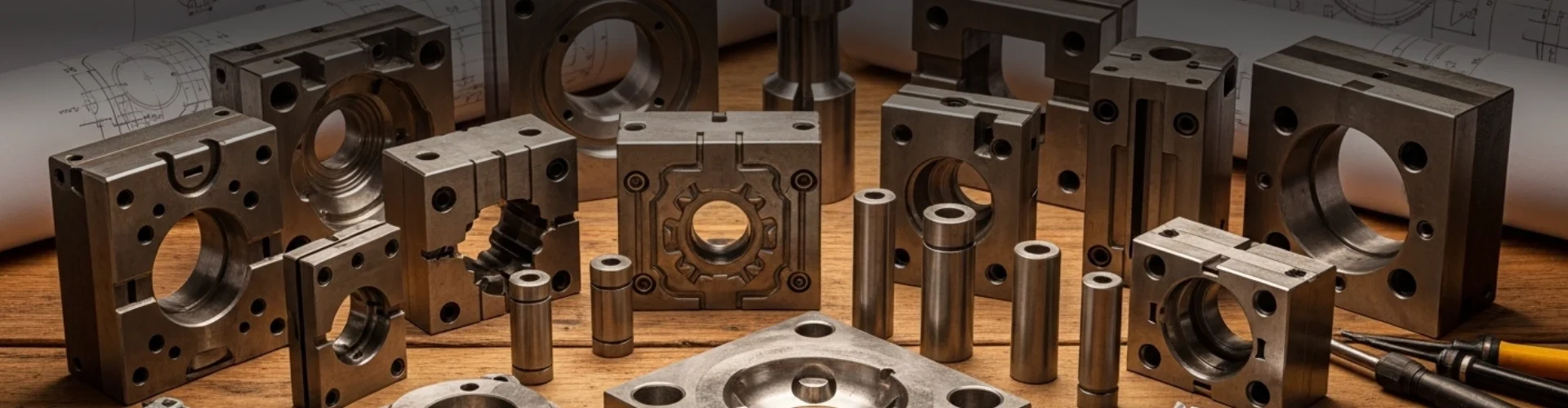
Automotive Mold

The automobile market is evolving at a rapid pace. Cars must now have lighter frames, increased safety and more energy efficiency. Due to this change, the technology of the automotive mould has become critical in the contemporary production systems. It assists in the production of bumpers, dashboards, interior parts, lighting parts and structural plastic parts. Meanwhile, mold parts of modern-day production guarantee precision, longevity, and predictable long-term behavior.
In the modern world, injection molding is very important to the automakers. It aids them in making complex components on large scale and maintaining high standards. Mold technology is also advancing with the improved design of the vehicle.
What Is an Automotive Mold
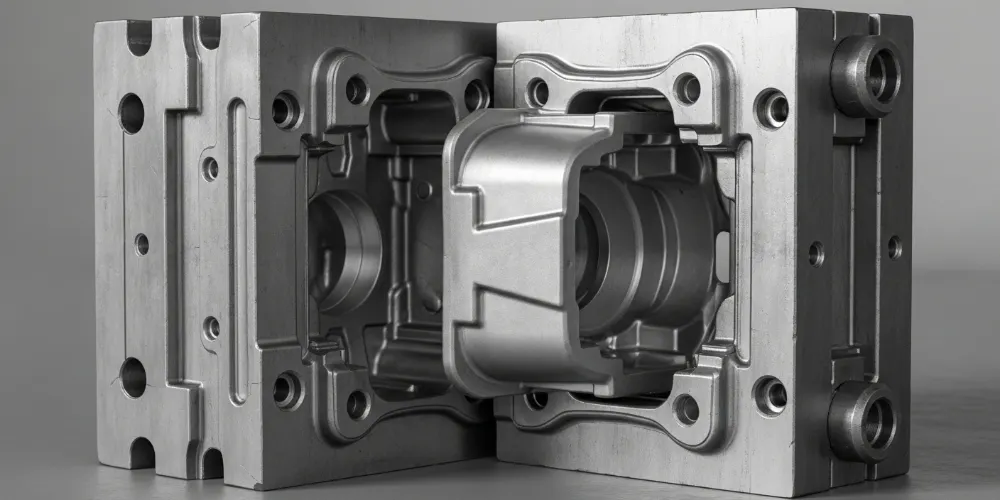
An automotive mold is an injection molding tool that is used to manufacture vehicle parts out of plastic. It helps to mould molten plastic into functional and structural automotive components.
These molds produce parts (door panels, instrument panels, air vents, bumper, and interior trims). Moreover, they assist aesthetic and structural needs.
Manufacturers make sure that such molds are highly strong, precise in all dimensions, and have quality surfaces. Since the automotive parts are required to work under pressure, even the smallest details are important when designing a mold and producing it.
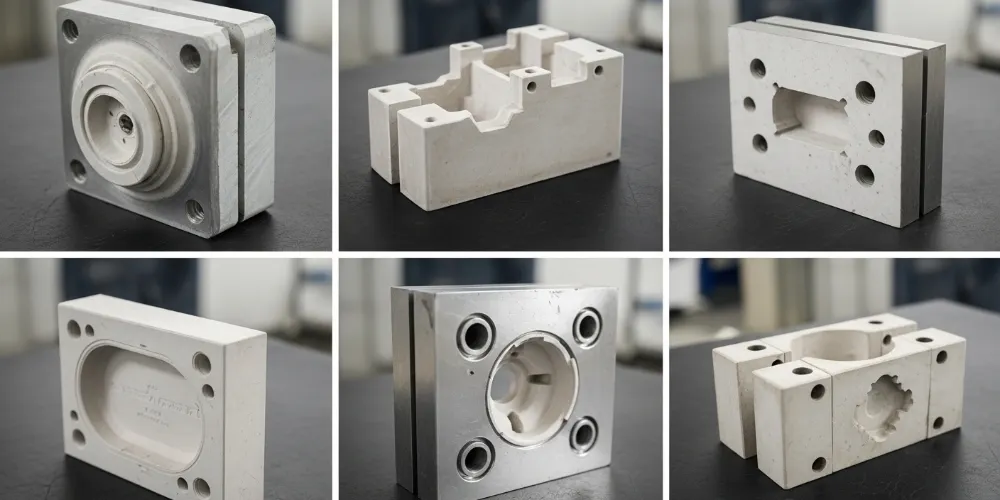
The reasons why Automotive Manufacturing is a High Precision Process
Accuracy is important in the automotive manufacturing. Even minor mistake can impact safety, performance or fit of assembly. To illustrate, an inappropriate bumper can influence the crash performance. Likewise, a lopsided interior panel can decrease the quality of assembly.
To prevent such issues, engineers create molds with high tolerance. They also employ high-level simulation tools prior to production. This aids in detecting possible problems on time.
Moreover, modern manufacturing has mold components that provide stabilized alignment and motion. This has the result of ensuring that the quality of production is maintained even when the manufacturing period is long.
Important Mold Components of Automotive Mold Systems
An automotive mold is a set of precision components which assemble with each production cycle. Every part plays a certain role.
The final shape of the automotive part is determined by the cavity and core. Bushings and guide pins ensure alignment in the operation of the mould. This decreases wear and enhances accuracy.
The finished parts are handled safely and do not deform by ejector systems. Cooling channels control temperature distribution inside the mold. This enhances cycle time and minimizes shrinkage defects.
Molten material is fed into the cavity by runner systems. They guarantee the flow balance and enhance the surface quality.
These components of mold in contemporary manufacturing render a stable and efficient production system.
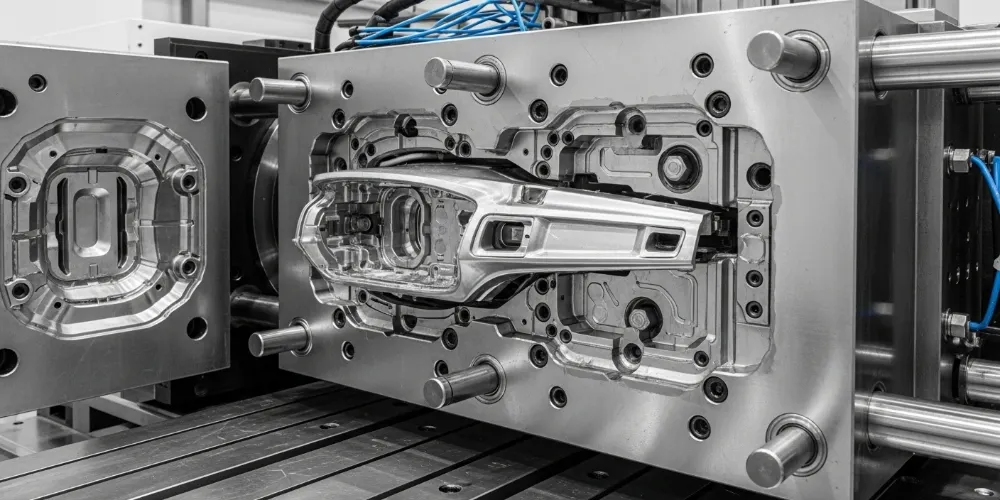
Mold Materials in the automotive mold manufacturing
The choice of material is very critical when making automotive molds. Mold structures are commonly manufactured through hardened tool steel by manufacturers. These alloys have great strength, wear resistance and thermal stability.
Surface treatments enhance durability as well. Coatings make it less frictional and less corrosive. The polishing increases surface smoothness, significant to visible automotive parts.
Engineering plastics such as PP, ABS, PA, and PC are commonly used as automotive parts. These materials are strong, heat and impact resistant. Hence, the design of molds should be compatible with the material behavior.
Automobile Production Injection Molding Process
The molding process of plastic begins with the heating of the plastic pellets till they melt. The molten material is then injected under a high pressure into the mold cavity.
Once full, the plastic hardens and solidifies within the mold. After the cooling, the part is discharged by the ejector system. The cycle goes on in a cyclic manner.
This is a very efficient process. It enables manufacturers to make high quantities of the identical parts. Moreover, automation enhances uniformity and saves labor expenses.
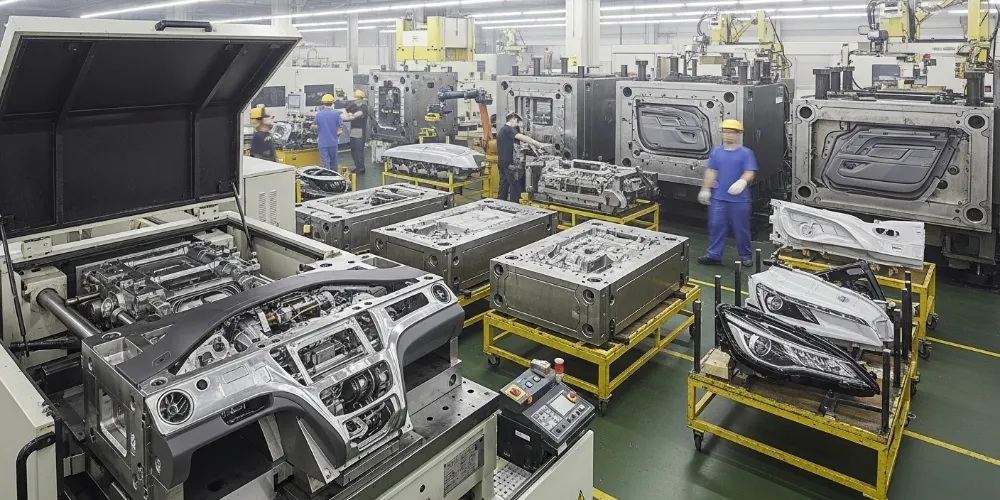
Automobile Mold engineering Optimization in design
Efficiency, strength, and precision are the areas of interest in modern automotive mold design. Prior to production, engineers test performance of molds using CAD and simulation tools.
They also maximize the thickness of walls and reinforcement. This enhances part strength with less use of materials. Besides, flow analysis can be used to avoid flaws like air traps or weld lines.
Due to the complex shapes of automotive parts, they should be carefully designed. Thus, the simulation tools contribute significantly to the minimization of the development risk.
Automobile moulding: automation and Smart Manufacturing
Automobile Molding Automation is prevalent in the manufacturing of automotive molds. Robots are used to do part removal, trimming and checking. This enhances speed and safety.
Meanwhile, temperature, pressure and cycle time are monitored by sensors. These systems are used to identify problems in a timely manner and ensure a stable production environment.
Moreover, production data is analyzed by digital systems. They assist engineers to adjust parameters on-the-fly. This leads to increased efficiency and predictability in manufacturing.
Automotive Mold uses
There are numerous vehicle parts that are made using automobile mold technology. It is a manufacturer of interior components including dashboards, door panels and center consoles. It also manufactures external components such as bumpers, grilles, and light housings.
Moreover, it helps to uphold functional units like air ducts, clips, and structural supports. These components should be very durable and safe.
Due to this broad scope of application, automotive mold technology is critical in the contemporary vehicle production.
Automobile Mold Manufacturing Sustainability
The automotive industry is shifting focus towards sustainability. It has reached a point where manufacturers are seeking to minimize wastage and enhance energy efficiency. Their molds have ideal cooling systems in order to reduce energy.
Besides this, the mold parts are durable to minimize maintenance and increase life. Plastic components are also lightweight which reduces the weight of the vehicle, and enhances fuel efficiency.
Consequently, sustainable mold design helps in sustaining environmental objectives and efficiency in production.
Trends of Automotive Mold Technology in Future
The automotive mold technology is shifting towards intelligent and largely automated systems in future. The artificial intelligence will streamline the settings of processes and minimize defects. Meanwhile, state-of-the-art materials will enhance the performance and durability of molds.
Prototyping of automotive components and molds will be supported with the help of 3D printing. This will reduce the time taken in development and enhance flexibility in design.
In addition, real-time monitoring and predictive maintenance systems will be incorporated into the fully connected smart factories.
All in all, the technology of automotive molds will keep changing together with the automotive industry.
FAQ
What is an automotive mold used for?
It is employed in making plastic parts of vehicles such as interior, exterior, and functional parts.
Why is precision important in automotive molds?
Safety and quality assembly, as well as uniform performance of vehicle parts, are guaranteed by precision.
What are the materials of producing automotive molds?
Hardened tool steel is used as a common mold. PP, ABS, PC and PA plastics are frequently used in automotive parts.
What are the advantages of injection molding to the automotive production?
It facilitates high volume production of high quality at low cost and in a short time.
What does the automotive mold technology have in store?
The future entails AI optimization, automation, the use of advanced materials, and smarter digital manufacturing systems.



Written By Sunshine
At Sunshine, we are a professional manufacturer and supplier of precision mould components, offering a wide range of products for stamping and injection mould applications. Our core focus includes punching dies, ejector pins and sleeves, and guide posts and bushings. With advanced CNC machining, strict quality control, and strong production capabilities, we ensure reliable, high-precision parts, along with in-stock standard components for fast and efficient global supply.
Industries
GET SERVICE
With quality parts to meet every budget and friendly staff trained to make your visit informative and hassle free.
