



Home Appliance Mold

Home appliance sector is expanding rapidly. Meanwhile, the expectations regarding the products are increasing. Consumers now expect durability, energy efficiency and contemporary design. Due to this reason, Mold technology of home appliances has a crucial role to play in the production. It facilitates the manufacturing of refrigerators, washing machines, air conditioners, microwaves and small kitchen appliances. Moreover, manufactured mold parts provide stability and precision, as well as extended life of production.
Nowadays, the appliances used in the homes need to be a mix of both functionality and beauty. Manufacturers, thus, use quality molds to produce similar results on large scale.
What Is a Home Appliance Mold
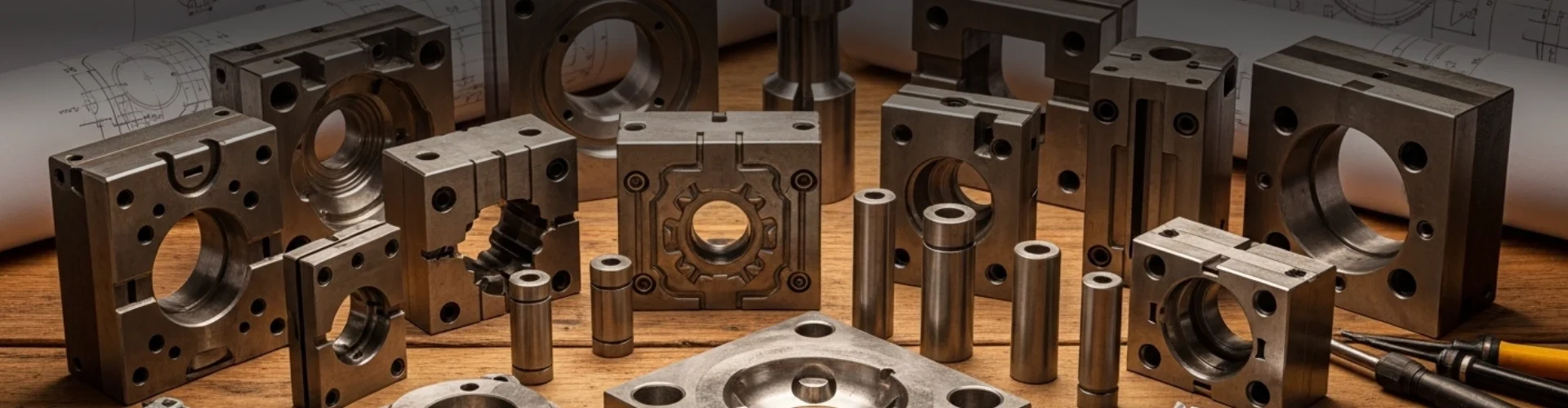
A home appliance mold is a highly accurate injection mold to make plastic parts in the manufacture of household machines. It is composed of components like outer shells, control panels, internal brackets, knobs, and structural housings.
These molds are designed by engineers to be strong and to have a visual quality. Moreover, they have to facilitate high volume production which is repeatable and stable. This will make sure that all the parts of the appliances are fitted properly when assembling.
Home appliances are used everyday so both durability and looks are important. As such, the precision of the moulds becomes a major determinant of product success.

The Reason Precision is Important in the Making of Home Appliances
Accuracy is critical in the manufacture of home appliances. Even minor mistakes may impact assembly or performance. As an illustration, vibration can be occasioned by a misaligned panel in a washing machine. On the same note, a door frame of a refrigerator that is not even can decrease the efficiency of sealing.
To prevent such problems, manufacturers employ stringent dimensional control. They also use high-tech machining in the production of the molds. Moreover, engineers do test designs prior to the commencement of mass production.
Furthermore, the use of mold parts in the contemporary production process also promotes stability when using repeated cycles. This guarantees uniform quality in extended production lines.
Basic Elements of Home Appliance Mold Systems
A home appliance mold has a number of key elements that combine in every production cycle.
The shape of the plastic part is determined by the cavity and core. They regulate size, form and surface texture. Guide systems make sure that the halves of the molds are aligned correctly. This decreases wear and enhances consistency.
Ejector systems eject finished parts without damage. Cooling channels control the temperature and shorten the time cycle. The flow of materials into the cavity is controlled by runner systems.
A combination of these mold parts in the manufacturing industry nowadays makes operation and production very efficient.
Raw Materials in home appliance production of molds
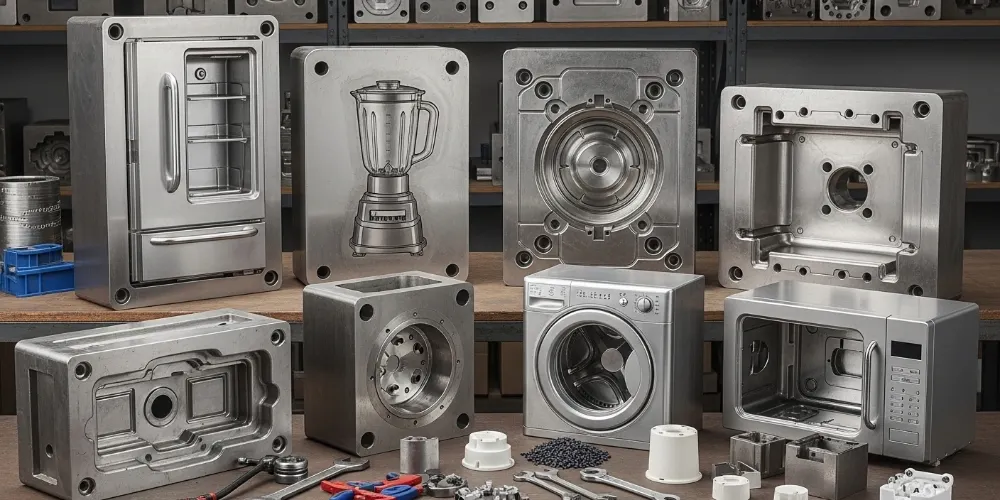
One of the important aspects of mold performance is material selection. Hardened tool steel is frequently used by manufacturers in the structure of moulds. This material is strong, resistant to heat and has a long service life.
Also, surface treatments enhance durability. Coatings make things less frictional and prevent corrosion. Surface finish is enhanced by polishing and is of significance to visible appliance parts.
In the case of product materials, engineers tend to employ ABS, PP and HIPS plastics. These materials are strong, impact resistant and cost effective. Thus, the design of molds should be in line with material behavior.
Home Appliances Injection Molding Process
Injection molding process starts with the heating of plastic pellets until they melt. The pressure is then applied to inject the molten material into the mold cavity.
The plastic solidifies after filling the cavity. The part is released by the ejector system once it has cooled down. This process is repeated indefinitely.
The process is effective and very repeatable. Thus, it promotes mass manufacturing of appliance parts. Moreover, automation enhances speed and minimizes errors in production.
Home Appliance Mold Engineering Design Optimization
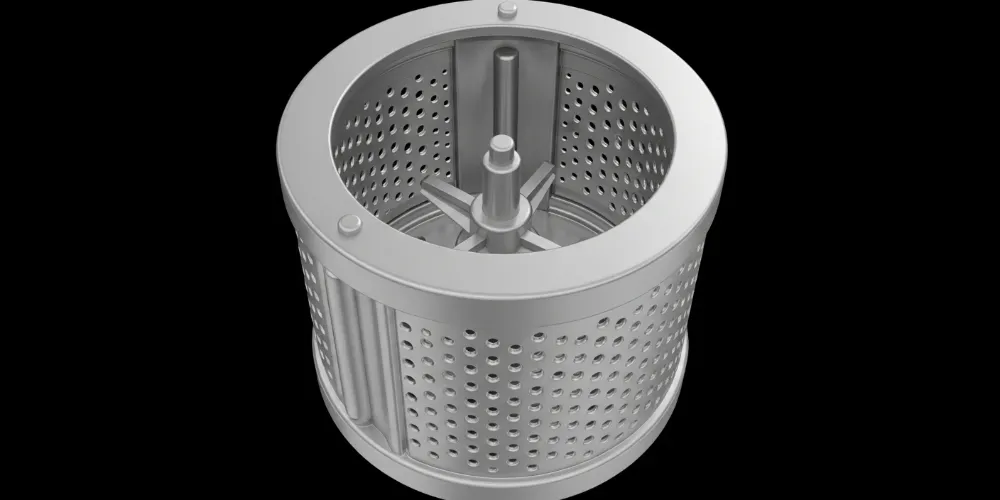
Design modern moulds are performance, efficiency and cost-controlled. CAD systems and simulation tools allow engineers to study how the molds will behave prior to manufacturing.
They maximize the thickness of walls and interior structures as well. This minimizes the use of materials and enhances strength. Furthermore, flow modelling can avoid defects like shrink marks or air traps.
Home appliances can involve a lot of huge plastic components, which make design optimization particularly significant. Thus, engineers pay close attention to the weight, strength, and manufacturability.
Appliance Production Smart Manufacturing and Automation
In the manufacturing of home appliances, automation has a significant role to play. Part removal, trimming, and inspection are done by robots. This enhances efficiency and manual labor is minimized.
Meanwhile, temperature, pressure, and cycle time are monitored with sensors during the production process. These systems assist in the early detection of problems. They also enhance stability between production runs.
More so, performance is analyzed by the data systems in real time. This data is used by engineers to make adjustments and enhance efficiency. This leads to an increased predictability and stability in production.
Home Appliance Mold in use
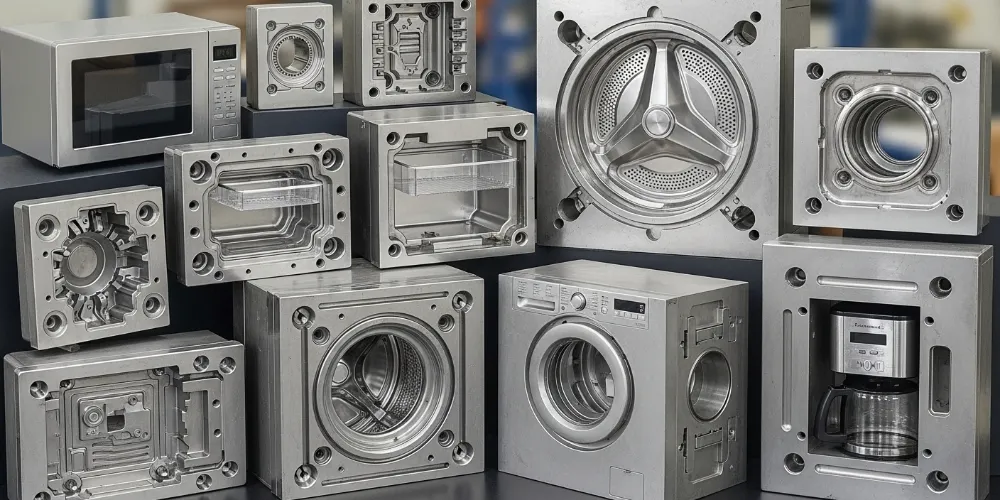
Mold of home appliances is common in the industry. They manufacture refrigerator liners, washing machine shells, air conditioner shells and microwave panels.
They also produce small appliances including blender housings, kettle bodies and coffee machines. Not only durability but also attractiveness is needed in these products.
Due to this broad area of application, home appliance mold technology plays a prominent role in the daily life production.
Home Appliance Mold Manufacturing Sustainability
The issue of sustainability is starting to gain relevance in the production of appliances. Manufacturers are currently oriented towards waste reduction and efficiency. They come up with molds that have best cooling systems to minimize energy consumption.
Moreover, mold parts are durable and last longer and minimize the replacement requirement. Plastic architectural designs are lightweight and serve to minimize the use of materials.
Consequently, sustainable mold engineering facilitates the cost-saving and environmental protection.
Prospect of Mold Technology of Home Appliances
The trend in the future of home appliance mold technology is towards smarter and more efficient systems. AI will aid in optimizing the molding parameters, minimizing the defects. Meanwhile, sophisticated materials will enhance the durability of moulds.
The 3D printing will help in quick prototyping and flexibility in design. This will reduce development time and enhance speed of innovation.
In addition, real-time monitoring and predictive maintenance will be incorporated in smart factories.
All in all, the industry will keep changing to be more automated, intelligent, and sustainable.
FAQ
What is the use of a home appliance mold?
It is utilized in manufacturing plastic parts in household appliances like refrigerators, washing machines, air conditioners, etc.
What is the importance of precision of home appliances molds?
Precision guarantees the correct assembly, longevity of products and the uniformity of the appearance among all components.
What are the materials to use in the mold production of home appliances?
Hardened tool steel are commonly used as mold material. ABS, HIPS and PP are the product materials.
What is the assistance of injection molding to the manufacturing of appliances?
It allows rapid, economical and repeatable manufacture of large plastic parts.
What does the future of mold in home appliances hold?
The future lies with AI optimization, automation, smarter materials, and smarter digital manufacturing systems.
Share:



Written By Sunshine
At Sunshine, we are a professional manufacturer and supplier of precision mould components, offering a wide range of products for stamping and injection mould applications. Our core focus includes punching dies, ejector pins and sleeves, and guide posts and bushings. With advanced CNC machining, strict quality control, and strong production capabilities, we ensure reliable, high-precision parts, along with in-stock standard components for fast and efficient global supply.
Industries
GET SERVICE
With quality parts to meet every budget and friendly staff trained to make your visit informative and hassle free.
