



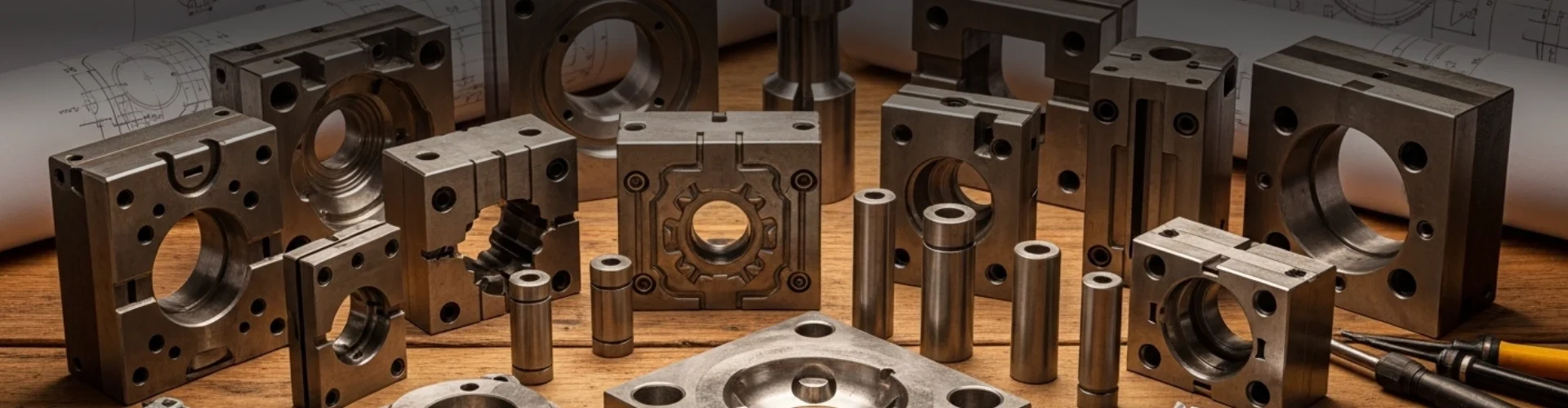
Electronic Mold

Electronics is a rapidly developing industry. Products are getting smaller, light and more powerful. Manufacturers rely on electronic mold technology in order to keep up with this shift. It assists in manufacture of accurate housings, connectors, insulation components and structural elements of electronic equipment. Simultaneously, the use of mold elements in the contemporary production makes the process accurate, stable and efficient in the long-term.
Electronic parts require very tight tolerances, unlike the general plastic products. A single flaw can have an impact on the work of devices. Hence, the design of electronic molds is quite concerned with precision, consistency, and reliability.
What is an Electronic Mold
An electronic mold is a precision injection mold to manufacture plastic components of electronic equipment. It manufactures parts like telephone cases, connectors, switching, sensor cases, and circuit-related envelops.
The molds are created by engineers to attain fineness and smoothness. Moreover, they have to regulate dimensional accuracy on extremely tight margins. This guarantees that all the electronic components will fit correctly when they are assembled.
Due to the constantly diminishing size of electronics, the accuracy of molds is even more significant. Consequently, electronics mold technology has emerged as a major source of innovation in the current electronics production.
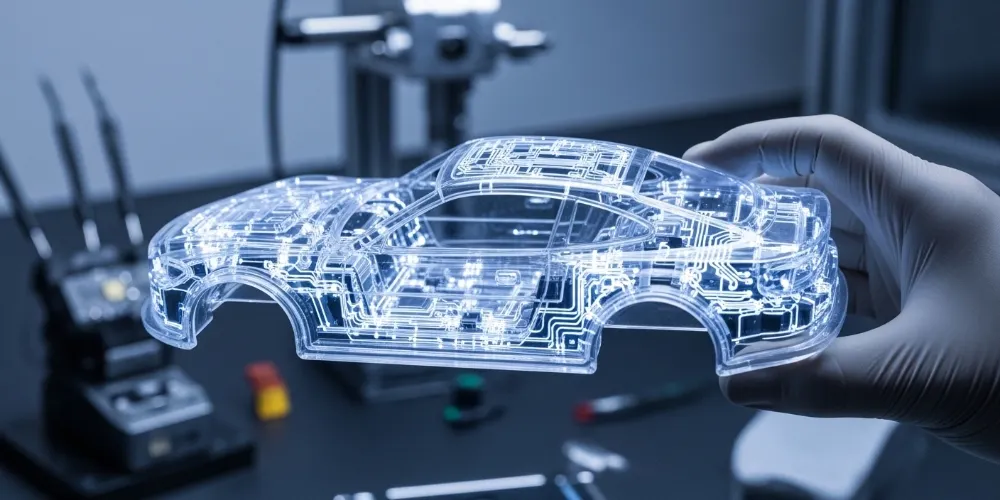
The reason why Electronics require such accuracy in Molding
Electronic equipment needs to be stable and fitted precisely. Minor variation may lead to failure of signals or assemblies. In a loose connector, the flow of electricity can be broken, as an example. On the same note, a wrongly fitting housing can destroy internal circuits.
Advanced mold engineering is employed by manufacturers to avoid these problems. They have a high degree of precision in all the stages of the molding process. They also make use of quality checks to maintain uniformity.
Besides, mold parts in the contemporary manufacturing industry aid in keeping everything aligned and minimizing mechanical wear. This enhances stability in the long term when production is in high volume.
Basic Building Blocks in Electronic Mold Systems
An electronic mold is a series of finely-tuned components that operate in a controlled cycle. All the components add up to the quality of the final product.
The shape of the electronic part is determined by the cavity and core. They decide on the precision and surface characteristics. Guide pins and bushings make sure that there is a smooth alignment when opening and closing cycles. This eliminates mismatch and wears.
The ejector systems take away the finished parts without mishandling delicate constructions. Cooling channels stabilize material shrinkage and control heat. In the meantime, the flow of molten plastic into the cavity is regulated by the runner systems.
The combination of these mold parts in the contemporary production guarantees high efficiency and consistency in the electronic production lines.
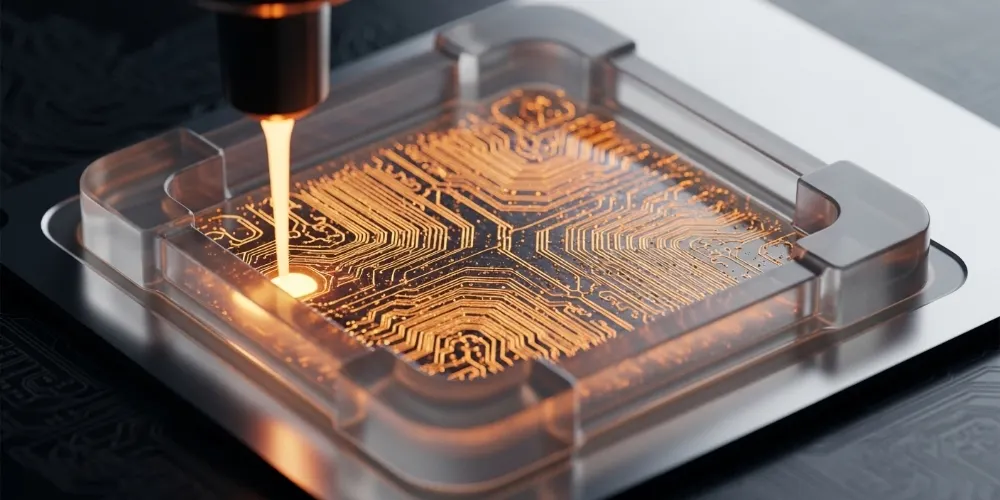
Electronic Mold Production Materials
The choice of materials contributes significantly to the performance of the molds. Usually manufacturers employ hardened tool steel because it is tough and durable. These materials can withstand constant pressure and heat without deformation.
Moreover, surface coverage enhances performance. Coatings minimize friction and corrosion. Surface finish is also enhanced by fine polishing and is significant with visible electronic parts.
ABS, PC and PBT are often the engineering plastics involved in the manufacture of electronic products. These materials are heat resistant, strong, and electrically insulating. The design of molds should, therefore, be in accordance with the behavior of materials.
Accuracy in Molding Electronics
High-precision machining is essential in the production of electronic moulds. CNC machines cut intricate forms to a precision of microns. EDM technology creates deep holes and angles. The faster milling enhances the quality of surfaces and rate of production.
Such procedures enable engineers to make multifaceted structures that have consistent reliability. Moreover, it also decreases the human error and enhances consistency in large production batches through automation.
This leads to a high level of efficiency and precision simultaneously among the manufacturers.
Electronic Mold Design Problems
The design of electronic molds has a number of challenges. To begin with, the sizes of products are mostly small. Very tight tolerances are needed in this. Second, internal structures can be quite complicated. They involve thinned walls, narrow ribs and interfaces.
Engineers employ simulation tools in order to overcome these challenges. These are used to study the flow of materials, cooling and structural strength prior to the manufacturing process. Thus, possible problems are detected at an early stage.
Moreover, designers optimize gating systems and cooling designs. This enhances the quality of products and decreases the time of the cycle.
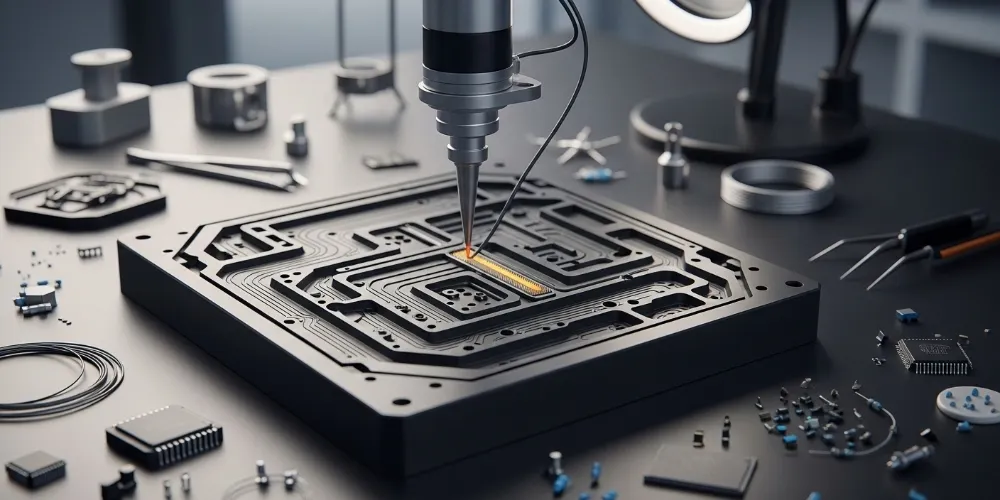
Electronics Molding Automation and Smart
In electronic mold production, automation has become a necessity. Part removal, inspection and packaging are now carried out by robots. This enhances speed and minimizes risk of contamination.
Simultaneously, intelligent sensors are used to gather real-time information in the production process. They control the temperature, pressure and cycle timing. This data aids operators to modify settings in a short time.
In addition, AI systems examine the information about production. They identify trends and propose changes. This leads to a stable and efficient production.
Electronic Mold uses
Electronic mold technology has application in numerous industries. It manufactures smartphone cases, laptop frames, and wearables. It also helps in connectors and switches and insulation components of industrial electronics.
Besides this, it can also be found in smart home devices, communication equipment, and automotive electronics. Such applications are very demanding in terms of reliability and performance.
Electronic mold systems are critical to the contemporary technology production due to this extensive use.
Green Electronic Mold Making
Electronics manufacturing is increasingly becoming more sustainable. Firms are currently concerned with cutting down on waste materials and energy. This is done by efficient designs of molds.
Indicatively, the optimized cooling systems minimize the cycle time and energy consumption. The use of durable mold parts can prolong the life of the service and minimize the frequency of replacement. Also, accurate molding minimizes scrap rates.
Thus, sustainable mold design helps in saving costs and preserving the environment.
Trends of Electronic Mold Technology in the future
The intelligence and miniaturization of electronic mould technology are the way forward. Molding parameters will be optimized with AI. This will enhance accuracy and minimize flaws.
Meanwhile, the new high-performance materials will enhance the durability of molds. Fast prototyping and flexibility in design will also be supported by 3D printing.
Furthermore, production systems that are fully automated will become more widespread. Such systems will incorporate data platforms, sensors, and robotics in the cloud.
In general, electronic mold technology will keep on changing as the electronics industry does.
FAQ
What is an electronic mold used for?
It is employed in the production of plastic parts of electronic devices including housings, connectors and part of insulation.
Why is precision important in electronic molds?
Accuracy guarantees correct fitting, consistent operation, and stable electrical operation in electronic equipment.
What do we use to manufacture electronic moulds?
Hardened tool steel is common as a mold material. Product materials are ABS, PC and PBT plastics.
What is the role of injection molding in electronics manufacturing?
It allows rapid, repeatable and high accuracy production of complicated electronic components.
What is the future of electronic mold technology?
There is AI-based optimization, further materials, automation, and very efficient smart manufacturing in the future.



Written By Sunshine
At Sunshine, we are a professional manufacturer and supplier of precision mould components, offering a wide range of products for stamping and injection mould applications. Our core focus includes punching dies, ejector pins and sleeves, and guide posts and bushings. With advanced CNC machining, strict quality control, and strong production capabilities, we ensure reliable, high-precision parts, along with in-stock standard components for fast and efficient global supply.
Industries
GET SERVICE
With quality parts to meet every budget and friendly staff trained to make your visit informative and hassle free.
