



Sports Plastic Mold
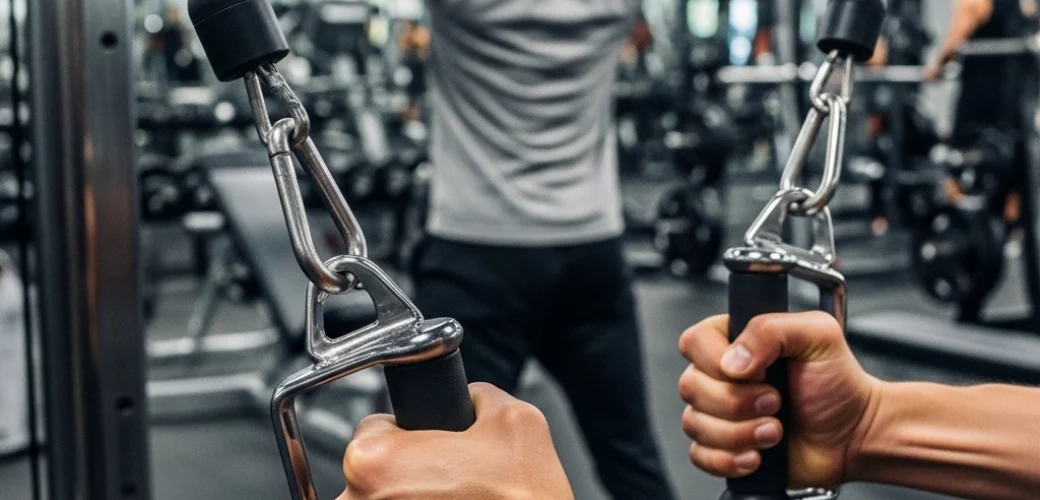
Sports equipment is an ever-growing business and the manufacturers are currently in need of heavier, lighter and tougher equipment. Sports Plastic Mold technology has been the most important aspect of contemporary production to satisfy these needs. It promotes efficient production of helmets, protective equipment, training equipment and other sports accessories. Simultaneously, mold elements in contemporary production are very significant in the accuracy, stability, and long-lasting performance.
Sports products today have to be able to withstand impact and repeated use as well as changing environmental conditions. Thus, injection molding has emerged as the choice to scale-manufacturing of uniform high-quality plastic components.
A Sports Plastic Mold What Is It?
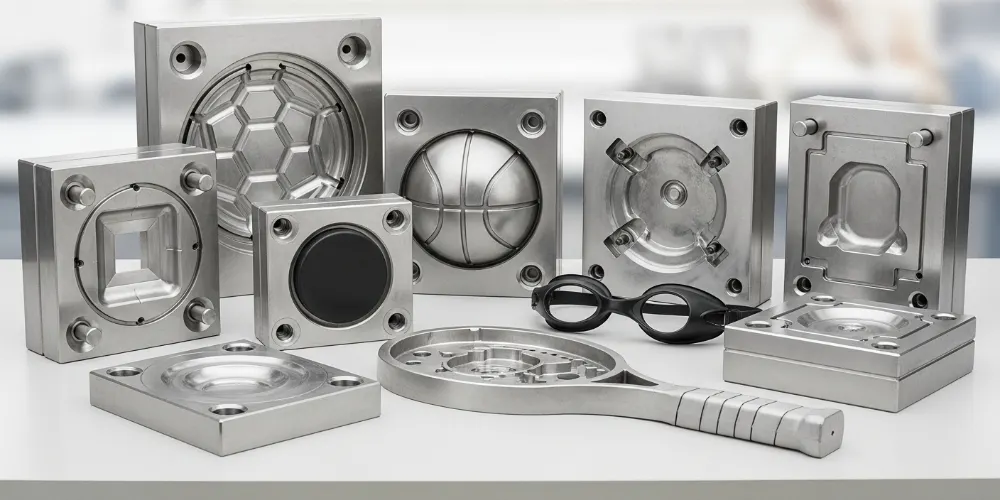
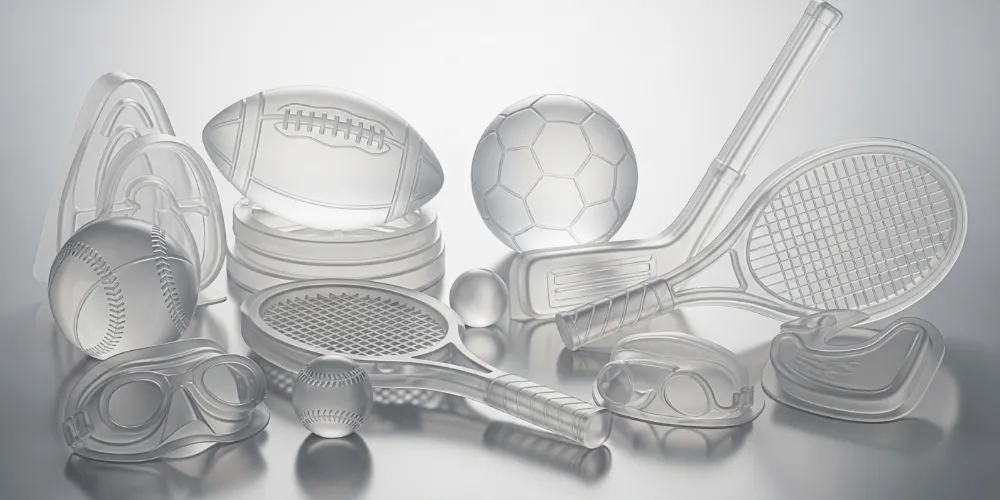
A Sports Plastic Mold is an injection mold that is specific to plastic parts of sports and fitness equipment. It casts molten plastic material into high-precision pieces like helmet shells, protective guards, handles and structural frames. These molds help in high-volume production without altering the size or strength of any part.
This is the process that manufactures prefer as it is fast and precise. Also, it enables complicated shapes, which otherwise would be tricky or costly to develop using alternative production techniques. Consequently, sports brands are able to come up with lighter and stronger products to serve the athletes.
The reason why Sports Equipment requires High-Precision Molds
The sports equipment should be able to work under pressure and therefore accuracy is paramount. Even minor dimensional inconsistencies can be a matter of safety or comfort. As an example, a poorly-fitting helmet shell can decrease protection, and an uneven handle can influence grip performance.
Precision moulds will address these problems by making all the parts the same. Mold cavities and cores are designed with much care by engineers to manage final sizes. Moreover, guide systems are used to ensure a flawless alignment in each molding process. This minimizes defects and enhances the overall product reliability.
Due to that, modern manufacturing uses mold components heavily in the manufacturing to provide stable quality and extended production lifecycles.
The important Mold parts employed in Sports Plastic Mold System
A Sports Plastic Mold has a combination of working parts that work in a specific cycle. Every part has its particular role in creating and discharging the finished product.
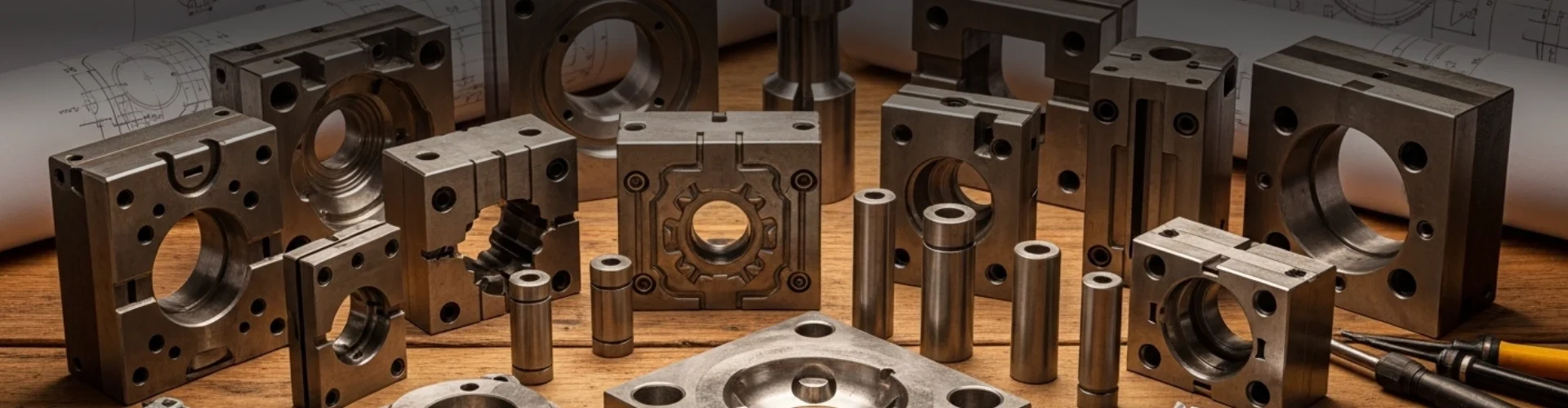
The shape of the sports part is the cavity and core. They establish surface details and structural accuracy. The finished part is then pushed out of the mold by ejector pins. Guide pins and bushings ensure alignment as well as minimize wear when subjected to repetitive use.
During production, cooling channels are used to control the heat. They cool the part uniformly to ensure that it solidifies. Meanwhile, the flow of molten plastic into the cavity is regulated by the runner systems. This enhances surface finish, and lowers internal stress.
These components of moulds in modern manufacturing are together functioning smoothly and producing quality products.
Plastic Mold Production Materials Used in Sports
The choice of the material directly influences the performance and mold durability. High-strength tool steels are popular among the manufacturers due to their ability to withstand wear and to be stable under high pressure. Repeated thermal cycling is also performed on these materials, but they do not deform.
There are also surface treatments that enhance performance. The hard coatings minimize friction and extend the life of the moulds. The plastic flow and surface finish quality can also be enhanced with the help of polishing.
Resins such as ABS, PC, and nylon based resins are also likely to be used in sports equipment. These materials are strong, impact resistant and flexible. Consequently, the mold should be shaped to accommodate various resin performances during injection.
Sports Equipment Injection Molding Process
Injection molding process starts with heating of plastic pellets until they melt. High pressure is then used to inject the molten plastic in the mold cavity. Once the cavity is filled, the material then cools down and hardens into the final shape.
After the part has cooled, ejector systems are used to release the part out of the mold. The process is repeated in a short period and it is therefore suitable in mass production.
Due to short cycle time, manufacturers are able to manufacture vast quantities of parts of sports equipments. Meanwhile, automation helps to minimize human error and enhance uniformity throughout each batch.
Sports Plastic Mold Engineering Design Innovation
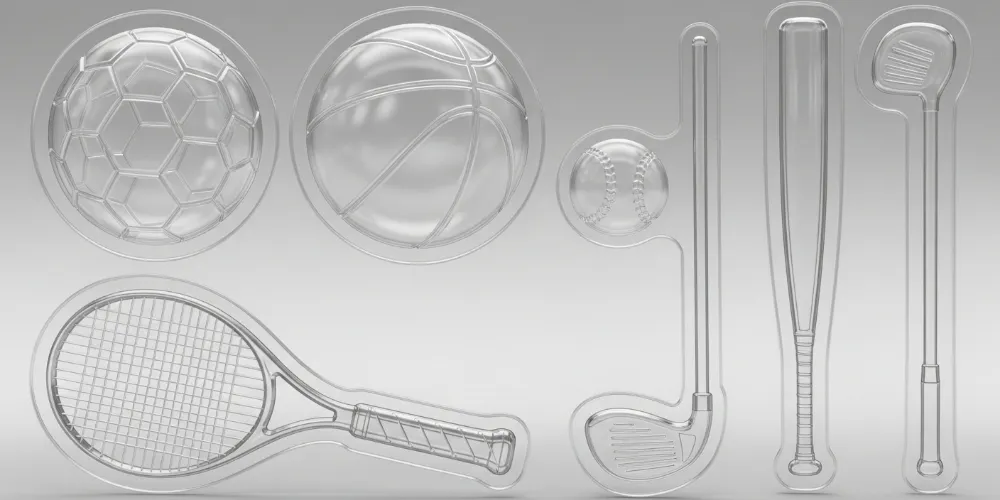
The design of the modern Sports Plastic Mold is directed towards enhancing the strength, reduction of weight and performance. CAD software and simulation tools have been adopted by engineers to test before production of the mold begins. This decreases risk and enhances efficiency.
Wall thickness and internal structures are also optimized by designers. This assists in minimizing the use of materials and still being durable. Moreover, an ergonomic design is becoming relevant. Sports equipment should be comfortable and safe to users.
Consequently, the practice of mold engineering keeps being improved towards superior and streamlined solutions.
Mold Production via Automation and Smart Manufacturing
Sports mold production now extensively employs automation. Part removal, trimming and packaging are some of tasks that robots are used to perform. This enhances speed and saves labor expenses.
Simultaneously, intelligent sensors check the temperature, pressure, and cycle time. These sensors aid in problem identification at the initial stage and enhance stability in production. Manufacturers can also make real-time adjustments to data-driven systems.
Due to this, there is an increasing trend to make modern production lines smarter and more efficient.
Applications of Sports Plastic Mold
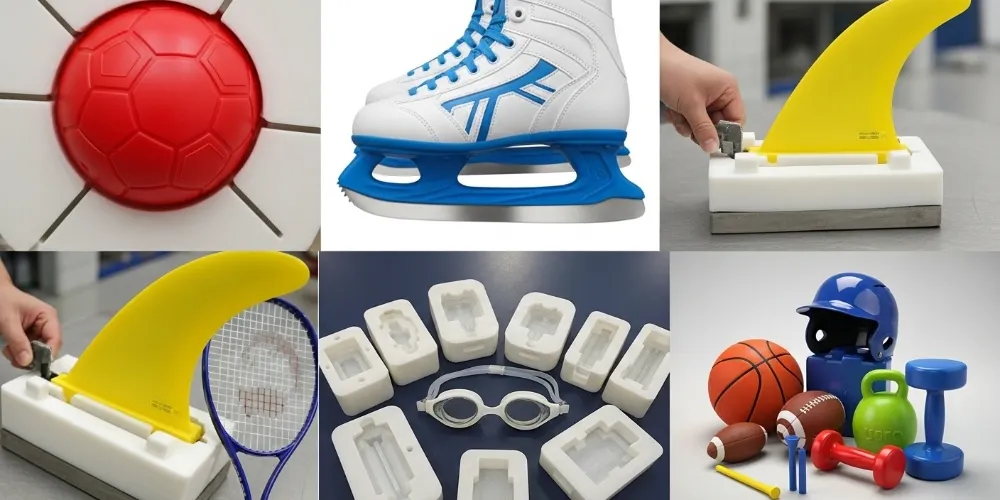
The technology of Sports Plastic Mold is applied in numerous applications. It manufactures safety equipment like helmet and pads. It also creates fitness equipment parts like grips, housings, and structural supports.
It also applies to the outdoor sports equipment, training equipment and recreational products. These applications mandate great strength and steady performance, and injection molding can offer that.
Thus, plastic molds in sports are a necessity in the whole sports manufacturing sector.
Future Trends of Sports Plastic Mold in Manufacturing
Automation, material innovation, and digital manufacturing are closely associated with the future of Sports Plastic Mold technology. Systems that are based on AI will assist in streamlining the performance of molds and minimizing defects. Simultaneously, the developed materials will enhance durability and decrease weight.
The rapid prototyping of molds will also be facilitated with the help of 3D printing. This will reduce the development time and enhance flexibility in designs.
As a whole, the sector is headed towards smarter, faster and more sustainable manufacturing processes.
FAQ
Sports Plastic Mold: What is it?
It is employed to produce sports equipment including helmets, protective equipment and training equipment made out of plastic parts.
Why is precision important in sports molds?
Accuracy guarantees safety, stability and performance. Minor mistakes may compromise the fit, strength, and usability.
What are the materials of sports plastic molds?
ABS, PC, nylon, and high-strength tool steels are normally used to construct the molds.
What advantages does injection molding have in the production of sports equipment?
It enables mass production which is fast, repeatable and cost effective and still with high quality and design flexibility.
What does sports plastic mold technology hold in the future?
Smarter automation, AI optimization, improved materials, and accelerated digital manufacturing processes are all in the future.
Share:



Written By Sunshine
At Sunshine, we are a professional manufacturer and supplier of precision mould components, offering a wide range of products for stamping and injection mould applications. Our core focus includes punching dies, ejector pins and sleeves, and guide posts and bushings. With advanced CNC machining, strict quality control, and strong production capabilities, we ensure reliable, high-precision parts, along with in-stock standard components for fast and efficient global supply.
Industries
GET SERVICE
With quality parts to meet every budget and friendly staff trained to make your visit informative and hassle free.
