



Medical Injection Molding
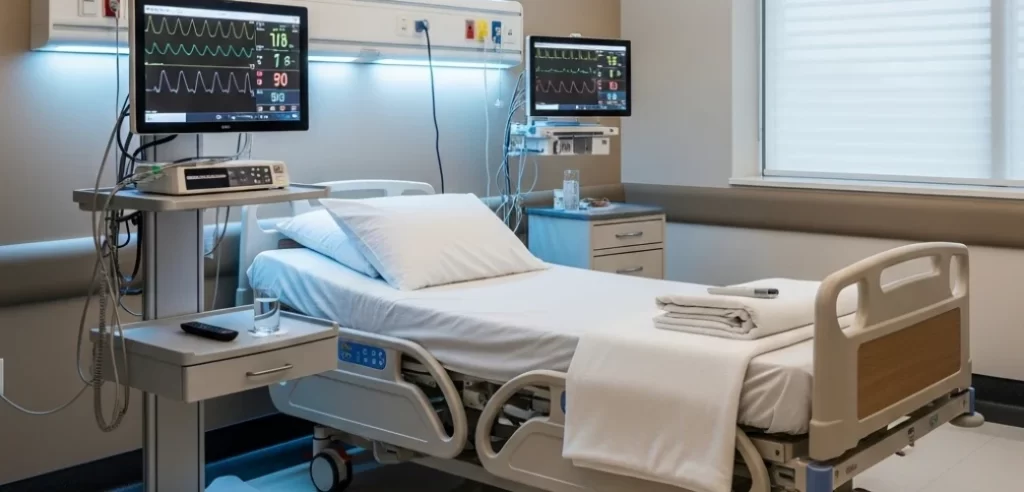
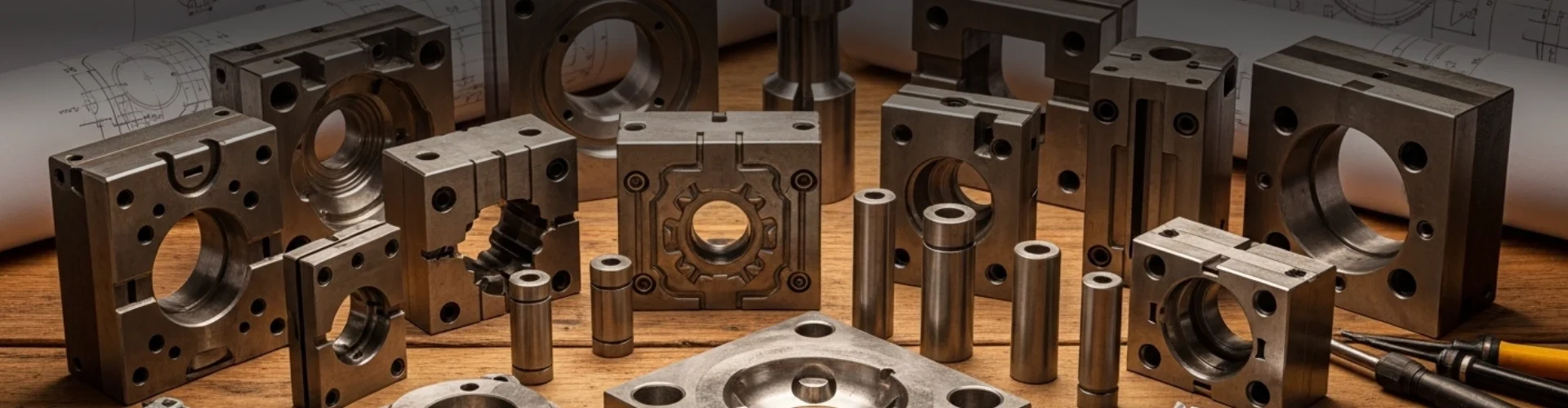
There is no tolerance in the healthcare industry. Due to this fact, medical injection molding has become any fundamental technology in the current medical production. It allows the manufacturing of sterile, precise and high-performance plastic parts employed in hospitals, laboratories and diagnostic systems. Meanwhile, modern manufacturing is characterized by the significant part of the mold components to promote stability, cleanliness, and uniform quality.
In contrast to general industrial products, medical products should comply with high safety and regulation. Thus, all the phases of the design and production of molds should be based on controlled and proven procedures.
What Is Medical Injection Molding
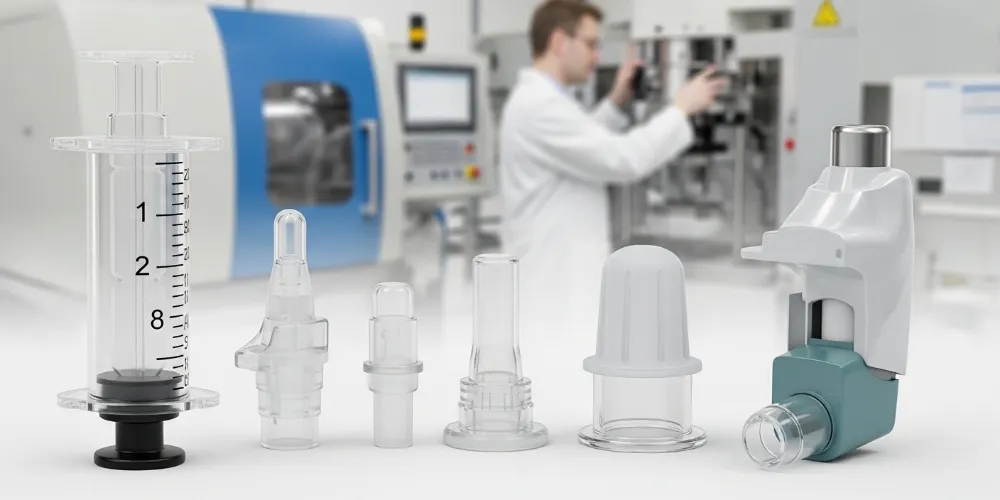
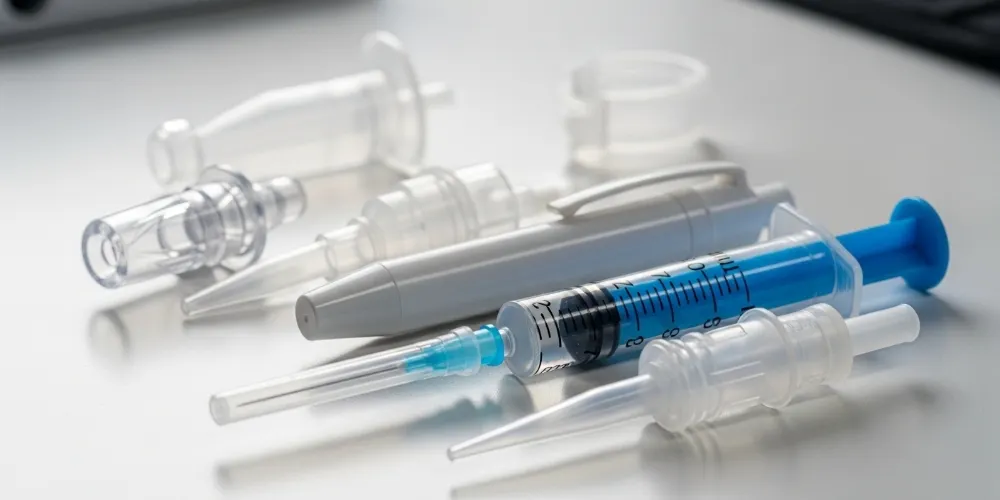
Medical injection molding is a type of manufacturing that involves the creation of plastic medical parts using highly accurate molds. It manufactures syringes, surgical equipment, diagnostic housings, IV connectors, and disposable medical equipment.
This process is designed by manufacturers to be accurate, clean and reproducible. Moreover, they should adopt a high level of environmental management in the production process. This averts contamination and safety of the patient.
Since healthcare products are frequently one-time or very sensitive, consistency is not a choice. It is essential. Medical injection molding has thus been a critical solution in the medical supply chain.
Why Accuracy is important in Medical manufacturing
Medical device manufacturing is based on precision. A small blemish may have an impact on patient safety. As one can give, a syringe that is poorly sealed can cause leakages. Likewise, a misplaced housing of a diagnostic can result in errors in measurements.
As a precaution, manufacturers use extreme dimensional control to eliminate these risks. They also have sophisticated inspection machines to check each component. Moreover, engineers come up with molds that are highly stable and repeatable.
In addition, the modern manufacturing entails mold components that guarantee proper alignment and smooth work. This minimizes variation in long production cycles and enhances reliability of the products.
Basic building blocks of medical injection molding systems
Medical injection mold comprises of several high precision parts. Both of them lead to accuracy, safety and efficiency.
The shape of the medical part is determined by the cavity and core. They have to be within a strict tolerance. Guide systems make sure that everything is aligned in each cycle. This eliminates flash and dimensional errors.
Finished parts are removed with care using ejector systems. They prevent superficial damages and deformation. Molding is done using cooling channels. This promotes a consistent shrinkage and structure.
Moreover, molten material is directed into the cavity by the help of the runner systems. They aid in the balance of flow and eliminate internal stress.
These mold elements, when combined, serve to provide a stable and controlled manufacturing environment in modern manufacturing.
The materials employed in Medical Injection Molding
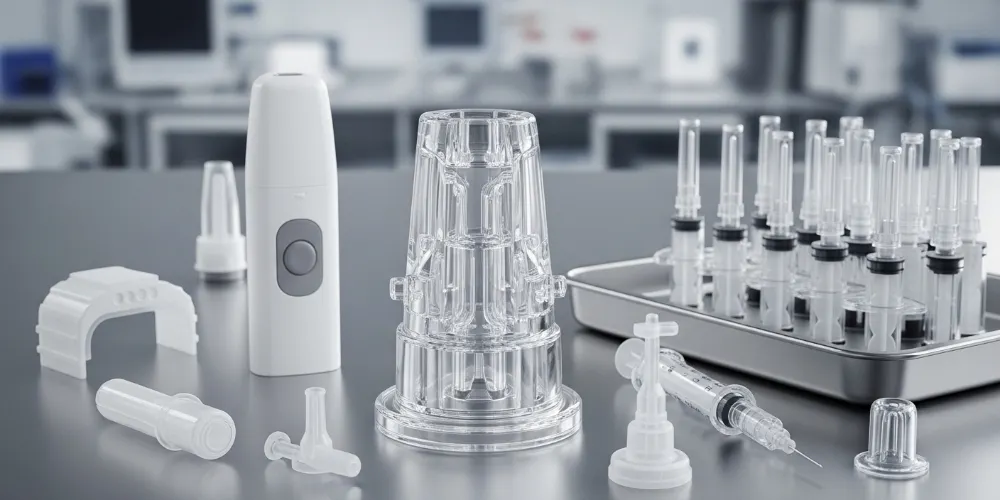
The choice of materials plays a crucial role in the medical use. Medical-grade polymers are often employed by manufacturers and have high regulatory requirements. These plastics are polypropylene (PP), polycarbonate (PC), polyethylene (PE) and ABS.
These plastics are chemically resistant, transparent and mechanical strong. Moreover, they aid sterilization like gamma radiation or ethylene oxide.
To construct moulds, engineers work with hardened tool steel. The material does not wear out and has a dimensional stability during continuous use. Coatings on surfaces also enhance corrosion resistance and low friction.
The product and mold materials used should be under strict quality control systems due to these material requirements.
In Medical Injection Molding, Cleanroom Manufacturing
Cleanroom production is essential in medical manufacturing. It controls contamination and safety of the products. Manufacturers manage the amount of air quality, humidity, and particle levels within the production space.
Protective clothing is used to protect the operators. There is also controlled condition of machines to ensure cleanliness. Moreover, automated systems minimize the number of humans that touch products.
Consequently, cleanroom settings have made sure that medical components are of international hygienic standards. This plays a crucial role in patient safety and regulatory compliance.
Medical Mold Design Precision Engineering
The precision of medical mold design is tremendous. CAD and simulation tools enable engineers to design complicated structures prior to production. This minimizes risk and enhances efficiency.
They also optimize flow paths and thickness of walls. This would avoid sink marks or unfilled fillings. Moreover, cooling systems are well calculated to provide a consistent temperature distribution.
Due to the complexity of shapes of medical parts, engineers have to trade off between precision and manufacturability. Hence, simulation tools can be important in shortening the development time.
Quality Control and Automation of Medical Manufacturing
Medical injection molding is more efficient and safe with automation. Part removal, inspection, and packaging are accomplished by robots. This minimizes the risk of contamination and enhances uniformity.
Simultaneously, pressure, temperature, and cycle time are monitored by sensors during the manufacturing process. These regimes early detect deviations and contribute to the stabilization of output.
Moreover, all batches of products are checked with quality control systems. They verify dimensional correctness, surface fineness and structural integrity. Consequently, defective components are easily spotted and eliminated.
This automation and inspection combination make a high degree of reliability in medical production.
Applications of Medical Injection Molding
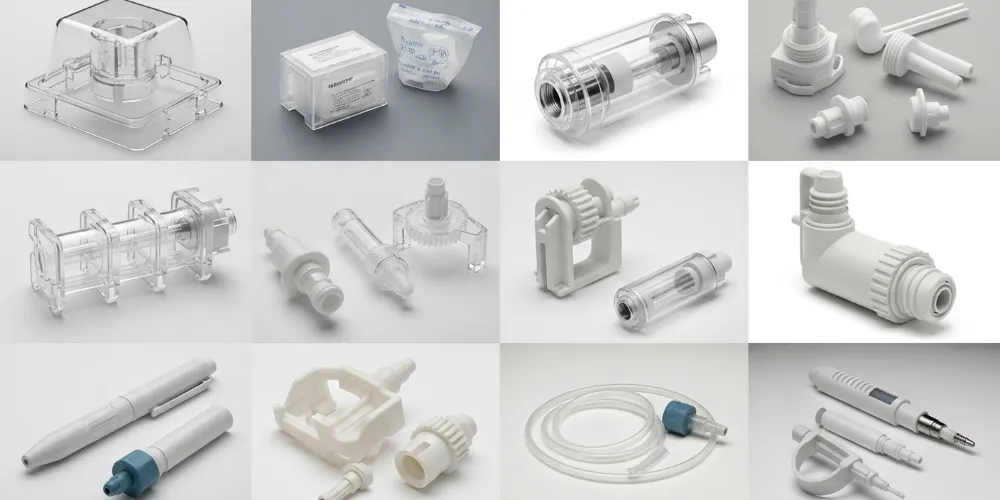
There are numerous medical injection molding applications. It manufactures disposal syringes, surgical equipment, test kits, and IV equipment.
It also provides laboratory equipment, drug delivery systems as well as wearable medical devices. These are products which need a high level of precision and safety.
Moreover, medical molding is utilized in hospital equipment houses and shield parts. These applications require reliability and stability.
Medical injection molding supplies a broad spectrum of healthcare requirements due to its flexibility.
Medical Mold Sustainability
Increasingly, sustainability is becoming a factor in the production of medicine. The current trend among manufacturers is minimizing waste and enhancing efficiency. They develop molds with long production life cycles.
Effective cooling systems minimize energy use. Mold components of high quality increase service life and decreases the frequency of replacement. Moreover, streamlined processes reduce wastages of materials.
Even with medical safety being the number one priority, sustainability is gradually becoming an increasing factor in current manufacturing plans.
Trends of Medical Injection Molding in the Future
The future of medical injection molding is shifting towards smarter and more automated systems. Artificial intelligence will assist in optimization of the process parameters and the defects will be minimized. Meanwhile, the high-tech materials will enhance performance and safety.
Rapid prototyping of medical equipment and moulds will be backed up by 3D printing. This will reduce the development cycles and enhance flexibility. Moreover, real-time control will be improved by using digital monitoring systems.
All in all, the sphere of medical manufacturing will be smarter, more efficient, and data-oriented.
FAQ
What is medical injection molding used for?
It is employed in manufacturing medical plastic parts including syringes, diagnostic equipment and surgical instruments.
Why is precision important in medical injection molding?
Accuracy guarantees patient safety, proper performance as well as adherence to high medical standards.
What are the materials in medical injection molding?
Materials such as PP, PC, PE and ABS medical grade plastics are commonly used, with hardened tool steel used as molds.
What is a cleanroom in the medical manufacturing?
A cleanroom is a controlled space that minimizes contamination through managing air quality, humidity, and particle concentration.
What will become of medical injection molding?
Artificial intelligence optimization, automation, new materials, and accelerated digital manufacturing are all part of the future.



Written By Sunshine
At Sunshine, we are a professional manufacturer and supplier of precision mould components, offering a wide range of products for stamping and injection mould applications. Our core focus includes punching dies, ejector pins and sleeves, and guide posts and bushings. With advanced CNC machining, strict quality control, and strong production capabilities, we ensure reliable, high-precision parts, along with in-stock standard components for fast and efficient global supply.
Industries
GET SERVICE
With quality parts to meet every budget and friendly staff trained to make your visit informative and hassle free.
