



Mold Components Guide: Types, Functions, and Buying Checklist
Mold components are the precision parts that control alignment, cooling, feeding, and ejection inside an injection mold. Buyers should compare component types, material grades, tolerances, hardness, and lead times before sending an RFQ. Standard parts reduce replacement costs and delivery risk, while custom components work better for specialized molds with tighter performance requirements.
A mold may look simple from the outside, but component quality decides how well it performs on the production floor. Poor ejector pins, weak guide bushings, or incorrect tolerances can lead to flash, sticking, downtime, and expensive repairs. This guide explains the main mold component types, what each one does, and what buyers should check before choosing a supplier or requesting a quote.
What are mold components and why do they matter?
Mold components are the individual functional parts inside an injection mold, including ejector pins, guide bushings, cooling systems, and mold bases. Their precision affects cycle time, part quality, alignment accuracy, and mold lifespan.
Every injection mold uses multiple parts that work together during molding. These components guide mold movement, cool molten plastic, eject finished parts, and keep alignment stable during repeated production cycles. If one critical part wears out early, the entire mold can lose accuracy.
Standardized components also make maintenance easier. Factories can replace worn pins, bushings, or springs without redesigning the entire tool. That matters for high-volume production lines where every hour of downtime affects output and delivery schedules.
Buyers comparing suppliers should focus on more than machining price. Material grade, hardness treatment, and dimensional consistency often determine whether a mold performs well after 100,000 cycles or after 1 million cycles.
For a broader overview of mold construction and tooling workflow, see these plastic injection mold basics.
What are the main types of mold components?
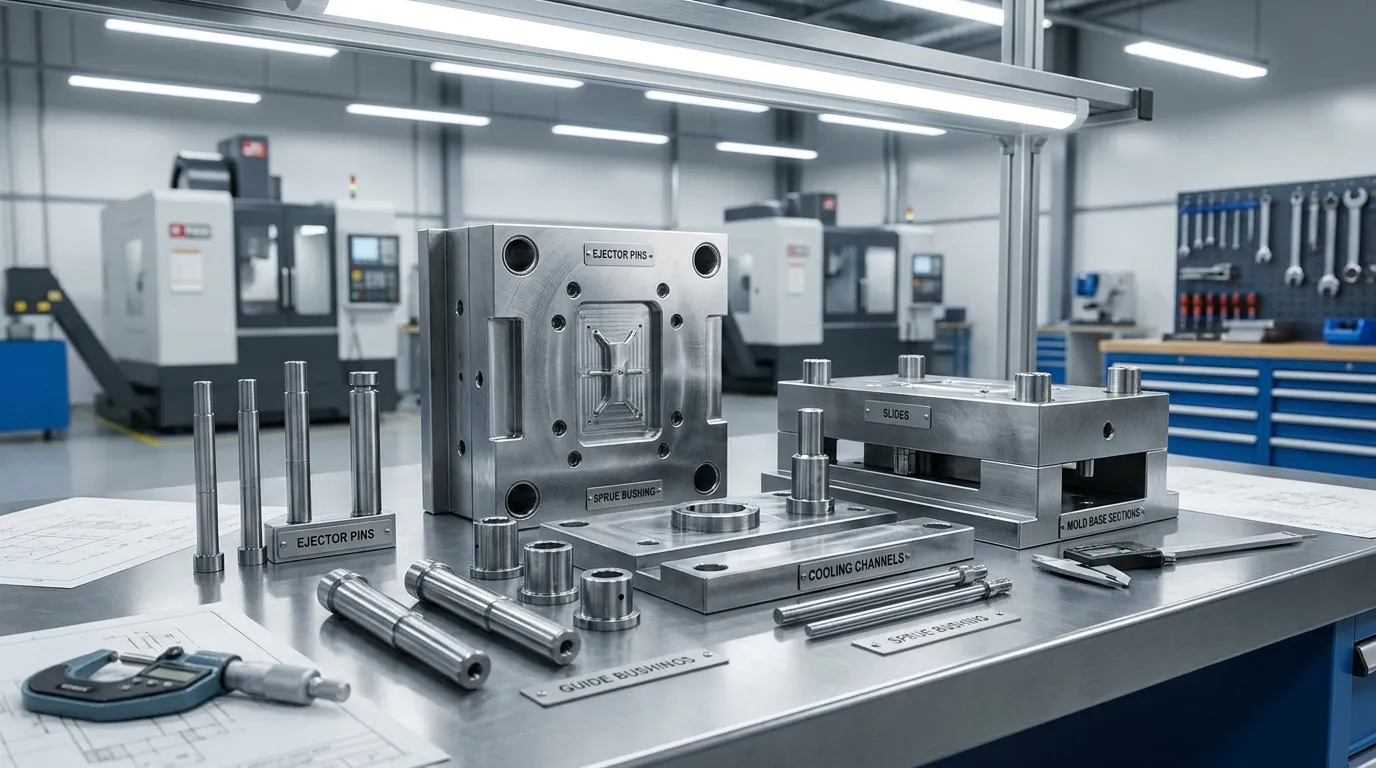
The main mold components include the mold base, guiding system, cooling channels, feed system, and ejection system. Each section controls a different part of molding performance, from alignment and resin flow to cooling efficiency and part release.
Most injection molds follow a similar structure, even when part geometry changes. Understanding these systems helps buyers compare molds and evaluate supplier capabilities more accurately.
| Component Group | Main Function | Common Parts |
|---|---|---|
| Mold Base | Supports the entire mold structure | Plates, clamps, support pillars |
| Guiding System | Maintains alignment during opening and closing | Guide pins, guide bushings |
| Feed System | Directs molten resin into the cavity | Sprue bushings, runners, gates |
| Cooling System | Controls mold temperature | Cooling channels, fittings |
| Ejection System | Removes molded parts safely | Ejector pins, sleeves, stripper plates |
According to industry references from FirstMold, cooling and ejection systems directly affect cycle consistency and molded part quality. Poor cooling design can increase warpage, while weak ejection systems may scratch finished surfaces.
Ejection components
Ejector pins are among the most heavily used mold parts. They push finished plastic parts out of the cavity after cooling. Sleeve ejectors and stripper plates are also common in molds with deep or complex geometry.
An automotive supplier producing high-volume trim parts may replace ejector pins every 500,000 cycles. Upgrading to hardened coated pins often reduces replacement frequency and lowers maintenance downtime.
Guiding components
Guide pins and guide bushings keep both mold halves aligned during operation. Misalignment can damage cavities, create flash, or increase wear on moving sections.
Standard guide systems are usually the safer choice for maintenance-heavy factories because replacement parts are easier to source quickly. Custom guide systems work best only when a mold requires specialized movement or tight space constraints.
For more detail on component categories and tooling systems, visit mold component systems.
Which mold components wear out the fastest?
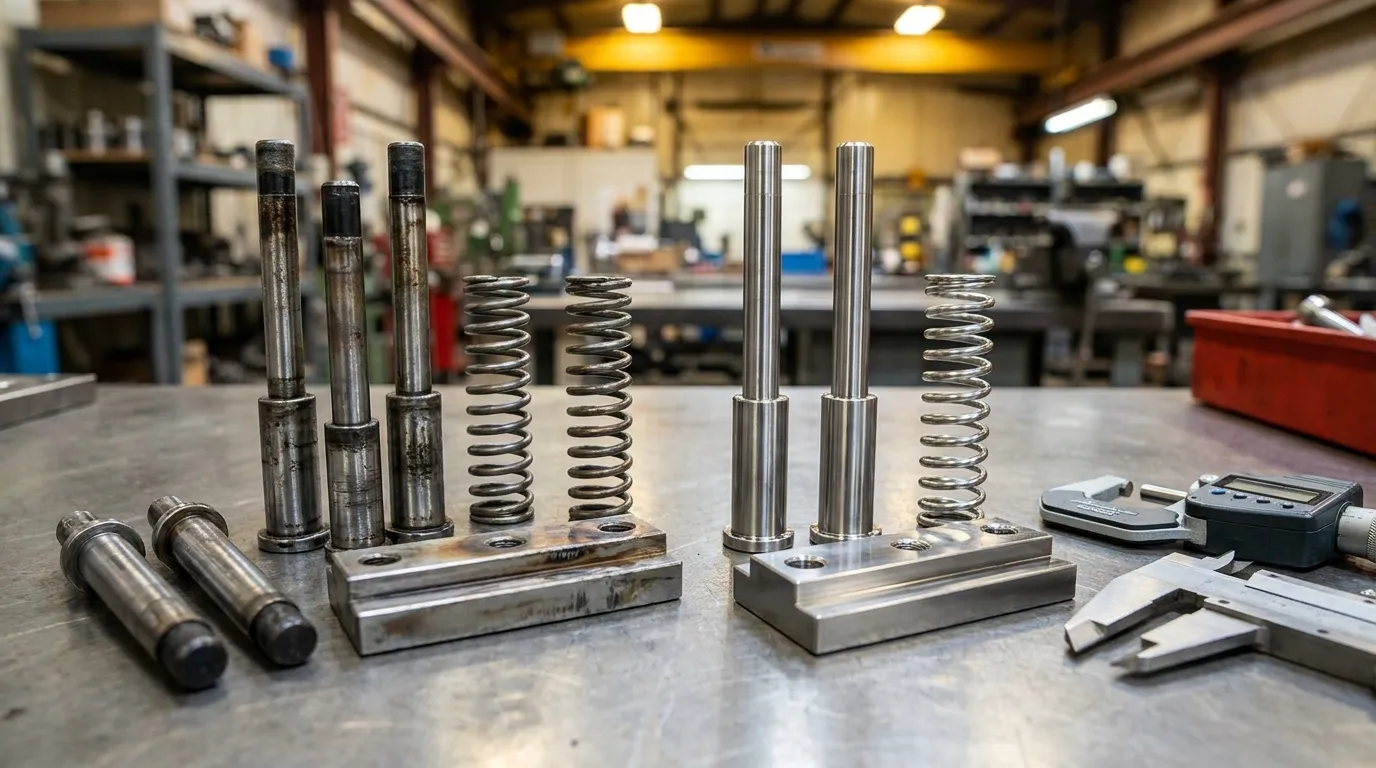
Ejector pins, guide bushings, slides, and springs usually wear out faster because they face repeated friction, heat, and movement. Buyers should check hardness, coating, material grade, and replacement availability before ordering.
High-wear parts operate under constant pressure and repeated movement. Friction between sliding components slowly removes material, especially in molds running abrasive resins or high production volumes. Weak coatings or low-grade steel can accelerate wear even faster.
The most common wear-prone components include:
- Ejector pins
- Guide bushings
- Return springs
- Slides and lifters
- Core pins exposed to abrasive materials
A medical mold buyer working in a humid cleanroom environment may choose stainless steel components to reduce corrosion risk. Standard carbon steel parts often degrade faster when moisture exposure is constant.
Extremely tight tolerances are not always beneficial. Over-specifying tolerances can increase machining cost and lead time without improving molded part quality. Buyers should match tolerance requirements to the actual application instead of requesting the highest precision by default.
Preventive maintenance also matters. Replacing inexpensive wear components early usually costs far less than repairing damaged cavities or mold bases later.
Standard vs custom mold components: which is better?
Standard mold components are faster and cheaper to replace, while custom components work better for specialized geometry or high-performance molds. The right choice depends on production volume, tolerances, and maintenance priorities.
Many buyers assume custom components always improve mold performance. That is not always true. Standard components reduce sourcing complexity, simplify maintenance, and lower emergency replacement costs for most production environments.
Custom components become useful when a mold requires unusual geometry, limited installation space, or advanced movement systems. Medical, aerospace, and multi-cavity tooling often require more customization than general consumer product molds.
Standard vs Custom Decision Table
| Factor | Standard Components | Custom Components |
|---|---|---|
| Cost | Lower | Higher |
| Lead Time | Faster | Slower |
| Replacement Availability | Easy | Limited |
| Maintenance | Simpler | More specialized |
| Precision Flexibility | Moderate | Higher |
| Best Use Case | General production molds | Specialized tooling |
The cheapest mold components often create the highest long-term production cost. Frequent replacements, alignment issues, and downtime can easily exceed the savings from a lower initial purchase price.
A factory producing packaging parts around the clock may prefer standardized guide bushings because emergency replacements are easier to source locally. A specialized medical mold may justify custom components because dimensional stability is more critical than replacement convenience.
What materials are commonly used for mold components?
Tool steel is the most common material for mold components because it handles pressure, heat, and repeated movement well. Stainless steel and coated alloys are also used when corrosion resistance or wear protection is important.
Material selection depends on production volume, resin type, and operating conditions. Components exposed to abrasive glass-filled plastics usually require harder steel grades than molds running softer resins.
| Material | Common Use | Main Advantage |
|---|---|---|
| Hardened Tool Steel | Ejector pins, cores | High wear resistance |
| Stainless Steel | Medical and humid environments | Corrosion resistance |
| Alloy Steel | Slides and moving systems | Toughness |
| Nitrided Steel | High-friction components | Surface hardness |
Heat treatment matters as much as the steel itself. Improper hardening can lead to cracking, deformation, or uneven wear during production cycles. Buyers should confirm hardness specifications in the RFQ instead of assuming all suppliers use the same standards.
A supplier quoting low-cost components without hardness certification may create future maintenance problems. That risk increases in high-volume automotive or electronics production where molds cycle continuously for long periods.
What should buyers check before sending an RFQ?
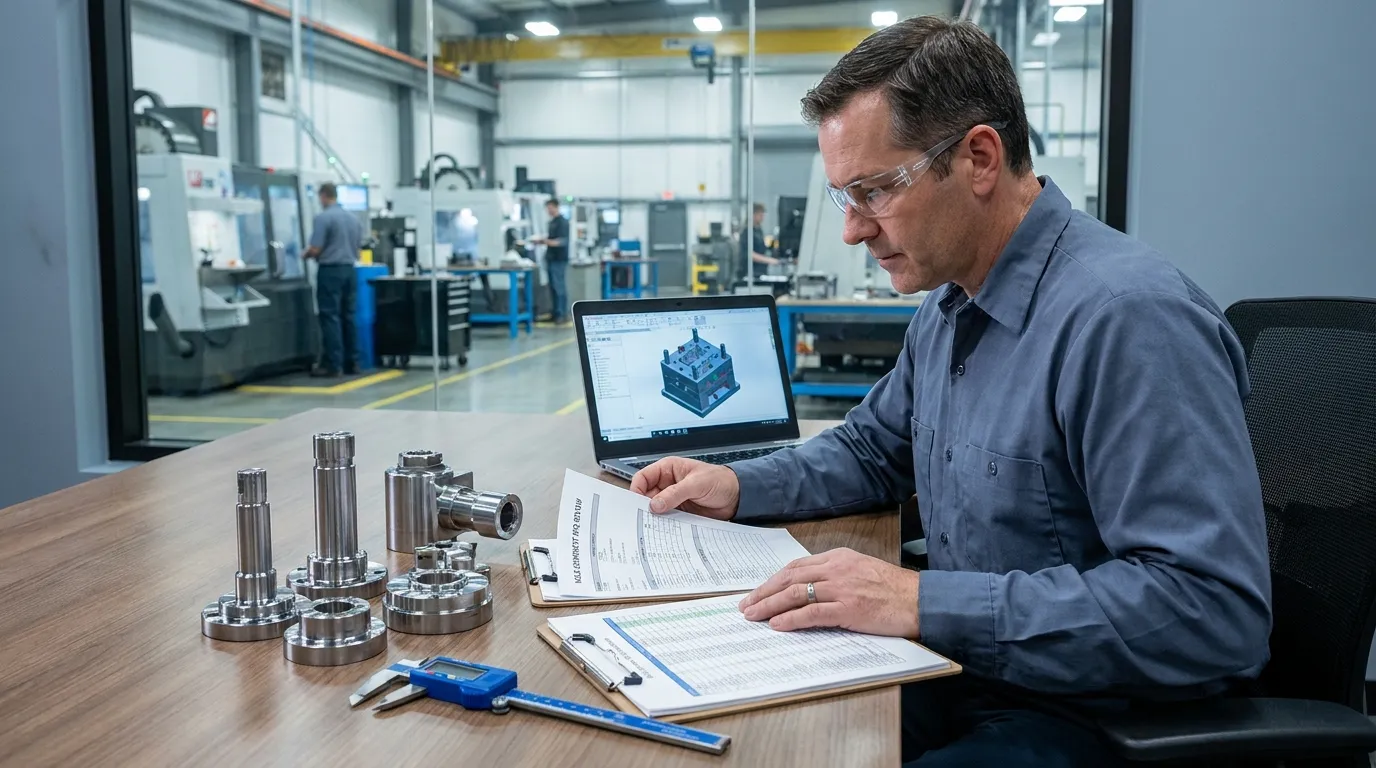
Before sending an RFQ for mold components, buyers should confirm tolerances, steel grade, hardness, coatings, delivery lead time, inspection standards, and replacement availability. Missing specifications often cause fit problems and production delays.
Many RFQ problems start with incomplete technical details. Suppliers may quote different materials, tolerances, or coatings if specifications are unclear. That makes pricing difficult to compare accurately.
A procurement team comparing two RFQs may discover one supplier omitted hardness specifications entirely. The lower quote can look attractive at first, but the long-term wear risk may be much higher.
Buyer RFQ Checklist
| Item to Confirm | Why It Matters |
|---|---|
| Material Grade | Affects wear resistance |
| Hardness Range | Impacts lifespan |
| Tolerance Requirements | Prevents fit issues |
| Surface Finish | Supports smooth movement |
| Coating Type | Reduces friction and wear |
| Inspection Standard | Confirms dimensional accuracy |
| MOQ | Impacts purchasing flexibility |
| Lead Time | Helps production planning |
| Replacement Availability | Reduces downtime risk |
RFQ details suppliers need
Most suppliers need clear drawings, production volume estimates, resin information, and dimensional tolerances before quoting accurately. Surface finish requirements and expected mold life should also be included early.
Factories ordering overseas should ask about inventory availability before approving production. Long machining queues or material shortages can extend delivery schedules significantly.
If you're comparing overseas manufacturing partners, working with a custom mold component supplier that provides engineering support and inspection documentation can reduce sourcing risk.
How do lead times and customs delays affect mold component sourcing?
Lead times for mold components depend on machining complexity, inventory availability, and international shipping processes. Incorrect documentation or HS codes can delay customs clearance and disrupt mold maintenance schedules.
Production delays often come from logistics issues rather than machining itself. Custom parts usually require longer manufacturing windows, while stock components can ship quickly if inventory is available.
Industry estimates from Aprios show complex injection mold tooling can require lead times of several weeks, especially when multiple machining operations and heat treatment processes are involved.
A shipment of replacement mold accessories may also get delayed during customs clearance if HS codes or paperwork are incomplete. One overseas buyer experienced maintenance downtime after guide bushings were held for classification review during import processing.
Mold Component Sourcing Checklist
- Verify inventory status before ordering
- Confirm HS code accuracy
- Review customs documentation requirements
- Maintain backup stock for wear components
- Request estimated shipping timelines early
- Plan replacement schedules before failure occurs
Factories running high-volume production lines often keep spare ejector pins, bushings, and springs on-site. Waiting for emergency overseas shipments can stop production for days.
How do you evaluate a mold component supplier?
A reliable mold component supplier should provide consistent tolerances, clear material specifications, stable lead times, and responsive technical support. Buyers should evaluate long-term reliability instead of comparing price alone.
Strong suppliers usually maintain quality control systems and provide dimensional inspection records. They should also explain steel grades, heat treatment methods, and coating options clearly during quotation discussions.
Supplier Evaluation Table
| Evaluation Area | What to Check |
|---|---|
| Quality Control | Inspection reports, measurement process |
| Material Verification | Steel certifications, hardness data |
| Machining Capability | Precision tolerance range |
| Inventory Depth | Availability of standard parts |
| Lead Time Stability | Realistic delivery estimates |
| Engineering Support | RFQ clarification and technical advice |
| Replacement Support | Spare component availability |
Suppliers serving automotive or electronics production often maintain stricter tolerance consistency because those industries depend on repeatability. Buyers working with complex molds should ask how dimensional deviations are handled during inspection.
For examples of how component choices vary across industries, review these injection mold applications.
Getting the Next Step Right
Choosing the right mold components is not only about matching dimensions on a drawing. Material quality, replacement planning, lead times, and supplier consistency all affect long-term production performance.
Start by identifying which components experience the most wear in your molds. Then compare suppliers based on technical capability, inventory support, and inspection standards instead of price alone. A well-planned RFQ usually prevents more problems than it creates.
If your production depends on stable cycle times and reliable maintenance scheduling, investing in higher-quality mold components often saves money over the full life of the tool.
Frequently Asked Questions
What are the main parts of an injection mold?
The main parts of an injection mold include the mold base, cavity, core, cooling system, feed system, and ejection system. Each section supports molding accuracy, part release, and cycle efficiency.
What does an ejector pin do?
An ejector pin pushes the molded plastic part out of the cavity after cooling. Poor ejector pin quality can cause sticking, scratches, or inconsistent ejection during production.
What materials are mold components made from?
Most mold components are made from hardened tool steel, stainless steel, or wear-resistant alloy steel. Material choice depends on production volume, resin abrasiveness, corrosion exposure, and required tolerances.
How long do mold components last?
Mold component lifespan depends on material quality, maintenance, molding pressure, and production cycles. High-wear parts like ejector pins and bushings usually require replacement more often than mold bases.
What causes mold component failure?
Mold components commonly fail because of friction, poor lubrication, incorrect hardness, corrosion, or alignment problems. Using low-grade materials or incorrect tolerances also increases premature wear risk.
Should I choose standard or custom mold components?
Standard components are easier to replace and usually cost less, while custom components support specialized mold geometry or tighter tolerances. The best choice depends on mold complexity and production goals.
Share:



Written By Sunshine
At Sunshine, we are a professional manufacturer and supplier of precision mould components, offering a wide range of products for stamping and injection mould applications. Our core focus includes punching dies, ejector pins and sleeves, and guide posts and bushings. With advanced CNC machining, strict quality control, and strong production capabilities, we ensure reliable, high-precision parts, along with in-stock standard components for fast and efficient global supply.
NEWS
GET SERVICE
With quality parts to meet every budget and friendly staff trained to make your visit informative and hassle free.
