



The Growing Role of Mold Components in Modern Manufacturing
The modern manufacturing is rapidly changing due to the increased requirements in precision, efficiency, and scalability. The key element of this change is injection molding, which has become a popular technique in the manufacturing of complex plastic components in the automotive, electronic, medical and consumer goods industries. In this system, mold parts in contemporary manufacturing are very important in achieving product accuracy, repeatability and efficiency in production.
With the further development of manufacturing, mold parts are no longer regarded as a basic tooling part. Rather, they represent key components of engineering that directly determine the quality of products, the rate and speed of production, and cost efficiency in the long term.
Knowledge of the Significance of Mold Components
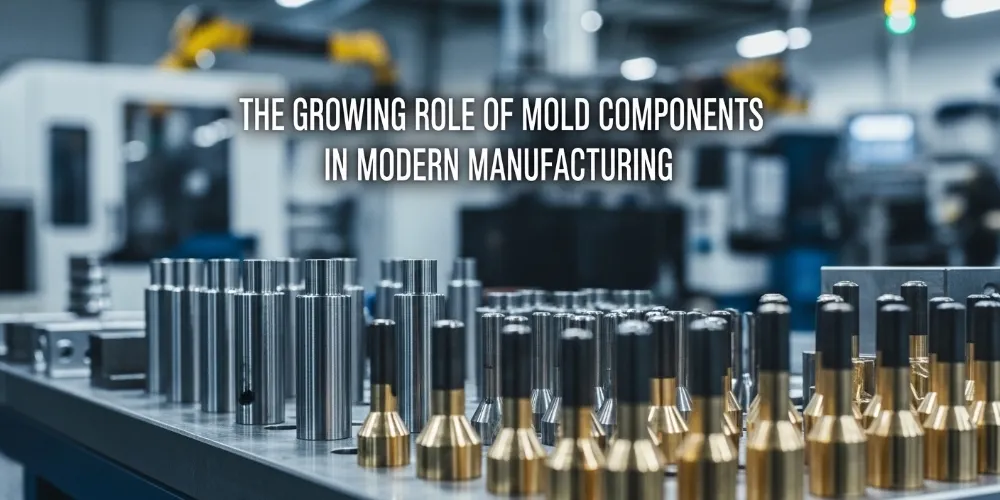
Injection molding is based on a highly-controlled mold system that forms the molten plastic into final products. A mold is not a block of solid material but a well-constructed composite of several working parts. They are cavities, cores, ejector systems, guide pins, bushings, cooling channels, and runners.
All components play a particular role in regulating the flow, cooling and solidification of material within the mold. Any changes (even minor) in the design or performance of a mold component may greatly influence the quality of the part, leading to defects like warping, shrinkage, or incomplete filling. Owing to this, mold components are essential in ensuring consistency within high-volume production settings.
The need of high-performance mold components has been on the rise in modern manufacturing, where accuracy and speed are crucial in manufacturing.
Basic Mold Component Types and functions
Mold systems consist of a number of important elements which collaborate in a synchronized cycle. The final shape of the product is determined by the mold cavity and core, which serves as the negative space, where molten plastic is injected.
Guide components like guide pins and bushings maintain the proper centering of the halves of the mold during closing and opening cycles. This helps to avoid misalignment and wear out. Ejector elements such as ejector pins, and plates are used to force the completed item out of the mold after it has hardened and solidified.
Another important component is the cooling channels. They control temperature in the molding process with uniform cooling rates and shortening of the cycle time. In the meantime, the flow of molten plastic into the cavity is regulated by means of runner and gate systems, which have a direct impact on the surface quality and structural integrity.
These elements, combined, create a very well-coordinated system, which allows a high production of accurate parts in mass.
Mold Component Technology
Recent progress in technology of manufacturing has made the mold components greatly better in performance and in durability. Modern tool steels, heat treatment, and machining methods have created high-strength tool steels that can withstand extreme pressure and temperature during the continuous production cycles.
Coatings and polishing treatments are also types of surface engineering technologies that are widely used to minimize friction and enhance wear resistance. It not only increases the life of molds but also improves the quality of the products surface.
In addition, additive manufacturing and CNC precision machining have made it possible to produce more complex mold component geometries. This involves optimized cooling channels that conform to the shape of the mold cavity enhance thermal efficiency and shorten cycle time.
These novelties lead to increased productivity and reduced costs of production, and mold components are even more useful in the modern manufacturing system.
Mold Components and their role in Precision Manufacturing
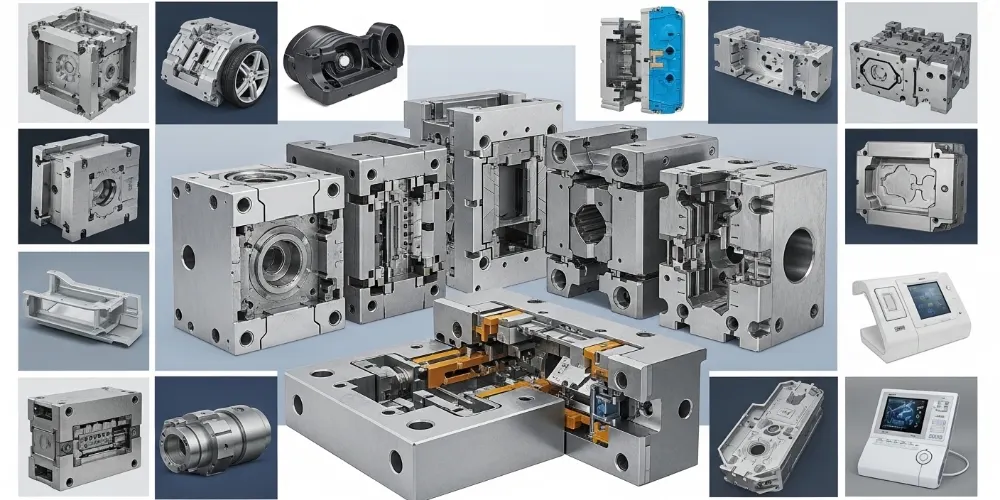
Precision is one of the most important requirements in today’s manufacturing environment. Medical equipment and electronic industry demand very tight tolerances and surface finishes. Mold components are what directly define the ability of these requirements to be met.
As an example, guide systems are used to ensure that halves of the mold close with a perfect fit eliminating any flash defects. Ejector systems should be in smooth operation to prevent harm of delicate parts in the course of release. The cooling systems should be able to provide a consistent distribution of temperature to avoid internal stress or deformity.
The accuracy of mold parts is on the rise as the designs of products are getting more complicated. This has created high demand of high quality tooling and professional engineering design practices.
Smart Mold Systems and digitalization
The incorporation of digital technologies is changing the way of designing and utilizing the mold components. Computer-aided design (CAD) and simulation software enables engineers to test the performance of molds prior to actual production. This minimizes design defects and decreases development times.
Sensors are also being incorporated in mold systems to observe temperature, pressure as well as cycle time in real time in advanced manufacturing settings. This information can be utilized in order to optimize performance, identify wear, and predict the maintenance requirements before the failures.
The new technology of digital twins is also developing as a potent solution, enabling manufacturers to develop virtual models of the mold systems that can reflect real-life behavior. This will allow optimization to proceed continuously and enhance the reliability of production.
Mold Design Sustainability and Mold Design Efficiency
The concept of sustainability in modern manufacturing became significant, and mold components can significantly contribute to minimizing the environmental impact. It contributes to energy consumption and waste of materials through efficient cooling systems, well-planned flow channels and durable materials used in the production.
Mold manufacturing is also being increasingly manufactured using recyclable materials and energy efficient production methods. Manufacturers can greatly cut down their environmental footprint by increasing the life of the mold and cutting down on the number of defects and still achieving high productivity.
The sustainable design of molds is not only helpful to the environment but also helps in minimizing operations costs in the long-run.
Trends in Mold Components of the Future in Modern Manufacturing
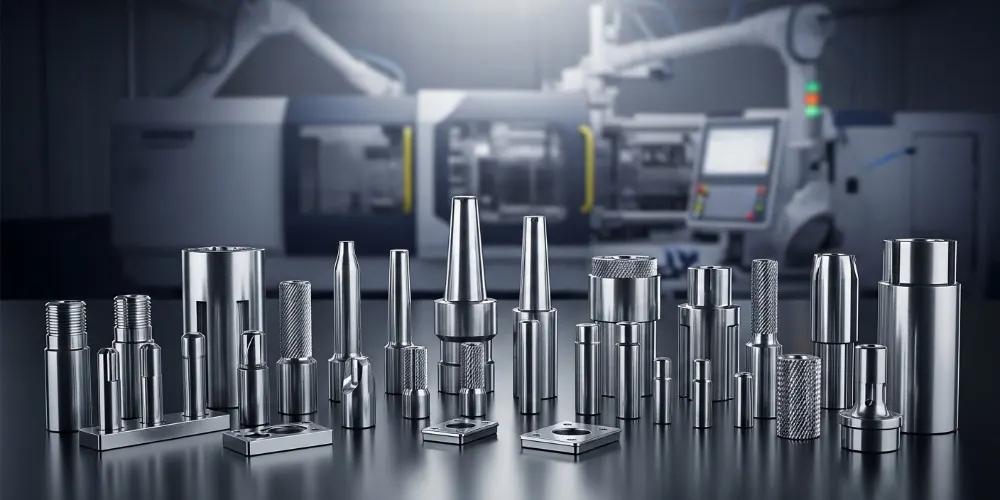
Mold components have a strong connection with future to automation, intelligent manufacturing, and improved materials. With more interconnectedness of factories and increased data-drivenness, mold components will be incorporated into intelligent systems, which will be self-monitored and self-adjusted.
AI will be more useful in streamlining the performance of the mould, predicting wear, and enhancing process parameters. Meanwhile, new stronger materials, more thermally resistant and with a higher degree of wear resistance will further expand the powers of mold systems.
The 3D printing will also enable quick prototyping of mold components, to enable quicker design cycles, and lower development costs.
Generally, the contents of the moulds will keep changing to being passive mechanical components to active components of smart manufacturing systems.
FAQ
What are the components of moulds in injection molding?
Mold parts refer to the separate groups that constitute an injection mold such as cavity, cores, ejector, cooling and guide mechanisms. All components have a certain role in forming and shaping plastic products.
What role do mold components play in the contemporary manufacturing?
They facilitate accuracy, consistency and efficiency in manufacturing. Good-quality mold parts minimize malfunctions, enhance the quality of products, and enhance the durability of the mold system.
What are the most frequently used materials in mold components?
The majority of the mold components are produced using high strength tool steels, which may additionally have undergone heat treatment or surface applied treatments to enhance their durability, wear resistance and thermal stability.
What impact do mold components have on the quality of products?
They have a direct impact on the material flow, cooling and ejection out of the mold. Flaws in the design or wear of the components may lead to defects like warping, shrinkage or surface flaws.
What will become of the mold components in the manufacturing?
The future holds smarter and more durable elements, which are combined with sensors and digitalized systems. Efficiency and accuracy will be enhanced by using AI-optimization, enhanced materials and automation.
Share:



Written By Sunshine
At Sunshine, we are a professional manufacturer and supplier of precision mould components, offering a wide range of products for stamping and injection mould applications. Our core focus includes punching dies, ejector pins and sleeves, and guide posts and bushings. With advanced CNC machining, strict quality control, and strong production capabilities, we ensure reliable, high-precision parts, along with in-stock standard components for fast and efficient global supply.
NEWS
GET SERVICE
With quality parts to meet every budget and friendly staff trained to make your visit informative and hassle free.
