



High Precision Injection Molding: When Standard Molding Is Not Enough
High precision injection molding is used when standard molding cannot meet tight tolerances, consistent repeatability, and strict quality demands. It focuses on controlling every variable, mold design, material flow, temperature, and inspection, to produce parts with extremely accurate dimensions. Industries like medical, aerospace, and electronics rely on it when even small deviations can cause product failure or performance issues.
High precision injection molding becomes essential when parts must fit perfectly, perform reliably, and stay consistent across large production runs. Unlike standard molding, it demands tighter control over tooling, machine calibration, and inspection methods. This guide breaks down how it works, when it is needed, and what makes it different from regular plastic molding processes.
What is high precision injection molding, and when is it actually needed?
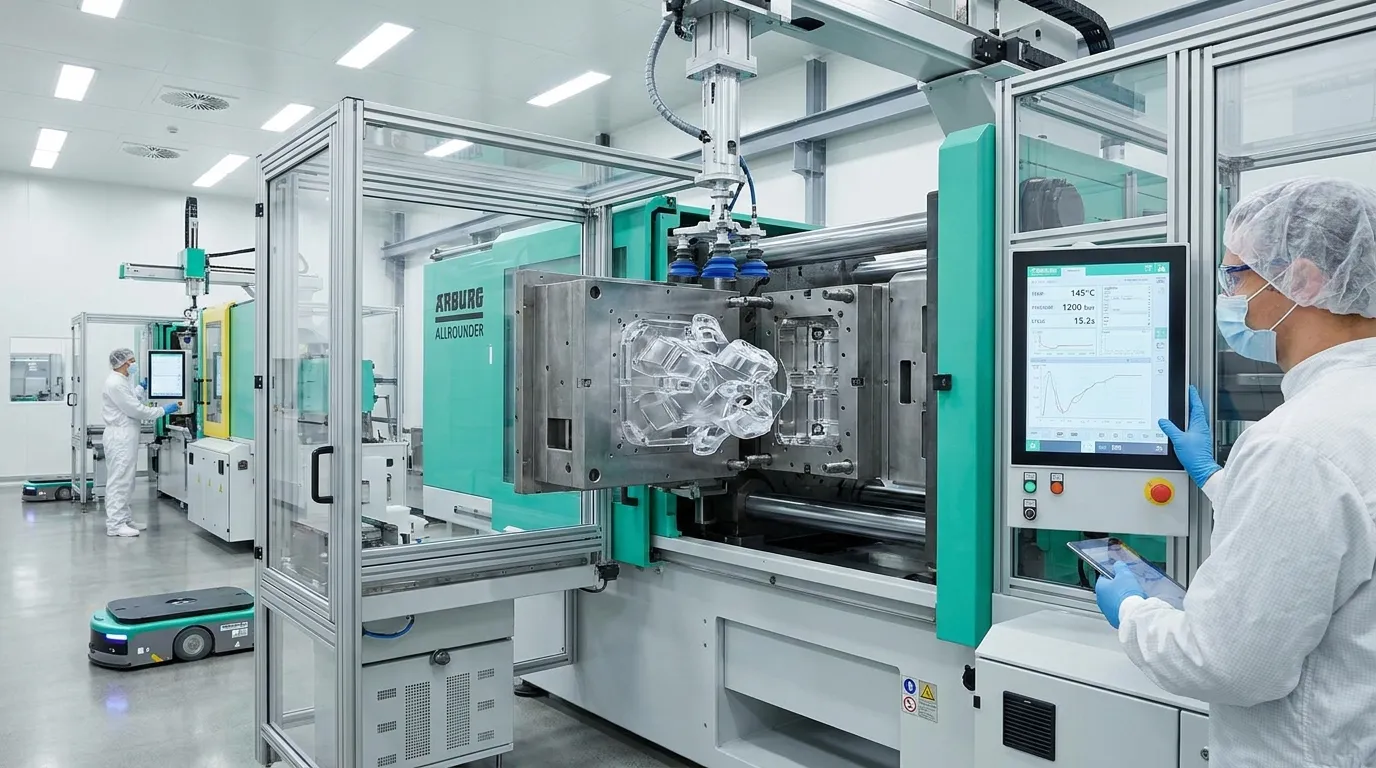
High precision injection molding is used when parts must meet extremely tight dimensional requirements and remain consistent across thousands or millions of cycles. It is needed when even small variations can affect assembly, safety, or performance.
High precision injection molding is a manufacturing method designed to produce plastic parts with very tight tolerances and high repeatability, often used in industries where small deviations can cause failure or misalignment.
This process is typically required in medical devices, electronic connectors, aerospace components, and automotive systems. In these cases, standard molding is not reliable enough because normal variation in shrinkage or cooling can create defects that are unacceptable in final assembly.
The difference is not just accuracy in one part, but consistency across production. Every cycle must match the same geometry within very small limits, which demands tighter process control and more advanced tooling.
How does high precision injection molding differ from standard molding?
High precision injection molding differs from standard molding mainly in tolerance control, process stability, and tooling accuracy. It removes variability wherever possible.
The main difference is that high precision molding prioritizes repeatability and dimensional stability over speed or cost efficiency, while standard molding focuses more on general production output.
Standard molding allows wider tolerances, meaning small size variations are acceptable. High precision molding reduces these variations through stricter control of temperature, pressure, and material flow. The mold itself is also built with higher-grade steel and tighter machining accuracy.
Process monitoring is another key difference. High precision systems continuously track conditions like injection pressure and cooling rates, while standard systems may not require this level of detail.
What makes a mold “high precision” in real production?
A high precision mold is defined by its construction quality, machining accuracy, and stability under repeated use. The mold must maintain shape without deformation over time.
A high precision mold is built with hardened tool steel, fine surface finishing, and extremely accurate machining to ensure every cavity produces identical parts over long production runs.
These molds often require polishing at a microscopic level to reduce friction and improve material flow. Even small surface imperfections can affect final part quality.
Another key factor is stability. The mold must resist thermal expansion and mechanical wear. That is why material selection and heat treatment are critical. Without this stability, even the best machine settings cannot maintain precision.
Why is dimensional stability so important in precision molding?
Dimensional stability ensures every part fits and functions correctly, even after thousands of production cycles. Without it, assemblies fail or require rework.
Dimensional stability in high precision injection molding means each part maintains the same size and shape within tight tolerances, even when produced in large volumes or under varying conditions.
Plastic materials naturally shrink as they cool, which can create variation. Precision molding compensates for this by carefully controlling cooling rates, mold temperature, and injection parameters.
If stability is not controlled, parts may look identical but fail during assembly. This is especially critical in electronics and medical devices where micro-level misalignment can create major functional issues.
What inspection methods are used to ensure high precision quality?
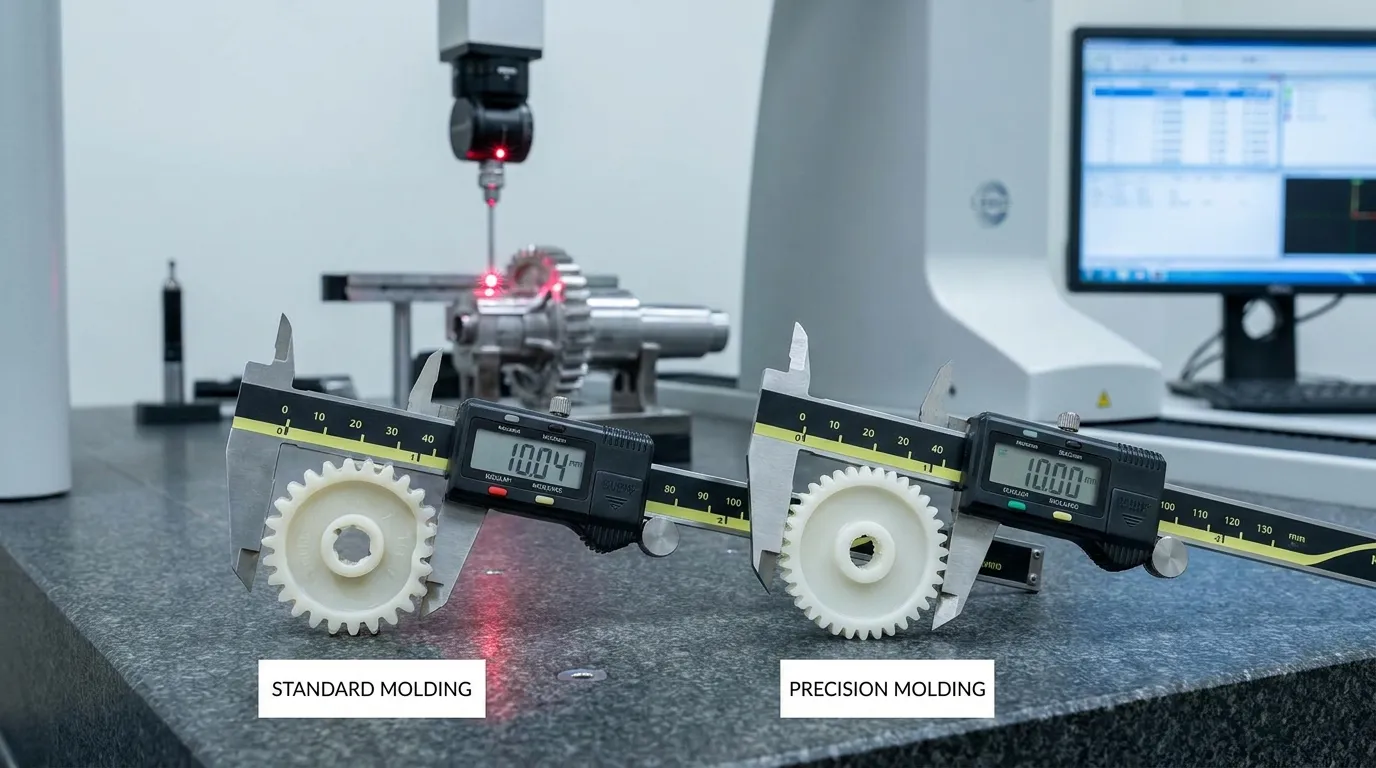
Inspection in precision molding is continuous and detailed, not just final-stage checking. It ensures that problems are detected early in production.
High precision injection molding relies on advanced inspection methods like coordinate measuring machines (CMM), optical measurement systems, and in-process monitoring to verify every dimension stays within tolerance.
Instead of checking a few finished parts, manufacturers often measure samples at regular intervals during production. This helps detect drift in machine settings or mold wear before it becomes a large defect batch.
In some cases, 100% inspection is used for critical components, especially in medical or aerospace applications where failure risk is unacceptable.
What industries depend most on high precision injection molding?
Several industries depend heavily on high precision molding because small errors can lead to product failure or safety risks.
- Medical device manufacturing
- Aerospace components
- Automotive safety systems
- Electronics and micro-connectors
- Industrial sensors and control systems
In these industries, parts must not only fit but also perform under stress, vibration, or temperature changes. Even slight dimensional errors can cause malfunction or reduced lifespan.
Process control checklist for high precision injection molding
This checklist helps ensure stable, repeatable production in high precision environments.
| Stage | Control Focus | Why it matters |
|---|---|---|
| Mold setup | Alignment and calibration | Prevents dimensional deviation |
| Injection phase | Pressure and speed control | Ensures consistent material flow |
| Cooling stage | Temperature stability | Reduces shrinkage variation |
| Ejection | Gentle release system | Prevents part deformation |
| Inspection | Real-time measurement | Detects early drift |
This structured control approach helps maintain consistency across long production runs, especially when tolerances are extremely tight.
When should you choose precision molding over standard methods?
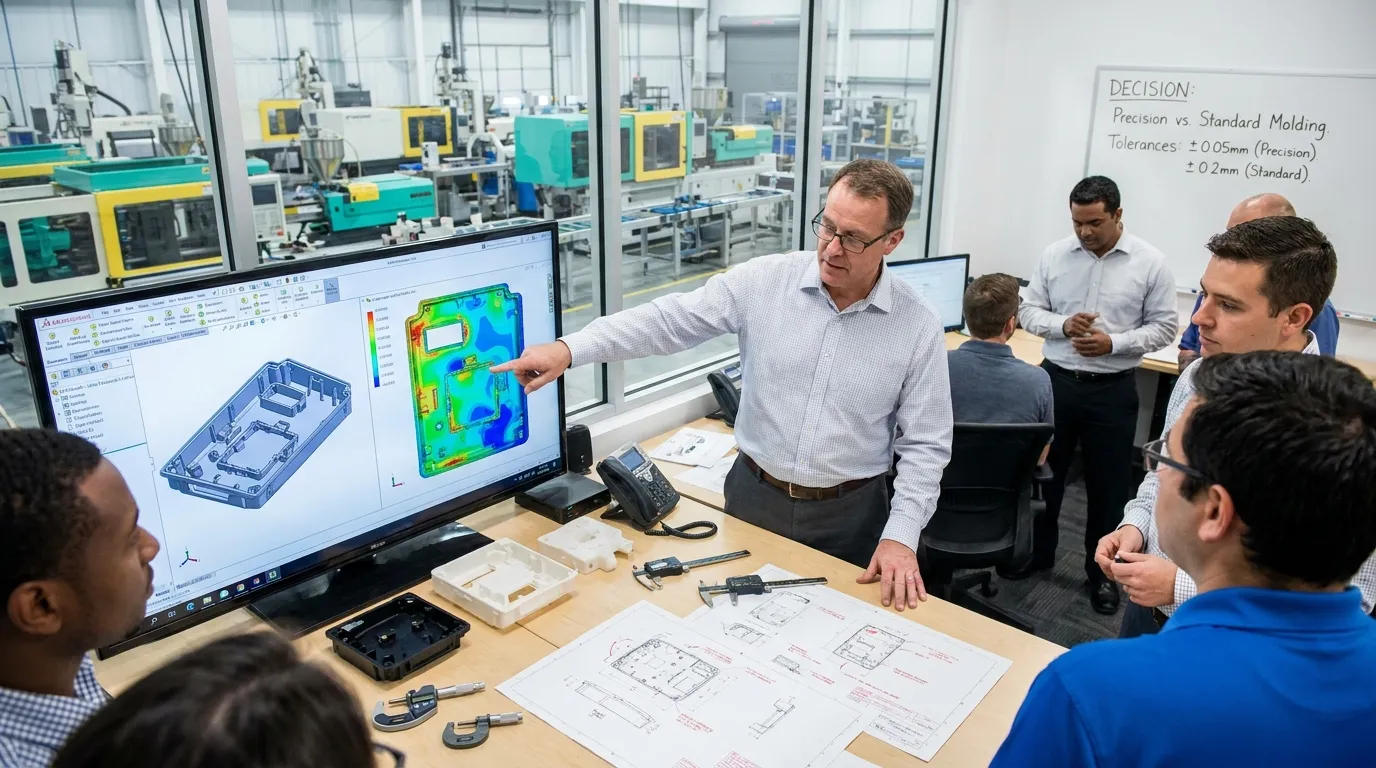
Precision molding should be chosen when product performance depends on exact fit or when failure costs are high. It is not always necessary for simple plastic parts.
Choose high precision injection molding when your parts require tight tolerances, complex assemblies, or must function in critical environments where standard molding variation is unacceptable.
It is not the best option for low-cost, high-volume consumer parts where slight variation does not affect performance. In those cases, standard molding is more cost-effective and faster.
However, when assembly precision or regulatory compliance is involved, precision molding becomes the safer long-term choice.
Final Thoughts
High precision injection molding is not just about making parts smaller or more accurate. It is about controlling every stage of production so each part behaves exactly as expected. When standard molding cannot guarantee consistency, precision methods step in to reduce risk and improve reliability.
If your project depends on tight fits, stable performance, or strict inspection requirements, exploring high precision injection molding early in the design stage can prevent costly redesigns later. It is less forgiving, but far more reliable when precision is non-negotiable.
Frequently Asked Questions
What tolerance can high precision injection molding achieve?
High precision injection molding can achieve extremely tight tolerances, often within microns depending on the material and mold design. The exact range depends on part geometry, tooling quality, and process control stability.
Why is precision molding more expensive than standard molding?
It is more expensive because it requires high-grade tooling, tighter machine control, and more detailed inspection. The added cost comes from ensuring consistency and reducing defects in high-risk applications.
Which materials are best for precision injection molding?
Common materials include engineering-grade thermoplastics that offer low shrinkage and stable behavior during cooling. Material choice depends on application requirements like strength, heat resistance, and dimensional stability.
Can precision molding be used for mass production?
Yes, it is often used for mass production where consistency is critical. Once the process is stabilized, it can produce large volumes with very low variation between parts.
What causes defects in precision injection molding?
Defects are usually caused by temperature fluctuations, mold wear, inconsistent material flow, or incorrect pressure settings. Even small deviations in process control can affect final part accuracy.
How is precision checked during production?
Precision is checked using measurement systems like CMM tools and optical scanners. Many manufacturers also use in-process monitoring to catch variations before they affect large batches.
Is precision molding always necessary for plastic parts?
No, it is only necessary when tight tolerances or critical performance requirements exist. For simple consumer products, standard injection molding is usually sufficient.
Share:



Written By Sunshine
At Sunshine, we are a professional manufacturer and supplier of precision mould components, offering a wide range of products for stamping and injection mould applications. Our core focus includes punching dies, ejector pins and sleeves, and guide posts and bushings. With advanced CNC machining, strict quality control, and strong production capabilities, we ensure reliable, high-precision parts, along with in-stock standard components for fast and efficient global supply.
NEWS
GET SERVICE
With quality parts to meet every budget and friendly staff trained to make your visit informative and hassle free.
