



Plastic Mold Components: Standard Parts, Custom Parts, and Uses
Plastic mold components include standard parts like ejector pins and guide bushings, plus custom-engineered parts built for specialized molds. Standard components reduce lead times and simplify maintenance, while custom components improve precision, cooling, and geometry control for demanding applications such as automotive, medical, and electronics manufacturing.
Choosing the right mold components affects more than tooling cost. It changes maintenance schedules, production downtime, replacement speed, and product quality. Some molds work perfectly with off-the-shelf components, while others need custom machining to hit strict tolerances or support complex part geometry. Understanding where each option fits helps buyers avoid unnecessary delays and expensive redesigns.
What are plastic mold components?
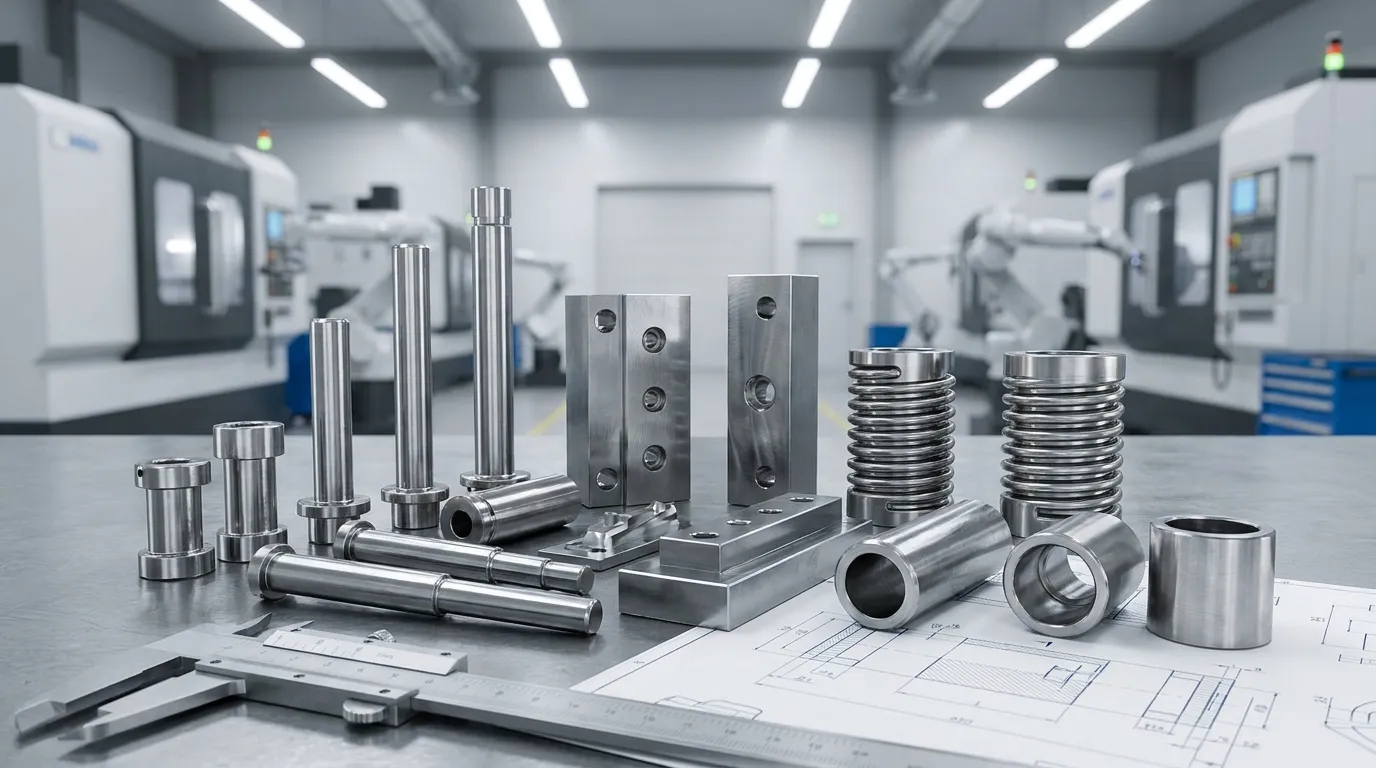
Plastic mold components are the individual precision parts that make up an injection mold system, including ejector pins, guide bushings, inserts, sliders, and cooling elements. Their accuracy directly affects mold lifespan, production consistency, and finished part quality.
Every injection mold contains dozens or even hundreds of individual parts. Some guide mold movement, some release finished products, and others control cooling or alignment. These parts must work together with tight tolerances to prevent flash, warping, or premature wear.
Common component categories include:
| Component Type | Main Function |
|---|---|
| Ejector pins | Push finished parts out of the mold |
| Guide posts and bushings | Keep mold halves aligned |
| Inserts | Form detailed part geometry |
| Sliders and lifters | Create side features or undercuts |
| Cooling channels | Control mold temperature |
| Sleeves | Support moving components |
High-volume molds depend heavily on component consistency. A worn guide bushing or damaged ejector pin can stop production quickly. That’s why many manufacturers standardize replacement parts whenever possible.
For a broader breakdown of complete mold systems, see this complete mold components guide and explore related plastic mold systems.
Which mold components are usually standard parts?
Standard mold components are mass-produced precision parts built to common industry dimensions. They reduce lead times, simplify maintenance, and make replacement easier during high-volume production.
Most injection molds use standard components for basic movement and alignment functions. These parts are widely available from industrial suppliers and usually come in pre-defined sizes and materials.
Common standard mold parts include:
| Standard Component | Why Manufacturers Use It |
|---|---|
| Ejector pins | Easy replacement during wear |
| Guide bushings | Consistent alignment |
| Guide posts | Fast sourcing |
| Return pins | Reliable standard sizing |
| Springs | Predictable performance |
| Sleeves | Lower machining costs |
Standardization matters most in molds with long production runs. If a guide post wears out after several million cycles, a replacement can often ship immediately instead of being custom-machined from scratch.
Standard components are not always the cheapest long-term option, though. In high-precision molds, repeated performance compromises can create more maintenance costs than a properly engineered custom part. Buyers sometimes focus too heavily on initial tooling savings and ignore future production stability.
Manufacturers building commodity consumer products often rely heavily on standard mold parts because replacement speed matters more than aggressive optimization.
When are custom mold components necessary?
Custom mold components become necessary when standard parts cannot meet geometry, tolerance, cooling, or production requirements. Complex consumer electronics, medical devices, and automotive programs commonly require custom inserts, cores, or sliders.
Custom components solve problems that standard parts cannot handle. Tight spaces, unusual product geometry, and strict tolerance requirements often force mold designers to create specialized tooling.
High-precision applications
Medical and automotive molds commonly use custom inserts or custom cooling layouts. These applications require tight dimensional consistency and stable cycle times. According to this guide on medical injection molding requirements, medical programs often require stricter process validation and tooling precision than standard commercial products.
A medical device housing may need custom core geometry to maintain wall thickness tolerance across several cavities. Standard inserts alone may not provide enough control.
Complex mold geometry
Consumer electronics molds often contain thin walls, undercuts, and cosmetic surfaces that increase tooling complexity. A standard slider or insert may not fit the available space.
For example, an automotive dashboard mold may use custom cooling inserts to reduce warpage across large plastic surfaces. Better cooling control can shorten cycle times and improve dimensional consistency.
Custom mold components are often unnecessary for low-volume consumer products. Many projects become over-engineered because buyers assume “custom” automatically means “better.” In reality, standard parts work well for many simple geometries.
If you need a deeper look at specialized tooling setups, explore custom mold tooling.
Standard vs custom mold components: what is the real difference?
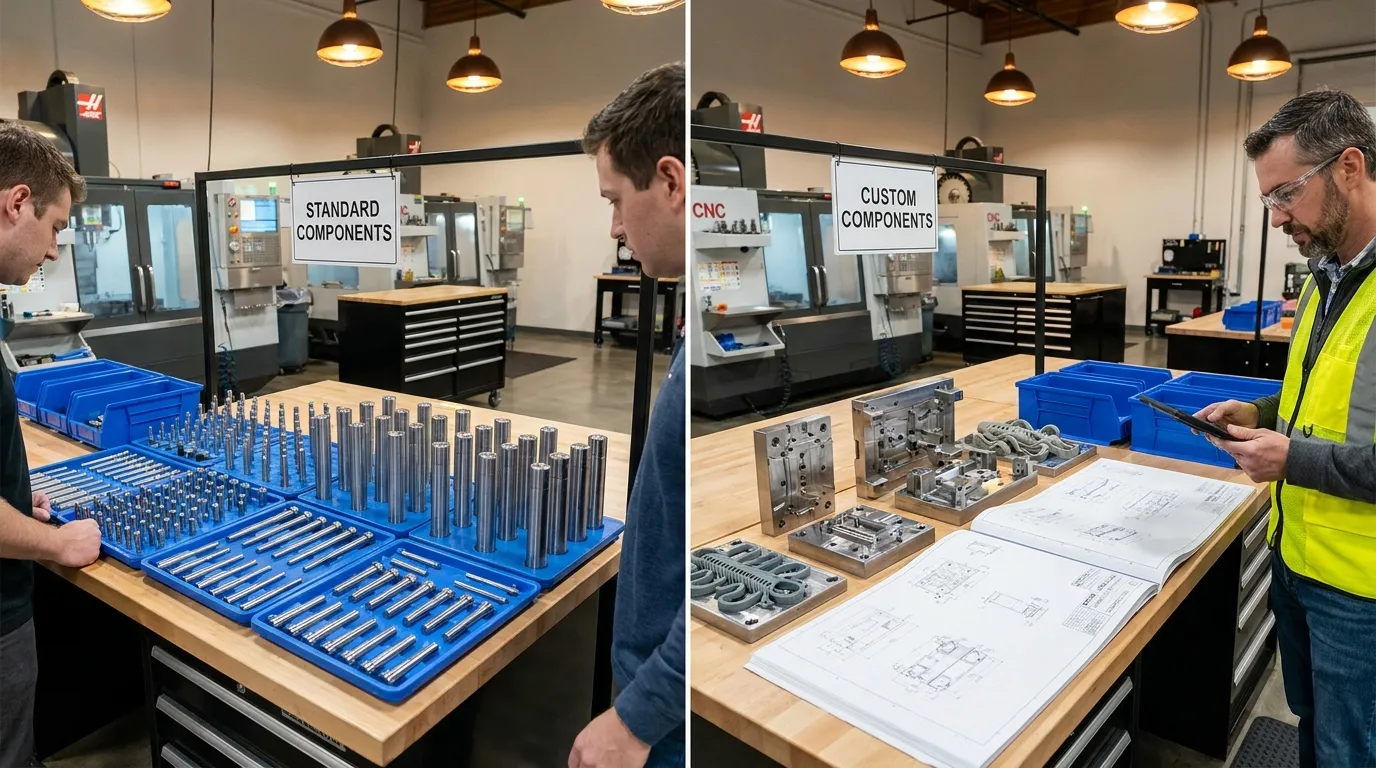
Standard mold components are faster and cheaper to source, while custom components offer better optimization for specialized mold designs. The right choice depends on production volume, precision requirements, and future maintenance priorities.
The biggest difference comes down to flexibility versus convenience. Standard parts simplify sourcing and repairs. Custom parts improve mold performance in situations where standard dimensions create limitations.
| Factor | Standard Components | Custom Components |
|---|---|---|
| Lead time | Shorter | Longer |
| Replacement speed | Fast | Slower |
| Upfront cost | Lower | Higher |
| Design flexibility | Limited | High |
| Maintenance | Easier | More complex |
| Precision optimization | Moderate | Higher |
A consumer packaging mold running millions of cycles per year may prioritize standard guide bushings because maintenance downtime costs more than small performance gains. On the other hand, a medical mold may accept longer lead times to achieve tighter process control.
Standard vs Custom Decision Table
| Production Situation | Better Option | Reason |
|---|---|---|
| High-volume commodity products | Standard | Faster replacement |
| Tight tolerance medical parts | Custom | Better precision control |
| Prototype tooling | Standard | Lower startup cost |
| Complex undercuts | Custom | Geometry flexibility |
| Frequent maintenance environments | Standard | Easier inventory planning |
| Thin-wall electronics parts | Custom | Improved cooling and support |
Many buyers assume custom tooling always creates better molds. That’s not always true. Faster delivery matters more than extreme optimization in many production environments, especially when production schedules are tight.
For broader part selection guidance, review this mold part selection resource.
How do standard and custom parts affect lead times and maintenance?
Standard components usually shorten mold build and repair timelines because replacements are readily available. Custom components can improve mold performance, but they often increase machining time, supplier dependency, and maintenance planning complexity.
Lead time differences become obvious during mold repair or production emergencies. A standard ejector pin can often be replaced immediately from inventory. A custom-machined insert may require additional machining, heat treatment, and inspection before installation.
According to this article on injection molding lead times, tooling revisions and manufacturing complexity can significantly extend project schedules. Custom mold components increase that risk because every revision may require additional machining work.
Replacement downtime risks
Maintenance planning becomes more difficult when molds depend heavily on custom components.
- Are replacement parts stocked locally?
- Does the supplier maintain machining capacity?
- Will heat treatment add delays?
- Are inspection approvals required before shipment?
- Can another supplier reproduce the part quickly?
A consumer electronics manufacturer using standard ejector pins can often source replacements globally. A custom insert with proprietary geometry may stop production for weeks if the original supplier cannot deliver quickly.
Import and customs issues can also affect schedules. Documentation or inspection problems may delay tooling shipments during international transport, especially for highly specialized mold components. The Bangladesh customs instruction update for 2025-2026 highlights how documentation handling can affect industrial import timelines.
Manufacturers that prioritize uptime often keep inventories of replacement mold parts for high-wear components.
Which industries rely most on custom mold components?
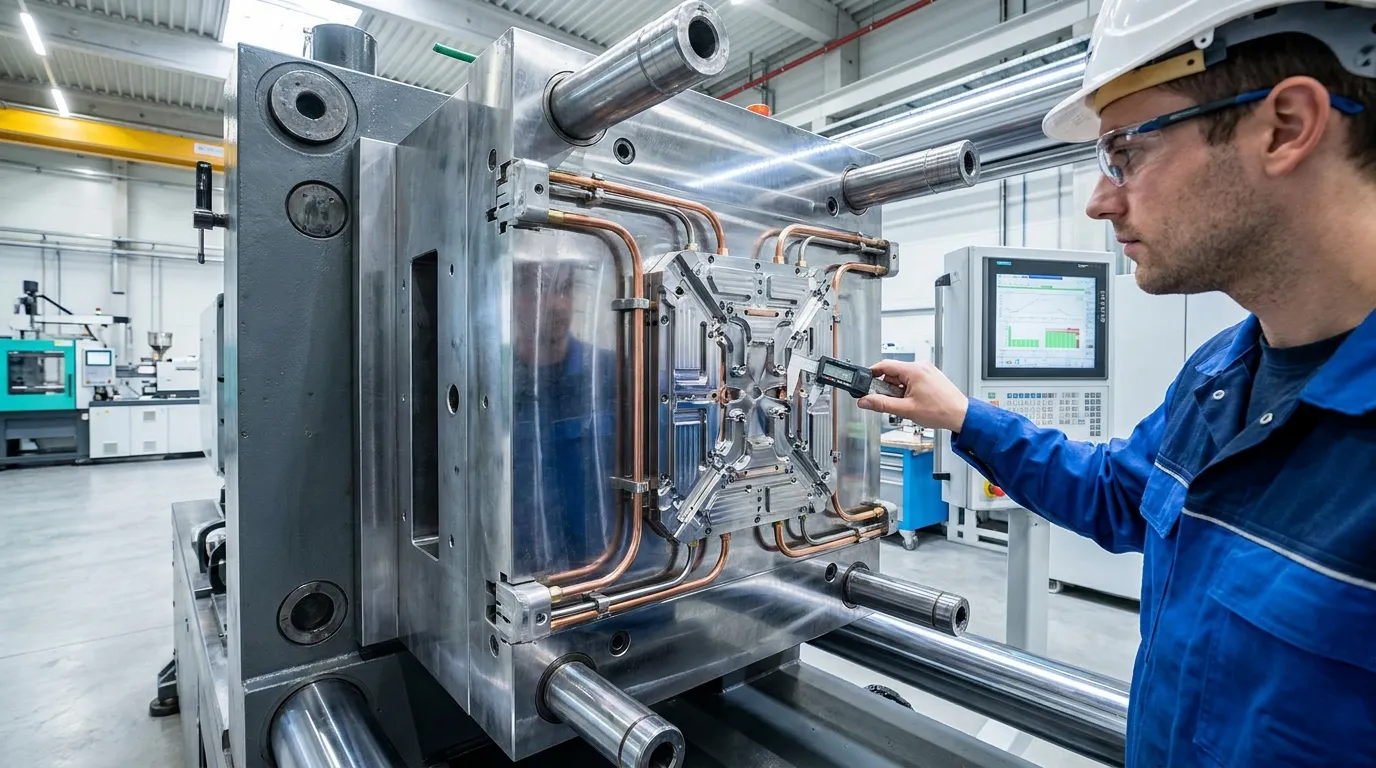
Different industries use different tooling strategies. High-volume commodity products often rely on standardization, while precision industries depend more heavily on custom engineering.
| Industry | Typical Component Strategy |
|---|---|
| Medical | Custom inserts and cooling |
| Automotive | Custom geometry and durability |
| Consumer electronics | Thin-wall custom tooling |
| Packaging | Heavy use of standard parts |
| Household products | Mostly standard components |
| Aerospace | High-precision custom tooling |
Medical molds need stable dimensional control and repeatability. Automotive tooling often requires custom cooling layouts to manage large molded surfaces and complex geometries.
Packaging manufacturers usually favor standard components because production speed and fast maintenance matter most. Replacing worn guide bushings quickly can prevent expensive line stoppages.
You can explore broader injection mold applications to see how tooling strategies change across industries.
How should buyers choose between standard and custom mold components?
Buyers should prioritize standard components when fast replacement, lower cost, and shorter lead times matter most. Custom components make more sense when production demands specialized geometry, tighter tolerances, or optimized mold performance.
The best choice depends on production goals, maintenance expectations, and product complexity. Many successful molds use a mix of standard and custom parts instead of choosing only one approach.
Mold Component Selection Flowchart
| If Your Priority Is... | Choose... |
|---|---|
| Faster repairs | Standard components |
| Lower startup cost | Standard components |
| Tight tolerances | Custom components |
| Complex geometry | Custom components |
| Easier inventory management | Standard components |
| Cycle-time optimization | Custom components |
Questions to ask your mold supplier
Before approving tooling, buyers should ask practical sourcing questions:
- Can replacement parts be sourced globally?
- Which components are fully custom?
- What are the expected replacement lead times?
- Are spare inserts recommended?
- Which parts experience the most wear?
According to this sourcing guide from The Rodon Group, supplier communication and tooling planning directly affect production reliability and long-term costs.
A balanced tooling strategy often works best. Standard guide components can reduce maintenance delays, while custom inserts handle specialized geometry or cooling demands.
For broader tooling decisions and mold architecture planning, review this plastic injection mold guide and the related mold component guide.
Getting the Next Step Right
Choosing the right plastic mold components is less about following a fixed rule and more about matching tooling decisions to production reality. Standard parts simplify sourcing, repairs, and inventory planning. Custom parts improve performance when molds require tighter tolerances, specialized cooling, or difficult geometry.
Many successful projects combine both approaches. Standard components handle wear and maintenance efficiency, while custom inserts or sliders solve design-specific problems. Before approving tooling, review replacement timelines, maintenance risks, and long-term production goals with your supplier. That process usually prevents more problems than chasing the lowest upfront tooling cost.
Frequently Asked Questions
What are the most common plastic mold components?
The most common plastic mold components include ejector pins, guide posts, bushings, sleeves, inserts, cooling channels, and sliders. These parts guide, cool, align, and release molded products during production cycles.
Are custom mold components more expensive?
Yes, custom mold components usually cost more because they require specialized machining, engineering, and inspection work. They can still provide value when a project needs tighter tolerances or specialized mold geometry.
Can standard mold components be replaced easily?
Standard mold components are easier to replace because they follow common industry dimensions and are widely available from suppliers. This helps reduce downtime during mold maintenance and emergency repairs.
Which industries use custom mold components most often?
Medical, automotive, and consumer electronics manufacturers commonly use custom mold components. These industries often require tighter tolerances, specialized cooling, or complex product geometry that standard parts cannot support.
Do custom mold parts increase lead times?
Custom mold parts often increase lead times because they require machining, heat treatment, and additional inspection processes. Design revisions can extend schedules even further during mold manufacturing.
Which mold components wear out fastest?
Ejector pins, sliders, guide bushings, and other moving wear surfaces typically wear out fastest because they experience constant friction during mold cycles. Proper maintenance and material selection help extend service life.
Share:



Written By Sunshine
At Sunshine, we are a professional manufacturer and supplier of precision mould components, offering a wide range of products for stamping and injection mould applications. Our core focus includes punching dies, ejector pins and sleeves, and guide posts and bushings. With advanced CNC machining, strict quality control, and strong production capabilities, we ensure reliable, high-precision parts, along with in-stock standard components for fast and efficient global supply.
NEWS
GET SERVICE
With quality parts to meet every budget and friendly staff trained to make your visit informative and hassle free.
