



Medical Device Injection Molding: Supplier Checklist Before Tooling
Medical device injection molding suppliers should be evaluated on validation support, tolerance capability, traceability systems, cleanroom controls, and tooling documentation before production begins. Buyers should verify inspection equipment, DFM review quality, lead-time planning, and regulatory readiness before approving tooling investment.
A tooling quote can look competitive on paper and still create major problems later. Medical programs depend on repeatable production, validation support, and clear documentation from the start. If a supplier struggles with traceability, engineering communication, or tolerance control before tooling begins, those problems usually become more expensive during validation and launch.
What should buyers verify before approving medical device tooling?
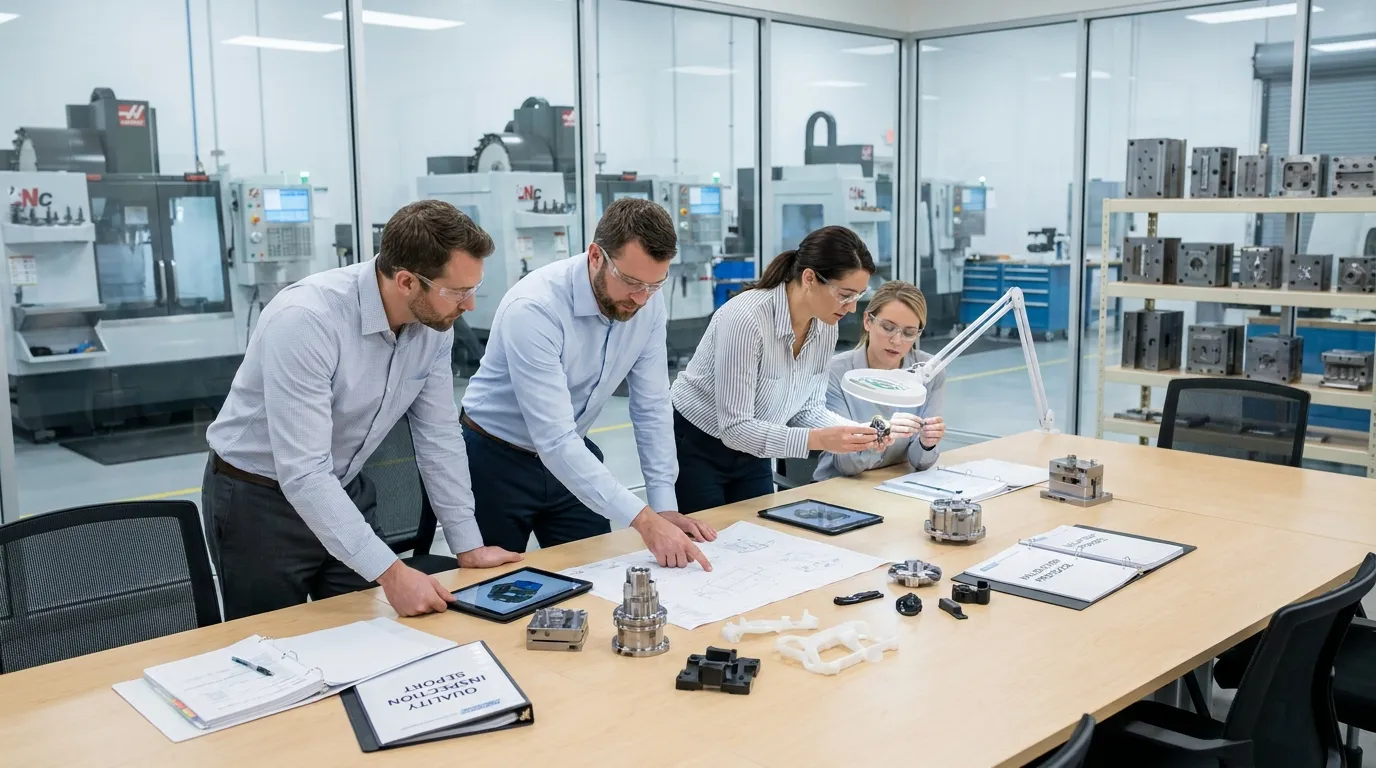
Medical device injection molding suppliers should be evaluated on validation support, traceability, tolerance control, cleanroom capability, and documentation readiness before tooling approval. A low tooling quote does not reduce regulatory or launch risk.
Before approving tooling, buyers should confirm that the supplier understands regulated manufacturing requirements. General injection molders may produce acceptable consumer parts, but medical projects need stronger process control, documented validation support, and repeatable inspection systems.
A supplier should also explain how engineering reviews, mold maintenance, process validation, and production records will be managed after tooling starts. Vague answers during quoting often signal bigger communication problems later.
| Supplier Area | What to Verify | Why It Matters |
|---|---|---|
| Quality systems | ISO 13485 procedures | Supports regulated production |
| Validation support | IQ/OQ/PQ documentation | Helps during audits and approvals |
| Inspection capability | CMM and contour measurement systems | Confirms repeatable tolerances |
| Traceability | Resin lot and production tracking | Reduces compliance risk |
| Cleanroom support | Controlled production procedures | Helps prevent contamination |
| Tooling management | Maintenance and spare component plans | Protects long-term repeatability |
| Engineering process | DFM review before steel cutting | Reduces tooling revisions |
Some buyers focus too heavily on tooling price. That approach can backfire. The lowest tooling quote often becomes the most expensive option once revision cycles, validation delays, and launch disruptions are added to the total project cost.
If your team still needs broader background on mold construction and tooling fundamentals, review this injection mold design guide before supplier selection moves forward.
Which certifications and quality systems actually matter?
ISO 13485 is the baseline certification most buyers expect for regulated medical molding projects, but buyers should also confirm traceability procedures, document control, and validation support instead of relying on certification logos alone.
Most medical buyers start with ISO 13485 because it supports quality management and traceability expectations for regulated manufacturing. The FDA also expects manufacturers to maintain documented quality controls throughout production and validation activities.
Certification alone does not prove that a supplier can support a regulated launch. Buyers should ask how process changes are documented, how inspection records are stored, and how validation support is managed during production scaling.
Why ISO 13485 alone is not enough
Some suppliers advertise ISO 13485 certification but still struggle with practical execution. A supplier may pass audits while lacking strong engineering communication, process monitoring, or tooling maintenance discipline.
That gap becomes obvious during validation or engineering changes. For example, a supplier may approve tooling without detailed DFM feedback, then request expensive mold revisions after initial sampling. Those delays can push qualification timelines back by weeks.
| Quality Area | What Buyers Should Check |
|---|---|
| ISO 13485 | Current certification status |
| Document control | Revision tracking procedures |
| Traceability | Resin and batch tracking |
| Validation support | IQ/OQ/PQ experience |
| Change control | Engineering approval workflow |
| CAPA process | Corrective action procedures |
A strong supplier should explain these systems clearly during the quoting stage. If answers stay vague or overly sales-focused, buyers should slow the approval process.
Can the supplier consistently hold medical-grade tolerances?

Medical molding suppliers should prove tolerance capability with measurement systems, documented inspection procedures, and repeatability data instead of verbal claims. Buyers should request sample reports before tooling approval.
Medical components often include mating surfaces, fluid pathways, or assembly features that depend on consistent dimensions across every production run. A supplier should explain how those dimensions are measured, monitored, and maintained over time.
Buyers should request sample inspection reports before tooling starts. Those reports help confirm whether the supplier already supports precision production work instead of simply promising it during sales discussions.
What inspection equipment should suppliers have?
Qualified suppliers commonly use coordinate measuring machines (CMMs), contour measuring systems, optical inspection equipment, and documented process monitoring tools. Inspection capability matters because medical tooling wear can slowly shift dimensions over long production cycles.
Suppliers using high-quality tooling materials and wear-resistant mold parts often maintain better dimensional consistency during repeat production.
A good example is a multi-cavity medical housing where one cavity slowly drifts out of tolerance. Without proper cavity monitoring, suppliers may not detect the issue until assembly failures appear downstream. Buyers should ask how cavity balance and dimensional drift are monitored during production.
How important is DFM review before steel cutting?
A detailed DFM review before steel cutting reduces tooling revisions, dimensional defects, and launch delays. Medical buyers should expect documented recommendations before final mold approval.
DFM, or Design for Manufacturability, identifies molding risks before tooling enters production. That review should happen before steel cutting starts, not after initial samples fail dimensional inspection.
A proper DFM review covers wall thickness, gate location, cooling layout, draft angles, shrinkage expectations, and part ejection strategy. Suppliers should provide documented recommendations instead of general verbal comments.
- Part geometry review
- Draft and undercut analysis
- Gate location recommendation
- Cooling and shrinkage evaluation
- Tooling feasibility approval
- Final engineering signoff before machining
A diagnostic device housing is a good example. If the gate location creates uneven shrinkage near a sealing surface, the supplier may need additional mold revisions after T1 sampling. That change can affect validation schedules and increase tooling costs.
Some buyers skip detailed DFM reviews to shorten launch timelines. That shortcut rarely saves time. Engineering problems found after tooling begins are slower and more expensive to correct.
What validation and documentation support should suppliers provide?
Medical molding suppliers should support IQ/OQ/PQ validation, maintain traceable production records, and document process changes throughout the tooling lifecycle. Missing documentation creates regulatory and audit risk.
Validation support is one of the clearest differences between standard injection molding suppliers and regulated medical manufacturers. Buyers should confirm that suppliers already support IQ, OQ, and PQ workflows before tooling approval.
Documentation should include material traceability, inspection records, process settings, engineering revisions, and mold maintenance history. According to the FDA, manufacturers are expected to maintain documented quality procedures and production controls throughout regulated manufacturing operations.
What documents should buyers request before tooling starts?
- DFM reports
- Validation planning documents
- Inspection procedures
- Material traceability procedures
- Mold maintenance expectations
- Engineering revision workflows
- Sampling and approval schedules
Suppliers providing detailed documentation early usually manage production transitions more smoothly later. That matters when launch schedules depend on coordinated validation timing.
For example, one disposable medical component project experienced delays because resin traceability records were incomplete during validation review. The tooling itself performed correctly, but missing documentation still disrupted the approval timeline.
Teams comparing suppliers may also want to review broader medical molding support capabilities before final sourcing decisions are made.
How should buyers evaluate cleanroom and contamination control?

Cleanroom capability should be evaluated as an operational system, not just a marketing label. Buyers should ask how materials, operators, packaging, and production flow are controlled inside the manufacturing environment.
Some suppliers advertise cleanroom molding but outsource secondary handling or packaging steps outside controlled conditions. That setup may create contamination risk for sensitive medical products.
| Area | What Buyers Should Verify |
|---|---|
| Cleanroom class | ISO classification level |
| Material handling | Controlled resin storage |
| Personnel procedures | Gowning and access control |
| Packaging process | Protected post-molding handling |
| Cleaning procedures | Scheduled contamination control |
Surface quality can also affect contamination management and cleaning consistency. Buyers reviewing cosmetic or functional requirements may benefit from understanding surface finish requirements during tooling evaluation.
A cleanroom is not always necessary for every project. Stable, lower-risk components may run successfully in controlled manufacturing environments without full cleanroom production. Buyers should match production controls to the actual regulatory and product requirements.
What lead-time and customs risks should buyers plan for?
Medical device tooling timelines depend on design stability, validation requirements, tooling complexity, and international logistics. Customs delays and late engineering changes can disrupt regulated launch schedules.
Medical tooling projects often move slower than standard commercial programs because validation, inspection approval, and engineering review cycles add additional steps to the launch schedule.
According to Evok Poly’s injection molding lead-time overview, tooling revisions and engineering changes are common causes of delayed production schedules. Offshore programs may also face shipping inspections or customs delays during mold transfer and sampling activities.
Why late design changes create major delays
Late-stage design revisions create more disruption in regulated projects because validation documents, inspection plans, and approval schedules may also need updates.
| Project Stage | Stable Design | Late Engineering Changes |
|---|---|---|
| DFM review | 1 week | 2 weeks |
| Tool machining | 3 weeks | 4 weeks |
| Initial sampling | 1 week | 2 weeks |
| Validation prep | 1 week | 2 weeks |
| Customs and shipping | 1 week | 1-2 weeks |
A tooling shipment held during customs inspection can easily delay validation scheduling if the launch timeline has no built-in buffer. Crescent Industries also notes that offshore sourcing may create additional logistics and communication challenges for regulated industries.
Offshore tooling is not always the wrong choice. Stable programs with predictable production volumes can work well internationally. Projects requiring frequent engineering changes usually benefit from closer supplier collaboration and faster revision cycles.
Which supplier red flags should buyers never ignore?
Suppliers that avoid technical reviews, cannot explain validation procedures, or provide unrealistic lead times often create expensive tooling and launch problems later in the project.
One of the clearest warning signs is weak technical communication during quoting. If a supplier avoids detailed DFM discussions or struggles to explain inspection methods, buyers should expect larger problems once tooling starts.
Another red flag is unrealistic scheduling. Medical tooling projects involve validation planning, inspection approval, and engineering coordination. Suppliers promising unusually short timelines without technical review may be underestimating the work involved.
- No documented validation process
- Vague tolerance claims
- No sample inspection reports
- Poor engineering communication
- No mold maintenance plan
- Limited traceability procedures
- Extremely low tooling pricing
Tooling durability also matters during long production runs. Suppliers that ignore proper heat treatment quality may face faster wear, dimensional drift, and inconsistent repeatability over time.
What to Do Next
Choosing a medical device injection molding supplier is less about finding the cheapest tooling quote and more about reducing production risk before launch. Buyers should evaluate validation support, engineering communication, inspection capability, and documentation systems before approving steel cutting.
A supplier that provides detailed DFM feedback, realistic timelines, and clear traceability procedures usually creates smoother validation and production outcomes later. Start with a structured qualification checklist, compare suppliers side by side, and confirm how production support will continue after tooling approval.
Frequently Asked Questions
What certifications should a medical injection molding supplier have?
Most medical buyers expect ISO 13485 certification because it supports regulated quality management and traceability procedures. Buyers should still verify validation support, document control, and inspection processes before approving tooling.
How tight are tolerances in medical injection molding?
Medical injection molding often requires very precise tolerances depending on the part function and assembly requirements. Suppliers should provide inspection reports and repeatability data instead of broad capability claims.
Why is DFM important before tooling?
DFM analysis identifies molding risks before steel cutting starts, which helps reduce tooling revisions and dimensional defects later. Early engineering review can also shorten validation and launch timelines.
What documents should buyers request before tooling starts?
Buyers should request DFM reports, validation plans, inspection procedures, traceability documentation, and mold maintenance expectations before tooling approval. Clear documentation reduces confusion during validation and production scaling.
Can customs delays affect medical device tooling launches?
Yes. International shipments, customs inspections, and documentation problems can delay validation schedules and production launches. Buyers should build schedule buffers into regulated tooling programs.
What inspection equipment should medical molding suppliers use?
Qualified suppliers commonly use CMM systems, contour measuring equipment, optical inspection tools, and documented process monitoring systems. These tools help maintain repeatable dimensional control across production runs.
Share:



Written By Sunshine
At Sunshine, we are a professional manufacturer and supplier of precision mould components, offering a wide range of products for stamping and injection mould applications. Our core focus includes punching dies, ejector pins and sleeves, and guide posts and bushings. With advanced CNC machining, strict quality control, and strong production capabilities, we ensure reliable, high-precision parts, along with in-stock standard components for fast and efficient global supply.
NEWS
GET SERVICE
With quality parts to meet every budget and friendly staff trained to make your visit informative and hassle free.
