



Die Mold Components: Selection Guide for Durable Stamping Tools
Die mold components control stamping accuracy, alignment stability, and tooling lifespan. Choosing the right guide posts, bushings, punches, and wear-resistant materials helps reduce downtime and improve repeatable production. Most early tooling failures come from poor alignment, incorrect material selection, or weak maintenance planning. Standard components work well for many production lines, while custom parts are better for specialized tolerances or high-load applications.
Stamping tools fail faster when components are mismatched to production conditions. A guide system with poor alignment can wear out punches early, while overly hard tooling materials may crack under repeated impact. Buyers need more than a parts catalog. They need a selection framework that balances durability, sourcing speed, maintenance, and repeatable performance.
What are die mold components and why do they affect stamping durability?
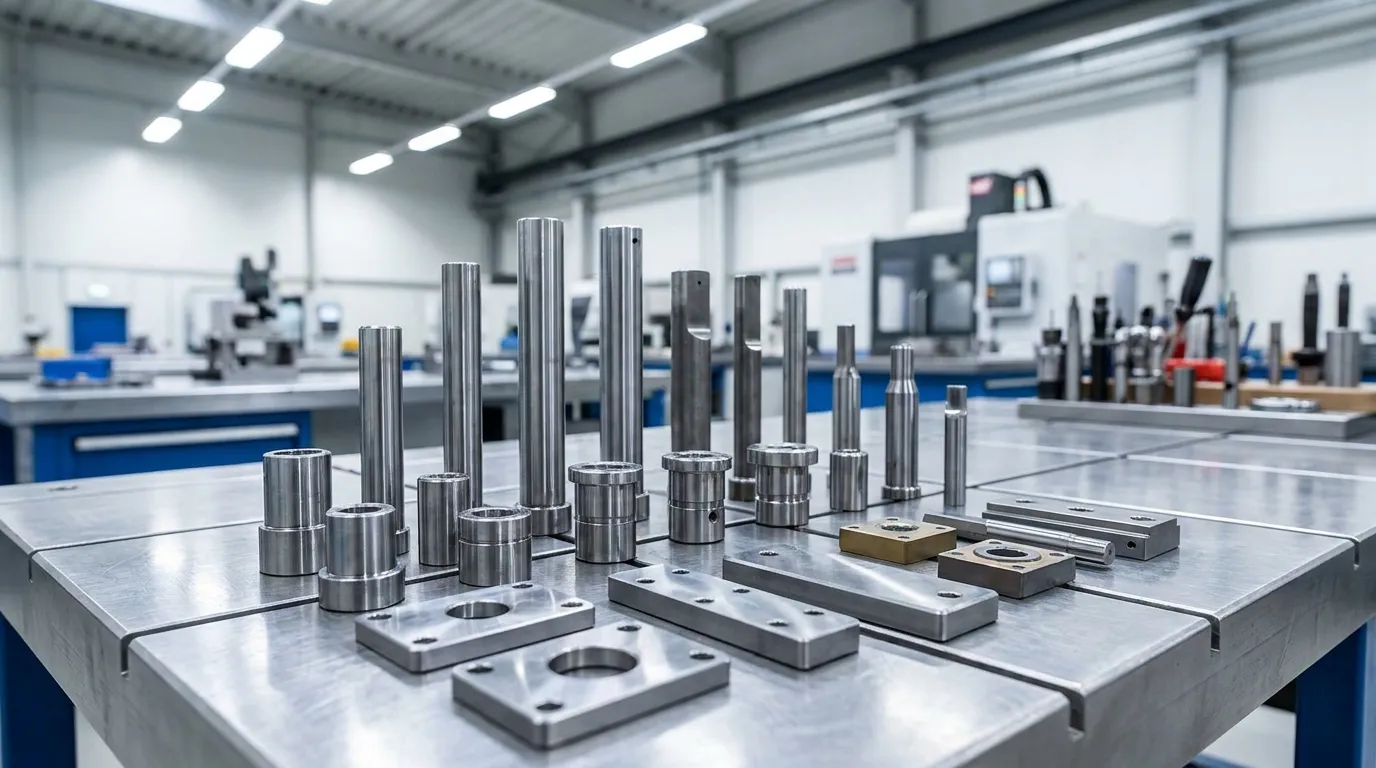
Die mold components directly affect stamping accuracy, wear resistance, and tooling lifespan. Guide systems, punches, and bushings must work together to maintain alignment and repeatable production under high-cycle operation.
Die mold components are the precision parts inside a stamping tool that guide movement, control alignment, and shape material during production. Common examples include punches, dies, guide posts, bushings, ejector systems, wear plates, and sleeves.
When one component wears unevenly, the entire tooling system can drift out of tolerance. That creates burrs, dimensional variation, and unnecessary downtime. In high-cycle stamping lines, even small alignment errors become expensive over time.
Many buyers focus only on hardness or material grade. That approach misses a bigger issue. Long-term stamping performance depends on how well components work together under load, speed, and repeated impact.
| Component | Main Function | Durability Impact |
|---|---|---|
| Punches | Shape or cut material | High wear exposure |
| Guide posts | Maintain alignment | Prevent uneven wear |
| Bushings | Reduce friction | Improve movement stability |
| Wear plates | Protect surfaces | Extend tool life |
| Ejector systems | Remove stamped parts | Reduce production interruption |
For a broader overview of tooling structures and systems, see this mold components guide and explore related die component systems.
Which die mold components have the biggest impact on tool life?
Guide posts, bushings, punches, and wear-resistant inserts typically determine tool lifespan more than secondary accessories. Poor alignment or inadequate hardness increases friction, dimensional drift, and premature failure during repeated stamping cycles.
Guide systems usually have the biggest effect on long-term durability because they control movement accuracy. If alignment drifts even slightly, punches and dies begin wearing unevenly. That shortens service life and increases replacement frequency.
Punch material also matters, especially in high-volume stamping. Harder materials improve wear resistance, but higher hardness is not always better. Extremely hard punches can become brittle under repeated impact loads and may crack earlier than tougher materials with lower hardness.
A high-cycle automotive stamping line provides a good example. One manufacturer replaced guide bushings every two months because alignment tolerance was too loose. After tightening guide fit tolerances and improving lubrication control, the replacement cycle extended significantly without changing punch material.
| Component | Common Failure Cause | Effect on Tool Life |
|---|---|---|
| Guide posts | Misalignment | Uneven wear |
| Bushings | Friction and contamination | Reduced accuracy |
| Punches | Brittleness or wear | Cracking and downtime |
| Wear inserts | Surface fatigue | Shorter maintenance intervals |
| Springs | Compression fatigue | Inconsistent operation |
Buyers comparing tolerances and wear resistance should also review these precision mold components for tighter production requirements.
How do you choose guide posts and bushings for repeatable alignment?
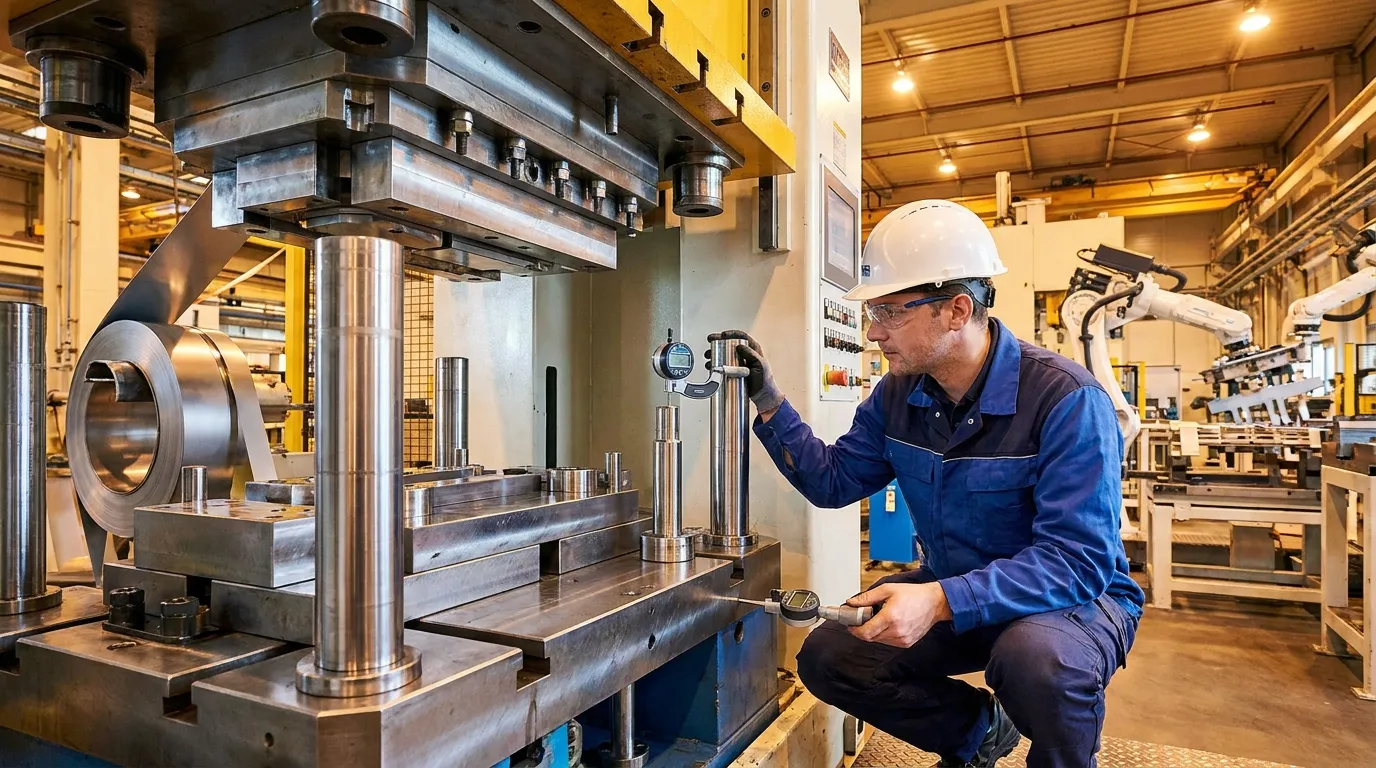
Guide posts and bushings should match production load, stamping speed, and tolerance requirements. Tight alignment control reduces uneven wear, protects punches, and improves repeatable part accuracy over long production runs.
Guide systems should be selected based on operating conditions, not just catalog dimensions. High-speed stamping lines usually require tighter fit tolerances and smoother surface finishes to reduce friction and vibration.
Poor alignment creates a chain reaction. Bushings wear faster, punches shift slightly off-center, and stamped parts lose dimensional consistency. In severe cases, the die set can crack from uneven stress distribution.
Clearance and fit tolerance
Tighter clearances improve alignment accuracy, but excessive tightness can increase friction and lubrication problems. The best balance depends on cycle speed, stamping load, and contamination exposure.
Standard guide systems often perform well for medium-volume production because replacement parts are easier to source. Fully custom systems are usually reserved for specialized tolerances or unusual tooling geometry.
| Production Condition | Recommended Approach |
|---|---|
| Medium-volume stamping | Standard guide systems |
| High-speed production | Precision-fit bushings |
| Heavy impact loads | Tougher guide materials |
| Contaminated environment | Enhanced lubrication design |
Material and surface finish selection
Surface finish affects wear more than many buyers expect. Rough surfaces increase friction and accelerate bushing wear, especially during long production runs.
A manufacturer that switched from fully custom guide systems to stocked standard assemblies reduced downtime because replacement inventory became easier to maintain. Faster replacement availability often matters more operationally than small precision gains.
For commonly stocked assemblies and replacement availability, review these guide system parts.
What materials work best for high-cycle stamping applications?
The best die mold component material depends on stamping force, production volume, and wear conditions. Harder materials improve wear resistance, but excessive hardness can increase brittleness and shorten component life under impact loads.
Tool steel remains the most common material for punches, dies, and wear components because it balances hardness, toughness, and machining stability. Heat treatment also plays a major role. Two components made from the same steel can perform very differently after processing.
Many buyers assume maximum hardness guarantees maximum durability. That is not always true. A stamping operation using extremely hard punch materials experienced repeated cracking because the tooling absorbed heavy impact loads during each cycle.
Die Component Selection Decision Table
| Production Volume | Stamping Load | Recommended Material Focus | Standard or Custom |
|---|---|---|---|
| Low-volume | Light | General tool steel | Standard |
| Medium-volume | Moderate | Heat-treated wear steel | Standard |
| High-volume | Heavy | High wear resistance with toughness | Custom when needed |
| Precision stamping | Moderate | Tight tolerance tool steel | Custom |
| Abrasive material stamping | Heavy | Enhanced wear-resistant steel | Custom |
Heat treatment quality matters as much as material grade. Poor heat treatment creates inconsistent hardness, surface fatigue, and uneven wear patterns.
Replacement planning also affects material decisions. Some manufacturers choose slightly lower hardness materials because they are easier to machine, faster to replace, and less prone to cracking.
Buyers planning maintenance inventory can compare available replacement mold parts before finalizing specifications.
When should you use standard components instead of custom parts?
Standard die mold components reduce sourcing time and replacement delays for most applications. Custom parts become necessary when tolerance, geometry, or production load requirements exceed standard component limitations.
Standard components work well in many stamping operations because they simplify sourcing, maintenance, and inventory planning. Replacement parts are easier to stock, and production downtime is usually shorter when failures occur.
Custom components make sense when production requirements exceed standard tolerances or when tooling geometry is highly specialized. Precision electronics stamping and complex automotive applications often fall into this category.
Custom die components are not automatically higher quality. Standard parts are often the safer operational choice when replacement speed matters more than extreme precision.
Standard vs Custom Selection Table
| Situation | Better Choice | Main Reason |
|---|---|---|
| General stamping | Standard | Faster sourcing |
| Frequent replacements | Standard | Easier inventory planning |
| Extreme tolerance requirements | Custom | Precision control |
| Specialized geometry | Custom | Better fit |
| Global multi-site production | Standard | Consistent availability |
Lead time is another factor. According to manufacturing timeline analysis from Ulitech Engineering, tooling revisions and component delays often extend production schedules more than buyers initially expect.
For common stocked options, compare available standard mold parts.
Why do die mold components fail earlier than expected?
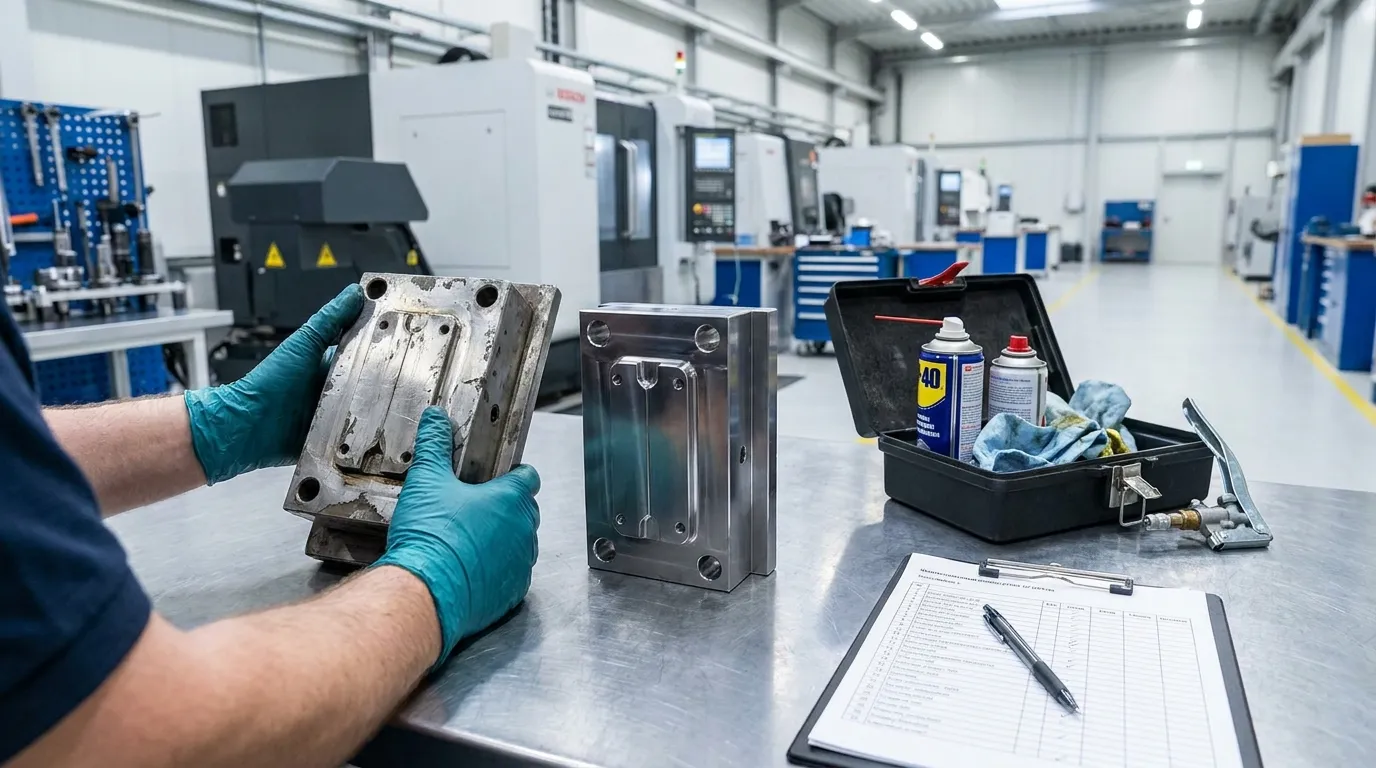
Most premature die component failures are caused by alignment problems, insufficient lubrication, contamination, or incorrect material selection. Preventive maintenance and proper fit tolerance usually extend tool life more effectively than simply choosing harder materials.
Misalignment is one of the biggest causes of premature wear. Even small guide system movement creates uneven loading across punches and bushings. Over time, that increases friction and dimensional drift.
Contamination is another common issue. Metal particles and debris can damage bushings quickly if lubrication systems are inconsistent or poorly maintained.
Premature Failure Troubleshooting Checklist
| Failure Symptom | Likely Cause | Inspection Step | Recommended Fix |
|---|---|---|---|
| Uneven punch wear | Misalignment | Check guide clearance | Adjust fit tolerance |
| Bushing scoring | Poor lubrication | Inspect lubrication flow | Improve lubrication schedule |
| Punch cracking | Excessive hardness | Review material specs | Increase toughness balance |
| Surface fatigue | Contamination | Inspect debris exposure | Improve cleaning routine |
| Dimensional drift | Worn guide system | Measure alignment accuracy | Replace worn guides |
Many tooling failures blamed on material quality actually start with maintenance problems. Regular inspection schedules usually prevent larger failures before production stops.
A preventive maintenance program that checks alignment, lubrication, and surface wear at fixed intervals often reduces replacement costs more effectively than upgrading every component material.
Operations dealing with tight tolerances can review these high-precision tooling parts for improved alignment consistency.
How should buyers evaluate suppliers and lead times?
Supplier evaluation should focus on delivery consistency, inventory support, quality control, and replacement availability. A low component price means little if replacement delays stop production for weeks.
Global buyers also need to consider customs processing and shipping documentation. Import delays caused by incomplete paperwork can extend lead times significantly. Recent customs guidance from Bangladesh Customs and logistics analysis from EximAgent AI show that documentation errors remain a major cause of shipment delays.
Questions to ask suppliers
- Do they stock replacement inventory locally?
- Can they maintain consistent tolerances across batches?
- What is the average replacement lead time?
- Do they provide inspection reports?
- How do they handle urgent replacement requests?
One manufacturer experienced several weeks of downtime because replacement guide components were unavailable during a production spike. After switching to a supplier with stocked standard assemblies, the company reduced replacement delays and stabilized scheduling.
Supplier quality control also matters during production launch. Manufacturing analysis from HH Molds Inc. highlights how inspection planning affects tooling consistency and long-term production stability.
For broader sourcing considerations and tooling categories, review this tooling component sourcing.
What maintenance practices extend die mold component lifespan?
Regular inspection, lubrication control, and planned replacement schedules extend component lifespan more effectively than reactive repairs. Most long-term tooling problems develop gradually before major failures appear.
Maintenance teams should track wear patterns instead of waiting for visible damage. Small alignment shifts can create uneven punch loading long before production defects become obvious.
Recommended Maintenance Checklist
- Inspect guide alignment at scheduled intervals
- Clean debris from moving surfaces regularly
- Monitor lubrication consistency
- Replace worn bushings before tolerance drift spreads
- Keep stocked replacement components available
- Record recurring wear patterns for future adjustments
A scheduled inspection program helped one stamping operation reduce premature punch wear after identifying uneven guide loading early. The company avoided a larger die failure because technicians corrected alignment before cracks developed.
Maintaining a backup spare tooling inventory also shortens recovery time when failures happen unexpectedly.
Getting the Next Step Right
Choosing the right die mold components is about balancing precision, durability, sourcing speed, and maintenance practicality. Buyers who focus only on hardness or upfront cost often miss the operational factors that affect long-term tooling performance.
Start by evaluating alignment stability, production volume, replacement lead times, and maintenance requirements together. Standard components may provide the best long-term value for many stamping lines, especially when replacement speed matters. For tighter tolerances or specialized production demands, custom tooling can still be the better fit when managed carefully.
Frequently Asked Questions
What are die mold components?
Die mold components are the precision parts used inside stamping tools to guide movement, shape material, and maintain alignment during production. Common examples include punches, guide posts, bushings, ejector systems, and wear-resistant inserts.
What components affect stamping accuracy the most?
Guide posts, bushings, and punches have the biggest effect on stamping accuracy because they control alignment and dimensional consistency. Worn or poorly matched components often cause uneven wear, burrs, and dimensional drift.
What material is best for stamping dies?
The best material depends on production volume, impact load, and wear conditions. Tool steels with proper heat treatment usually balance hardness, toughness, and wear resistance better than overly hardened materials.
When should custom die components be used?
Custom die components are best when standard parts cannot meet tolerance, geometry, or production-load requirements. They are commonly used in high-precision or specialized stamping applications.
Why do die components wear out early?
Most premature wear comes from misalignment, poor lubrication, contamination, or incorrect material selection. Preventive maintenance and accurate fit tolerances usually improve lifespan more than increasing hardness alone.
How do you improve mold life?
Mold life improves when components are properly aligned, regularly lubricated, and inspected before excessive wear develops. Scheduled replacement planning also reduces sudden production failures.
Share:



Written By Sunshine
At Sunshine, we are a professional manufacturer and supplier of precision mould components, offering a wide range of products for stamping and injection mould applications. Our core focus includes punching dies, ejector pins and sleeves, and guide posts and bushings. With advanced CNC machining, strict quality control, and strong production capabilities, we ensure reliable, high-precision parts, along with in-stock standard components for fast and efficient global supply.
NEWS
GET SERVICE
With quality parts to meet every budget and friendly staff trained to make your visit informative and hassle free.
