



Mold Standard Parts: Types, Sizes, and When to Customize
Mold standard parts are pre-sized mold components used in injection molds and tooling systems to reduce lead time, simplify maintenance, and lower replacement costs. Standard parts work well for most general-purpose molds, but custom mold components become necessary when projects require tighter tolerances, unusual geometry, higher wear resistance, or specialized materials. Buyers should compare lifecycle cost, replacement speed, and production risk before choosing between stocked and custom-made parts.
Choosing between standard and custom mold components affects more than purchase cost. It changes maintenance planning, downtime risk, replacement speed, and even shipping timelines. Many tooling projects work perfectly with stocked components, but high-cycle molds and tight-tolerance applications often need something more specific. This guide explains where standard parts make sense, where customization pays off, and how to avoid expensive sourcing mistakes.
What are mold standard parts?
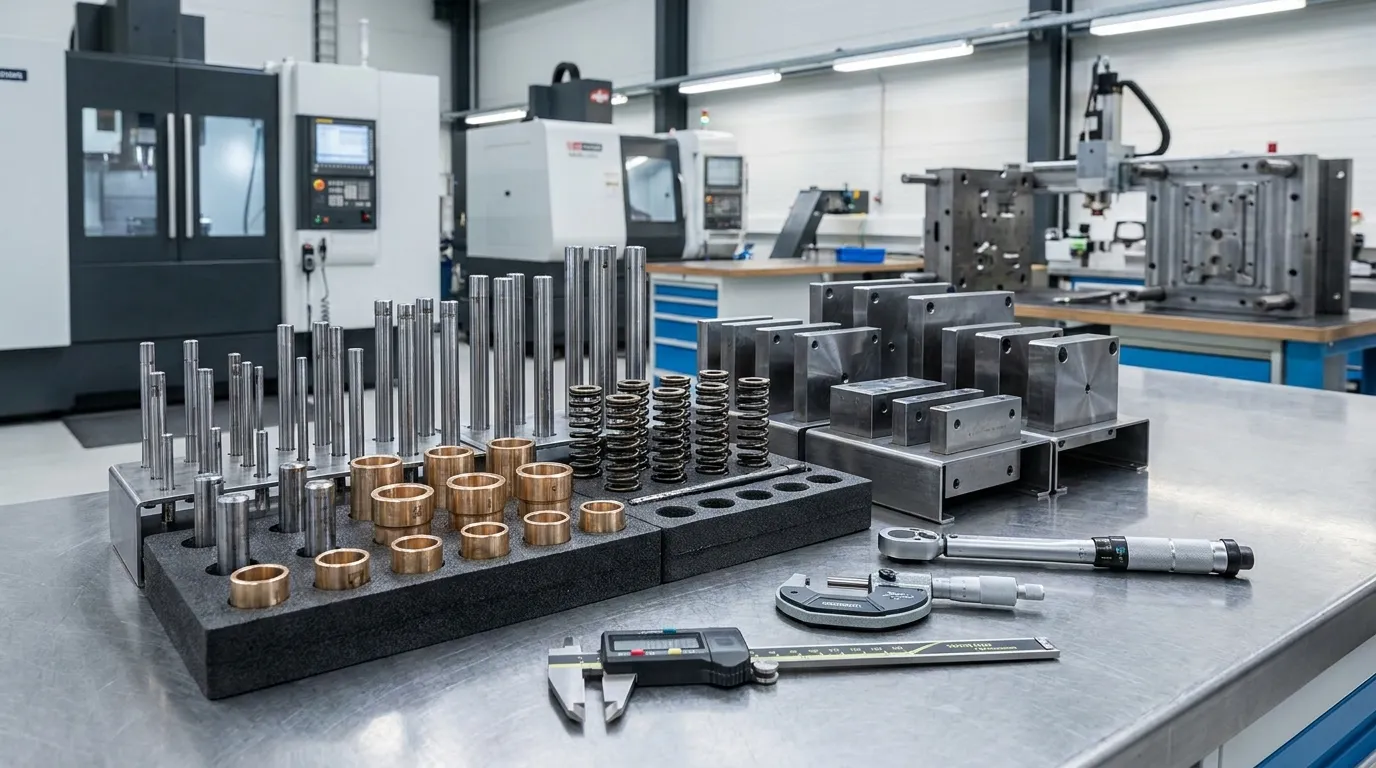
Mold standard parts are pre-engineered mold components produced in fixed sizes and tolerances for repeat use across injection molds and tooling systems. They reduce lead time, simplify replacement, and lower machining costs when catalog specifications meet application requirements.
These components are manufactured according to common dimensional standards, which allows mold makers to source replacements quickly instead of machining every part from scratch. Standardization also improves interchangeability across different mold programs.
Common examples include ejector pins, guide posts, bushings, mold plates, sleeves, and springs. Many suppliers keep these parts in stock, which helps reduce production delays during mold assembly or maintenance.
A detailed look at broader mold structures is available in this complete mold components guide.
| Standard Part Type | Main Function | Common Benefit |
|---|---|---|
| Ejector pins | Push molded parts out | Easy replacement |
| Guide posts | Align mold halves | Consistent positioning |
| Bushings | Reduce friction | Longer wear life |
| Springs | Support movement | Faster maintenance |
| Mold plates | Structural support | Standard sizing |
Many manufacturers rely on standardization because it shortens procurement cycles and simplifies servicing. According to STRACK mould standard parts, standardized systems also improve compatibility across tooling setups.
You can also explore common plastic mold components used across injection mold systems.
Which mold components are usually standardized?
Most mold shops standardize ejector pins, guide posts, bushings, springs, and mold plates because these components benefit from interchangeable sizing, easier replacement, and shorter procurement cycles compared to fully custom-machined parts.
Standardization works best for components that perform repeatable mechanical functions. These parts usually follow established dimensional ranges, which allows suppliers to maintain inventory for fast shipment.
| Component | Why It’s Standardized | Typical Advantage |
|---|---|---|
| Ejector pins | High replacement frequency | Fast maintenance |
| Guide bushings | Fixed alignment roles | Better interchangeability |
| Return pins | Repeatable geometry | Lower machining cost |
| Springs | Predictable load ranges | Easy sourcing |
| Mold bases | Common structural layouts | Faster mold assembly |
Some mold shops also standardize cooling fittings, support pillars, and wear plates to simplify spare-part inventory across multiple production lines.
This approach becomes especially useful in high-volume manufacturing environments. An automotive supplier running several similar molds can keep one shared stock of replacement ejector pins instead of maintaining custom inventory for every tool.
For a broader breakdown of injection mold structures, Rapiddirect’s injection mold component guide explains how these systems work together inside production molds.
If you need tighter specifications or specialty machining, these standard mold components show where precision manufacturing becomes important.
What standard sizes are commonly available?
Standard mold parts are available in a wide range of catalog sizes, but they still follow fixed dimensional systems. Buyers need to confirm diameter, length, tolerance class, and regional compatibility before ordering replacements.
Ejector pins, for example, are commonly available in millimeter increments with standardized head dimensions. Guide posts and bushings usually follow established outer diameter and fitment ranges to maintain compatibility between mold halves.
How tolerance classes affect interchangeability
Tolerance class matters as much as physical size. Two guide bushings with the same diameter may still perform differently if clearance tolerances vary between suppliers or regions.
Before ordering standard parts, buyers should verify:
- Diameter range
- Length increments
- Surface hardness
- Heat treatment
- Fit tolerance
- Regional standard system
A common mistake is assuming all catalog components are fully interchangeable. That’s not always true. Some suppliers use proprietary sizing variations, especially for older tooling systems.
Medical and electronics molds often require tighter dimensional control than standard stock tolerances allow. In those situations, standard sizing may still work, but the finishing process usually needs additional machining or inspection.
If your tooling program depends on close alignment tolerances, these precision mold tolerances explain where tighter specifications become necessary.
When are standard mold parts the better choice?
Standard mold parts are usually the better choice when production speed, replacement availability, and predictable maintenance matter more than ultra-specific geometry or extreme tolerance requirements. They reduce downtime and simplify sourcing across multiple mold programs.
Most general-purpose molds perform well with stocked components. Standardization lowers machining cost, shortens lead time, and makes future replacements easier to manage.
A supplier producing consumer packaging molds, for example, may prioritize quick maintenance over custom engineering. In that situation, standardized ejector systems often provide the best balance between cost and reliability.
| If Your Priority Is... | Standard Parts Usually Work Best |
|---|---|
| Fast replacement | Yes |
| Lower upfront cost | Yes |
| Shared spare inventory | Yes |
| General-purpose molds | Yes |
| Short production runs | Yes |
Standard parts are not automatically the cheaper choice long-term. In high-cycle molds, repeated replacement downtime can cost more than a properly engineered custom component.
Still, many buyers over-specify custom machining when stocked parts already meet production requirements. If the mold does not require extreme wear resistance or complex geometry, standardization usually keeps operations simpler.
Teams managing ongoing maintenance often rely on replacement mold parts to reduce downtime and avoid long machining queues.
When should you customize mold components instead?
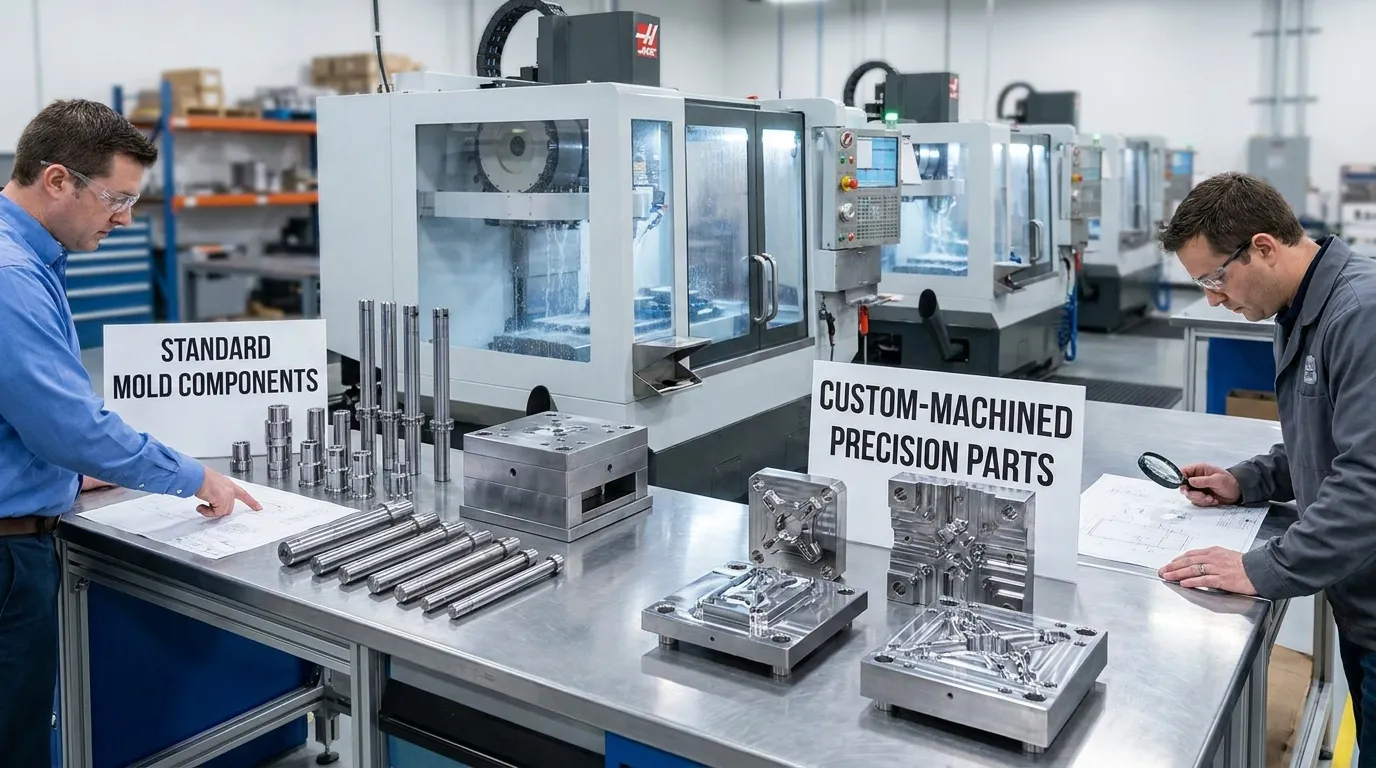
Custom mold components become necessary when standard catalog parts cannot meet tolerance, wear resistance, geometry, or cycle-life requirements. High-volume molds and complex part geometries often justify custom machining despite higher upfront costs.
Standard parts work well in many molds, but they have limits. Once a tooling project reaches extreme production volumes or tighter dimensional requirements, customization often becomes the safer option.
High-cycle molds
High-cycle molds experience constant wear, friction, and repeated impact. Standard components may wear out too quickly under these conditions.
A high-volume automotive mold producing millions of cycles each year may need hardened custom bushings or specialty coatings to reduce maintenance intervals. Although the initial cost is higher, the mold spends less time offline for repairs.
Tight-space applications
Some mold layouts simply cannot accommodate catalog dimensions. Electronics housings and compact medical parts often require non-standard geometry to fit within limited tooling space.
One medical mold supplier switched from standard bushings to custom-machined alignment components after tolerance variation caused positioning issues during assembly. The change increased upfront tooling cost but reduced rejected parts and maintenance adjustments.
| Customization Trigger | Why Standard Parts Fall Short |
|---|---|
| Tight tolerances | Excess movement or variation |
| High wear environments | Shorter service life |
| Space constraints | Fixed catalog dimensions |
| Specialty materials | Standard steel limitations |
| Unique geometry | Compatibility issues |
Fast delivery claims matter less if suppliers cannot maintain replacement inventory. Reliable stocking is often more valuable than saving a few days on initial machining.
For projects requiring specialty machining, these custom precision components show where custom manufacturing supports tighter production requirements.
How do lead time and customs delays affect mold part decisions?
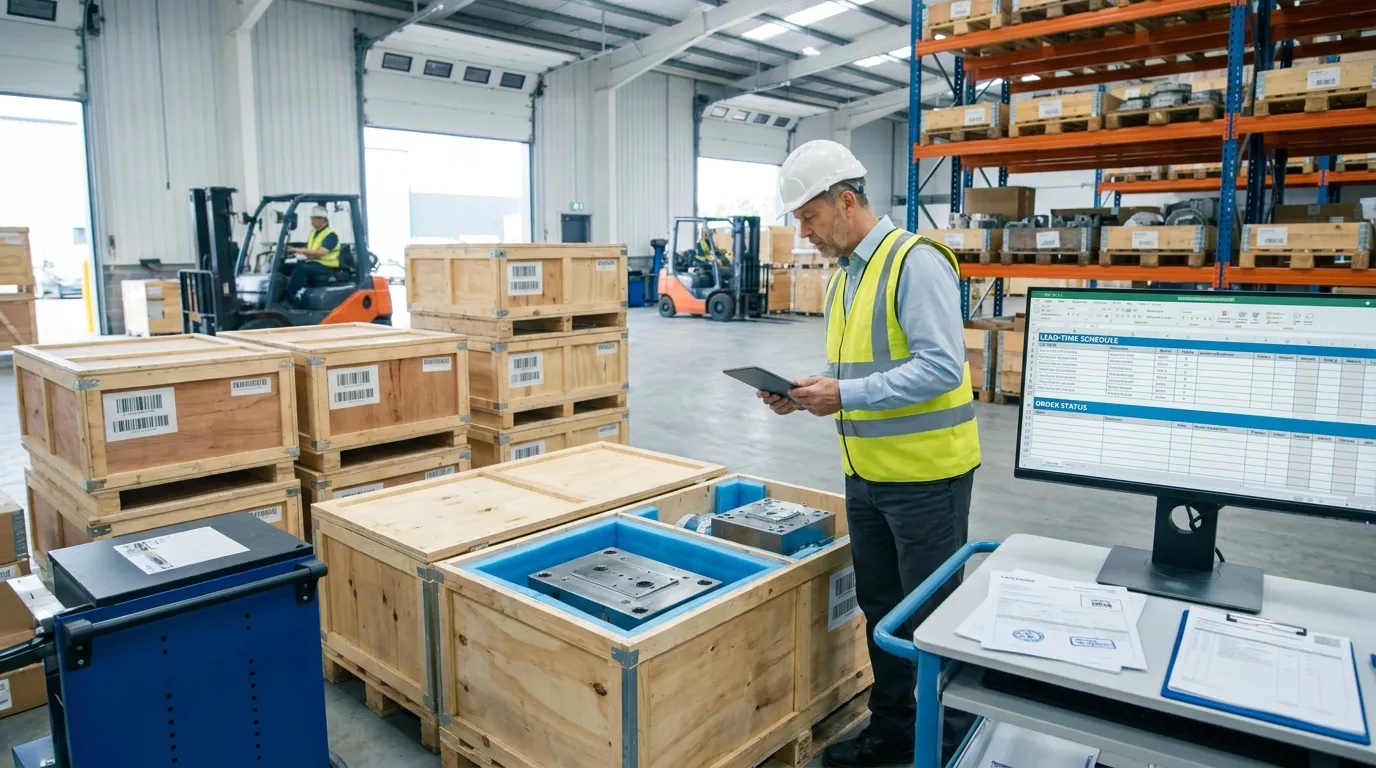
Standard parts usually shorten procurement timelines because suppliers maintain inventory, but imported mold components can still face customs or logistics delays. Critical molds often require backup sourcing or local stocking strategies to reduce production risk.
Lead time is one of the biggest reasons manufacturers choose standard mold parts. A stocked ejector pin may ship in days, while a custom-machined replacement can take several weeks.
That difference becomes important during unexpected downtime. If a production line stops because of a failed guide bushing, waiting four weeks for machining and shipping can cost far more than the part itself.
How buyers reduce shipment risk
- Keep critical spare inventory locally
- Pre-approve secondary suppliers
- Verify import documentation early
- Stock high-wear replacement components
- Avoid single-source dependency
Customs delays also create problems for imported tooling components. According to NG Terminal’s customs delay report, incomplete documentation and compliance checks continue to slow industrial shipments.
One electronics mold supplier experienced a production delay after imported replacement components were held during customs review because shipment documentation was incomplete. The issue forced temporary production downtime while replacement inventory was sourced locally.
Lead-time planning matters during initial mold manufacturing too. Evok Poly’s injection molding lead-time overview shows how sourcing delays can affect tooling schedules across multiple production stages.
Manufacturers managing recurring maintenance often keep stocked mold components available locally to reduce replacement delays.
What is the real cost difference between standard and custom parts?
Custom mold parts cost more upfront, but they can reduce wear, maintenance, and replacement frequency in demanding applications. Standard parts usually win on short-term procurement cost, while custom components may lower long-term operational risk.
Upfront price only tells part of the story. Buyers also need to compare replacement frequency, downtime risk, inventory planning, and service life.
A low-cost standard component may require frequent replacement in high-cycle production. Over time, repeated downtime and maintenance labor can exceed the cost of a better-engineered custom part.
| Cost Factor | Standard Parts | Custom Parts |
|---|---|---|
| Initial machining cost | Lower | Higher |
| Replacement speed | Faster | Slower |
| Spare inventory | Easier | More specialized |
| Wear resistance | Moderate | Application-specific |
| Downtime risk | Higher in extreme use | Lower in demanding environments |
Consider a mold running 24-hour automotive production. If a standard wear component fails every six months, each shutdown may involve labor, lost production time, and emergency sourcing. A hardened custom component costing twice as much may still reduce annual operating cost if it lasts significantly longer.
Custom machining is often unnecessary for general-purpose molds. Still, in high-volume tooling, the cheaper component is not always the cheaper decision.
Companies comparing long-term maintenance planning often evaluate custom mold part manufacturing alongside replacement frequency and production downtime.
How should buyers decide between standard and custom mold parts?
The safest selection process starts with function, tolerance, and replacement risk rather than price alone. Standard parts fit most general-purpose molds, while high-cycle or high-precision tooling often justifies custom engineering.
The best decision usually comes from balancing production goals with maintenance realities. Buyers should focus on how the mold will actually perform over time, not just the initial purchase price.
| Question | If Yes | If No |
|---|---|---|
| Is the mold high-cycle? | Consider custom wear parts | Standard parts may work |
| Are tolerances extremely tight? | Use precision custom machining | Standard sizing is usually enough |
| Is fast replacement critical? | Favor stocked components | Longer lead times may be acceptable |
| Is downtime expensive? | Prioritize durability | Lower-cost options may fit |
| Are replacement parts easy to source locally? | Standard systems work well | Backup sourcing may be needed |
A buyer managing several consumer packaging molds may prioritize fast maintenance and shared spare inventory. In that situation, standardized systems usually make operations easier.
A medical tooling supplier dealing with tight alignment tolerances may reach the opposite conclusion. The higher upfront machining cost becomes easier to justify when production quality depends on precision stability.
If you need a broader overview of mold engineering decisions, this plastic injection mold guide explains how component selection fits into larger tooling systems.
How to Choose the Right Option
Most molds do not need fully custom components. Standardized parts handle many production environments efficiently, especially when maintenance speed and inventory simplicity matter most.
The decision changes when molds operate under heavy wear, tight tolerances, or costly downtime conditions. In those cases, custom engineering can reduce long-term operating risk even if the initial cost is higher.
Before choosing mold standard parts, review your production volume, replacement timeline, sourcing flexibility, and tolerance requirements together. A practical selection process usually prevents more problems than chasing the lowest upfront price.
Frequently Asked Questions
What are standard mold parts?
Standard mold parts are pre-manufactured mold components produced in fixed sizes and tolerances for broad compatibility across tooling systems. They reduce machining time, simplify replacement, and improve sourcing speed for mold manufacturers.
What is the difference between standard and custom mold parts?
Standard mold parts follow catalog sizes and specifications, while custom parts are machined for unique geometry, tolerance, or performance requirements. Customization is usually chosen when standard components cannot meet production demands.
Are standard mold components interchangeable?
Many standard mold components are interchangeable when suppliers follow the same dimensional standards and tolerance classes. Buyers should still verify compatibility because regional standards and manufacturer specifications may vary.
Which mold parts wear out the fastest?
Ejector pins, guide bushings, springs, and sliding components often wear faster because they experience repeated movement and friction during production cycles. Material quality and lubrication strongly affect service life.
How long do mold component replacements usually take?
Replacement time depends on inventory availability, machining complexity, and shipping conditions. Standard stocked parts can ship within days, while custom-machined components may require weeks of production and validation.
What causes customs delays for mold parts?
Customs delays usually happen because of incomplete documentation, origin verification issues, inspection holds, or changing import compliance requirements. Buyers importing critical mold parts often maintain backup inventory to reduce production risk.
Share:



Written By Sunshine
At Sunshine, we are a professional manufacturer and supplier of precision mould components, offering a wide range of products for stamping and injection mould applications. Our core focus includes punching dies, ejector pins and sleeves, and guide posts and bushings. With advanced CNC machining, strict quality control, and strong production capabilities, we ensure reliable, high-precision parts, along with in-stock standard components for fast and efficient global supply.
NEWS
GET SERVICE
With quality parts to meet every budget and friendly staff trained to make your visit informative and hassle free.
