



Mold Spare Parts: What to Keep in Stock to Reduce Downtime
Mold spare parts such as ejector pins, springs, guide bushings, and wear inserts should be kept in stock to reduce production downtime. The right inventory depends on failure frequency, replacement lead time, and mold cycle volume. Critical spare components with long shipping or customs delays should always have backup inventory available before failure occurs.
Unexpected mold downtime usually starts with a small component failure. A worn ejector pin or damaged spring can stop production for hours, sometimes days, if replacement parts are not available. That’s why maintenance and procurement teams need a practical spare-parts strategy, not just a supplier contact list. This guide explains which mold components deserve shelf space, how to prioritize inventory, and where stocking decisions often go wrong.
Which mold spare parts should always be kept in stock?
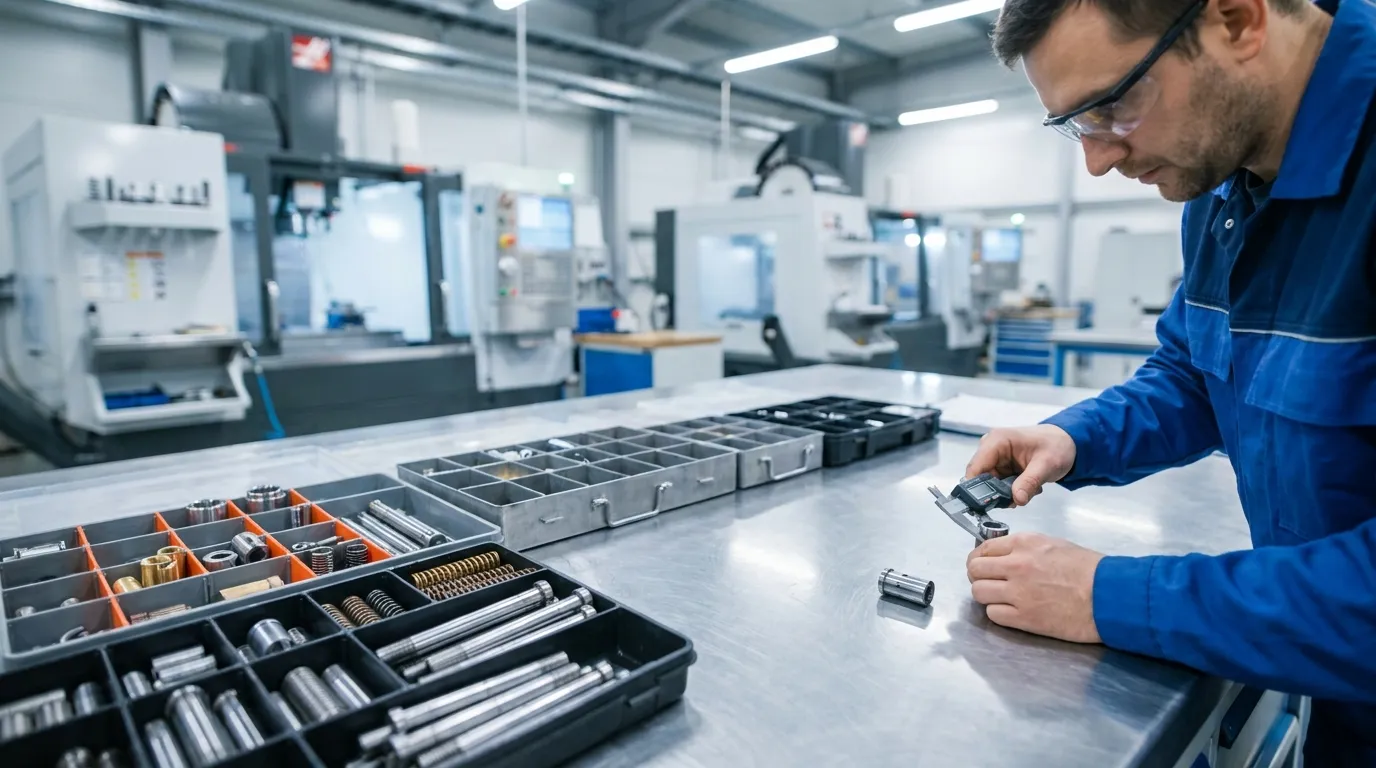
The most important mold spare parts to keep in stock are ejector pins, springs, bushings, guide components, and wear inserts. These parts experience frequent wear and can stop production immediately if replacements are unavailable.
The best spare inventory focuses on components with high wear rates and short replacement windows. Small parts often create the biggest downtime risk because they fail more often than structural mold components. If production depends on one mold running continuously, even a low-cost part can become a serious bottleneck.
Most maintenance teams start with consumable components from their regular service schedule. These parts are easier to predict because wear patterns appear after repeated production cycles.
Priority Mold Spare Parts Checklist
- Ejector pins
- Springs
- Guide bushings
- Guide posts
- Wear inserts
- Sleeves
- Standard fasteners
- O-rings and seals
A high-volume automotive mold may replace ejector pins every two months due to constant cycling pressure. Keeping several matched replacements on-site prevents emergency downtime and avoids rushed machining work.
Not every mold component needs backup inventory. Expensive structural parts with low failure rates are often better ordered on demand. For standard replacement items, keeping a dedicated stock of standard mold parts usually provides faster recovery when failures happen unexpectedly.
For broader mold structure planning, the complete mold components guide explains how these systems work together inside the mold assembly.
What mold components fail most often during production?
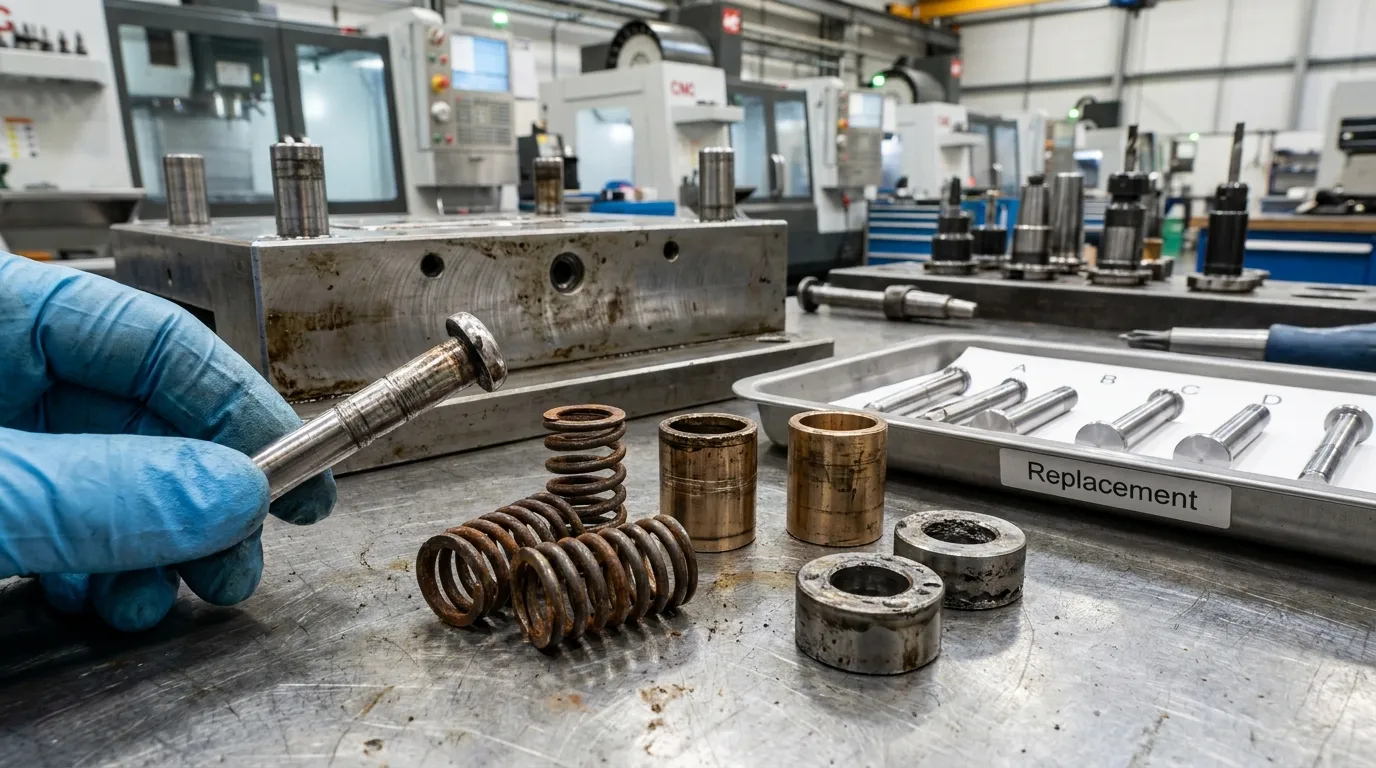
Ejector systems, guide components, and springs are among the most commonly replaced mold spare parts because they operate under repeated stress, friction, and alignment pressure during every production cycle.
Production molds run through thousands or even millions of cycles. Repeated motion creates friction, heat, and alignment wear. Over time, small dimensional changes can affect part quality or stop the mold completely.
The most failure-prone components are usually moving parts. Springs lose tension, guide bushings wear unevenly, and ejector systems develop alignment problems after long production runs.
| Component | Common Failure Cause | Downtime Risk | Replacement Frequency |
|---|---|---|---|
| Ejector pins | Friction and bending | High | Frequent |
| Springs | Fatigue and compression loss | High | Frequent |
| Guide bushings | Alignment wear | Medium-High | Moderate |
| Wear inserts | Surface abrasion | Medium | Moderate |
| Sleeves | Heat and friction | Medium | Moderate |
A maintenance team running high-cycle packaging molds reduced stoppages after stocking extra springs and wear inserts locally. Before that change, replacement delays regularly interrupted weekend production shifts.
Cheap aftermarket replacements are not always cost-effective. Poor tolerance control can create alignment issues and increase wear on nearby components. Precision matters, especially for moving assemblies and tight-clearance molds. Choosing reliable precision mold components helps maintain stable production over longer cycles.
Which spare parts are critical versus optional?
Critical mold spare parts are components that can stop production immediately when they fail. Optional spare parts may reduce efficiency or quality but usually do not shut down the entire mold.
The smartest inventory plans separate critical components from lower-risk replacements. This prevents overspending while still protecting production capacity. A low-cost part with high downtime risk deserves more attention than an expensive component that rarely fails.
Critical spare parts should always be available locally if replacement lead times are unpredictable. Optional components can often be ordered after wear is detected during maintenance inspections.
Critical vs Optional Spare Parts
| Component Type | Production Impact | Typical Stocking Priority |
|---|---|---|
| Ejector systems | Stops production | High |
| Springs | Stops mold movement | High |
| Guide components | Causes alignment issues | High |
| Wear inserts | May reduce quality first | Medium |
| Structural plates | Rare immediate failure | Low |
| Cosmetic trim parts | Limited production impact | Low |
A delayed imported guide bushing shipment once forced a molding facility to pause production for several days. The replacement itself was inexpensive, but the lost production time cost far more than maintaining backup inventory.
Fast supplier delivery is not a replacement for critical spare inventory. Shipping disruptions, supplier delays, and customs reviews can still interrupt production unexpectedly. Keeping backup mold replacement parts for high-risk components gives maintenance teams more control during urgent repairs.
How many mold spare parts should you keep?
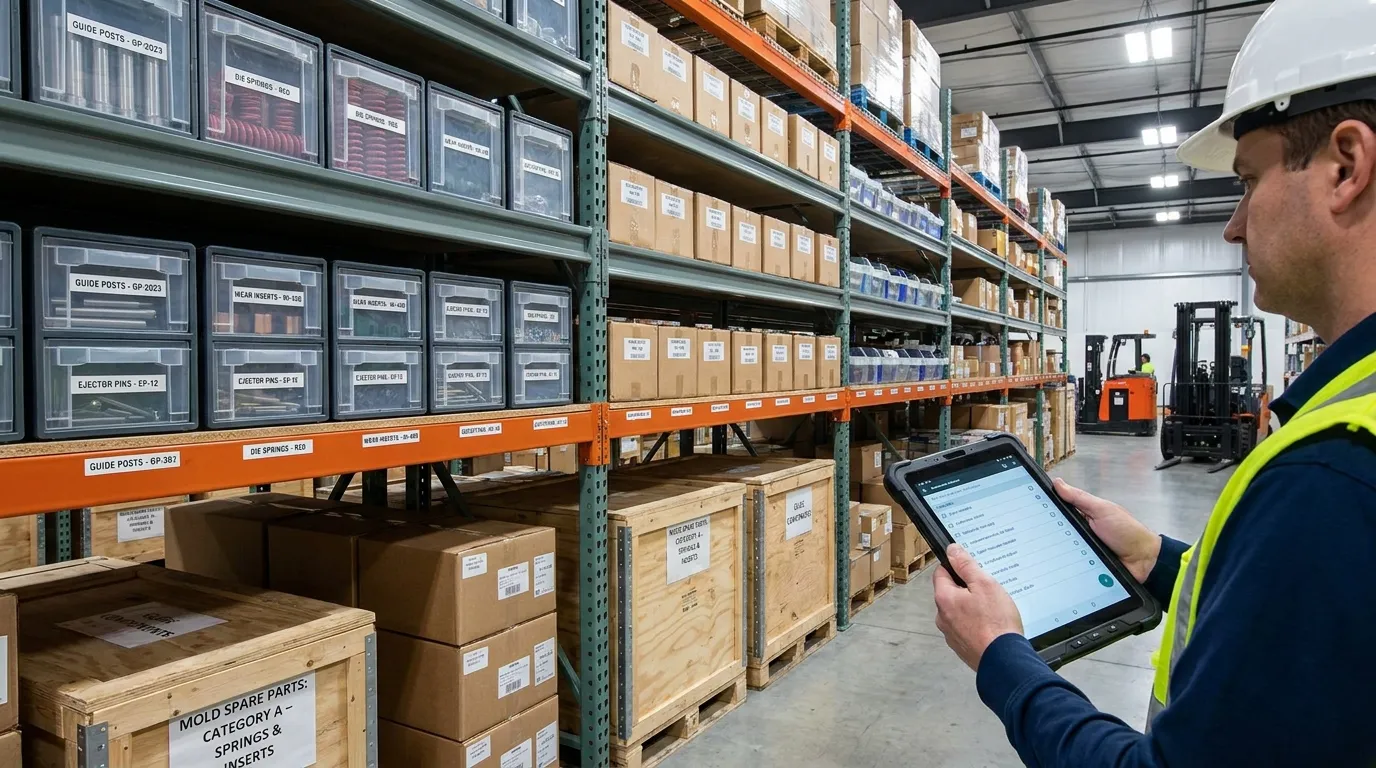
The right spare inventory depends on cycle volume, lead time risk, and replacement frequency. High-cycle molds and imported components usually require larger backup inventory.
There is no universal inventory number for every mold. A low-volume mold used once a month needs a different stocking strategy than a mold running continuously across multiple shifts. Maintenance history usually gives the clearest answer.
Supplier reliability also matters. If replacement parts consistently arrive within days, inventory requirements stay lower. If imported components take weeks to replace, keeping additional stock becomes safer.
When one backup part is enough
- The component rarely fails
- Local suppliers can ship quickly
- The mold has low production volume
- Downtime costs are manageable
When multiple replacements are necessary
- The mold runs daily
- Failures happen regularly
- Components are imported
- Production contracts have strict deadlines
- Downtime costs exceed replacement cost
A procurement manager tracking supplier performance noticed imported sleeves regularly exceeded quoted lead times. After calculating average delays, the company increased safety stock from one sleeve to four units for each active mold.
Critical Spare Parts Priority Table
| Component | Failure Frequency | Lead Time Risk | Recommended Backup Quantity |
|---|---|---|---|
| Ejector pins | High | Medium | 5-10 |
| Springs | High | Low | 10-20 |
| Guide bushings | Medium | High | 2-4 |
| Wear inserts | Medium | Medium | 2-3 |
| Sleeves | Medium | High | 2-4 |
Using maintenance history with supplier lead times gives more accurate stocking decisions than guessing. Teams working with specialized mold precision components often review inventory every quarter to adjust for wear trends and supplier changes.
How do customs and shipping delays affect mold spare inventory?
Customs inspections, international freight delays, and compliance reviews can extend mold spare-part delivery times unexpectedly. Keeping critical components in stock reduces the risk of long production stoppages.
Many mold components move through international supply chains before reaching production facilities. Delays can happen during customs inspections, freight congestion, or document verification. Recent customs compliance updates have increased review pressure in some shipping routes, according to the Bangladesh Customs instruction update and logistics reporting from NG Terminal.
These delays matter most for precision components with limited suppliers. A factory may have enough material, operators, and machine time ready, but production still stops if one small mold component is unavailable.
One packaging manufacturer avoided repeated delays by shifting several imported wear components into local safety stock. The added inventory cost was lower than the financial loss from emergency shutdowns and rescheduled deliveries.
Should you buy OEM, standard, or custom replacement parts?
OEM parts work best when molds require exact compatibility or strict tolerances. Standard components are usually faster and less expensive to replace. Custom replacements make sense for specialized tooling that cannot use standard dimensions.
The right option depends on production requirements, not just purchase price. A cheaper component may save money initially but create alignment issues or shorter service life later.
| Replacement Type | Best Use Case | Main Advantage | Main Risk |
|---|---|---|---|
| OEM | Tight-tolerance molds | Exact fit | Higher cost |
| Standard | Common mold systems | Faster delivery | Limited customization |
| Custom | Specialized tooling | Designed for unique molds | Longer lead time |
A factory switching from custom ejector pins to standardized components shortened replacement lead time from three weeks to four days. That change improved maintenance scheduling and reduced emergency orders during peak production.
Standard mold parts are often the safer choice for high-turnover consumables. For specialized tooling systems, custom components may still be necessary to maintain dimensional accuracy. The plastic injection mold guide explains how mold structure and tolerance requirements affect component selection.
For buyers building faster replacement systems, keeping local inventory of standard mold inventory can simplify emergency maintenance planning.
What does a practical mold spare-parts checklist look like?
A practical spare-parts checklist tracks component condition, inventory levels, and supplier risk in one place. The goal is to identify downtime threats before production stops.
Most effective checklists separate high-frequency consumables from emergency-only replacements. This keeps inventory organized and makes reorder decisions easier for both maintenance and procurement teams.
Mold Downtime Risk Checklist
| Item | What to Track | Review Frequency |
|---|---|---|
| Ejector pins | Wear and bending | Weekly |
| Springs | Compression strength | Weekly |
| Guide bushings | Alignment wear | Monthly |
| Wear inserts | Surface condition | Monthly |
| Inventory count | Remaining stock | Weekly |
| Supplier lead time | Delivery consistency | Quarterly |
| Emergency backup status | Critical shortages | Monthly |
The checklist should also include supplier history. A component with unpredictable delivery times deserves more safety stock than one with stable local availability.
Some teams also create color-coded inventory levels for critical components. Green means stocked, yellow signals reorder planning, and red identifies immediate risk. Keeping organized records for precision spare components helps prevent rushed purchasing decisions during urgent repairs.
What to Do Next
Reducing downtime starts with identifying the mold spare parts that fail most often and replacing guesswork with a clear inventory plan. Focus first on high-wear, production-critical components such as ejector systems, springs, and guide parts. Then review supplier lead times, shipping risks, and maintenance history to decide how much backup inventory makes sense.
A small inventory investment can prevent expensive production interruptions later. If your current replacement process depends entirely on emergency orders, it’s probably time to build a more reliable spare-parts system.
Frequently Asked Questions
What mold spare parts wear out the fastest?
Ejector pins, springs, bushings, and guide components usually wear out the fastest because they operate continuously under friction and mechanical stress. High-cycle molds typically require these parts to be replaced more frequently than structural mold components.
How many spare mold components should be stocked?
The right quantity depends on production volume, replacement frequency, and supplier lead times. High-volume molds or imported components usually require more backup inventory to reduce downtime risk.
Why do mold spare-part shipments get delayed?
Mold spare-part shipments can be delayed by customs inspections, incomplete documentation, freight congestion, or supplier production delays. Imported precision components often face longer replacement timelines than standard local inventory.
Which mold spare parts are considered critical?
Critical spare parts are components that stop production immediately when they fail, including ejector systems, guide assemblies, and certain wear inserts. These parts should usually be stocked before failures occur.
Are standard mold parts better than custom replacements?
Standard mold parts are often faster and cheaper to replace, but custom components may still be necessary for specialized molds or tight tolerances. The best choice depends on compatibility, production volume, and lead-time risk.
Share:



Written By Sunshine
At Sunshine, we are a professional manufacturer and supplier of precision mould components, offering a wide range of products for stamping and injection mould applications. Our core focus includes punching dies, ejector pins and sleeves, and guide posts and bushings. With advanced CNC machining, strict quality control, and strong production capabilities, we ensure reliable, high-precision parts, along with in-stock standard components for fast and efficient global supply.
NEWS
GET SERVICE
With quality parts to meet every budget and friendly staff trained to make your visit informative and hassle free.
