



Medical Injection Molding: Requirements, Materials, and QC Checklist
Medical injection molding uses validated production processes, medical-grade plastics, cleanroom-compatible tooling, and strict inspection controls to manufacture healthcare components safely and consistently. Successful projects depend on proper material selection, contamination prevention, documented traceability, and quality checks that verify dimensional accuracy, surface condition, and packaging integrity throughout production.
Medical parts face tighter quality demands than standard plastic products. A small defect, contamination issue, or material mismatch can create compliance risks or product failure. That’s why medical molding projects require more than precision tooling alone. Buyers also need the right materials, clean production controls, and reliable inspection systems before approving production.
What is medical injection molding?
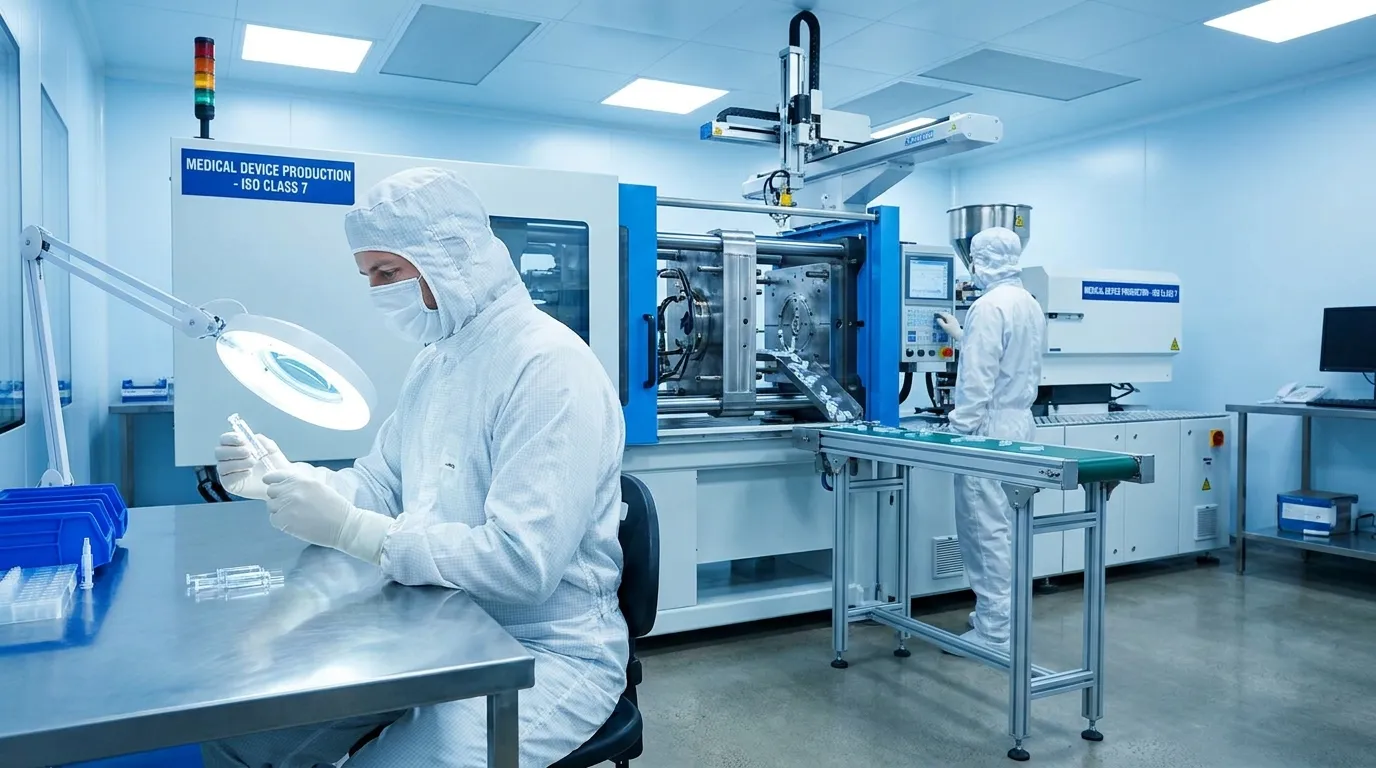
Medical injection molding produces medical-grade plastic components under tightly controlled manufacturing and quality conditions. Unlike standard molding, it requires validated processes, contamination control, traceability, and material compliance suitable for healthcare environments.
Medical injection molding is used to manufacture parts for healthcare and laboratory products. Common examples include syringe housings, diagnostic device enclosures, IV connectors, surgical handles, and disposable testing components.
The molding process itself is similar to standard injection molding. Heated plastic resin is injected into a mold cavity under pressure. The difference is the production environment and quality requirements. Medical production often requires process validation, material tracking, documented inspections, and controlled handling procedures.
Companies producing medical parts also need to consider regulatory expectations from organizations like the FDA. Buyers usually expect suppliers to maintain detailed production records and stable process controls.
For readers who need broader tooling fundamentals, the mold components guide explains how mold systems support precision manufacturing across different industries.
How is medical injection molding different from standard molding?
Medical molding prioritizes patient safety, traceability, and contamination control over pure production speed. Standard molding may focus mainly on cost and throughput, while medical production requires validated materials, documented processes, and stricter inspection standards.
A standard industrial plastic part may only need dimensional accuracy and cosmetic consistency. Medical parts often require additional documentation, material verification, and contamination control procedures before shipment approval.
The production environment also changes. Many medical components are manufactured in controlled areas to reduce airborne particles and contamination risks. Tool maintenance becomes more important because mold wear can introduce cosmetic defects or particulate contamination.
| Area | Standard Molding | Medical Injection Molding |
|---|---|---|
| Material control | Basic tracking | Full traceability |
| Inspection | Batch inspection | Documented QC workflow |
| Production environment | Standard factory | Controlled or cleanroom-compatible |
| Validation | Limited | Process validation required |
| Defect tolerance | Moderate | Very strict |
Medical projects also tend to require longer supplier qualification. A supplier may need to demonstrate repeatability, inspection capability, and documentation practices before production approval.
Which medical products commonly use injection molding?
Injection molding is widely used for disposable and reusable healthcare products because it supports high-volume production with tight dimensional consistency.
Medical manufacturers use molded plastic parts in:
- Syringe bodies
- Diagnostic cartridge housings
- Surgical tool handles
- IV and fluid delivery components
- Drug delivery systems
- Laboratory consumables
- Monitoring device enclosures
A disposable syringe housing is a good example of high-volume medical molding. The part needs stable dimensions, contamination control, and repeatable material quality across large production runs.
Diagnostic equipment often creates different requirements. Cosmetic quality and dimensional precision matter because parts may include snap fits, transparent windows, or electronic integration points.
For a broader overview of sector-specific production uses, SunshinePro’s medical molding applications page covers additional injection molding industries and part categories.
What materials are used in medical injection molding?
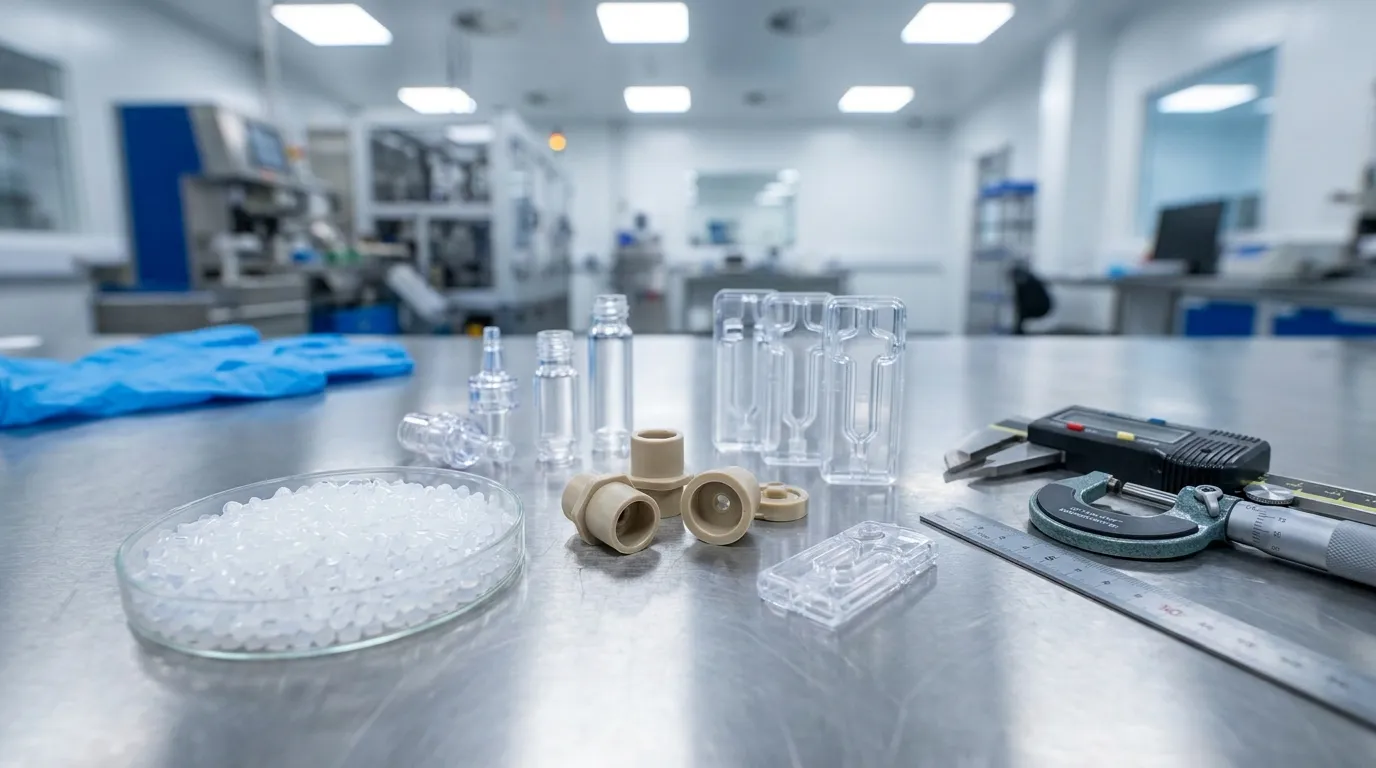
Medical injection molding commonly uses polypropylene, polycarbonate, polyethylene, PVC, and PEEK depending on sterilization, strength, and biocompatibility requirements. Material selection depends on whether the device is disposable, reusable, implantable, or exposed to chemicals or heat.
Medical-grade plastics are selected based on performance, sterilization compatibility, and regulatory expectations. The same resin used for industrial production may not meet medical traceability or biocompatibility requirements.
Here’s a simplified comparison of common materials:
| Material | Typical Medical Use | Sterilization Resistance | Cost Level |
|---|---|---|---|
| Polypropylene (PP) | Syringes, containers | Good | Low |
| Polyethylene (PE) | Tubing, packaging | Good | Low |
| Polycarbonate (PC) | Surgical handles, housings | Very good | Medium |
| PVC | Medical tubing | Moderate | Medium |
| PEEK | Implant-adjacent parts | Excellent | High |
When is PEEK necessary?
PEEK is not automatically the best medical plastic. It performs well in high-temperature or demanding environments, but many disposable devices use lower-cost materials successfully.
A reusable surgical instrument handle may justify polycarbonate or PEEK because it must survive repeated sterilization cycles. A disposable diagnostic cartridge usually does not need that level of performance.
Material selection also affects tooling wear. Abrasive or high-temperature resins may require stronger tooling materials and better surface protection. SunshinePro’s guide to wear-resistant mold components explains how mold durability supports stable long-run production.
Why do cleanroom compatibility and surface finish matter?
Cleanroom compatibility reduces contamination risks during medical molding production. Mold surface finish, wear resistance, and maintenance quality directly affect particulate generation, cosmetic defects, and product cleanliness.
Not every medical product requires full cleanroom production, but contamination-sensitive devices often do. Airborne particles, residue buildup, or poor handling practices can create quality problems that are unacceptable in healthcare applications.
Surface finish also affects cleaning and maintenance. A poorly finished mold surface may trap residue more easily or create cosmetic inconsistency on molded parts. That becomes a larger issue for transparent or patient-contact products.
A polished mold surface is not only cosmetic in medical production. Poor surface quality can increase contamination retention and cleaning difficulty during production cycles.
Cleanroom and Mold Maintenance Checklist
- Use controlled material handling procedures
- Reduce particulate buildup during production
- Maintain consistent mold cleaning schedules
- Monitor mold wear and polishing condition
- Separate medical tooling from general production tooling
- Verify packaging cleanliness before shipment
Medical manufacturers also pay close attention to tooling wear because worn surfaces can increase flash, contamination risk, or dimensional variation. SunshinePro’s article about medical mold surface finish explains how finishing quality affects molded part performance.
What certifications and compliance standards matter?
Medical injection molding suppliers typically follow ISO 13485 quality management standards and FDA-related manufacturing requirements. Documentation, traceability, validation, and process control are essential for regulated medical production.
Medical molding suppliers are often evaluated on more than machining capability. Buyers also review quality systems, documentation procedures, and inspection controls before approving production.
One of the most common standards is ISO 13485, which focuses on quality management systems for medical device manufacturing. The standard emphasizes traceability, risk management, and documented process control.
What does ISO 13485 cover?
ISO 13485 focuses on manufacturing consistency and documentation. It supports process validation, corrective actions, supplier control, and product traceability throughout production.
Suppliers working with medical device companies may also need to align with expectations outlined by the FDA quality system regulation.
ISO certification alone does not guarantee good medical molding performance. Buyers still need to evaluate tooling maintenance practices, contamination control procedures, and inspection discipline before approving a supplier.
What should a medical injection molding QC checklist include?
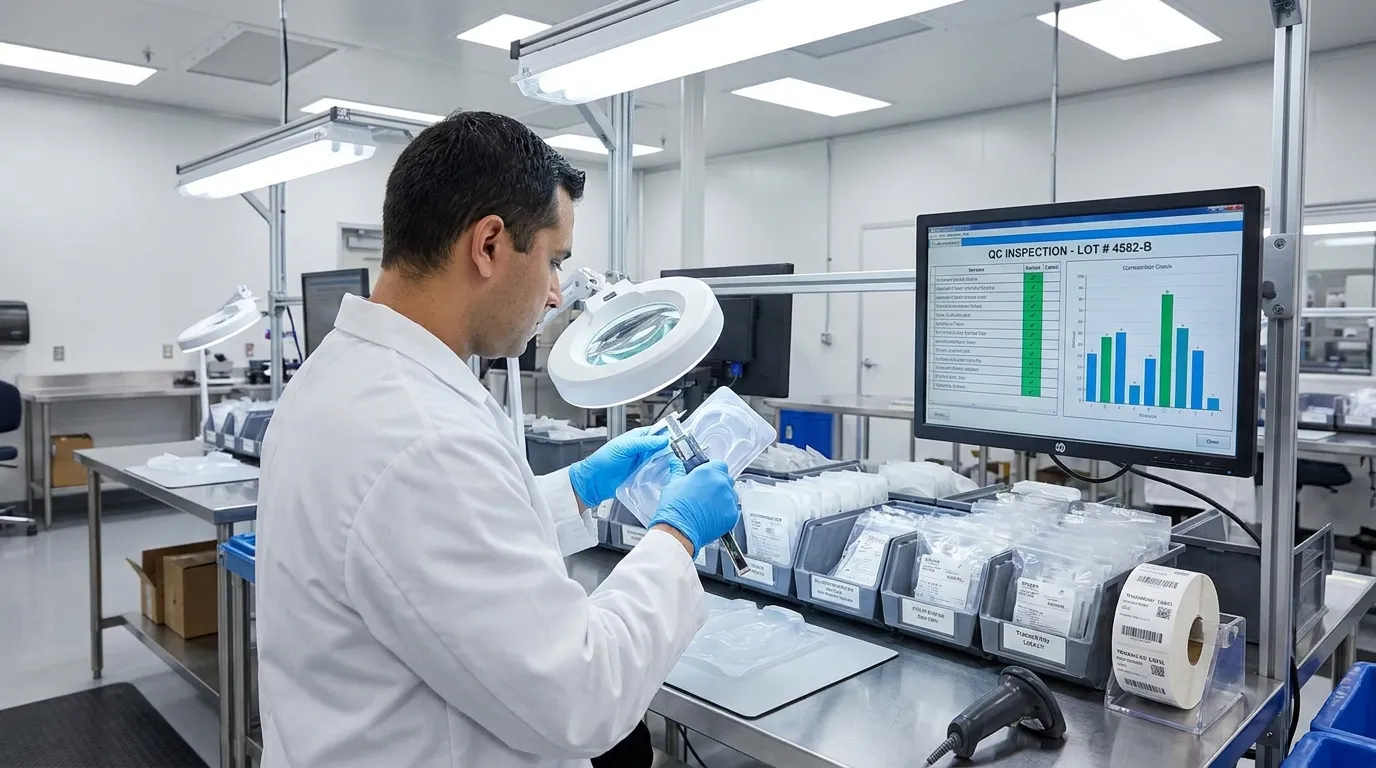
A medical injection molding QC checklist should verify material traceability, dimensional accuracy, contamination control, visual quality, process consistency, and packaging integrity. Medical parts require documented inspection steps throughout production, not only at final shipment.
Medical QC starts before molding begins. Incoming resin verification helps confirm that the correct medical-grade material is being used for production. Traceability records should connect each production batch to specific materials and process conditions.
In-process inspection monitors dimensions, cosmetic quality, and contamination risks during production. Final inspection verifies that packaging, labeling, and part quality meet customer and regulatory requirements.
Medical Injection Molding QC Checklist
| Inspection Area | What to Verify | Why It Matters |
|---|---|---|
| Incoming resin | Material certification and batch ID | Confirms approved resin use |
| Mold condition | Surface wear and cleanliness | Reduces contamination risk |
| Dimensional checks | Critical tolerances | Maintains assembly fit |
| Visual inspection | Flash, sink marks, contamination | Prevents cosmetic and functional defects |
| Process records | Temperature and pressure consistency | Supports validation |
| Packaging inspection | Sealing and cleanliness | Protects sterile handling |
Incoming, In-Process, and Final Inspection
Incoming inspection focuses on resin quality and mold readiness. In-process inspection monitors production stability and dimensional consistency during manufacturing runs.
Final inspection verifies cosmetic condition, packaging integrity, and traceability records before shipment approval. Medical manufacturers usually require documented QC records for each batch.
Heat treatment also affects mold stability during long production cycles. Proper tooling hardness reduces wear and dimensional drift over time. SunshinePro’s guide to heat treatment for mold parts explains how hardened tooling improves production consistency.
How do you choose the right medical injection molding supplier?
The best medical injection molding suppliers combine regulatory experience, validated production processes, cleanroom capability, and consistent QC documentation. Buyers should evaluate traceability systems, tooling maintenance, material handling, and inspection procedures before approving production.
Medical sourcing decisions should focus on process reliability as much as tooling quality. A supplier may produce visually acceptable parts while still lacking proper traceability or contamination controls.
Buyers should ask suppliers practical questions before approval:
- Do you support documented process validation?
- Can you provide traceability records?
- How are molds cleaned and maintained?
- What inspection data is recorded during production?
- Do you support cleanroom-compatible manufacturing?
A supplier comparison often makes the difference clear. Supplier A may offer lower pricing with standard production controls. Supplier B may provide validated inspection records, documented mold maintenance, and traceable material handling. For regulated medical production, Supplier B usually reduces long-term compliance risk.
Production cost still matters, especially for disposable products. Buyers comparing tooling investments can review SunshinePro’s guide to medical mold cost factors to understand how tooling complexity and production requirements affect pricing.
Suppliers handling international production should also understand trade and import documentation expectations outlined by Trade.gov and U.S. Customs and Border Protection.
Getting the Next Step Right
Medical injection molding projects succeed when tooling quality, material selection, contamination control, and inspection systems work together from the start. Buyers should evaluate more than part appearance alone. Traceability, process validation, mold maintenance, and clean production practices all affect long-term reliability.
If you’re reviewing suppliers or planning a new medical device project, start with a clear material strategy and a documented QC checklist. That approach reduces approval delays, lowers production risk, and helps maintain stable quality across future production runs.
Frequently Asked Questions
What is medical-grade plastic?
Medical-grade plastic is a resin formulated and tested for healthcare applications that require biocompatibility, sterilization resistance, and regulatory compliance. The right material depends on how the device is used and whether it contacts patients, chemicals, or heat during operation.
Does medical injection molding require a cleanroom?
Not every medical part requires full cleanroom molding, but contamination-sensitive products often do. Cleanroom requirements depend on the device category, regulatory expectations, and the level of contamination risk during production and packaging.
What is ISO 13485 in medical manufacturing?
ISO 13485 is a quality management standard used in medical device manufacturing. It focuses on documentation, traceability, process control, and risk management to help suppliers maintain consistent production quality.
Which plastics are commonly used in medical injection molding?
Common medical molding plastics include polypropylene, polyethylene, polycarbonate, PVC, and PEEK. Material selection depends on sterilization method, chemical resistance, strength requirements, and whether the product is disposable or reusable.
How are medical molded parts inspected?
Medical molded parts are inspected through dimensional checks, visual inspection, contamination monitoring, process validation, and traceability review. Inspection happens during production and again before packaging and shipment approval.
What defects are unacceptable in medical molding?
Contamination, flash, short shots, sink marks, dimensional variation, and surface defects can create quality or compliance risks in medical products. Acceptable tolerances depend on the part’s function, assembly fit, and regulatory requirements.
Share:



Written By Sunshine
At Sunshine, we are a professional manufacturer and supplier of precision mould components, offering a wide range of products for stamping and injection mould applications. Our core focus includes punching dies, ejector pins and sleeves, and guide posts and bushings. With advanced CNC machining, strict quality control, and strong production capabilities, we ensure reliable, high-precision parts, along with in-stock standard components for fast and efficient global supply.
NEWS
GET SERVICE
With quality parts to meet every budget and friendly staff trained to make your visit informative and hassle free.
