



Cost of Injection Mold: Main Price Factors Buyers Should Know
The cost of injection mold projects usually ranges from about $1,000 for simple prototype tooling to more than $100,000 for complex production molds. Mold steel type, cavity count, part geometry, tolerances, surface finish, and production volume have the biggest impact on price. Buyers should also factor in testing, shipping, tariffs, customs delays, and future maintenance before approving a tooling quote.
Injection mold pricing can feel inconsistent until you understand what suppliers are actually quoting. A low-cost mold may work for a short production run, while a more expensive tool could reduce downtime, scrap, and long-term part cost. This guide breaks down the main cost drivers so you can compare quotes with more confidence and avoid expensive surprises later.
How much does an injection mold cost?
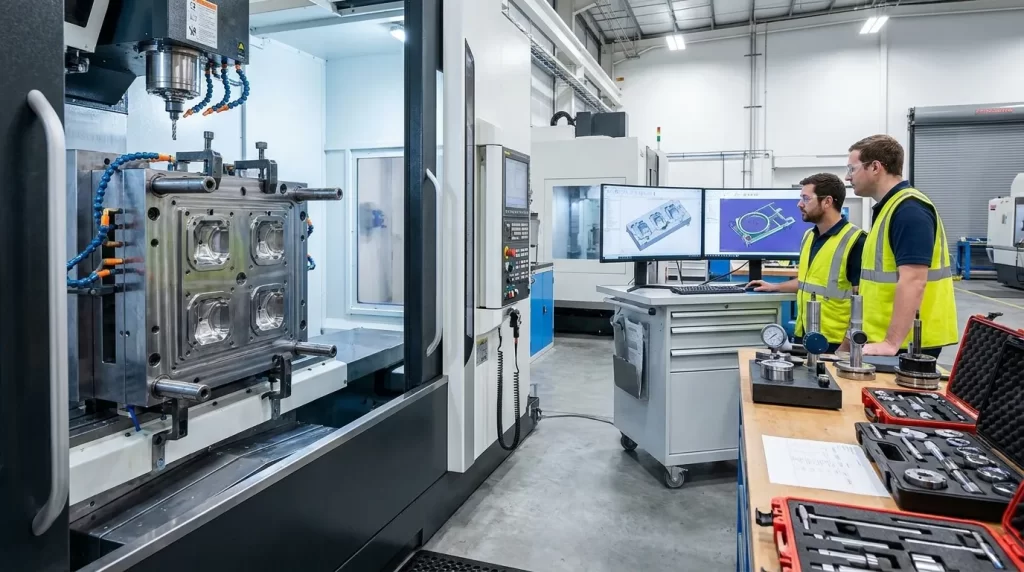
Injection mold cost typically ranges from about $1,000 for simple prototype tooling to more than $100,000 for complex hardened steel production molds. Part geometry, cavity count, tolerance, finish quality, and expected production volume are the main factors driving price.
Simple prototype molds made from aluminum or softer steel often stay in the lower price range. These tools are usually built for product testing, pilot runs, or low-volume production. A basic single-cavity mold for a small plastic part may cost a few thousand dollars if the geometry is simple and tolerances are loose.
Production tooling costs rise quickly when buyers need hardened steel, multiple cavities, textured finishes, or tight tolerances. According to Formlabs, large production molds can exceed six figures depending on complexity and expected output.
| Mold Type | Typical Cost Range | Common Use |
|---|---|---|
| Prototype aluminum mold | $1,000 to $5,000 | Product testing |
| Simple steel mold | $5,000 to $20,000 | Low to medium production |
| Multi-cavity production mold | $20,000 to $100,000+ | High-volume manufacturing |
If you need a broader overview of tooling structure and mold systems, the injection mold guide explains the core components and production setup in more detail.
What factors increase injection mold cost the most?
The biggest drivers of injection mold cost are mold complexity, cavity count, steel grade, tolerance requirements, and surface finish expectations. Small specification changes can add significant machining, polishing, and validation time to the project.
The part design has the biggest effect on tooling cost. Deep ribs, undercuts, threads, and sharp corners often require additional machining or moving mold components. Complex geometries also increase engineering time and mold testing requirements.
Material selection matters too. Hardened steel molds cost more because they take longer to machine and are built for higher production volumes. Softer steel or aluminum tooling lowers upfront cost but usually has a shorter lifespan.
| Cost Factor | Lower-Cost Scenario | Higher-Cost Scenario | Cost Impact |
|---|---|---|---|
| Part geometry | Simple shape | Undercuts and complex features | High |
| Steel type | Aluminum or P20 steel | Hardened H13 steel | High |
| Cavities | Single cavity | 8+ cavities | High |
| Surface finish | Standard finish | Mirror polish or texture | Medium to High |
| Tolerances | Standard tolerances | Tight precision tolerances | High |
For buyers still refining product geometry, reviewing some basic mold design basics before requesting quotes can help avoid unnecessary tooling complexity.
How cavity count changes tooling cost
Multi-cavity molds produce more parts per cycle, but they require more machining precision and balanced flow control. An 8-cavity mold is not simply eight times the price of a single-cavity tool, but it does require more engineering, tooling steel, and validation work.
A higher cavity count makes sense when annual production volume is high enough to offset the upfront tooling investment. For smaller production programs, a simpler mold may provide a better return.
Why tight tolerances increase machining time
Tight tolerances increase machining, inspection, and validation requirements. Medical, automotive, and electronics parts often need higher dimensional accuracy, which increases tooling complexity.
Surface finish can raise cost too. High-gloss cosmetic parts require extensive polishing, while textured finishes may require additional processing steps. Those finishing hours directly affect tooling price.
Is aluminum tooling or steel tooling the better investment?
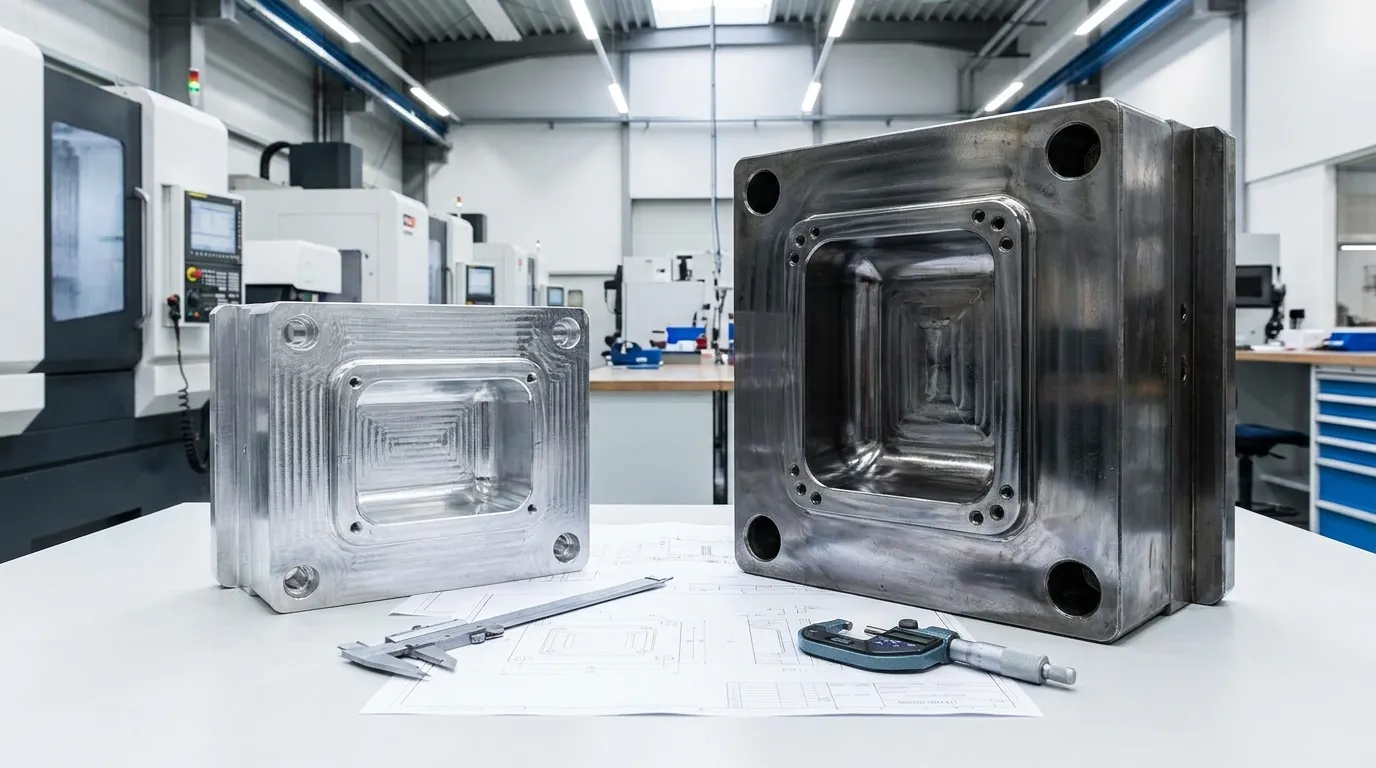
Aluminum tooling reduces upfront cost and shortens lead time for low-volume production, while hardened steel molds cost more initially but provide longer tool life and better stability for high-volume manufacturing.
Aluminum tooling is commonly used for prototype programs and smaller production runs. It machines faster than hardened steel, which lowers tooling cost and reduces lead time. Startups and product development teams often choose aluminum molds when they need fast market testing.
A consumer electronics startup producing 10,000 test units may choose aluminum tooling because the lower upfront investment reduces financial risk during product validation.
Steel molds work better for long production cycles and higher output. They resist wear more effectively and maintain dimensional consistency over time. Automotive and industrial programs usually depend on hardened steel because downtime and maintenance issues become expensive at scale.
Cheap tooling is not always cheaper long term. A lower-cost mold can increase maintenance, scrap, and production interruptions if the tool life does not match the expected production volume.
| Tooling Type | Best For | Advantages | Tradeoffs |
|---|---|---|---|
| Aluminum tooling | Prototype and low-volume runs | Lower cost, faster lead times | Shorter lifespan |
| Hardened steel tooling | High-volume production | Longer tool life, better stability | Higher upfront investment |
Early-stage product teams can reduce unnecessary tooling costs with better DFM planning before steel cutting begins.
Why do multi-cavity molds cost more upfront but lower part cost later?
Multi-cavity molds increase tooling cost because they require more machining precision and balanced flow design, but they reduce per-part production cost at higher volumes by producing more parts in each cycle.
A single-cavity mold produces one part per cycle, while a multi-cavity mold produces several parts at once. That increases mold complexity, but it also improves production efficiency.
For low annual volumes, a single-cavity mold is often the smarter choice. Multi-cavity molds are not automatically the best option. If production demand is modest, the added tooling cost may never pay for itself.
Single vs Multi-Cavity ROI Comparison
| Annual Volume | Tooling Type | Estimated Tool Cost | Output Per Cycle | Recommended Option |
|---|---|---|---|---|
| 10,000 parts | Single cavity | $8,000 | 1 part | Single cavity |
| 100,000 parts | 4-cavity mold | $28,000 | 4 parts | Multi-cavity |
| 500,000+ parts | 8-cavity hardened steel | $70,000+ | 8 parts | Multi-cavity |
An automotive supplier producing more than 500,000 parts annually may justify an 8-cavity hardened steel mold because the lower per-part cost offsets the higher tooling investment over time.
If you want a better understanding of cycle efficiency and production flow, the molding cycle process covers how tooling design affects manufacturing output.
What hidden costs do buyers often miss?
Many buyers focus only on the mold fabrication quote and overlook validation runs, engineering changes, shipping, customs fees, tariffs, and repair costs. These hidden expenses can significantly increase total project cost and delay production launch.
Tooling quotes do not always include every project expense. Some suppliers separate mold testing, spare components, shipping, or engineering revisions into additional charges after production starts.
Engineering changes become especially expensive after steel cutting begins. A small design revision that looks minor on a CAD file may require re-machining large mold sections or replacing inserts entirely.
Hidden Cost Checklist
- Mold testing and validation runs
- Design revisions after tooling starts
- Spare inserts and replacement components
- Shipping and insurance
- Tariffs and customs clearance fees
- Maintenance and repair work
- Secondary finishing operations
Customs and tariff risks in 2025-2026
Overseas tooling can still lower upfront cost, but customs delays and tariff changes create scheduling risk. According to Midstate Mold and TechNH, manufacturers continue to face supply chain uncertainty tied to international sourcing and trade policy.
A buyer sourcing a mold offshore may save money initially but lose weeks during customs clearance or shipping disruptions. For time-sensitive product launches, that delay can outweigh the original tooling savings.
Buyers planning a new program should review these molding project guidelines before approving international tooling.
Are overseas molds still cheaper in 2025 and 2026?
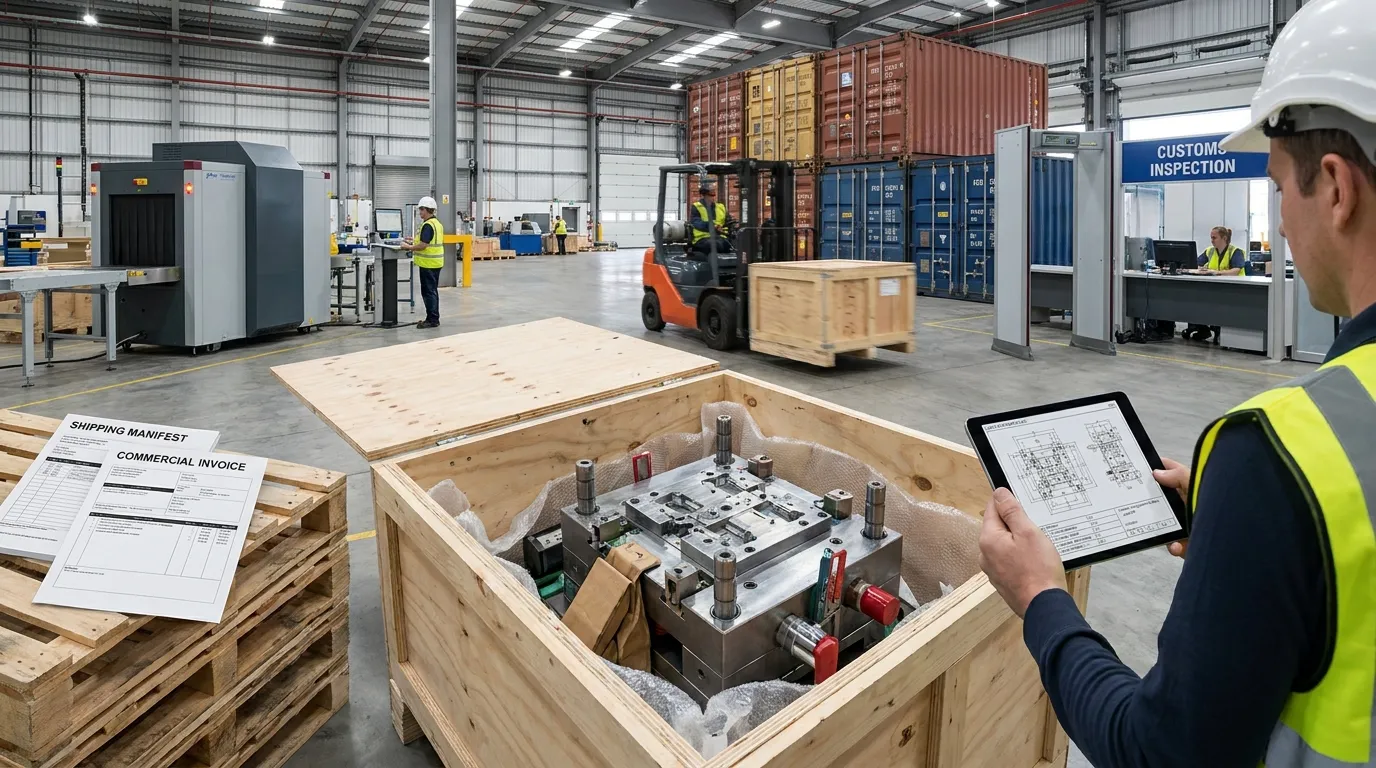
Overseas molds can reduce upfront tooling cost, especially for simple projects, but tariffs, customs delays, shipping costs, communication delays, and revision risks can reduce or eliminate the savings for complex or time-sensitive programs.
Offshore suppliers often offer lower labor and machining costs, which helps reduce the initial mold quote. For straightforward plastic parts with stable designs, overseas tooling can still provide meaningful savings.
The challenge appears when revisions, repairs, or production changes become necessary. Communication delays and international shipping can slow engineering updates significantly. A domestic supplier may cost more upfront but resolve tooling adjustments much faster.
Tool ownership is another issue buyers sometimes overlook. According to Harris Sliwoski, tooling contracts should clearly define ownership rights, maintenance responsibility, and transfer conditions.
| Factor | Overseas Tooling | Domestic Tooling |
|---|---|---|
| Upfront tooling cost | Usually lower | Usually higher |
| Shipping time | Longer | Shorter |
| Revision speed | Slower | Faster |
| Tariff exposure | Higher | Lower |
| Communication | Variable | Easier coordination |
A medical device manufacturer with tight tolerances and frequent engineering updates may benefit more from domestic tooling support, even if the upfront quote is higher.
How should buyers compare injection mold quotes?
Tooling quotes should be compared line by line, not just by total price. Two suppliers may quote similar molds with very different steel grades, maintenance expectations, validation processes, or ownership terms.
A low quote sometimes excludes critical services such as sampling, mold testing, or replacement components. Buyers should confirm exactly what is included before approving production.
Questions to ask before approving tooling
- What steel grade is included?
- How many production cycles is the tool designed for?
- Are sampling and validation included?
- Who owns the mold after payment?
- What repair or warranty support is included?
- How are engineering changes handled after approval?
A detailed mold engineering review before tooling approval can reduce revision costs and clarify supplier expectations early in the project.
Higher-cost tooling is not always overpriced. In many cases, the more expensive quote includes stronger steel, better cooling design, longer tool life, or tighter quality control. Those upgrades can reduce downtime and scrap during long production runs.
What information should you prepare before requesting a mold quote?
Accurate quotes depend on accurate project information. Missing details often lead to revised pricing, longer lead times, or tooling redesigns later.
Suppliers usually need CAD files, estimated production volume, resin selection, tolerance expectations, and cosmetic finish requirements before preparing a reliable quote. Annual volume matters because it affects steel selection, cavity count, and mold life planning.
Mold Quote Preparation Checklist
- 3D CAD files or technical drawings
- Expected annual production volume
- Resin or material selection
- Surface finish requirements
- Tolerance expectations
- Target lead time
- Packaging or assembly requirements
Better upfront documentation usually reduces engineering revisions later. Strong manufacturability planning can also help identify unnecessary complexity before tooling starts.
What to Do Next
The best injection mold decision depends on production volume, part complexity, timeline, and long-term manufacturing goals. A lower upfront quote may work for short pilot runs, while a more durable production tool can reduce cost per part over time.
Before approving any tooling project, compare quotes carefully and confirm what is included. Ask about steel type, cavity count, validation, maintenance, and ownership terms. If you're evaluating the cost of injection mold programs for a new product, getting the engineering details right early usually saves far more money than choosing the cheapest quote.
Frequently Asked Questions
How much does an injection mold usually cost?
Injection mold cost can range from roughly $1,000 for simple prototype tooling to more than $100,000 for complex multi-cavity hardened steel molds. Final pricing depends on part complexity, cavity count, tolerances, and expected production volume.
Why is injection molding tooling expensive?
Injection molding tooling is expensive because molds require precision engineering, machining, polishing, and validation. Tight tolerances and complex geometries increase manufacturing time and tooling complexity, which raises the total project cost.
Is aluminum tooling cheaper than steel tooling?
Aluminum tooling is generally cheaper than hardened steel tooling. It also shortens lead times for low-volume production, while steel molds provide longer tool life and better dimensional stability for high-volume manufacturing.
How long does it take to build an injection mold?
Injection mold manufacturing often takes between 8 and 20 weeks depending on complexity, validation requirements, and supplier workload. Engineering changes after steel cutting can extend the timeline further.
Are Chinese injection molds cheaper?
Chinese injection molds are often cheaper upfront, especially for simpler projects. However, tariffs, customs delays, shipping costs, and revision challenges can reduce the overall savings.
What increases injection mold cost the most?
Cavity count, steel grade, part complexity, tight tolerances, and surface finish requirements are major mold cost drivers. These factors increase machining time, polishing work, validation needs, and long-term maintenance demands.
Share:



Written By Sunshine
At Sunshine, we are a professional manufacturer and supplier of precision mould components, offering a wide range of products for stamping and injection mould applications. Our core focus includes punching dies, ejector pins and sleeves, and guide posts and bushings. With advanced CNC machining, strict quality control, and strong production capabilities, we ensure reliable, high-precision parts, along with in-stock standard components for fast and efficient global supply.
NEWS
GET SERVICE
With quality parts to meet every budget and friendly staff trained to make your visit informative and hassle free.
