



Automotive Injection Molding: Tooling Requirements for Durable Plastic Parts
Automotive injection molding requires tooling that can maintain dimensional stability, cosmetic consistency, and repeatable part quality through long production runs. Automotive molds face thermal cycling, vibration-related stress, abrasive materials, and tight tolerance requirements. Hardened steel tooling, balanced cooling channels, proper venting, and preventive maintenance help manufacturers produce durable automotive plastic parts with stable surface finishes and longer mold life.
Automotive suppliers cannot treat vehicle parts like standard consumer plastics. A dashboard panel, grille, or under-hood housing may go through years of heat, vibration, UV exposure, and mechanical stress. Tooling decisions directly affect whether those parts stay dimensionally stable and visually consistent after hundreds of thousands of cycles.
What makes automotive injection molding different from standard plastic molding?
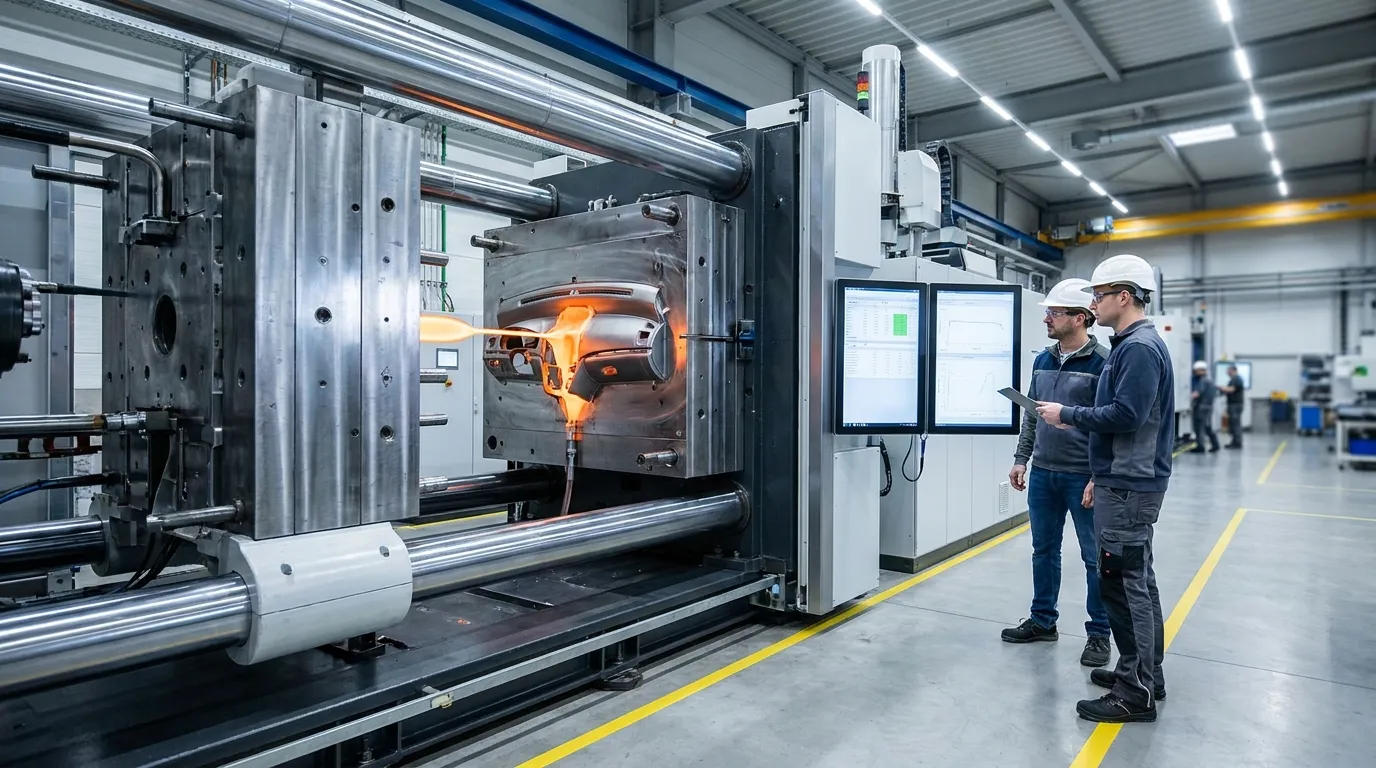
Automotive injection molding requires stronger tooling because vehicle parts must survive heat, vibration, UV exposure, and long production runs without losing dimensional accuracy or cosmetic quality. Standard consumer-product molds usually face lower stress and shorter production demands.
Automotive parts often stay in service for years under changing temperatures and constant vibration. Interior trim pieces must fit tightly without rattling. Exterior components need stable surface finishes even after long UV exposure. Under-hood parts may experience repeated thermal cycling that pushes both the resin and the mold harder than standard commercial applications.
Production volume also changes the tooling strategy. Automotive programs commonly run for hundreds of thousands or even millions of cycles. Softer tooling materials may wear too quickly under those conditions, especially when using glass-filled engineering plastics.
| Standard Plastic Molding | Automotive Injection Molding |
|---|---|
| Lower production volumes | High-volume production runs |
| Basic cosmetic standards | Strict surface finish consistency |
| Limited thermal exposure | Repeated thermal cycling |
| Lower dimensional demands | Tight assembly tolerances |
| Shorter product lifespan | Long-term durability expectations |
This is why many automotive suppliers invest heavily in hardened tooling, process control, and preventive maintenance. According to Intertek, automotive plastic components often require extensive validation and testing to maintain quality standards across production.
If you need a broader overview of mold construction, the mold design fundamentals page explains the core structure behind injection mold systems.
Which automotive parts place the highest demands on injection molds?
Automotive parts exposed to heat, vibration, UV light, or cosmetic inspection place the greatest demands on injection molds. Dashboards, grilles, lamp housings, and under-hood components require stable tooling that can maintain tight tolerances across long production runs.
Not every automotive component stresses a mold equally. Large cosmetic panels often create the biggest challenges because they combine appearance requirements with dimensional accuracy. Even a small amount of warpage can create fitment problems during assembly.
Lamp housings are another demanding application. Poor cavity polishing or inconsistent cooling can create gloss variation that becomes visible immediately under light reflection. Exterior grilles and trim pieces also need stable surface texture retention throughout the mold lifecycle.
| Automotive Part | Main Tooling Challenge |
|---|---|
| Dashboard panels | Warpage control |
| Lamp housings | Gloss consistency |
| Exterior grilles | UV-related surface quality |
| Under-hood housings | Thermal resistance |
| Interior trim panels | Tight dimensional fit |
| HVAC components | Long-run repeatability |
A dashboard molding project is a good example. Uneven cooling channels can create shrinkage differences across the part surface. The result may look flat at first, then distort slightly after installation. That small dimensional shift often causes alignment issues during vehicle assembly.
Manufacturers working across different industries often apply similar precision principles. The injection mold applications resource shows how tooling requirements change between product categories.
Why do mold steel selection and hardness matter in automotive production?
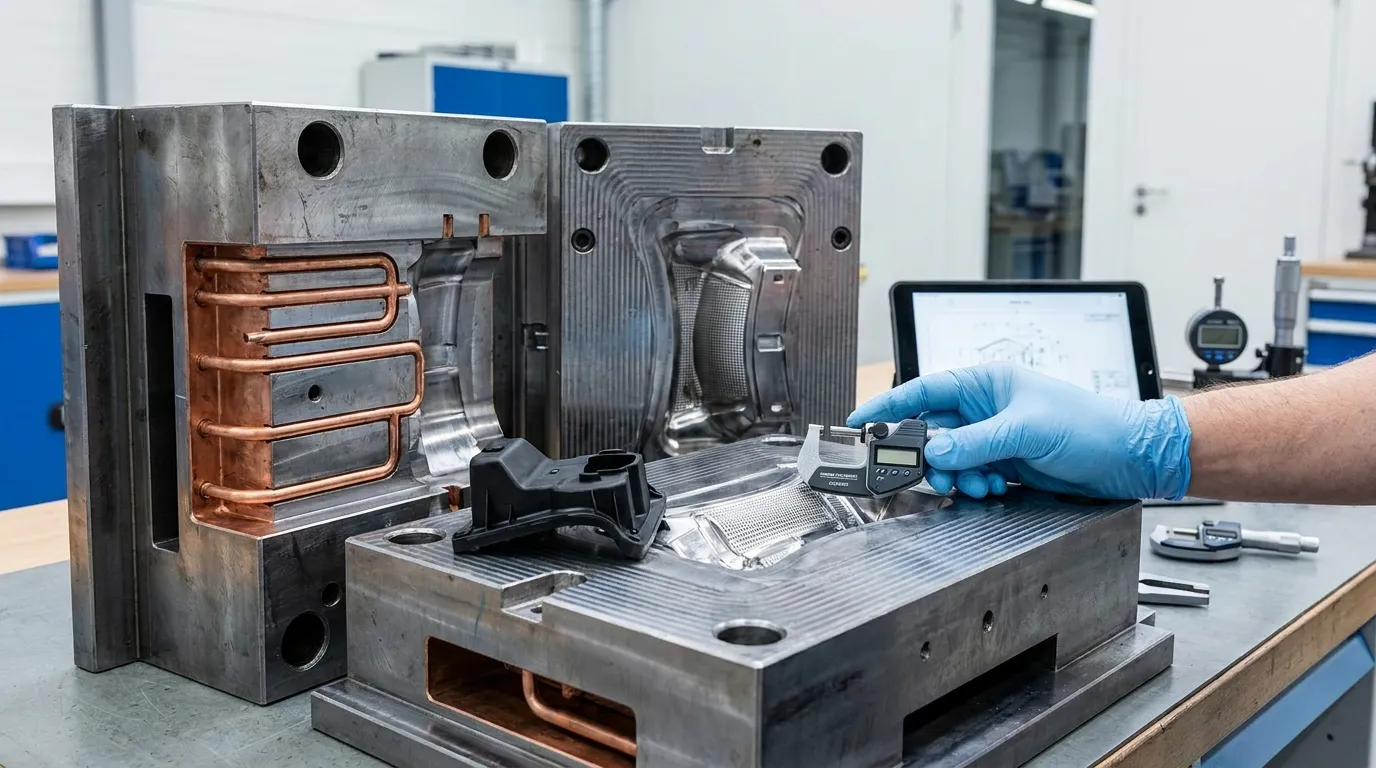
Mold steel selection affects wear resistance, cavity stability, surface finish retention, and long-term production consistency. Automotive programs with high volumes or abrasive resins usually require hardened steel tooling instead of softer aluminum molds.
Tooling material directly affects how long a mold can maintain quality standards. Automotive molds frequently run abrasive materials such as glass-filled nylon, which can wear softer cavity surfaces quickly. Once cavity wear starts, dimensional drift and cosmetic defects become harder to control.
Hardened steel tooling costs more upfront, but it usually performs better for long automotive programs. It handles repeated thermal cycling more consistently and maintains cavity precision over larger production volumes.
| Tooling Material | Best Use Case | Main Limitation |
|---|---|---|
| Aluminum tooling | Prototype and short runs | Faster wear |
| Pre-hardened steel | Medium production | Moderate wear resistance |
| Hardened steel | Long automotive programs | Higher initial cost |
When aluminum tooling still makes sense
Aluminum tooling is not always the wrong choice. It works well for prototype validation, bridge tooling, and low-volume production where lead time matters more than extreme mold lifespan.
That said, low tooling cost can become expensive later if the mold cannot maintain dimensional consistency. A softer mold running glass-filled resin may require repeated repairs, re-polishing, or cavity corrections much earlier than expected.
A supplier that understands long-term tooling performance should explain these tradeoffs clearly instead of defaulting to the cheapest option. The mold component guide provides a broader look at the components that affect tooling durability.
How do automotive manufacturers maintain dimensional stability in molded parts?
Dimensional stability in automotive injection molding depends on balanced cooling, stable cavity temperatures, controlled shrinkage, and repeatable process settings. Poor tooling design can cause warpage, fitment issues, and inconsistent assembly performance.
Automotive assemblies leave little room for dimensional variation. Interior trim pieces, HVAC housings, and console components often need to align precisely with surrounding parts. Even small dimensional movement can create visible gaps or assembly stress.
Cooling design plays a major role in dimensional control. If one area of the cavity cools faster than another, the part may shrink unevenly. This is a common cause of warpage in large automotive panels.
Common causes of warpage in automotive parts
- Uneven cooling channel layout
- Poor gate placement
- Inconsistent resin shrinkage
- Excessive injection pressure
- Unstable mold temperature control
A dashboard warpage issue illustrates the problem well. One supplier used uneven cooling channels near the center of a large panel. The part initially passed inspection, but slight dimensional movement appeared after installation. The issue traced back to inconsistent cooling rates across the cavity.
Manufacturers also use mold-flow analysis to predict shrinkage and filling behavior before production begins. Stable process settings help maintain repeatability after the tool moves into long production cycles.
| Dimensional Stability Factor | Why It Matters |
|---|---|
| Balanced cooling | Reduces uneven shrinkage |
| Stable cavity temperature | Improves repeatability |
| Controlled gate placement | Reduces internal stress |
| Consistent process settings | Maintains part dimensions |
| Resin selection | Affects shrink behavior |
Companies producing tight-tolerance parts in other industries face similar challenges. The device mold precision page shows how precision tooling practices support dimensional consistency.
What tooling features improve surface finish and cosmetic quality?
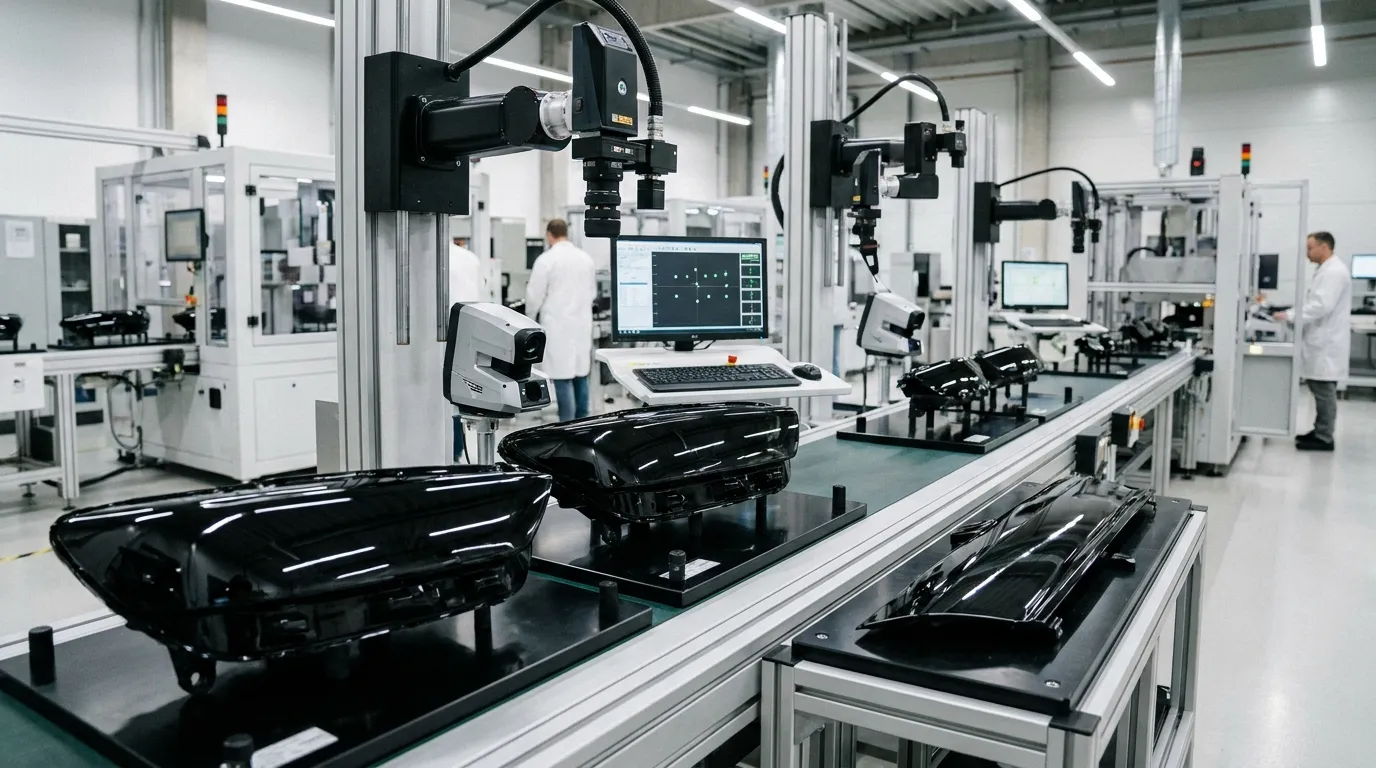
Automotive surface quality depends heavily on tooling precision. Proper polishing, venting, cavity alignment, and gate positioning help manufacturers reduce weld lines, gloss variation, and visible cosmetic defects across large production runs.
Cosmetic automotive parts require stable tooling surfaces. Poor polishing can create texture inconsistency, while weak venting may trap gases and leave visible marks on finished components.
Lamp housings provide a clear example. A supplier may choose a premium resin, but weak cavity polishing can still create uneven gloss reflection across the part surface. In automotive applications, even small cosmetic variation becomes noticeable under direct lighting.
Surface Finish Checklist
- Maintain consistent cavity polishing standards
- Design venting to reduce trapped gas marks
- Position gates to minimize weld line visibility
- Monitor cavity wear during long production runs
- Control mold temperature for stable gloss levels
Surface finish problems are often tooling problems, not material problems. A well-designed mold can improve appearance consistency even when production volume increases significantly.
For industries that also require tight cosmetic control, the plastic device tooling resource shows how precision tooling supports clean surface quality.
How does production volume affect automotive tooling strategy?
Production volume changes nearly every tooling decision in automotive injection molding. Low-volume programs may justify softer tooling, while long-run automotive production usually requires hardened steel, preventive maintenance planning, and stable multi-cavity performance.
A prototype tool and a million-cycle automotive production mold serve very different purposes. Short-run programs often focus on speed and lower upfront cost. Long-run automotive programs prioritize consistency and predictable maintenance intervals.
Multi-cavity tooling becomes more important as production demand increases. When cavity balancing is poor, one cavity may fill differently from another. That variation can create dimensional inconsistency across the same production run.
When multi-cavity tooling becomes necessary
Multi-cavity molds make sense when production demand is high enough to justify the added tooling complexity. They improve output efficiency, but they also increase the need for balanced flow paths and stable process control.
A trim panel production project highlights this issue well. One cavity produced slightly different shrinkage because the flow path was less balanced. The result was inconsistent fitment during assembly checks.
Automotive Tooling Decision Table
| Production Volume | Recommended Tooling | Typical Mold Life | Common Application | Maintenance Frequency |
|---|---|---|---|---|
| Under 10,000 parts | Aluminum tooling | Short-term | Prototype validation | Low |
| 10,000 to 100,000 parts | Pre-hardened steel | Medium-term | Bridge production | Moderate |
| 100,000+ parts | Hardened steel | Long-term | Full automotive production | Scheduled preventive maintenance |
Tooling revisions can also extend lead times significantly. According to Evok Polytech and Ulitech, design changes during tooling development often increase production delays and adjustment costs.
What shortens the lifespan of automotive injection molds?
Automotive injection molds wear out faster when abrasive resins, poor maintenance practices, excessive injection pressure, or uncontrolled thermal cycling damage cavity surfaces and critical mold components.
Automotive molds operate under demanding conditions for long periods. Glass-filled engineering plastics are especially hard on cavity surfaces because the reinforcing fibers gradually erode softer tooling materials.
Thermal cycling creates another long-term issue. Repeated heating and cooling can affect cavity stability, especially if the mold lacks proper temperature management. Over time, this may reduce dimensional accuracy or create flash issues around part edges.
Automotive Mold Failure Checklist
| Wear Source | Visible Symptom | Likely Cause | Corrective Action | Maintenance Priority |
|---|---|---|---|---|
| Abrasive resin wear | Dimensional drift | Glass-filled materials | Harden cavity surfaces | High |
| Poor vent maintenance | Burn marks | Gas trapping | Clean vent channels | High |
| Excessive injection pressure | Flash formation | Process imbalance | Adjust process settings | Medium |
| Thermal cycling stress | Surface cracking | Unstable temperature control | Improve cooling management | High |
| Cavity polishing wear | Gloss inconsistency | Long production runs | Re-polish cavity surfaces | Medium |
Preventive maintenance matters more in automotive molding than many buyers realize. According to Escatec, tooling lifespan depends heavily on maintenance quality, operating conditions, and material selection.
How should buyers evaluate an automotive injection molding supplier?
Choosing the right supplier requires more than comparing tooling quotes. Automotive programs need stable production systems, long-term maintenance capability, and consistent quality control.
A supplier should be able to explain how they manage dimensional stability, cavity wear, cooling balance, and preventive maintenance. If those conversations stay vague, the tooling strategy may not be mature enough for demanding automotive programs.
Questions to ask before approving tooling
- What mold steel is recommended, and why?
- How will the supplier manage cavity wear?
- What maintenance schedule is planned?
- Has mold-flow analysis been completed?
- How are dimensional tolerances verified during production?
A low tooling quote is not always the safest choice. Some suppliers reduce cost by using softer tooling materials or simplifying cooling design. That may work for short runs, but long automotive programs often expose those compromises later.
Buyers should also look for evidence of precision manufacturing discipline. Suppliers serving industries with tight tolerance requirements often develop stronger process controls. The precision manufacturing process page provides a useful example of how structured manufacturing practices support consistency.
Getting the Next Step Right
Automotive injection molding depends heavily on tooling quality, especially when parts must maintain appearance, dimensional stability, and long-term durability across large production runs. Mold steel selection, cooling balance, maintenance planning, and cavity design all affect the final result.
Before approving a new automotive program, review how the supplier handles wear resistance, process control, and preventive maintenance. A stronger tooling strategy usually costs less over the full life of the program because it reduces rework, dimensional drift, and production interruptions.
Frequently Asked Questions
What is automotive injection molding?
Automotive injection molding is a manufacturing process that forms vehicle plastic parts by injecting molten resin into precision molds. It is commonly used for dashboards, trim panels, lamp housings, grilles, and structural plastic components that require repeatable quality.
What plastics are commonly used in automotive injection molding?
Common automotive molding materials include ABS, polypropylene, nylon, polycarbonate, and glass-filled engineering plastics. Material choice depends on heat resistance, impact strength, cosmetic quality, and dimensional stability requirements.
How long do automotive injection molds last?
Automotive injection molds can last from hundreds of thousands to more than one million cycles depending on mold steel quality, maintenance practices, resin abrasiveness, and operating conditions. Hardened steel tooling usually provides the longest service life.
Why is hardened steel used for automotive molds?
Hardened steel is used because automotive production often involves high volumes, abrasive materials, and strict dimensional requirements. It improves wear resistance, cavity stability, and long-term surface finish consistency.
What causes warpage in automotive molded parts?
Warpage usually comes from uneven cooling, poor gate placement, inconsistent material shrinkage, or unstable process settings. Balanced cooling channels and controlled mold temperatures help reduce distortion.
Which automotive parts are commonly injection molded?
Common injection molded automotive parts include dashboards, bumpers, trim panels, grilles, lamp housings, HVAC components, and interior consoles. Many modern vehicles rely heavily on molded plastic components to reduce weight and improve manufacturing efficiency.
Share:



Written By Sunshine
At Sunshine, we are a professional manufacturer and supplier of precision mould components, offering a wide range of products for stamping and injection mould applications. Our core focus includes punching dies, ejector pins and sleeves, and guide posts and bushings. With advanced CNC machining, strict quality control, and strong production capabilities, we ensure reliable, high-precision parts, along with in-stock standard components for fast and efficient global supply.
NEWS
GET SERVICE
With quality parts to meet every budget and friendly staff trained to make your visit informative and hassle free.
