


Mold Guide Pins: Alignment, Wear, and Selection Guide
Mold guide pins keep injection mold halves aligned during every opening and closing cycle. Proper guide pin selection reduces flashing, prevents cavity and core damage, improves repeatability, and extends mold life. High-cycle molds usually need hardened guide pins, matched bushings, and consistent lubrication to reduce wear and maintain alignment accuracy over long production runs.
A mold can have excellent cavity design and still fail early if alignment is inconsistent. Guide pins control how mold halves meet during every cycle, which directly affects wear, flashing, dimensional consistency, and maintenance cost. Understanding how these components work helps tooling buyers and maintenance teams avoid expensive repair problems before they grow into full mold rebuilds.
What do mold guide pins do during mold operation?
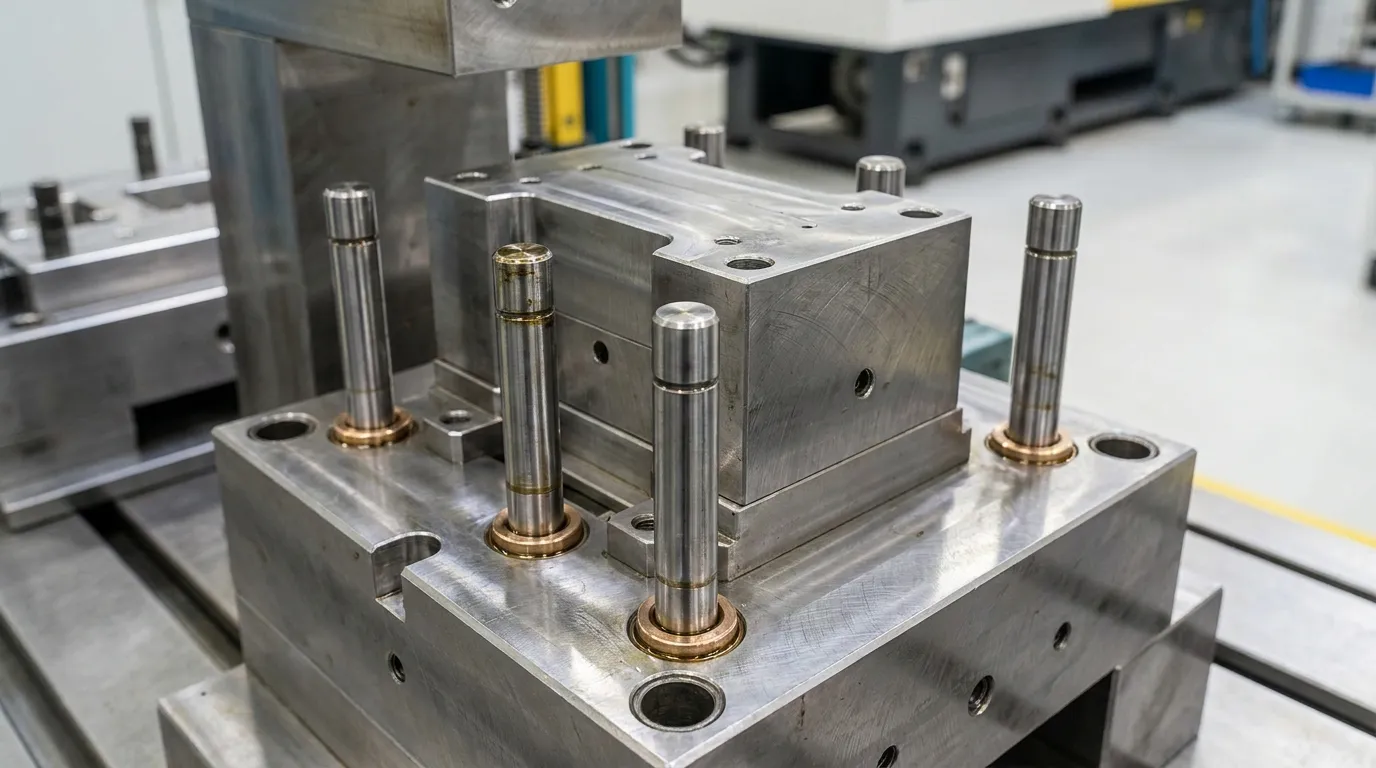
Mold guide pins keep the mold halves aligned during opening and closing cycles. Proper alignment prevents cavity damage, reduces flashing, improves repeatability, and extends mold life by minimizing uneven wear.
Guide pins are precision-machined cylindrical components installed in the mold base. During mold closing, the pins enter matching guide bushings and help both mold halves align correctly before clamping pressure builds. This protects cavity edges, cores, and other precision surfaces from impact damage.
Without proper alignment, even small positioning errors can create uneven stress across the mold. Over time, that stress increases wear and may create flashing or dimensional variation in molded parts. This becomes more noticeable in high-cycle production where molds open and close thousands of times per day.
Guide pins also improve movement consistency during production. In precision molds, repeatable alignment helps maintain stable part quality and smoother mold movement. If you need a broader overview of how alignment fits into the full tooling system, Sunshine’s guide to injection mold structure explains how these components work together inside a complete mold assembly.
Why does guide pin alignment affect mold life?
Poor guide pin alignment increases uneven stress across the mold. Over time, this accelerates cavity wear, damages cores, creates flashing defects, and shortens the usable life of high-cycle tooling.
Guide pins do more than position mold halves. They help distribute movement evenly during closing and opening. When alignment drifts, side loading increases across cavity surfaces and moving components. That extra friction slowly damages precision areas that are expensive to repair.
A common example appears in high-cycle packaging molds. A small amount of guide pin wear may initially create light flashing near the parting line. If the problem continues, cavity edges begin wearing unevenly, and repair costs rise quickly.
Standard guide pin systems are not always enough for high-cycle precision molds. Lower-cost setups may reduce tooling cost at the beginning, but they often increase maintenance frequency later. Precision molds with tight tolerances usually benefit from hardened materials and tighter fit control.
| Alignment Condition | Common Result | Long-Term Mold Risk |
|---|---|---|
| Proper alignment | Stable mold closing | Lower wear rate |
| Minor guide pin wear | Light flashing | Uneven cavity stress |
| Poor lubrication | Increased friction | Galling and scoring |
| Severe misalignment | Core or cavity impact | Major mold repair |
For a broader look at tooling relationships, Sunshine’s overview of mold component systems covers how alignment components interact with the rest of the mold assembly.
How do guide pins and guide bushings work together?
Guide pins provide alignment movement while guide bushings control friction and support. The fit between both parts directly affects mold smoothness, wear rate, and long-term alignment accuracy.
Guide pins and guide bushings operate as a matched system. The guide pin enters the bushing during mold closing, which keeps movement controlled and centered. If the fit becomes too loose, alignment accuracy drops. If the fit is too tight, friction increases and wear accelerates.
Lubrication also affects how these parts perform together. Standard systems rely on oil or grease to reduce friction between the pin and bushing surface. Poor lubrication increases scoring and surface damage, especially in high-speed molds.
| Component | Main Function | Common Wear Issue |
|---|---|---|
| Guide pin | Directs alignment movement | Surface scoring |
| Guide bushing | Supports and stabilizes movement | Internal wear |
| Lubrication layer | Reduces friction | Dry running damage |
Precision medical molds often use tighter tolerances and hardened guide systems because dimensional consistency is critical. Small alignment errors that might be acceptable in low-precision parts can create rejection problems in medical or electronic components.
What causes mold guide pins to wear out early?
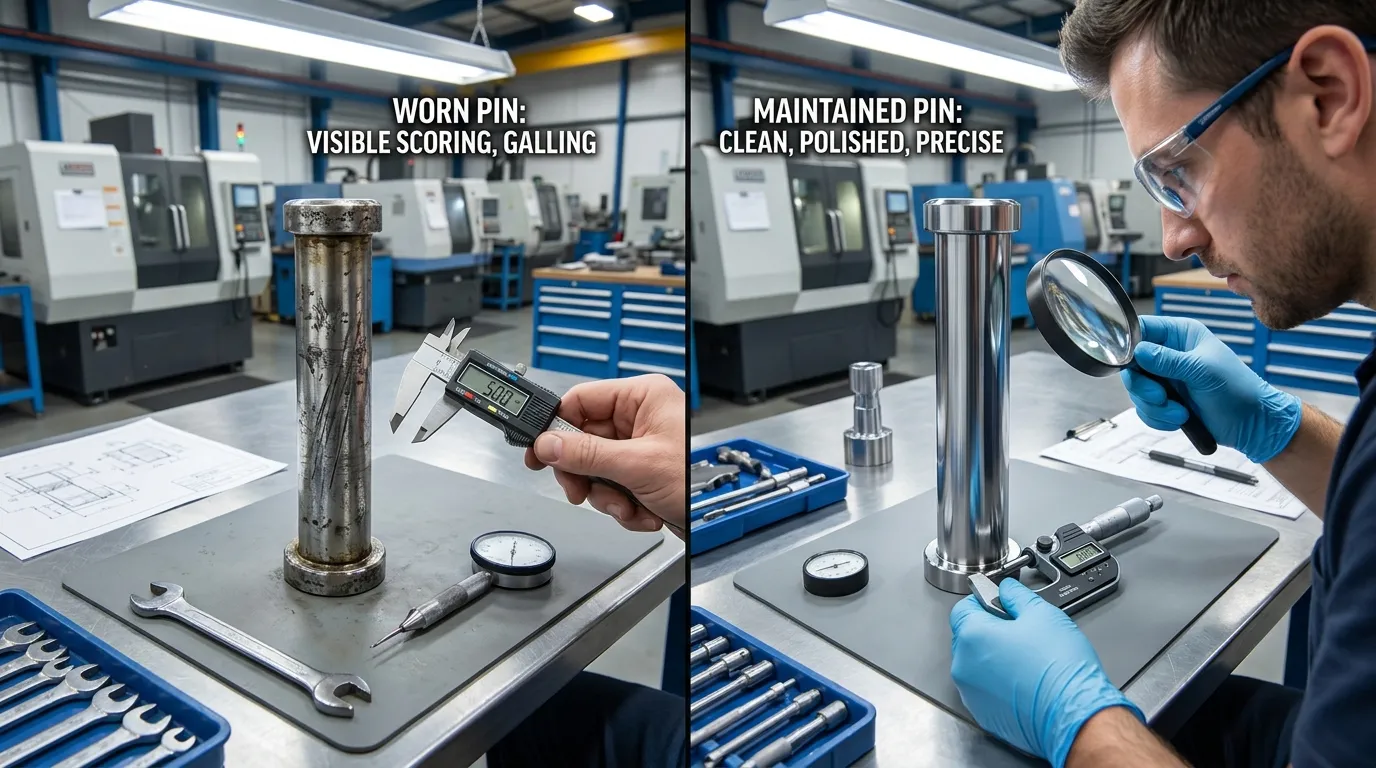
Early guide pin wear usually comes from poor lubrication, contamination, or incorrect fit. Misalignment increases side loading, which accelerates scoring, galling, and uneven wear inside the mold.
Guide pins rarely fail suddenly. Most wear problems develop slowly through friction, contamination, or poor maintenance habits. Once surface wear begins, alignment quality decreases and additional damage spreads across nearby components.
A common maintenance issue appears in dusty production environments. Dirt or resin contamination enters the guide system and scratches the guide pin surface during repeated cycling. This creates rough movement and increases wear inside the bushing.
Common wear symptoms to inspect
- Scratches or scoring on the guide pin surface
- Uneven wear patterns near one side of the pin
- Flashing around the molded part
- Rough mold opening or closing movement
- Increased lubrication discoloration
- Noise during mold cycling
Oil-less systems reduce lubrication maintenance, but they are not maintenance-free. Contamination and poor fit can still shorten guide pin life. In some environments, a properly lubricated standard system may last longer than a poorly maintained oil-less setup.
Guide Pin Wear Troubleshooting Table
| Symptom | Likely Cause | Mold Risk | Recommended Fix |
|---|---|---|---|
| Surface scoring | Poor lubrication | Faster wear | Improve lubrication schedule |
| Uneven wear | Misalignment | Flashing and cavity stress | Inspect alignment fit |
| Galling marks | Excess friction | Seized movement | Replace damaged components |
| Rough mold movement | Contamination | Bushing damage | Clean and inspect system |
| Flashing defects | Worn guide fit | Dimensional inconsistency | Replace worn pins and bushings |
Wear patterns often affect more than one component. Teams investigating alignment issues may also benefit from reviewing precision core pin wear because similar wear conditions can affect multiple tooling areas at the same time.
How do you select the right mold guide pin setup?
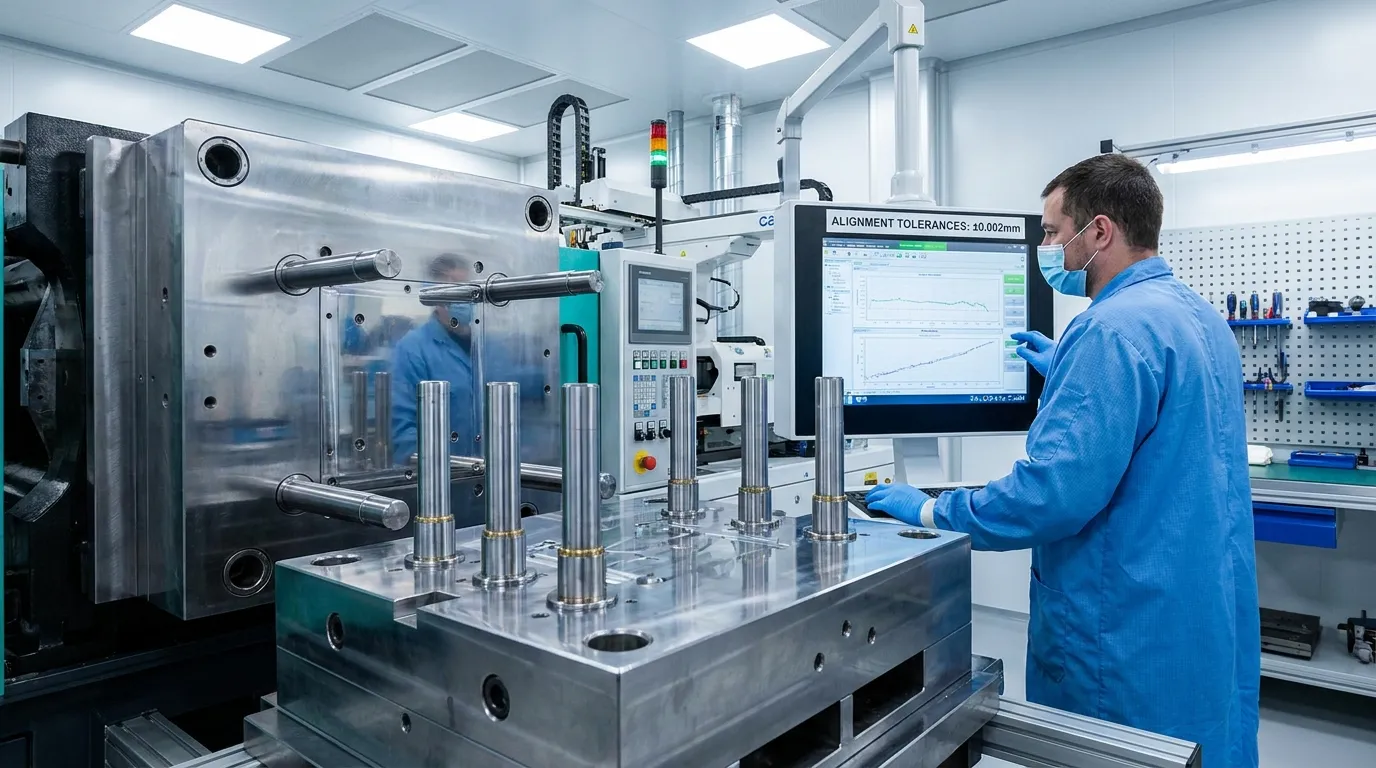
The right mold guide pin setup depends on mold size, production cycles, alignment precision, and maintenance conditions. High-cycle molds usually require hardened materials, tighter tolerances, and more reliable lubrication systems.
Guide pin selection should match the mold’s operating conditions. A low-volume prototype mold does not need the same alignment system as a high-speed production mold running continuously across multiple shifts.
Material hardness matters because guide pins experience repeated contact and side loading. Hardened tool steels such as SUJ2 are commonly used because they provide better wear resistance under repeated cycling conditions.
Standard vs precision guide pin systems
| Mold Condition | Recommended Setup | Lubrication Strategy | Expected Wear Level |
|---|---|---|---|
| Low-volume tooling | Standard guide pins | Manual lubrication | Moderate |
| High-cycle packaging mold | Hardened precision pins | Scheduled lubrication | Lower |
| Precision medical mold | Tight-tolerance system | Controlled lubrication | Very low |
| Dusty production area | Oil-less or sealed system | Reduced maintenance | Depends on contamination |
A practical example appears in consumer packaging molds. High-cycle production can create side loading and wear quickly, especially when molds operate at fast cycle times. Using hardened guide pins with controlled lubrication often reduces downtime compared to lower-cost standard setups.
Replacing worn guide pins early is usually cheaper than waiting for visible cavity damage. Small alignment problems can become expensive mold repairs quickly, especially in molds with precision cavity surfaces.
If your project involves different tooling environments or production sectors, Sunshine’s guide to injection mold applications shows how mold requirements change across industries.
Are oil-less guide pin systems worth using?
Oil-less guide pin systems reduce lubrication maintenance, but they are not the best option for every mold. Their performance depends heavily on contamination levels, cycle frequency, and alignment precision requirements.
These systems usually use self-lubricating bushings or specialized surface materials that reduce the need for manual lubrication. They work well in environments where regular lubrication is difficult or where excess oil could contaminate products.
| System Type | Main Advantage | Main Limitation |
|---|---|---|
| Standard lubricated system | Lower initial cost | Requires regular maintenance |
| Oil-less system | Reduced lubrication work | Sensitive to contamination |
| Precision hardened system | Better wear resistance | Higher tooling cost |
A dusty production area highlights the difference clearly. Oil-less systems may reduce grease buildup that traps debris, but contamination can still damage alignment surfaces if cleaning intervals are ignored. In cleaner environments, lubricated precision systems may provide longer service life and smoother movement.
What maintenance practices extend guide pin life?
Regular inspection and lubrication are the most effective ways to extend guide pin life. Small alignment problems become expensive mold repairs when wear is ignored for too long.
Preventive maintenance keeps alignment problems from spreading into cavity or core damage. Most guide pin wear starts as a small surface issue that grows gradually over thousands of cycles.
Maintenance teams should inspect guide pins during scheduled mold servicing. Surface finish, lubrication condition, and movement smoothness all provide early warning signs before major alignment failure develops.
Signs your guide pins need replacement
- Visible scoring or galling
- Uneven wear marks
- Loose fit inside bushings
- Flashing problems appearing suddenly
- Increased vibration or movement resistance
- Repeated lubrication discoloration
A common repair scenario involves delayed replacement. A mold may continue running after light flashing appears, but continued operation can damage cavity edges and increase downtime later. Replacing worn guide pins early often prevents larger repair costs.
Maintenance planning also overlaps with other tooling components. Teams reviewing broader wear conditions can compare alignment-related movement issues with mold maintenance components used throughout the mold system.
How do guide pins affect molding quality and repeatability?
Guide pin condition directly affects molding consistency. Stable alignment keeps cavity surfaces positioned correctly during injection and clamping, which helps maintain dimensional accuracy across production cycles.
When guide pins wear unevenly, the mold halves may shift slightly during injection pressure. Even small movement changes can create flashing, inconsistent wall thickness, or dimensional variation. Precision molds are especially sensitive to these alignment changes.
A medical molding example shows why this matters. Precision medical components often require tight dimensional repeatability. Hardened guide systems with tighter tolerances help maintain stable cavity positioning and reduce variation between production runs.
Guide pins also affect mold movement smoothness. Stable movement reduces stress on nearby tooling components and helps maintain repeatable cycle performance over long production runs. Manufacturers focused on high-precision parts often evaluate alignment together with precision molding accuracy because both directly influence finished part quality.
Getting the Next Step Right
Choosing the right mold guide pins comes down to operating conditions, maintenance discipline, and precision requirements. A standard setup may work well for lower-volume tooling, but high-cycle molds often need tighter tolerances, hardened materials, and more consistent lubrication practices.
Before selecting a guide system, review cycle volume, contamination risks, maintenance access, and required part accuracy. Small alignment decisions affect wear, flashing, downtime, and mold life more than many buyers expect. A properly matched guide pin system usually saves money long before the mold reaches the repair bench.
Frequently Asked Questions
What happens when mold alignment fails?
Mold alignment failure can cause flashing, cavity damage, uneven wear, and dimensional inconsistency. Continued operation with poor alignment may also damage cores, bushings, and other precision mold components.
How often should mold guide pins be replaced?
Replacement timing depends on production volume, lubrication quality, and mold precision requirements. High-cycle molds usually need more frequent inspection because even small wear patterns can affect alignment accuracy early.
What material is best for mold guide pins?
Hardened tool steels such as SUJ2 are commonly used for mold guide pins because they resist wear during repeated cycling. The best material still depends on production volume, lubrication conditions, and required precision.
Do guide pins need lubrication?
Most standard guide pin systems require lubrication to reduce friction and wear. Oil-less systems reduce maintenance demands, but they still need proper fit and contamination control to perform reliably.
Can worn guide pins cause flashing?
Yes, worn guide pins can allow slight mold movement during clamping and injection. Even small alignment shifts may create flashing and dimensional inconsistency in precision molded parts.
What is the difference between guide pins and guide bushings?
Guide pins direct mold alignment movement, while guide bushings support the pin and control friction during operation. Both components work together to maintain smooth movement and positioning accuracy.
Share:



Written By Sunshine
At Sunshine, we are a professional manufacturer and supplier of precision mould components, offering a wide range of products for stamping and injection mould applications. Our core focus includes punching dies, ejector pins and sleeves, and guide posts and bushings. With advanced CNC machining, strict quality control, and strong production capabilities, we ensure reliable, high-precision parts, along with in-stock standard components for fast and efficient global supply.
NEWS
GET SERVICE
With quality parts to meet every budget and friendly staff trained to make your visit informative and hassle free.
