



Medical Parts Manufacturing: How Plastic Mold Quality Reduces Risk
Medical parts manufacturing depends on stable tooling, controlled materials, and repeatable quality systems. High-quality plastic molds reduce dimensional variation, contamination risk, validation failures, and shipment delays. Manufacturers that monitor mold wear, document inspections, and maintain material traceability are better prepared to deliver consistent medical parts during scaling and long production runs.
Medical manufacturing leaves little room for variation. A small tolerance shift can affect sealing, fit, or device reliability, especially during high-volume production. That’s why mold quality matters far beyond part appearance. Strong tooling, stable processing, and disciplined QC systems help manufacturers avoid scrap, delayed validation, and production instability before problems reach customers or regulators.
Why does mold quality matter so much in medical parts manufacturing?
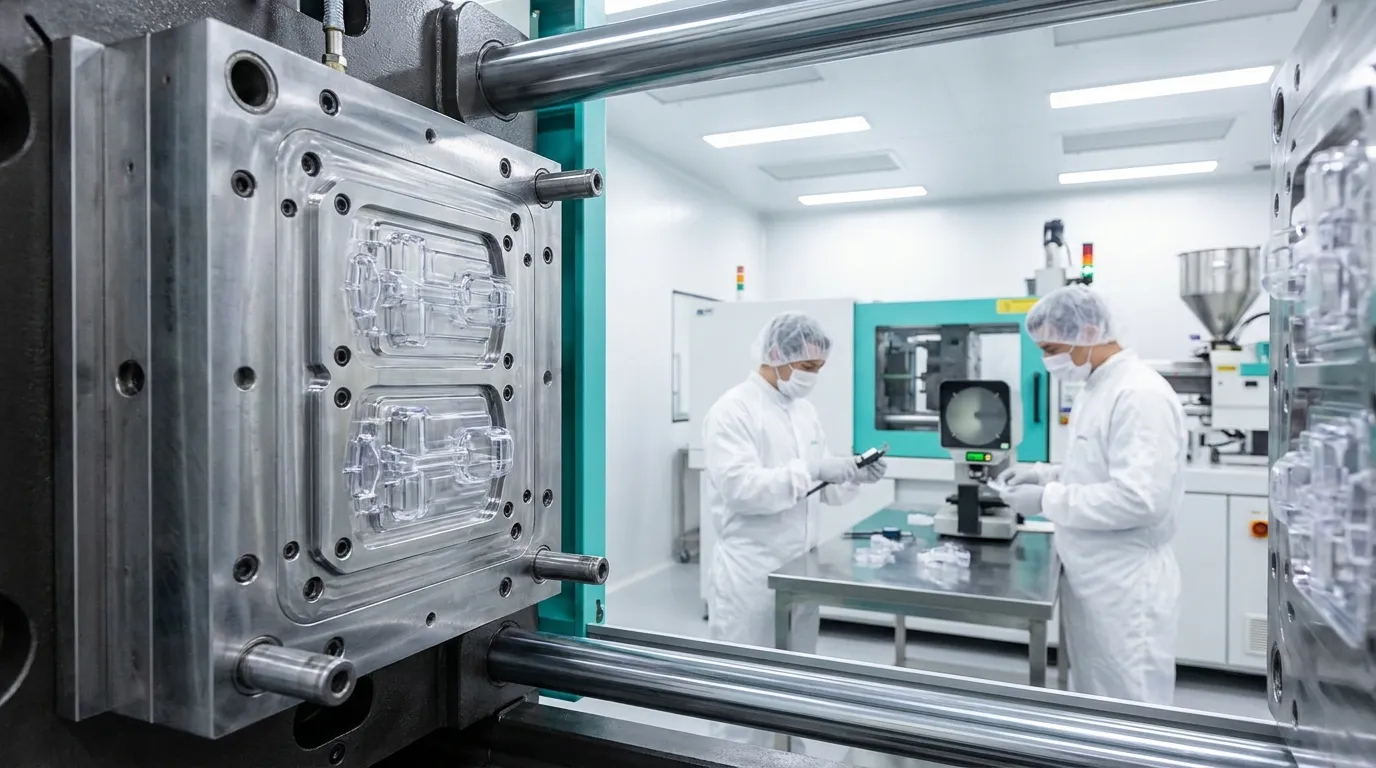
Medical parts manufacturing depends on stable tooling because even small dimensional shifts can affect device fit, sealing, or safety. High-quality molds reduce variation, improve repeatability, and help manufacturers maintain consistent production during validation and scaling.
Medical parts often require tight tolerances across thousands or millions of cycles. If a mold cavity wears unevenly or cooling becomes unstable, dimensions can drift slowly over time. That creates risk during inspection and assembly, especially for connectors, housings, and sealing surfaces.
High-quality molds support repeatable production because they maintain cavity consistency under long production runs. Better steel selection, tighter machining tolerances, and controlled surface finishing all help reduce variation between parts.
Manufacturers also rely on documented inspection routines during the medical molding process. These systems help detect cavity wear before defects increase. For regulated production, repeatability matters as much as speed.
If you need broader background on tooling structures and cavity systems, Sunshine Pro’s mold component basics guide explains how injection mold systems support stable production.
The FDA has repeatedly highlighted manufacturing quality issues tied to production control failures, including warning actions involving medical device facilities reported by Reuters. Stable tooling helps reduce those risks early in the process.
What risks do poor-quality molds create in medical production?
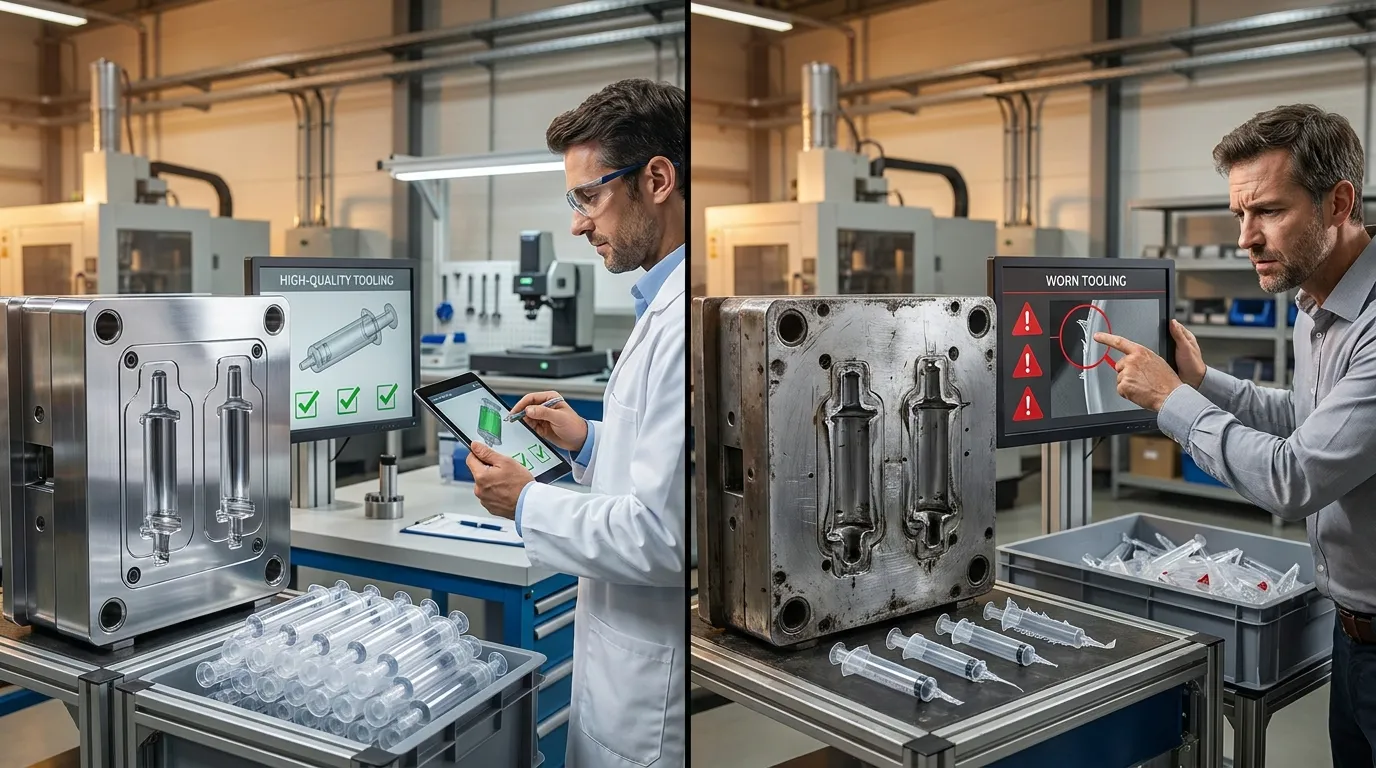
Poor mold quality increases the risk of dimensional drift, unstable part performance, excess scrap, and delayed validation. In medical manufacturing, these problems can slow approvals, disrupt shipments, and increase compliance exposure.
Poor tooling problems rarely appear all at once. A mold may pass early sampling, then develop flash, uneven shrinkage, or cavity inconsistency after extended production. Those changes create inspection failures that slow production and increase waste.
A common example involves medical connectors with sealing surfaces. If cavity wear changes dimensions slightly during long runs, seals may fail pressure testing. That forces reinspection, sorting, and possible tooling revision before shipments continue.
Medical Manufacturing Risk Comparison Table
| Mold Issue | Production Symptom | Business Impact | Compliance Impact | Prevention Method |
|---|---|---|---|---|
| Uneven cavity wear | Dimensional drift | Increased scrap | Failed validation checks | Scheduled cavity inspection |
| Flash formation | Excess trimming | Slower production | Inspection failures | Better mold maintenance |
| Cooling imbalance | Warpage | Delayed assembly | Repeatability concerns | Thermal monitoring |
| Poor venting | Burn marks | Part rejection | Surface-quality issues | Vent cleaning schedule |
| Weak steel durability | Short tool life | Downtime and repair cost | Production instability | Wear-resistant tooling |
Lower tooling cost is not always lower manufacturing cost. A cheaper mold may reduce upfront spending, but repeated scrap, delayed validation, and downtime can become far more expensive over time.
Manufacturers that invest in wear-resistant tooling often reduce long-term production interruptions because cavity dimensions remain stable for longer production cycles.
How do medical manufacturers control dimensional consistency?
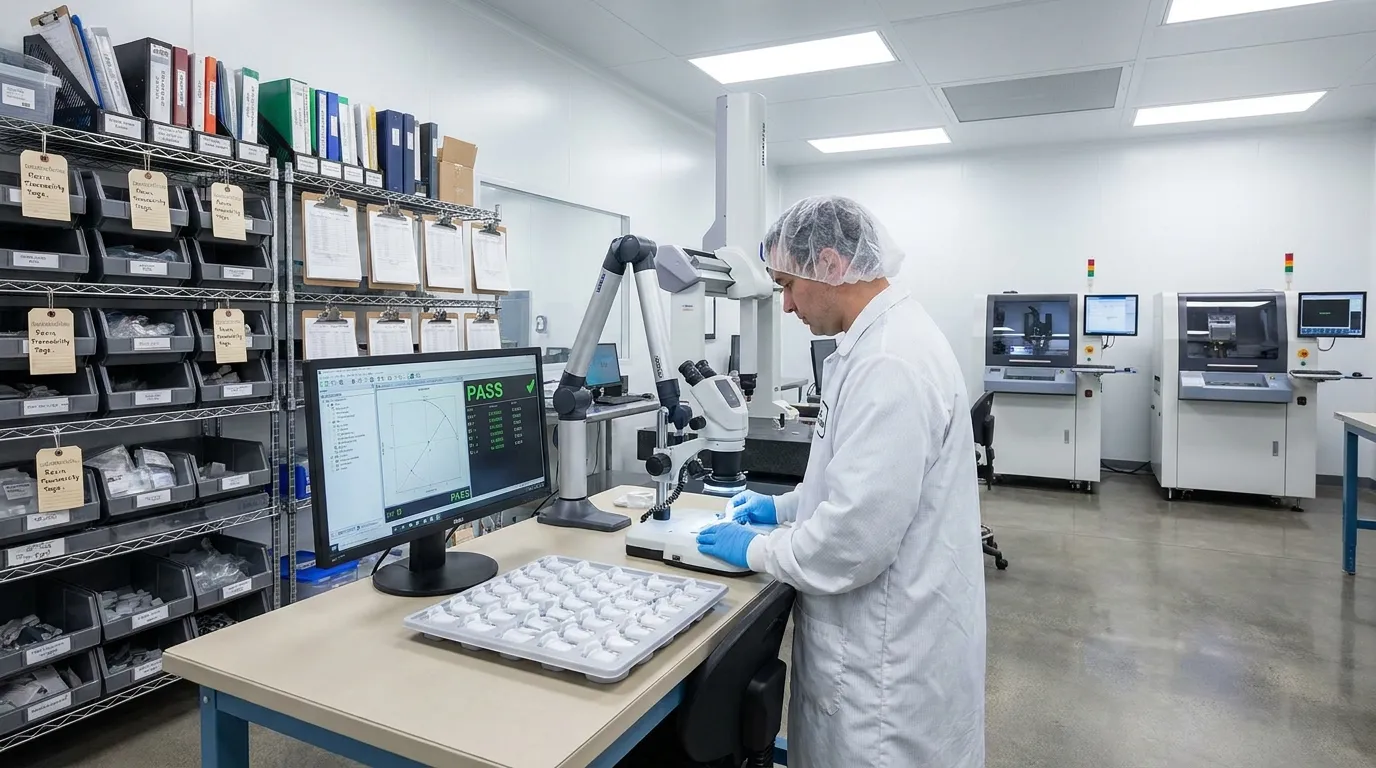
Medical manufacturers maintain dimensional consistency through controlled tooling maintenance, documented inspection plans, stable processing parameters, and material traceability. Consistency matters because validated parts must remain repeatable across production batches.
Consistency starts with process discipline. Strong manufacturers track cavity condition, machine settings, resin drying, and inspection measurements during every production stage. These controls help prevent gradual variation that becomes difficult to detect later.
A supplier with advanced machines but weak documentation can still create unstable production. Medical manufacturing depends on repeatable systems, not equipment alone.
Mold maintenance and cavity monitoring
Tool maintenance schedules help manufacturers monitor wear before defects increase. Engineers often inspect cavity surfaces, gates, vents, and cooling channels after planned cycle intervals instead of waiting for visible failures.
For example, a multi-cavity mold producing diagnostic housings may develop uneven wear in one cavity first. Early inspection can isolate the issue before scrap spreads across full production batches.
Manufacturers using strong device molding controls usually document cavity inspections alongside maintenance history. That creates a traceable record during audits and validation reviews.
Inspection planning during production
Inspection planning matters because stable tooling alone does not guarantee stable output. Medical manufacturers often use in-process measurements to confirm dimensions throughout production instead of relying only on final inspection.
- First article inspection
- In-process dimensional checks
- Resin lot verification
- SPC trend monitoring
- Final batch inspection
The quality management expectations described by Critical Manufacturing highlight how documented process control supports regulated medical production.
Why do material traceability and contamination control matter?
Material traceability helps medical manufacturers identify, isolate, and document production risks quickly. Controlled resin handling and contamination prevention also reduce the chance of failed inspections or inconsistent part performance.
Medical molding requires more than accurate tooling. Resin handling, storage, and documentation also affect product quality. If manufacturers cannot trace resin lots or process conditions, investigations become much harder when problems appear later.
A common issue involves undocumented resin substitutions during production scaling. If a supplier changes material lots without proper traceability, additional validation reviews may delay shipment approval.
Contamination control matters for the same reason. Dust, moisture, or mixed resin can affect surface quality and dimensional stability. Manufacturers producing medical plastic molding components often use controlled handling systems and cleanroom procedures to reduce contamination exposure.
- Sealed resin storage
- Controlled drying procedures
- Dedicated material lines
- Cleanroom packaging
- Lot traceability records
The FDA continues to monitor manufacturing consistency in medical supply production, including syringe manufacturing quality concerns covered by Reuters.
What should buyers ask before approving a medical parts manufacturer?
Buyers should evaluate whether a medical parts manufacturer can maintain repeatable tolerances, document inspection processes, manage tooling wear, and support stable production during scaling. Strong process discipline matters more than low initial tooling cost.
Many supplier evaluations focus heavily on machine lists and facility size. Those details matter, but production discipline usually matters more during long-term medical manufacturing programs.
A supplier should be able to explain how they monitor cavity wear, track resin lots, document inspections, and respond to dimensional drift. If those answers stay vague, production risk usually increases later.
Supplier Evaluation Checklist
| Evaluation Area | What Buyers Should Ask |
|---|---|
| Tool maintenance | How often are cavities inspected and serviced? |
| QC documentation | Are in-process inspections documented? |
| Traceability | Can resin lots be tracked to production batches? |
| Validation support | How are process changes documented? |
| Cleanroom capability | Which operations use contamination controls? |
| Scaling stability | How is repeatability maintained during higher volume runs? |
A practical example involves pilot production scaling. A low-cost mold may work during early sampling, then develop flash defects after higher-volume runs begin. That can force production pauses and tooling adjustments at the worst possible stage.
Questions like these are also discussed in supplier evaluation guidance from Seasky Medical.
Buyers comparing suppliers can also review Sunshine Pro’s guide to choosing a medical device supplier for more production-focused evaluation criteria.
How do customs delays and supply chain instability affect medical manufacturing?
Customs delays and unstable supply chains can interrupt validation schedules, delay first shipments, and increase production pressure. Medical manufacturers reduce this risk through stable tooling control, documentation readiness, and supplier coordination.
Medical production schedules often depend on tightly coordinated tooling, materials, and regulatory timelines. If imported tooling components or resin shipments get delayed at customs, production windows can shift quickly.
One example involves imported mold components delayed during customs processing. A two-week hold can interrupt pilot production, delay validation sampling, and increase launch pressure across the entire program.
Supply Chain Risk Comparison
| Stable Supply Chain | Unstable Supply Chain |
|---|---|
| Planned tooling delivery | Delayed mold components |
| Consistent resin supply | Material shortages |
| Predictable validation timing | Rescheduled inspections |
| Controlled inventory planning | Emergency production changes |
| Stable shipment release | Customer delivery delays |
Offshore sourcing is not automatically risky, but buyers should evaluate tooling ownership, customs exposure, and shipment coordination before prioritizing lower pricing alone.
Exporters in several markets have already reported customs automation delays affecting production timelines, according to reporting from The Business Standard.
When is higher mold quality worth the investment?
Higher mold quality usually becomes worthwhile when production requires long-term repeatability, tight tolerances, or stable scaling. Medical programs often stay active for years, so tooling reliability affects much more than startup cost.
Premium tooling is especially valuable when validation costs are high. Repeating inspections, resampling parts, or revising molds late in production can delay launches and increase operational pressure quickly.
When Better Tooling Makes Sense
| Production Situation | Better Tooling Priority |
|---|---|
| High-volume production | High |
| Tight sealing tolerances | High |
| Short prototype runs | Moderate |
| Long product lifecycle | High |
| Multi-cavity medical molds | High |
| Low-risk prototype parts | Moderate |
A manufacturer producing disposable diagnostic housings may accept moderate tooling costs during early prototypes. That same approach becomes risky once annual production scales into millions of parts.
Manufacturers also need to think about downtime. A cavity failure during full production creates far more disruption than a tooling upgrade during development.
If you need broader context around mold engineering and applications, Sunshine Pro’s injection molding applications guide covers larger system-level considerations.
Getting the Next Step Right
Medical parts manufacturing depends on consistency from the first validated sample through full-scale production. Strong tooling, documented QC systems, and stable material handling all help reduce production risk before problems affect customers or regulators.
If you’re evaluating suppliers, focus on repeatability instead of tooling price alone. Ask how molds are maintained, how inspections are documented, and how production stays stable during scaling. Those answers usually reveal far more about long-term manufacturing reliability than equipment lists or marketing claims.
Frequently Asked Questions
What is medical parts manufacturing?
Medical parts manufacturing is the production of components used in medical devices, diagnostics, and healthcare equipment. It requires controlled materials, repeatable processes, and documented quality systems to reduce safety and compliance risks.
Why is mold quality important in medical injection molding?
Mold quality affects dimensional consistency, surface finish, and long-term repeatability. Poor tooling can increase scrap, validation failures, and unstable production during scaling or extended manufacturing runs.
What certifications should a medical manufacturer have?
Medical manufacturers commonly operate under ISO-based quality systems and FDA-related compliance requirements, depending on the product and market. Buyers should verify certifications, inspection controls, and traceability processes before approving production.
How do manufacturers prevent contamination in medical molding?
Manufacturers reduce contamination through controlled resin handling, cleanroom procedures, documented traceability, and regular equipment maintenance. These controls help maintain stable medical part quality during production and packaging.
What causes delays in medical parts manufacturing?
Delays often come from tooling revisions, failed inspections, customs issues, material shortages, or unstable production processes. Weak documentation and inconsistent quality systems can also slow validation and shipment approvals.
Can low-cost molds work for medical production?
Low-cost molds may work for prototypes or low-risk applications, but they often struggle with long-term dimensional stability. Medical production usually requires stronger tooling and tighter process control to maintain repeatability over time.
Share:



Written By Sunshine
At Sunshine, we are a professional manufacturer and supplier of precision mould components, offering a wide range of products for stamping and injection mould applications. Our core focus includes punching dies, ejector pins and sleeves, and guide posts and bushings. With advanced CNC machining, strict quality control, and strong production capabilities, we ensure reliable, high-precision parts, along with in-stock standard components for fast and efficient global supply.
NEWS
GET SERVICE
With quality parts to meet every budget and friendly staff trained to make your visit informative and hassle free.
