



Custom Injection Molding Services: Prototype, Tooling, and Mass Production
Custom injection molding services help turn product ideas into real plastic parts by moving through three key stages: prototype validation, tooling development, and mass production. Each step ensures fit, function, and manufacturability before scaling up. This process is widely used for industrial, consumer, and technical components where precision, repeatability, and cost efficiency matter at scale.
If you’re planning a new plastic part, custom injection molding is usually the bridge between a sketch and a manufacturable product. It’s not just about making parts; it’s about building a repeatable system that can produce thousands or millions of consistent units. Understanding how prototype testing, mold design, and production planning connect will help you avoid costly redesigns and delays later.
What are custom injection molding services?
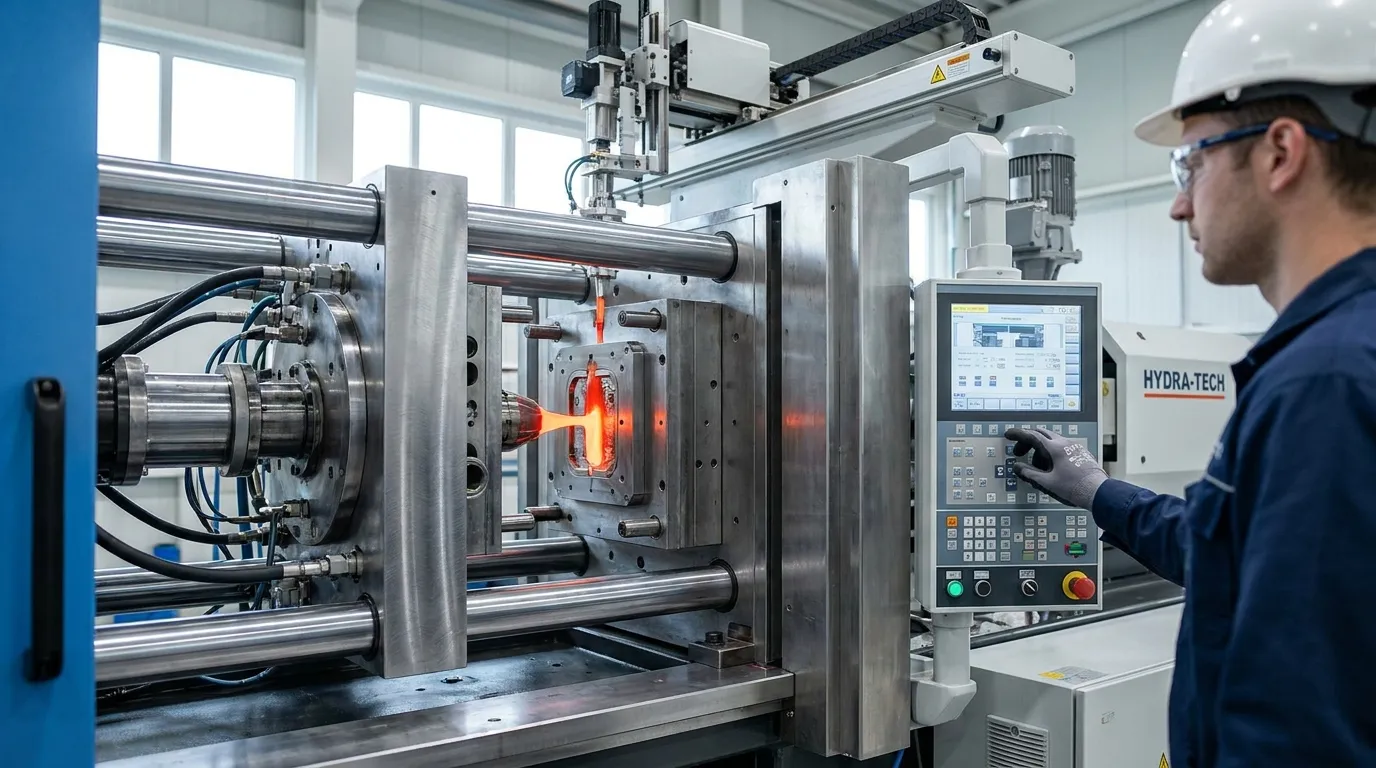
Custom injection molding services are end-to-end manufacturing solutions that create plastic parts using a tailored mold built for your specific product design. They cover everything from early design support to final mass production, ensuring parts meet functional, dimensional, and cost requirements.
These services typically start with reviewing your CAD design, then selecting the right material and preparing mold geometry. Once the mold is built, molten plastic is injected under pressure, cooled, and ejected as finished parts. The process is highly repeatable, making it ideal for large production runs.
A strong advantage of custom injection molding is flexibility. You can adjust wall thickness, textures, strength, and shape without changing the entire production system. This makes it suitable for industries like automotive, electronics, medical devices, and consumer products.
For a deeper breakdown of mold structure and components, you can explore the mold components guide which explains how each part of a mold affects final product quality.
How does the process move from prototype to mass production?
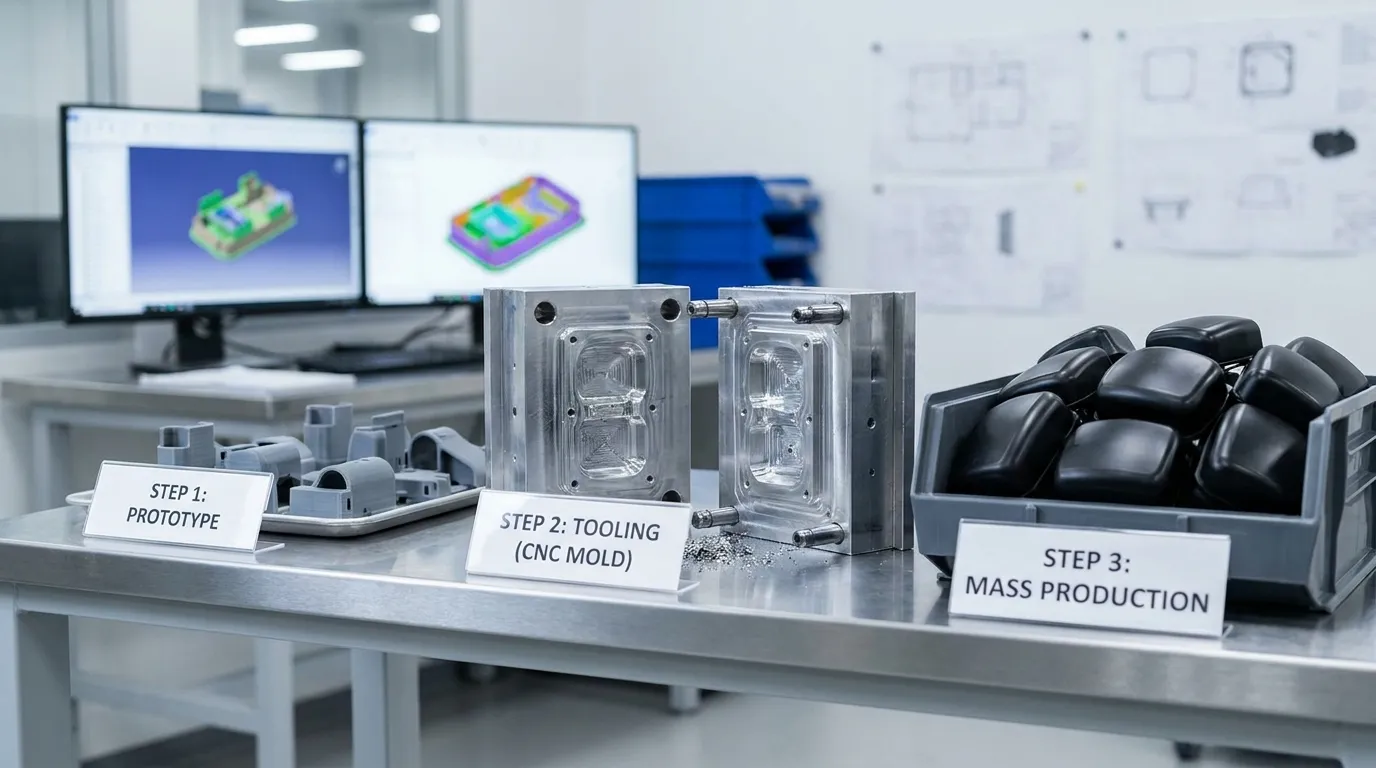
Answer capsule: The process moves in three stages: prototype validation, pilot tooling, and full-scale production. Each stage reduces risk before you commit to high-volume manufacturing and helps ensure the final product is stable, manufacturable, and cost-efficient at scale.
In the prototype phase, manufacturers test whether the design works in real-world conditions. This may involve soft tooling or 3D-printed molds to quickly produce sample parts. Adjustments are common here since design flaws are easier and cheaper to fix.
Next comes tooling development, where hardened steel or aluminum molds are created. This step defines final part accuracy and production stability. It is also where cycle time and long-term durability are optimized.
Finally, mass production begins once the mold is validated. Machines run continuously to produce consistent parts with minimal variation. At this stage, efficiency and quality control become the main focus.
Why does tooling matter so much in injection molding?
Answer capsule: Tooling determines the precision, durability, and consistency of your final plastic parts. A well-designed mold reduces defects, shortens cycle time, and supports long production runs without frequent maintenance. Poor tooling, on the other hand, leads to unstable quality and higher scrap rates.
Tooling is essentially the backbone of injection molding. Once a mold is built, it defines every part produced from it. That means even small design flaws can scale into thousands of defective parts.
High-quality tooling focuses on cooling efficiency, flow balance, and material wear resistance. These factors directly influence production speed and part consistency. While tooling is often the most expensive upfront step, it reduces long-term manufacturing costs by improving stability.
In most projects, tooling decisions decide whether production runs smoothly or constantly needs correction. It is where long-term reliability is built.
What affects the cost of custom injection molding?
Answer capsule: Cost depends mainly on mold complexity, material selection, production volume, and part design. Simple designs with high-volume output reduce per-unit costs, while complex geometries and low-volume runs increase both tooling and unit pricing significantly.
Several factors influence pricing. Mold design complexity is the biggest driver, especially if the part requires tight tolerances or multiple moving components in the mold. Material choice also matters since engineering-grade resins cost more than standard plastics.
Production volume plays a major role too. High-volume runs spread tooling costs across more units, lowering per-part pricing. Low-volume production keeps per-unit costs higher.
You can better estimate costs early by requesting a structured quote through a custom injection mold quotation process, which helps break down tooling and production expenses clearly.
How long does production usually take?
Answer capsule: Lead time depends on design complexity, tooling requirements, and production volume. Simple molds may take a few weeks, while complex tooling and high-precision parts can take several months before mass production begins.
The timeline usually starts with design validation, which can take days or weeks depending on revisions. After that, mold manufacturing is the longest stage since it requires precision machining and testing.
Once tooling is complete, sample runs are produced to confirm quality and performance. Only after approval does full production begin. Delays often happen when design changes are introduced late in the process.
Planning ahead and finalizing designs early helps reduce lead time and avoid costly adjustments during tooling.
How is quality controlled in injection molding production?
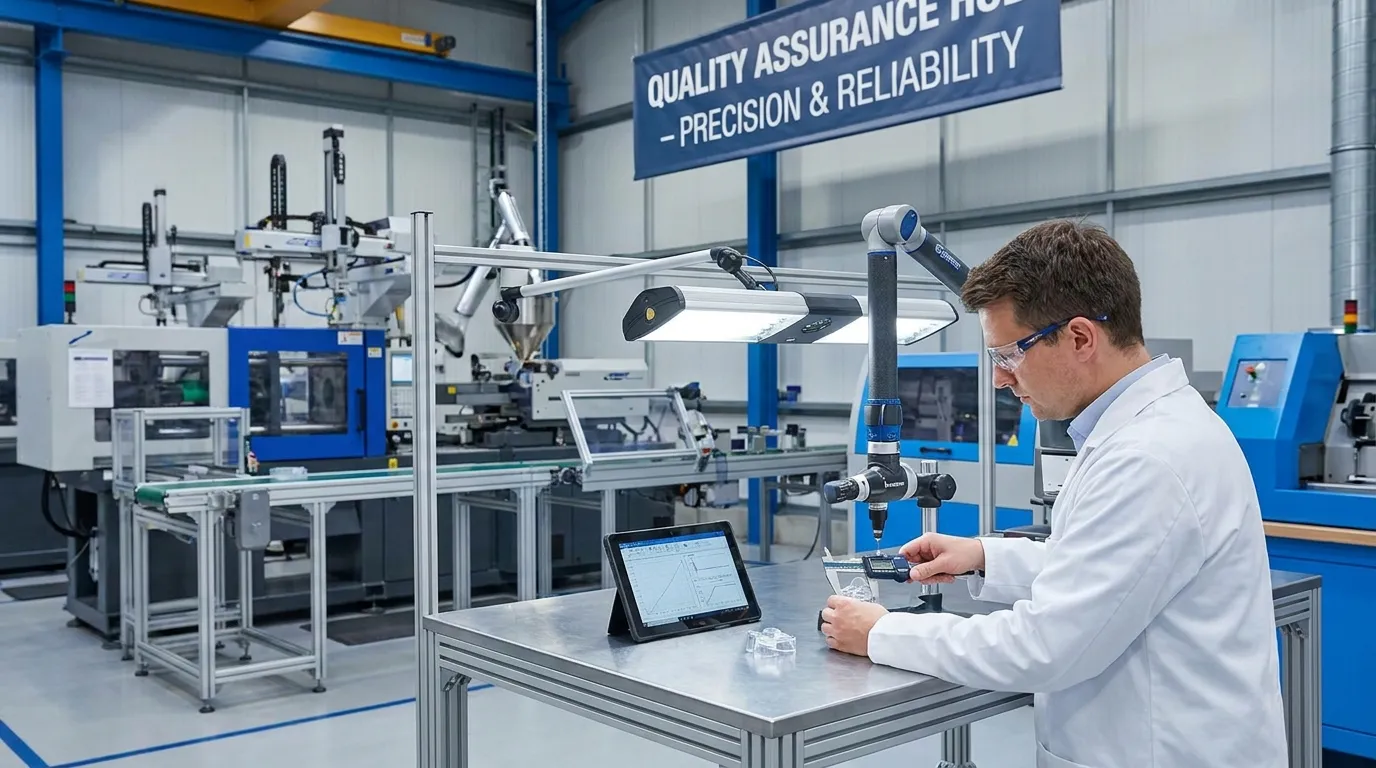
Answer capsule: Quality control ensures every molded part matches design specifications through inspection, testing, and process monitoring. This includes dimensional checks, material consistency tests, and real-time production adjustments to maintain stability across large batches.
Quality control starts at material selection and continues through molding, cooling, and final inspection. Machines are calibrated to maintain pressure, temperature, and cycle timing for consistent output.
Manufacturers often use sampling checks during production to catch variations early. In critical industries like medical or automotive, stricter testing methods are applied, including stress testing and surface inspection.
A stable production process reduces waste and ensures parts fit correctly during assembly, which is essential for large-scale manufacturing success.
How do you choose the right injection molding partner?
Answer capsule: Choose a partner based on tooling capability, production experience, quality systems, and communication reliability. The right manufacturer should guide you from design validation to mass production, not just produce parts.
A strong supplier will review your design for manufacturability before tooling begins. This early feedback helps prevent expensive redesigns later. Experience with similar industries is also a strong indicator of reliability.
You should also look at their ability to scale production. Some manufacturers handle prototypes well but struggle with consistent mass production. Checking their equipment range and quality systems helps avoid this gap.
Working with established custom plastic mold manufacturers ensures smoother scaling from prototype to full production.
Final Thoughts
Custom injection molding services give you a structured path from idea to production-ready plastic parts. The real value comes from how well each stage connects, from prototype validation to tooling and mass production. When done right, it reduces risk, improves consistency, and controls long-term manufacturing costs.
If you're planning a new product, the next step is to validate your design and connect with an experienced partner early. Exploring a plastic injection molding service can help you move from concept to scalable production with fewer surprises along the way.
Frequently Asked Questions
What industries use custom injection molding services?
Custom injection molding is used in automotive, electronics, medical devices, packaging, and consumer goods. These industries rely on it because it produces precise, repeatable parts at scale with consistent quality and cost efficiency.
What materials are commonly used in injection molding?
Common materials include ABS, polypropylene, polycarbonate, and nylon. Each material is chosen based on strength, flexibility, heat resistance, and cost depending on the product’s application.
Can injection molding be used for prototypes?
Yes, but it depends on the method. Soft tooling or rapid prototype molds are often used for early testing before investing in full production-grade tooling.
What is the difference between tooling and molding?
Tooling refers to creating the mold itself, while molding is the production process of injecting plastic into that mold to create parts. Tooling is the setup stage, and molding is the production stage.
How can I reduce injection molding costs?
You can reduce costs by simplifying part design, increasing production volume, choosing cost-effective materials, and finalizing designs before tooling begins to avoid revisions.
How accurate are injection molded parts?
Injection molded parts are highly accurate, often within tight tolerances depending on mold quality and machine precision. Proper tooling and process control ensure consistent results across large batches.
Share:



Written By Sunshine
At Sunshine, we are a professional manufacturer and supplier of precision mould components, offering a wide range of products for stamping and injection mould applications. Our core focus includes punching dies, ejector pins and sleeves, and guide posts and bushings. With advanced CNC machining, strict quality control, and strong production capabilities, we ensure reliable, high-precision parts, along with in-stock standard components for fast and efficient global supply.
NEWS
GET SERVICE
With quality parts to meet every budget and friendly staff trained to make your visit informative and hassle free.
