


Plastic Mold Parts: Standard Components for Injection Molds
Plastic mold parts include standardized components like ejector pins, sleeves, guide posts, and bushings used in injection molds. Buyers should compare wear resistance, tolerances, material quality, and supplier lead times before purchasing. Standard components usually reduce maintenance delays and replacement costs, while custom parts work better for specialized mold designs. Keeping critical spare parts in stock also helps prevent downtime caused by shipping or customs delays.
Mold performance depends on more than cavity design. The small components inside the mold often determine maintenance frequency, production uptime, and replacement costs. Buyers who choose the wrong ejector pins, guide bushings, or sleeves can face alignment issues, unexpected wear, and sourcing delays. This guide explains how to compare standard plastic mold parts before placing an order or approving a tooling build.
What are standard plastic mold parts?
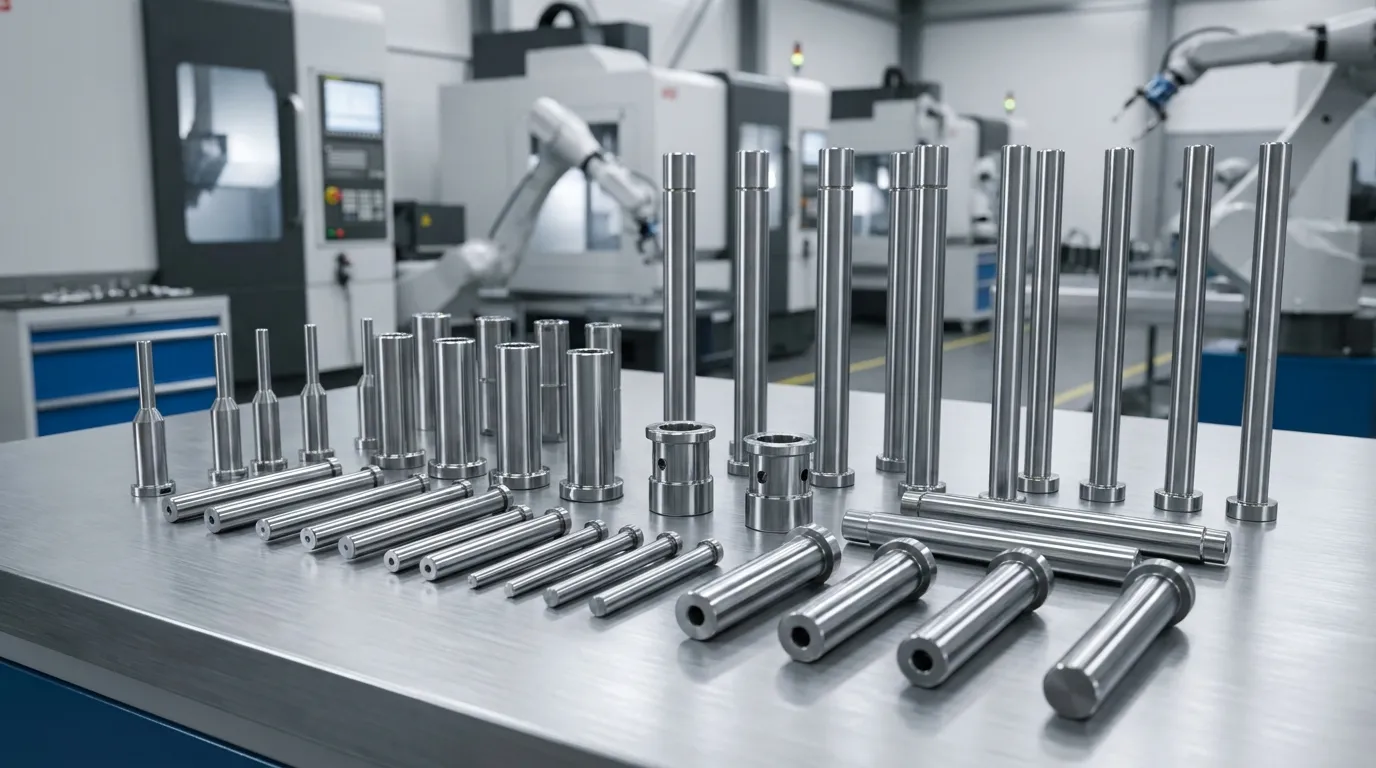
Standard plastic mold parts are pre-manufactured components such as ejector pins, sleeves, guide posts, and bushings used across injection molds. Buyers choose them to simplify maintenance, reduce lead times, and improve replacement consistency.
Standard mold components are designed around common dimensions and tolerances. Instead of machining every part from scratch, mold builders use standardized pieces that can be replaced quickly during maintenance or production repairs.
These components support mold alignment, part ejection, wear control, and overall production stability. Many manufacturers prefer standardization because replacement inventory is easier to manage across multiple tools and production lines.
For a broader look at mold systems and terminology, see this complete mold component guide.
| Common Mold Part | Primary Function |
|---|---|
| Ejector pins | Push finished parts out of the mold |
| Ejector sleeves | Support ejection around cores |
| Guide posts | Maintain mold alignment |
| Guide bushings | Reduce alignment wear |
| Return pins | Reset ejector systems |
| Core pins | Form internal features |
Standardization also helps maintenance teams. If multiple molds use the same guide bushings or ejector sleeves, replacement becomes faster during shutdowns or emergency repairs.
Which mold components wear out most often?
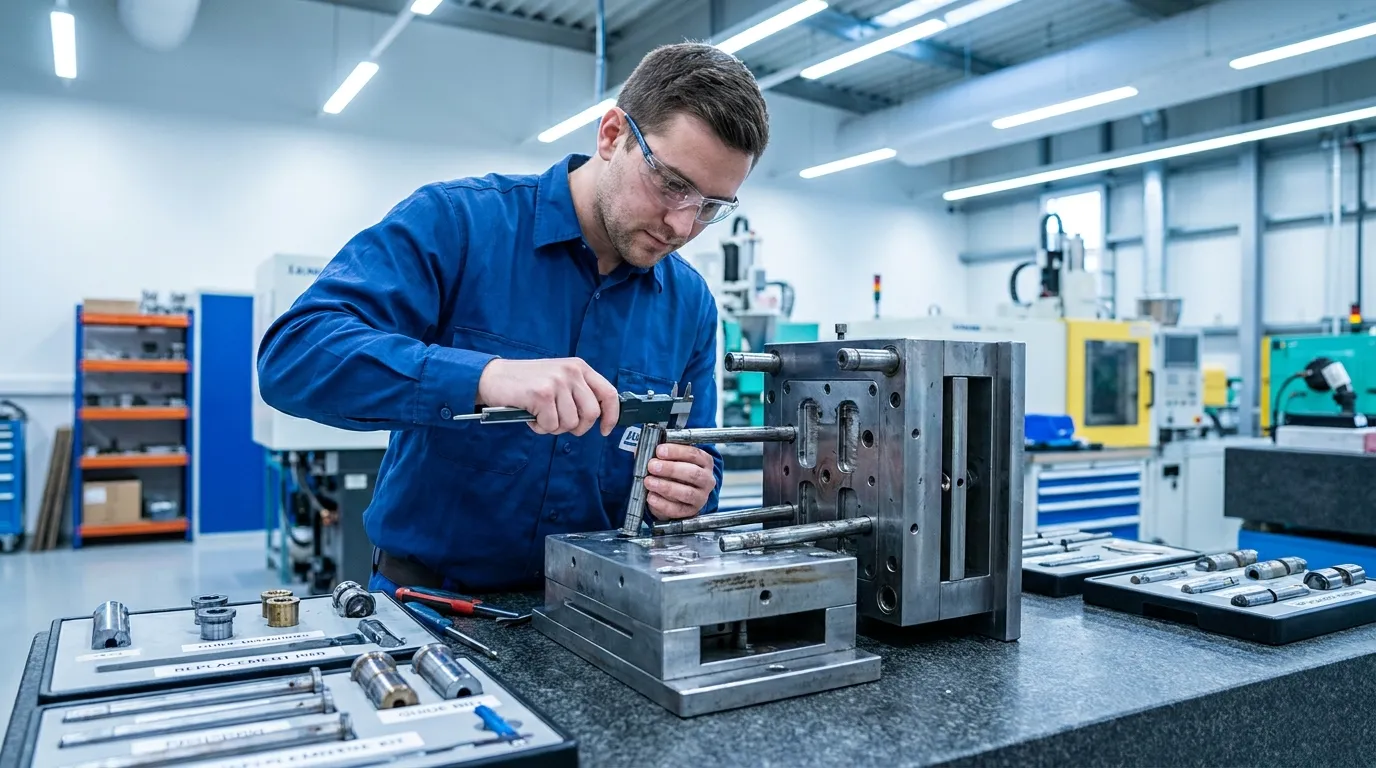
Ejector pins, sleeves, and guide bushings are among the most frequently replaced mold components because they operate under repeated friction, pressure, and alignment stress. Buyers should prioritize wear resistance and replacement availability when sourcing these parts.
High-wear components usually sit in areas with constant movement or friction. Ejector systems cycle every time the mold opens, while guide systems absorb alignment loads during clamping. Over time, this repeated movement creates wear that affects precision and part quality.
Abrasive resins can accelerate damage. A consumer electronics mold using glass-filled plastic may wear through low-grade ejector pins much faster than expected. In high-cycle production, buyers often switch to higher-hardness steel grades to extend replacement intervals.
High-Wear Mold Components Checklist
- Ejector pins exposed to repeated cycling
- Ejector sleeves operating around moving cores
- Guide bushings handling mold alignment pressure
- Core pins exposed to abrasive resin flow
- Alignment components affected by vibration or misalignment
Downtime costs also change replacement strategy. One production manager calculated that a single day of downtime cost more than keeping several sets of spare guide pins and sleeves in inventory. That made preventive stocking easier to justify.
You can explore additional mold wear components commonly replaced during maintenance cycles.
Should you choose standard or custom mold components?
Standard mold components usually reduce lead time and simplify maintenance, while custom parts work better for specialized geometries or unique production requirements. The best choice depends on production volume, replacement frequency, and mold complexity.
Standard parts work well for most injection mold applications because they are easier to source and replace. Buyers can often reduce maintenance downtime by choosing widely available dimensions and configurations.
Custom components become necessary when molds require unusual geometry, non-standard movement, or specialized cooling and ejection layouts. Medical, aerospace, and highly engineered automotive molds often need custom features that standard catalogs cannot support.
Standard mold parts are not always the best option. They reduce lead time and simplify maintenance, but custom components are often safer for unusual geometries or specialized production environments.
Standard vs Custom Mold Parts Decision Table
| Factor | Standard Components | Custom Components |
|---|---|---|
| Lead time | Usually shorter | Often longer |
| Replacement speed | Faster | Slower |
| Upfront cost | Lower | Higher |
| Maintenance flexibility | Easier | More specialized |
| Compatibility | Broad | Limited |
| Precision customization | Moderate | High |
An automotive mold project may use standard guide bushings to shorten replacement lead times during planned shutdowns. In contrast, a medical device mold might require custom ejector layouts because of strict geometry and surface requirements.
For more specialized tooling options, review these custom mold accessories before finalizing your design.
How do ejector pins and sleeves affect mold performance?
Ejector pins and sleeves directly affect part release consistency, mold wear, and production uptime. Poor fit or incorrect hardness can increase friction, create flash issues, and shorten mold service life.
Ejector systems control how finished parts leave the cavity after cooling. If pin sizing or alignment is incorrect, the mold may produce sticking, uneven marks, or damaged surfaces. Small tolerance issues can become major production problems during high-volume runs.
Sleeves are commonly used around round cores or deep cylindrical features. They distribute ejection force more evenly than standard pins in certain applications. Buyers should compare hardness, surface finish, and fit accuracy before selecting either option.
When should you upgrade to higher-hardness ejector pins?
Higher-hardness ejector pins make sense when molds run abrasive materials, high cycle counts, or elevated temperatures. Low-cost ejector pins can increase downtime costs later because softer materials wear faster under repeated friction.
A consumer electronics supplier using glass-filled resin upgraded to hardened ejector pins after repeated wear caused sticking and flash defects. The replacement cost increased slightly, but production interruptions dropped significantly.
If-Then Selection Table
| If this condition exists | Consider this solution |
|---|---|
| Abrasive resin wear | Hardened ejector pins |
| Deep cylindrical cores | Ejector sleeves |
| Frequent alignment issues | Precision guide systems |
| High-cycle production | Wear-resistant tool steel |
| Surface marking problems | Improved pin finish |
Buyers comparing ejection systems should also review available ejector pin systems before locking final specifications.
Which materials are commonly used in plastic mold parts?
Tool steel selection affects wear resistance, dimensional stability, corrosion performance, and mold life. Buyers should match component materials to production volume, resin type, and operating temperature instead of choosing solely on price.
Most standard mold components use hardened tool steel because it handles repeated pressure and friction well. Stainless grades may be used when corrosion resistance matters, especially in molds exposed to moisture-sensitive or corrosive materials.
Heat treatment also changes performance. Proper hardening improves wear resistance and extends service life, but excessive hardness can increase brittleness in certain applications.
| Material Type | Typical Advantage | Common Use |
|---|---|---|
| Hardened tool steel | Wear resistance | Ejector pins, bushings |
| Stainless steel | Corrosion protection | Medical and humid environments |
| Heat-treated alloy steel | Strength and toughness | High-load components |
Material quality matters most in high-cycle environments. A low-cost guide bushing may work for limited production, but repeated cycling can quickly increase clearance and alignment wear.
What tolerances matter most when selecting mold parts?
Tolerances affect alignment, fit, wear patterns, and replacement consistency. Even small dimensional differences can create flashing, sticking, or premature component wear during production.
Guide systems require especially tight tolerance control because alignment errors increase friction across the mold. Ejector systems also depend on proper clearance to prevent sticking or uneven movement.
Critical Tolerance Areas
- Guide post and bushing fit
- Ejector pin clearance
- Surface finish consistency
- Alignment accuracy between moving halves
- Replacement compatibility across molds
Buyers sometimes focus only on material hardness and overlook fit accuracy. That creates avoidable maintenance problems later. A properly fitted standard component often performs better than a harder but poorly matched replacement part.
For additional tolerance and tooling guidance, review these precision mold standards before finalizing specifications.
What sourcing and customs issues delay mold part delivery?
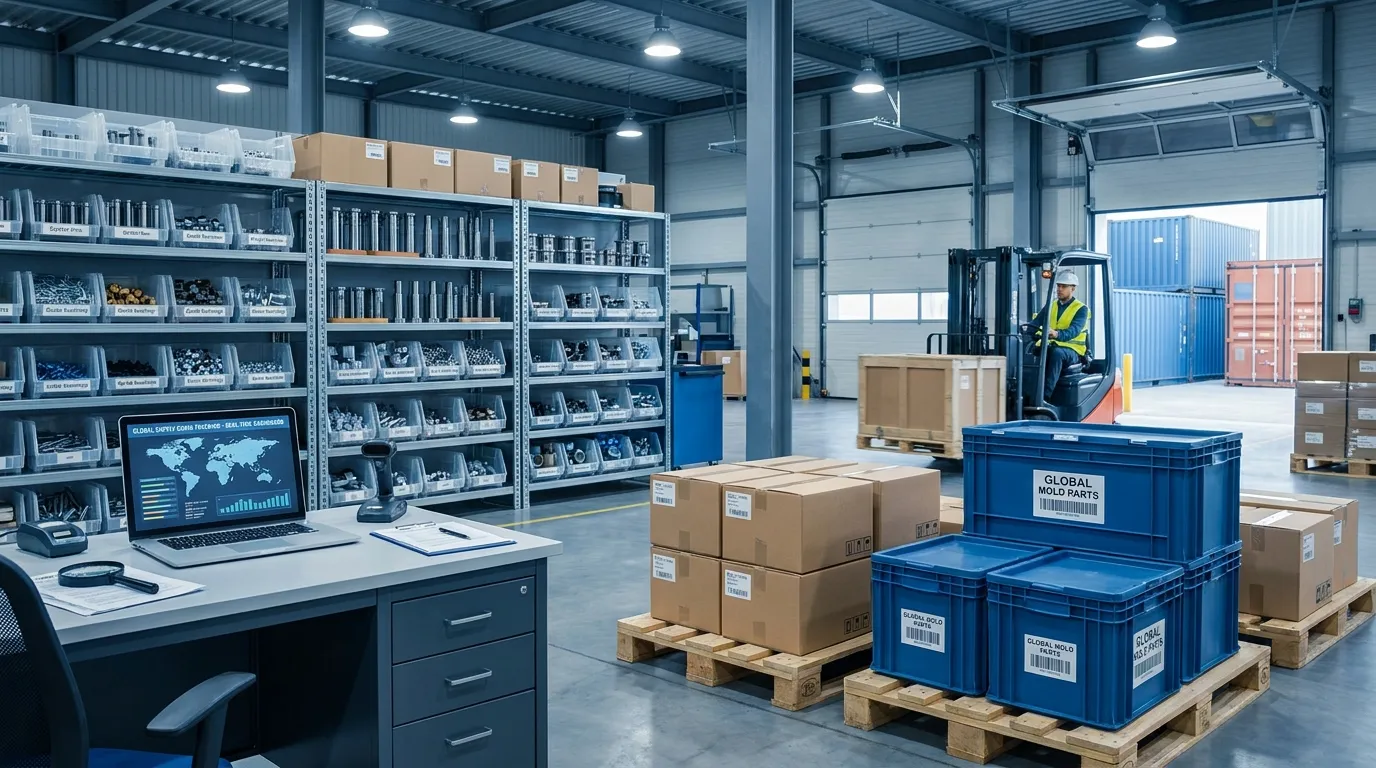
Mold part delivery delays often come from incomplete customs documentation, incorrect classifications, production bottlenecks, or low inventory availability. Buyers can reduce delays by standardizing parts, confirming documentation early, and maintaining critical spare stock.
Lead times for mold components involve more than manufacturing. International shipping, customs clearance, and inventory shortages can delay replacement parts long after production is complete.
According to customs compliance guidance from NG Terminal, shipment holds increasingly come from documentation and compliance problems rather than port congestion alone.
How customs compliance affects mold component imports
Incorrect HS classifications, incomplete paperwork, or missing compliance details can delay industrial component imports. Bangladesh customs updates for industrial imports also show how documentation requirements continue changing for international shipments through Bangladesh Customs.
Production scheduling creates another risk. Research from Ulitech Precision explains how tooling timelines already include machining, validation, and approval stages before shipment even begins.
Mold Component Sourcing Checklist
- Confirm part specifications before ordering
- Verify HS codes and customs paperwork
- Check supplier inventory availability
- Keep spare high-wear components in stock
- Avoid single-source custom replacements when possible
Overseas sourcing only works well when replacement planning is already in place. Buyers who rely on one custom component supplier without backup inventory create unnecessary production risk.
You can also review broader mold component sourcing considerations before planning large tooling orders.
Which mold parts should you keep in stock?
Buyers should keep high-wear and high-risk mold components in stock, especially ejector pins, sleeves, guide bushings, and alignment parts. Spare inventory reduces emergency downtime and protects production schedules during shipping or customs delays.
Not every mold component needs backup inventory. Focus first on parts with high wear rates, long replacement lead times, or major production impact if failure occurs.
Medical production teams often keep spare ejector sleeves available because customs delays can interrupt regulated manufacturing schedules. In many cases, carrying a small inventory costs far less than unexpected downtime.
Mold Spare Inventory Checklist
| Component | Wear Frequency | Downtime Risk | Suggested Stock Level |
|---|---|---|---|
| Ejector pins | High | High | Multiple sets |
| Guide bushings | Medium | High | Backup set |
| Ejector sleeves | High | Medium | Backup set |
| Core pins | Medium | Medium | Limited backup |
| Alignment parts | Medium | High | Backup set |
Injection molding timelines already include tooling and validation stages, according to Evok Plastic Molding. Delayed replacement parts can extend those timelines even further if critical components are unavailable.
Additional planning tips are available in this guide to spare mold parts for production maintenance teams.
How should buyers evaluate mold component suppliers?
Price matters, but supplier consistency matters more. Buyers should compare tolerance control, inventory availability, quality systems, and delivery reliability before approving a supplier.
A sourcing team comparing two vendors may find one supplier offers lower pricing but no stocked inventory. If emergency replacement parts require extended manufacturing time, the cheaper option can become more expensive during downtime.
Supplier Evaluation Checklist
- Material certification availability
- Inventory depth for standard components
- Tolerance control capability
- Production consistency
- Replacement lead times
- Quality inspection process
- Communication responsiveness
Supplier capability also affects scaling. Industry sourcing guidance from The Rodon Group highlights the importance of production capacity and operational consistency when evaluating manufacturing partners.
If you're reviewing suppliers across broader tooling systems, this plastic injection mold guide can help connect component decisions to overall mold production planning.
What to Do Next
Choosing the right plastic mold parts comes down to reliability, replacement planning, and production fit. Standard components often reduce maintenance delays and simplify inventory management, but custom solutions still matter for specialized tooling.
Start by identifying the highest-wear components in your molds. Then compare material quality, tolerance control, and supplier inventory support before ordering. Buyers who standardize critical components and maintain spare inventory usually reduce downtime risk and simplify long-term maintenance planning.
Frequently Asked Questions
What are mold components?
Mold components are the replaceable parts used inside injection molds, including ejector pins, bushings, sleeves, guide posts, and inserts. They support alignment, part ejection, wear resistance, and overall mold performance.
What are ejector pins used for?
Ejector pins push finished plastic parts out of the mold cavity after cooling. Proper pin selection helps prevent sticking, surface damage, and uneven ejection during production.
What is the difference between standard and custom mold parts?
Standard mold parts use common dimensions and specifications, while custom parts are built for unique tooling requirements. Standard components usually reduce replacement delays and simplify maintenance planning.
What materials are used for mold components?
Mold components commonly use hardened tool steel, stainless steel, and heat-treated alloy materials. Material selection depends on wear resistance, corrosion exposure, production volume, and resin type.
How long do mold components last?
Mold component lifespan depends on production volume, material quality, maintenance, and molding conditions. High-wear parts like ejector pins and bushings usually require replacement more often than structural mold sections.
What causes injection mold delays?
Injection mold delays often come from tooling revisions, inventory shortages, customs clearance issues, and production bottlenecks. Highly customized components can increase replacement lead times and sourcing risk.
Share:



Written By Sunshine
At Sunshine, we are a professional manufacturer and supplier of precision mould components, offering a wide range of products for stamping and injection mould applications. Our core focus includes punching dies, ejector pins and sleeves, and guide posts and bushings. With advanced CNC machining, strict quality control, and strong production capabilities, we ensure reliable, high-precision parts, along with in-stock standard components for fast and efficient global supply.
NEWS
GET SERVICE
With quality parts to meet every budget and friendly staff trained to make your visit informative and hassle free.
