



Plastic Injection Molding Service for Custom Plastic Parts: Buyer Guide
Plastic injection molding service is a manufacturing process used to produce custom plastic parts from prototype to mass production using reusable molds. It works by creating a precision mold, injecting molten plastic, cooling it, and ejecting finished parts in repeatable cycles. It’s widely used because it delivers consistent quality, scalable output, and lower per-part cost at higher volumes.
If you’re trying to turn a product idea into real plastic parts, this process is usually one of the first serious manufacturing options you’ll come across. But choosing the right service is not just about “can they make it,” it’s about cost, volume, tooling risk, and how ready your design actually is for production.
What is plastic injection molding service used for in custom parts?
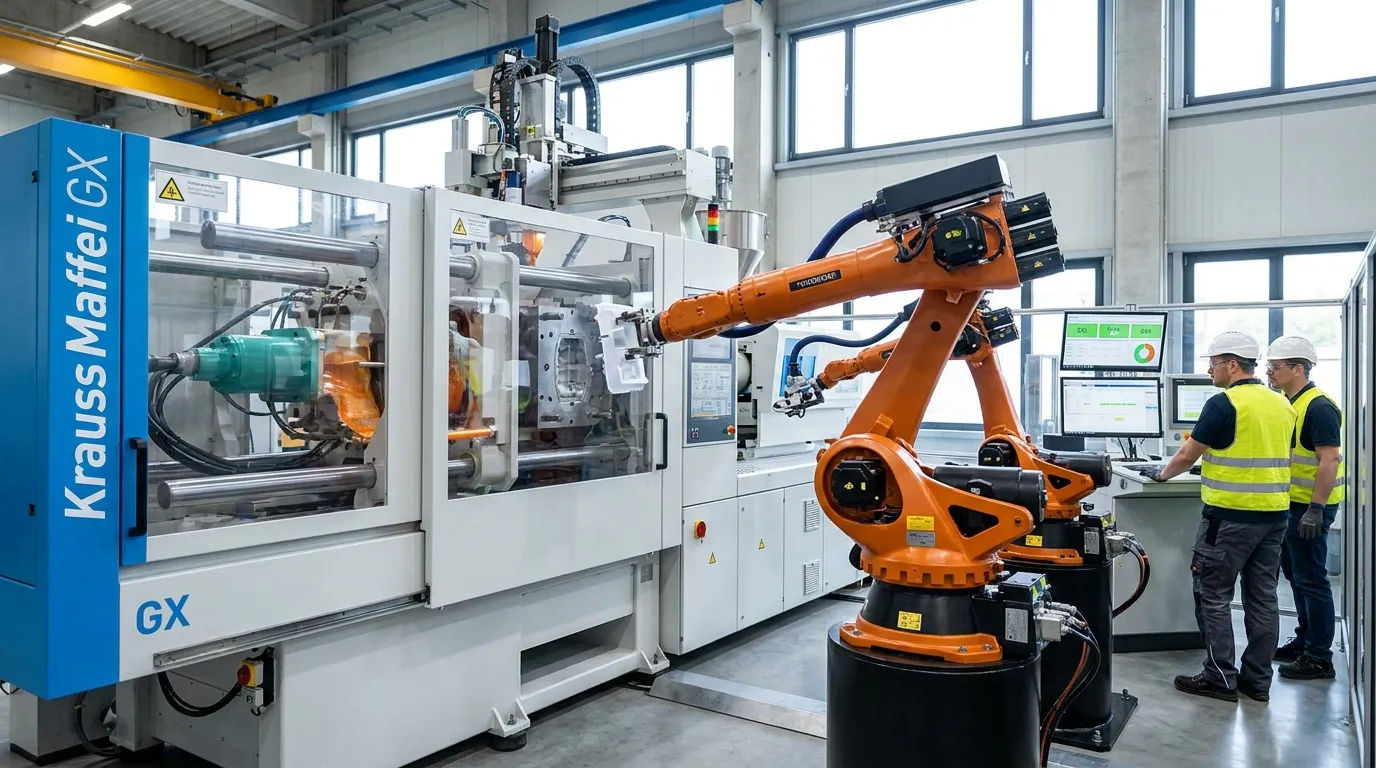
Plastic injection molding service is used to manufacture custom plastic parts from early prototypes to full-scale production. It turns a designed part into a physical product using a reusable mold, allowing consistent mass production once the tool is created.
This service is mainly used when a product needs repeatable accuracy and scalable manufacturing. It is common in consumer products, automotive components, electronics housings, and medical devices where identical parts must be produced in large quantities.
In practice, it sits between product design and mass production. You provide a CAD design, and the provider builds a mold that can produce thousands or even millions of identical parts. Many providers also support early-stage prototypes or small batches using simplified tooling options.
How does the plastic injection molding process work from design to production?
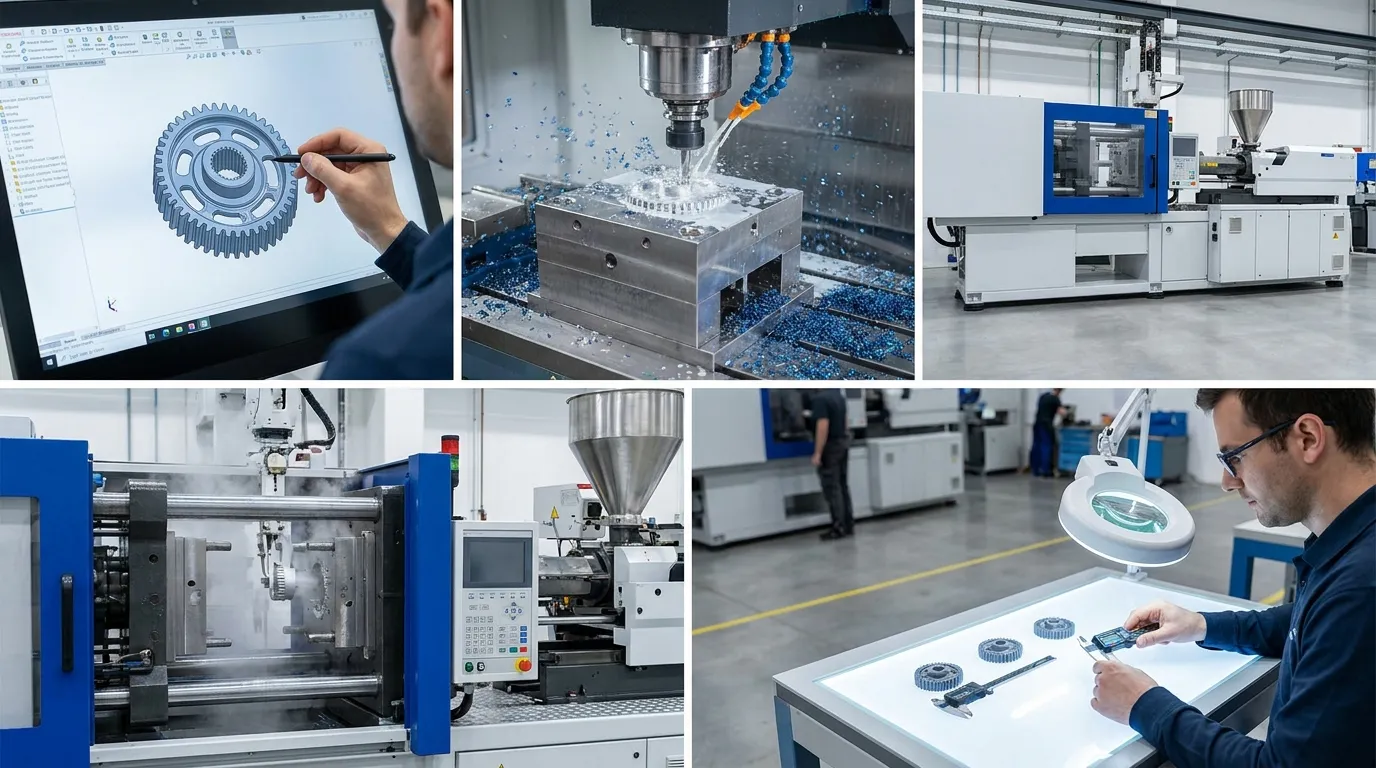
The plastic injection molding process converts a digital design into a physical mold, then repeatedly produces identical parts by injecting molten plastic into it. The cycle includes tooling, injection, cooling, and ejection, repeated for mass production.
Answer capsule: The process starts with mold design and tooling, followed by melting plastic resin and injecting it into the mold cavity. After cooling and solidification, the part is ejected and finished. This cycle repeats for mass production with high repeatability.
Core process steps
- Mold design: Based on CAD files and product requirements
- Tooling manufacturing: Steel or aluminum mold creation
- Injection phase: Heated plastic is injected into the mold
- Cooling phase: Material solidifies into final shape
- Ejection and finishing: Parts are removed and inspected
Once the mold is completed, production becomes fast and highly repeatable. Each cycle can take seconds or minutes depending on part complexity and size. The upfront tooling time is longer, but unit production becomes efficient once the system is running.
In advanced cases, controlling material behavior under pressure and heat is important for precision parts and stable output quality.
What types of plastic injection molding services can you choose from?
You can choose from prototype molding, bridge tooling, and full production molding depending on your product stage. Each option balances cost, speed, and volume differently.
Answer capsule: Plastic injection molding services are usually divided into three types: prototype, bridge tooling, and production molding. Prototype is for testing, bridge tooling supports early small batches, and production molding is used for large-scale manufacturing where cost per part becomes lowest.
| Service type | Best for | Tooling cost | Speed | Volume |
|---|---|---|---|---|
| Prototype molding | Early design testing | Low–medium | Fast | Low |
| Bridge tooling | Market testing | Medium | Medium | Medium |
| Production molding | Mass manufacturing | High upfront | Slower start, fast output | High |
Prototype molding is useful when your design is still evolving. Bridge tooling is often used when you are preparing for market launch but not ready for full investment. Production molding is the final stage when demand is stable and scaling is required.
How much does injection molding cost and what affects pricing?
Injection molding cost is mainly driven by tooling complexity, material choice, and production volume. The mold is the biggest upfront expense, while per-part cost drops significantly at higher volumes.
Answer capsule: Injection molding cost is dominated by tooling design and complexity. After the mold is built, unit costs become low at scale. Simple parts with common materials are cheaper, while tight tolerances or complex geometry significantly increase tooling and production cost.
Main cost drivers
- Tooling cost: One-time investment for mold creation
- Material type: Engineering plastics cost more than standard resins
- Design complexity: More features increase machining effort
- Tolerance requirements: Tight precision increases cost
- Production volume: Higher volume reduces per-unit cost
Tooling is often underestimated because buyers focus only on unit pricing. In reality, tooling determines whether the project is economically viable over time. If production volume is uncertain, bridge tooling can reduce early financial risk.
How to choose the right plastic injection molding service provider?
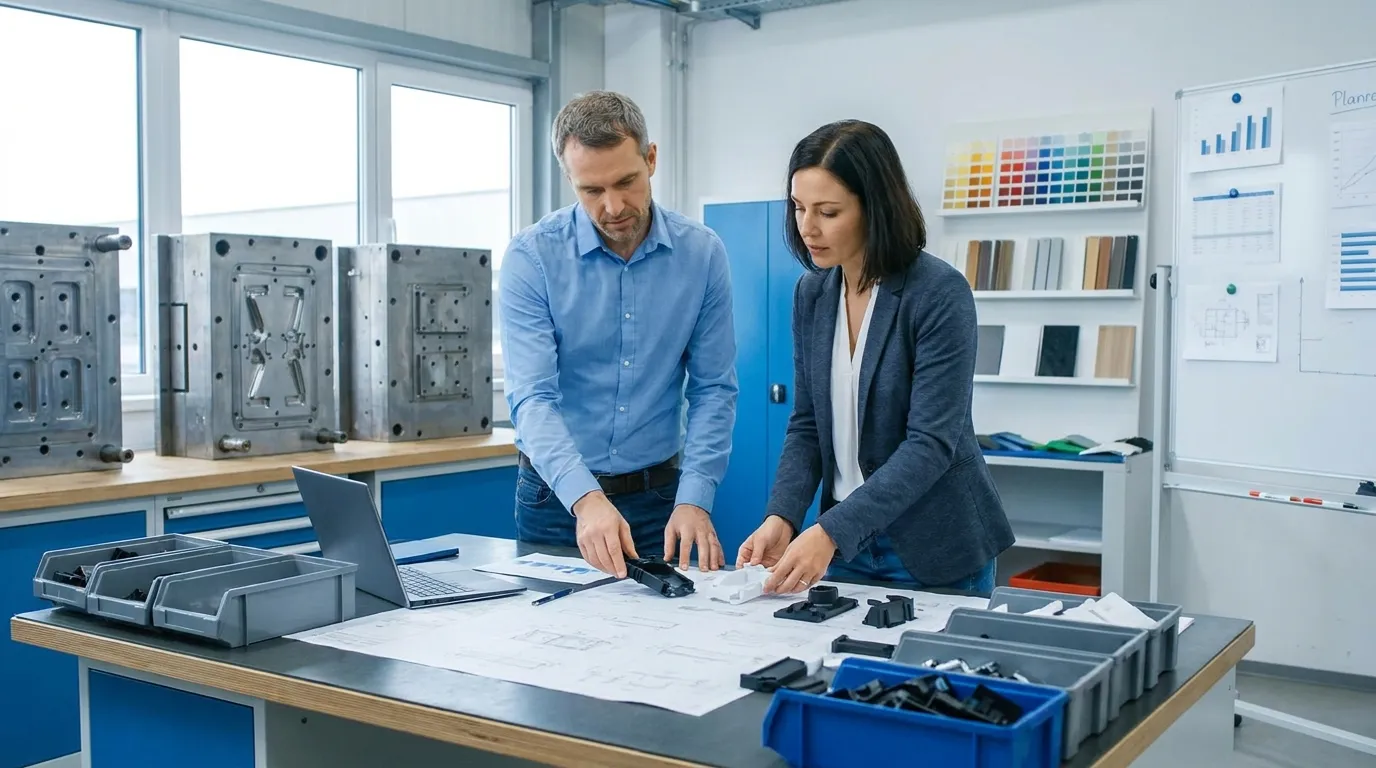
The right provider should have strong tooling capability, reliable quality control, and the ability to scale from prototype to mass production. The goal is not just manufacturing, but long-term production stability.
Answer capsule: The right injection molding provider should offer reliable tooling quality, consistent production control, and flexible scaling. You should also check engineering support, communication speed, and whether they can move your project from prototype to full production without rework.
- Do they support both prototype and production stages?
- Can they provide design for manufacturability (DFM) feedback?
- What quality control systems are in place?
- Can they scale production as demand grows?
- How transparent is their quotation process?
A strong supplier acts as a technical partner, not just a manufacturer. If a provider only accepts drawings without feedback, the risk of redesign and failure increases significantly. Quality systems and experience matter more than lowest price, especially for functional parts.
What mistakes should you avoid when ordering custom injection molded parts?
Most costly mistakes happen before production begins, usually in design and planning. Poor preparation leads to delays, redesigns, or failed tooling.
Answer capsule: Common mistakes include skipping design for manufacturability checks, choosing the wrong material, and ignoring tooling lifecycle cost. These issues often lead to delays, redesign expenses, or parts that do not perform as expected in real-world use.
- Poor manufacturability design (DFM issues)
- Wrong material selection for real conditions
- Using prototype tooling as final production tooling
- Ignoring mold revision requirements
- Underestimating scaling needs
One of the most expensive mistakes is committing to full production tooling before validating the design. Even small changes after tooling is built can significantly increase cost and delay the entire project.
When should you use injection molding instead of other manufacturing methods?
Injection molding is best when you need stable, high-volume production with consistent design requirements. It becomes cost-effective only when production scale justifies tooling investment.
Answer capsule: Injection molding is ideal for medium to high-volume production where consistency and unit cost matter. For low volumes or early testing, CNC machining or 3D printing is often more flexible and cost-efficient before committing to tooling.
Compared to other methods, 3D printing is better for early prototypes, CNC machining is better for low-volume precision parts, and injection molding is best when scaling production. The key factor is design stability and demand certainty.
If your design is still changing, molding is usually too early. If your product is stable and demand is predictable, injection molding becomes the most efficient manufacturing option.
Final Thoughts
Choosing a plastic injection molding service is not just about production capability. It is about matching your product stage with the right manufacturing approach, from prototype validation to full-scale production. Each stage has its own tooling strategy, cost structure, and risk level.
If your design is still evolving, start small and validate first. If your product is stable and demand is clear, investing in proper tooling reduces long-term cost and improves consistency. The right decision comes down to timing, planning, and understanding how your product will scale over time.
Frequently Asked Questions
What is plastic injection molding service?
It is a manufacturing process where molten plastic is injected into a mold to produce custom parts. It is widely used for creating precise and repeatable components for industries like automotive, electronics, and consumer goods.
Is injection molding suitable for small batches?
Yes, but cost efficiency depends on volume. Small batches are possible using prototype or bridge tooling, but per-part costs are higher. It becomes more economical as production scale increases.
What materials are used in injection molding?
Common materials include ABS, polypropylene, polycarbonate, and nylon. Each material has different strength, flexibility, and heat resistance, so selection depends on the product’s functional requirements.
How long does injection molding take?
Each production cycle takes seconds to minutes depending on part complexity. However, tooling development can take several weeks before mass production begins.
What industries use injection molding services?
It is widely used in automotive, medical, electronics, packaging, and consumer goods industries. These sectors rely on it for producing consistent, high-quality plastic components at scale.
What is the biggest cost in injection molding?
The mold tooling is the largest upfront cost. After tooling is complete, per-part production becomes significantly cheaper, especially at higher volumes.
Can injection molding produce complex shapes?
Yes, it can produce highly complex and precise geometries. However, designs must be optimized for moldability to avoid defects and unnecessary cost increases.
Share:



Written By Sunshine
At Sunshine, we are a professional manufacturer and supplier of precision mould components, offering a wide range of products for stamping and injection mould applications. Our core focus includes punching dies, ejector pins and sleeves, and guide posts and bushings. With advanced CNC machining, strict quality control, and strong production capabilities, we ensure reliable, high-precision parts, along with in-stock standard components for fast and efficient global supply.
NEWS
GET SERVICE
With quality parts to meet every budget and friendly staff trained to make your visit informative and hassle free.
