


Ejector Pins Guide: Materials, Sizes, Coatings, and Buying Tips
Ejector pins are precision mold components used to push finished plastic parts out of injection molds. Buyers should compare material grade, hardness, coating, tolerance, and sizing before ordering. H13 and nitrided pins work well for high-temperature production, while through-hard pins are safer for heavy shutoff applications. Custom sizing, coating selection, and supplier quality control all affect mold life, cycle stability, and replacement frequency.
A low-cost ejector pin can turn into an expensive mold problem if the material, hardness, or coating is wrong for the application. Wear marks, sticking parts, broken pins, and production downtime often start with poor pin selection. This guide explains how to choose the right ejector pins based on resin type, mold conditions, and sourcing requirements, without overcomplicating the buying process.
What are ejector pins and why do they matter in mold performance?
Ejector pins push molded parts out of the mold after cooling. The right pin material, hardness, and placement reduce wear, prevent surface defects, and improve cycle consistency in injection molding.
Ejector pins sit inside the ejection system of an injection mold. After the plastic part cools, the pins move forward and release the part from the mold cavity. Without proper ejection, parts can stick, warp, or crack during removal.
Pin selection directly affects mold reliability. Poorly matched pins may wear quickly, leave visible marks, or bend under pressure. According to Protolabs, ejector pin placement also affects cosmetic quality and force distribution during ejection.
If you need a broader overview of mold systems and component roles, this mold components guide explains how ejector systems fit into complete mold assemblies. You can also explore ejector pin function in more detail for operational basics.
Which ejector pin materials are best for different molding conditions?
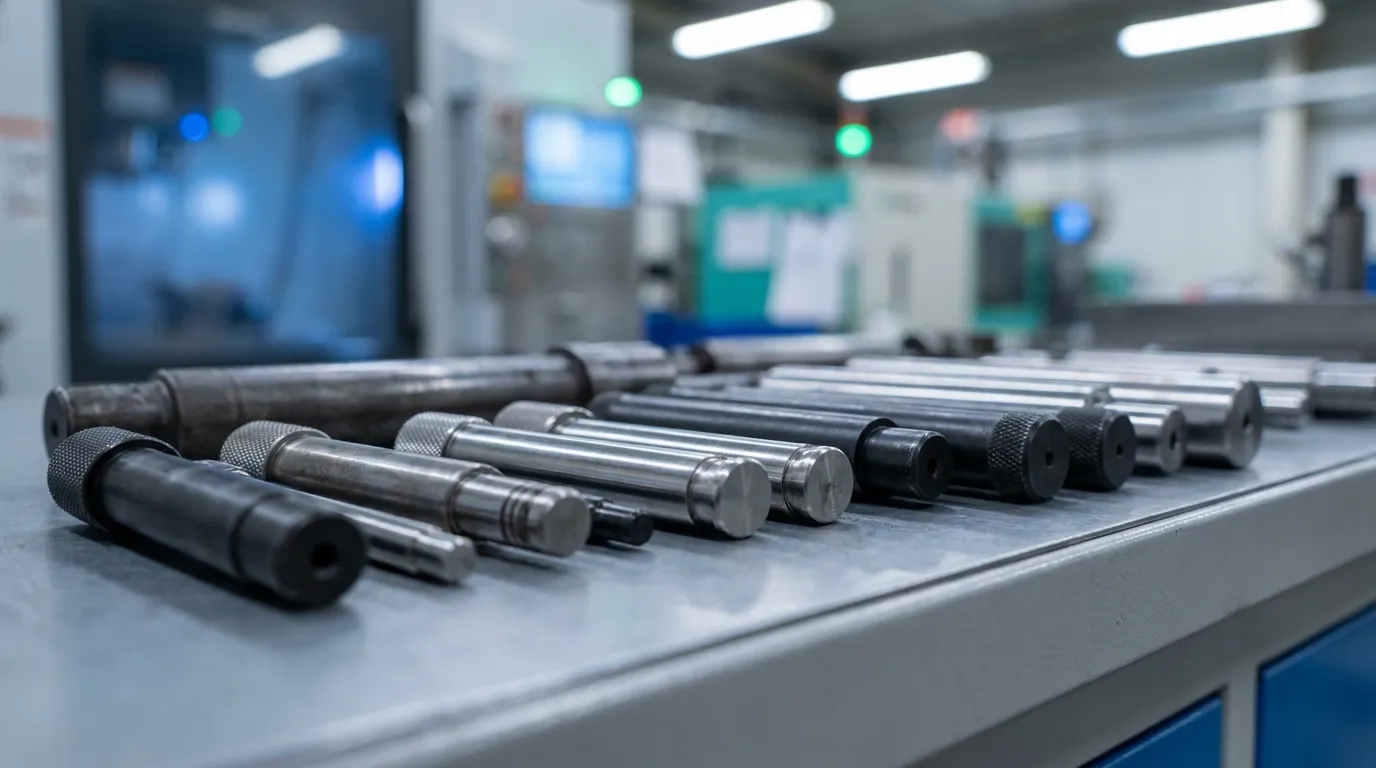
H13 and nitrided tool steels are common for high-temperature molding, while stainless steel options help reduce corrosion risks. Material choice should match resin type, cycle volume, and mold temperature.
Most ejector pins are made from hardened tool steels because they handle repeated movement, heat, and pressure. The right material depends on how aggressive the molding environment is. High-volume automotive molds need different pin properties than low-volume consumer product molds.
H13 vs stainless steel
H13 tool steel is one of the most common choices for injection molds. It handles heat well and maintains hardness during repeated production cycles. Stainless steel ejector pins are useful in medical or corrosive environments where moisture resistance matters more than maximum hardness.
| Material | Best Use | Main Benefit | Limitation |
|---|---|---|---|
| H13 Tool Steel | High-temperature molding | Heat resistance | Higher cost |
| Stainless Steel | Medical or humid environments | Corrosion resistance | Lower wear resistance |
| Hardened Tool Steel | General production | Balanced cost and durability | May wear faster in abrasive resins |
| Nitrided Steel | High-cycle molding | Better surface hardness | Surface layer can chip under impact |
A medical mold producing sterile plastic housings may use stainless ejector pins to reduce corrosion risk during frequent cleaning cycles. An automotive mold running glass-filled nylon usually benefits more from H13 or nitrided steel because abrasive resins increase wear.
This is where material selection becomes practical instead of theoretical. The cheapest ejector pins usually increase replacement frequency and downtime. Lower upfront cost often creates higher long-term maintenance costs.
For related tooling materials, precision mold materials can help compare other hardened mold components used in production tooling.
Through-hard or nitrided ejector pins: which should you buy?
Through-hard ejector pins are safer for steel shutoff applications because hardness runs through the full pin. Nitrided pins improve surface wear resistance but can fail faster in certain impact-heavy conditions.
This is one of the most common buying mistakes in mold component sourcing. Buyers often assume nitrided pins are automatically better because the surface hardness is higher. That is not always true.
Nitrided ejector pins use a hardened outer layer to improve wear resistance and reduce friction. They perform well in high-cycle production and abrasive resin applications. According to Nonnenmann, nitrided pins can achieve high surface hardness levels that improve wear life.
Through-hard pins are different because the hardness extends through the entire pin body. This makes them more resistant to cracking or chipping under repeated impact. PT Online notes that through-hard pins are often preferred in steel shutoff conditions where side loading and impact stress are higher.
| Pin Type | Best For | Main Advantage | Main Risk |
|---|---|---|---|
| Through-Hard | Heavy shutoff applications | Better structural strength | More wear over time |
| Nitrided | High-cycle abrasive molding | Superior surface hardness | Surface layer damage under impact |
Custom molds with repeated side pressure often perform better with through-hard pins. A thin nitrided surface can fail faster if the mold experiences constant impact loading.
What coatings improve ejector pin lifespan?
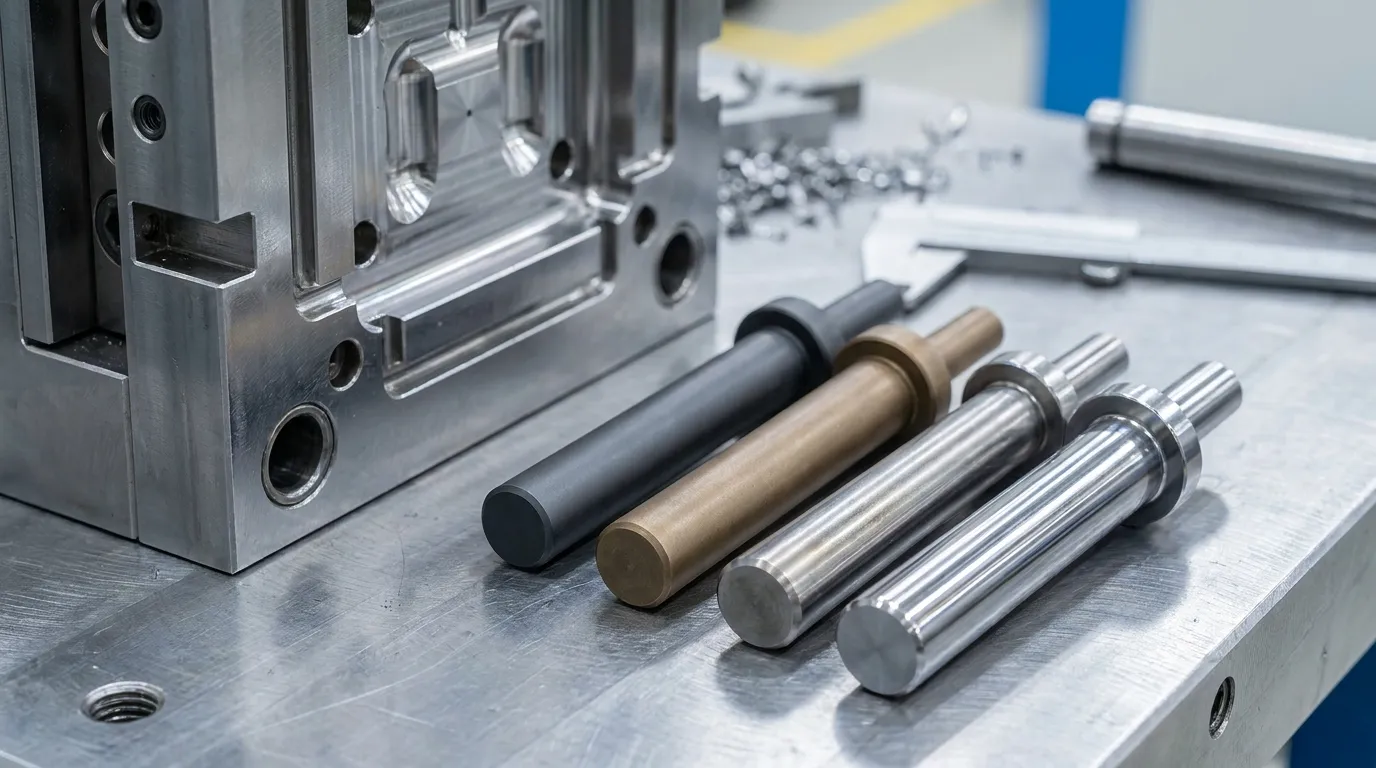
Coatings reduce friction and wear during repeated ejection cycles. DLC and nitrided finishes are commonly used when molds run abrasive resins or high-cycle production schedules.
Surface coatings help ejector pins survive longer under demanding production conditions. They reduce friction between the pin and mold surface, which lowers heat buildup and wear during repeated cycles.
DLC (diamond-like carbon) coatings are common in high-cycle molds because they improve hardness and reduce sticking. PVD coatings are also used when buyers want smoother movement and lower friction. HASCO lists several coating and heat-treatment options designed for different molding environments.
| Coating | Best Application | Main Benefit |
|---|---|---|
| DLC | High-cycle molds | Low friction |
| PVD | Precision molding | Smoother movement |
| Nitrided Finish | Abrasive resin molding | Surface hardness |
| Black Oxide | General applications | Basic corrosion protection |
A high-cycle automotive mold producing reinforced plastic clips may switch from standard hardened pins to DLC-coated pins after repeated wear problems. The higher coating cost often pays off through fewer shutdowns and lower replacement frequency.
Custom coatings are not necessary for every mold. Standard hardened pins are usually enough for low-volume production or softer resins.
How do you choose the correct ejector pin size?
Choosing the wrong ejector pin size can create sticking, bending, or visible marks on molded parts. Diameter, stroke length, and tolerance all need to match the mold design and part geometry.
Standard ejector pins are faster and more cost-effective for most molds. Custom sizes make sense when the mold has unusual cavity depth, restricted space, or specialized ejection requirements.
Standard vs custom ejector pins
Standard pins reduce lead time and replacement cost because they follow common industry dimensions. Custom ejector pins may require additional machining, coating, or grinding work before shipment.
Ejector Pin Selection Table
| Application Condition | Recommended Pin Type | Suggested Hardness | Coating Option |
|---|---|---|---|
| High-temperature resin | H13 ejector pin | 58-62 HRC | Nitrided |
| Abrasive glass-filled resin | Through-hard tool steel | 60-64 HRC | DLC |
| Medical molding | Stainless ejector pin | 50-55 HRC | PVD |
| General consumer parts | Standard hardened steel | 54-58 HRC | None or black oxide |
Use this checklist before ordering:
- Confirm diameter tolerance with the mold drawing
- Match pin length to the required stroke
- Verify hardness range from the supplier
- Check if coatings affect dimensional tolerance
- Ask whether replacement pins follow standard sizing
For dimensional basics and ejection setup examples, this guide on ejector pin sizing explains how sizing affects mold performance. Buyers working on larger mold systems may also benefit from these plastic injection mold basics before finalizing specifications.
Why do ejector pins leave marks or break?
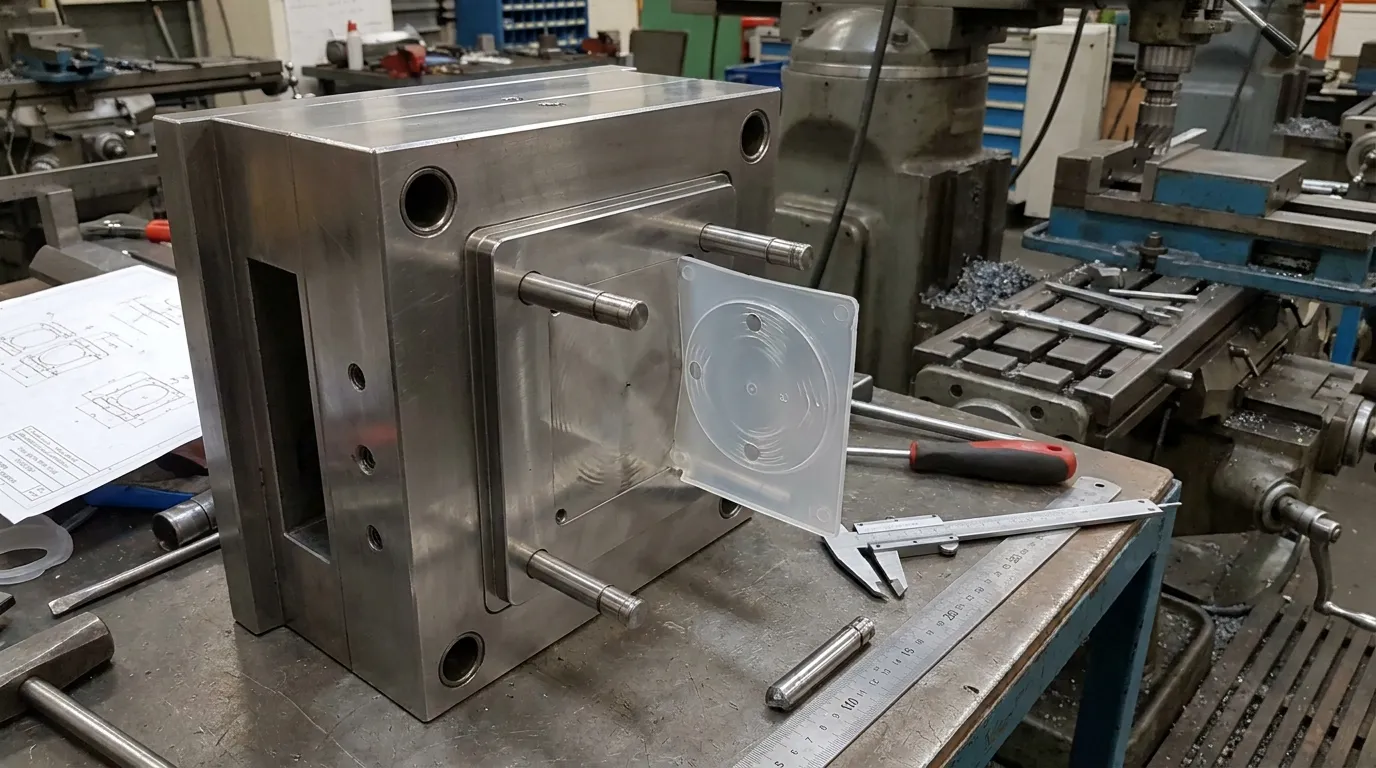
Ejector pin marks and breakage usually result from incorrect placement, uneven force, excessive friction, or poor hardness selection. Matching pin design to part geometry helps reduce cosmetic and structural defects.
Visible ejector pin marks are common when force concentrates on thin plastic surfaces. Poor cooling balance, weak support areas, or incorrect pin diameter can also increase marking. According to Protolabs, proper pin placement helps spread force more evenly during part ejection.
Breakage usually comes from misalignment or excessive side loading. A pin designed for straight pressure may fail quickly if the mold creates lateral stress during ejection. PT Online also highlights steel shutoff conditions as a major failure source.
| Problem | Likely Cause | Recommended Fix |
|---|---|---|
| Visible pin marks | Excess pressure | Increase support area |
| Broken pins | Side loading | Use through-hard pins |
| Fast wear | Abrasive resin | Add DLC coating |
| Sticking parts | Poor alignment | Recheck mold tolerances |
A thin-wall electronics housing is a good example. If ejector pins push directly against unsupported cosmetic surfaces, circular marks often appear after cooling. Moving the pins closer to structural ribs usually reduces visible defects.
If you are troubleshooting recurring tooling wear, these tool wear issues show how stress and alignment problems affect other precision tooling systems too.
What should buyers ask suppliers before ordering ejector pins?
Buyers should confirm material grade, hardness range, coating method, dimensional tolerance, and production lead time before placing ejector pin orders. These details directly affect mold life and replacement frequency.
Many ejector pin problems begin before production starts. Suppliers may use different steel grades, hardness processes, or tolerance standards even when the pin dimensions look identical on paper.
Ask suppliers for material certification whenever the application involves high temperatures or abrasive resins. Hardness range also matters because overly brittle pins can fail under repeated impact loading.
Supplier Evaluation Checklist
| Question | Why It Matters |
|---|---|
| What steel grade is used? | Confirms heat and wear resistance |
| What hardness range is guaranteed? | Prevents early failure |
| Is the coating outsourced or in-house? | Affects consistency |
| What tolerance standard is followed? | Reduces fitting issues |
| What is the MOQ? | Impacts replacement flexibility |
| What is the lead time? | Prevents production delays |
Custom ejector pins are not necessary for every mold. Standard sizes are usually faster and more cost-effective unless the geometry truly requires customization.
For broader sourcing considerations across tooling systems, mold component sourcing explains how buyers evaluate precision manufacturing suppliers.
How do customs delays and shipping issues affect ejector pin orders?
International ejector pin orders can create unexpected downtime if customs paperwork or lead times are not handled properly. Small mold components are easy to overlook during procurement planning, but delayed replacement pins can stop an entire production line.
Incorrect HS code classification is one common problem. According to FreightAmigo, classification issues can slow customs processing and create extra inspection requests.
A supplier shipment delayed by incomplete HS code documentation can extend mold downtime by days or even weeks. Buyers handling custom ejector pins should also allow extra production time for grinding, coating, or non-standard machining.
Use this checklist before shipment:
- Confirm HS code accuracy
- Verify material certificates
- Check coating documentation
- Add buffer time for customs clearance
- Order spare pins for high-cycle molds
If your mold program involves multiple production industries, these injection mold applications show how sourcing requirements change between sectors like automotive, electronics, and medical manufacturing.
Getting the Next Step Right
The right ejector pins improve mold reliability, reduce visible defects, and lower replacement costs over time. Material grade, hardness, coating, and sizing should all match the actual production environment, not just the mold drawing.
Start by reviewing resin type, cycle volume, and operating temperature. Then compare standard and custom pin options based on wear risk and lead time. If your molds experience repeated impact loading or abrasive resins, it is usually worth investing in better steel grades or coatings early instead of replacing failed pins later.
Frequently Asked Questions
What is an ejector pin used for?
Ejector pins push molded parts out of the mold cavity after cooling. They help maintain production speed and reduce damage during part removal.
Which material is used to make ejector pins?
Ejector pins are commonly made from H13 tool steel, stainless steel, and hardened alloy steels. The right material depends on mold temperature, wear conditions, and production volume.
How much temperature can an ejector pin withstand?
Temperature resistance depends on the steel grade and coating. H13 and nitrided pins are commonly selected for high-temperature molding because they maintain hardness during repeated thermal cycles.
Why do ejector pins leave marks on molded parts?
Ejector pin marks appear when force distribution, placement, or cooling conditions are not optimized. Proper pin sizing and positioning help reduce visible surface defects.
Why do ejector pins break?
Ejector pins often break due to misalignment, excessive force, improper hardness, or repeated side loading. Material selection and mold alignment both affect lifespan.
Are coated ejector pins worth the cost?
Coated ejector pins can improve wear resistance and reduce friction in high-cycle production. They are usually more valuable in abrasive resin or high-temperature applications.
Share:



Written By Sunshine
At Sunshine, we are a professional manufacturer and supplier of precision mould components, offering a wide range of products for stamping and injection mould applications. Our core focus includes punching dies, ejector pins and sleeves, and guide posts and bushings. With advanced CNC machining, strict quality control, and strong production capabilities, we ensure reliable, high-precision parts, along with in-stock standard components for fast and efficient global supply.
NEWS
GET SERVICE
With quality parts to meet every budget and friendly staff trained to make your visit informative and hassle free.
