



Injection Mold Surface Finish: Standards, Options, and Cost Impact
Injection mold surface finish controls the texture, gloss, and roughness transferred to plastic parts during molding. SPI finishes are commonly used for polished cosmetic surfaces, while VDI finishes work well for matte and textured parts. The right finish affects appearance, ejection, scratch visibility, mold wear, and tooling cost, so finish selection should balance cosmetic goals with manufacturability and production efficiency.
A mold surface finish does more than change how a part looks. It can affect release force, scratch resistance, polishing time, and even how long the mold lasts in production. Choosing the wrong finish often leads to higher tooling cost or avoidable cosmetic problems. This guide explains how SPI and VDI finishes work, when to use them, and how to match the finish to your product and production goals.
What is an injection mold surface finish?
Injection mold surface finish defines the texture and roughness transferred from the mold cavity to the plastic part. The selected finish affects product appearance, scratch visibility, ejection performance, mold wear, and tooling cost.
Every molded plastic part copies the condition of the mold cavity surface. A highly polished cavity creates a glossy appearance, while a textured cavity creates a matte or patterned finish. Surface finish also changes how the part interacts with the mold during ejection.
Smooth finishes often look premium, especially for consumer products. They also make scratches and fingerprints easier to see. Textured finishes usually hide wear better and improve grip, which is why they are common in automotive interiors and industrial housings.
Finish selection also affects manufacturing time. Mirror-polished surfaces require more machining, polishing, and inspection work. That increases tooling cost and maintenance requirements over the mold's lifecycle.
If you want a broader overview of mold construction and tooling systems, SunshinePro’s complete plastic injection mold guide explains the larger mold engineering process in more detail.
You can also review the mold production stages that influence final surface quality.
What do SPI and VDI surface finish standards mean?
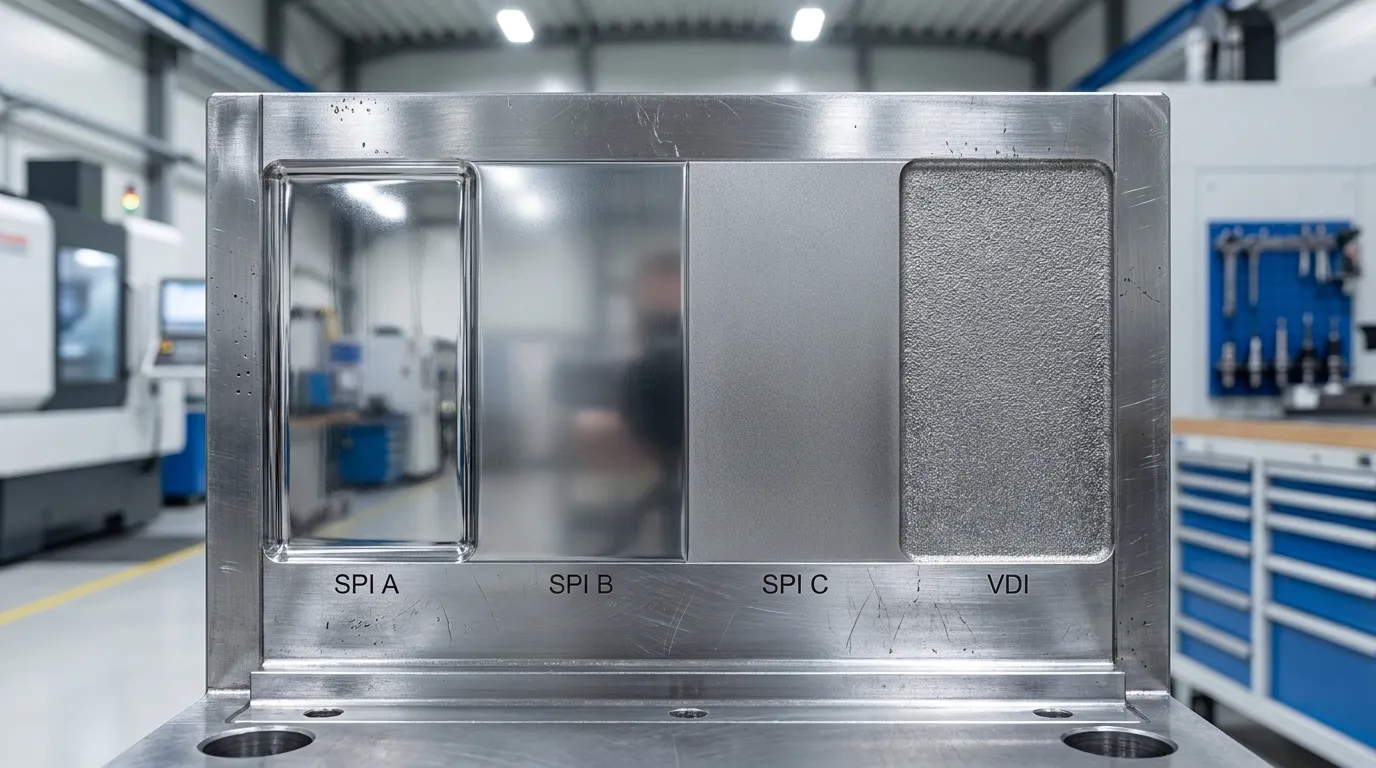
SPI standards classify polished mold finishes from high-gloss A grades to textured D grades, while VDI 3400 uses EDM texture scales for matte and textured surfaces. SPI is commonly used for polished cosmetic parts, while VDI is preferred for textured industrial finishes.
Most injection mold surface finish specifications use either SPI or VDI standards. SPI stands for Society of the Plastics Industry and focuses on polished finishes. VDI 3400 is commonly used for textured EDM surfaces.
According to Fictiv’s SPI finish guide and Engineering Product Design’s surface finish reference, SPI grades range from highly polished mirror finishes to rough textured surfaces.
SPI finish grades explained
| SPI Grade | Appearance | Typical Use | Relative Cost |
|---|---|---|---|
| SPI A1-A3 | Mirror gloss | Optical parts, premium cosmetics | Highest |
| SPI B1-B3 | Semi-gloss | Consumer housings | Medium-high |
| SPI C1-C3 | Matte | Utility components | Medium |
| SPI D1-D3 | Textured | Industrial parts | Lower |
Mirror-polished SPI A finishes are not automatically the best option. They work well for optical clarity and premium cosmetics, but they also reveal fingerprints, scratches, and molding defects more easily.
VDI texture grades explained
| VDI Range | Texture Level | Typical Application |
|---|---|---|
| VDI 12-18 | Fine matte | Consumer products |
| VDI 21-27 | Medium texture | Automotive trim |
| VDI 30-45 | Heavy texture | Industrial housings |
VDI textures are often created through EDM, or electrical discharge machining. These finishes work well when products need grip, reduced glare, or better scratch masking.
How does surface finish affect appearance, friction, and ejection?
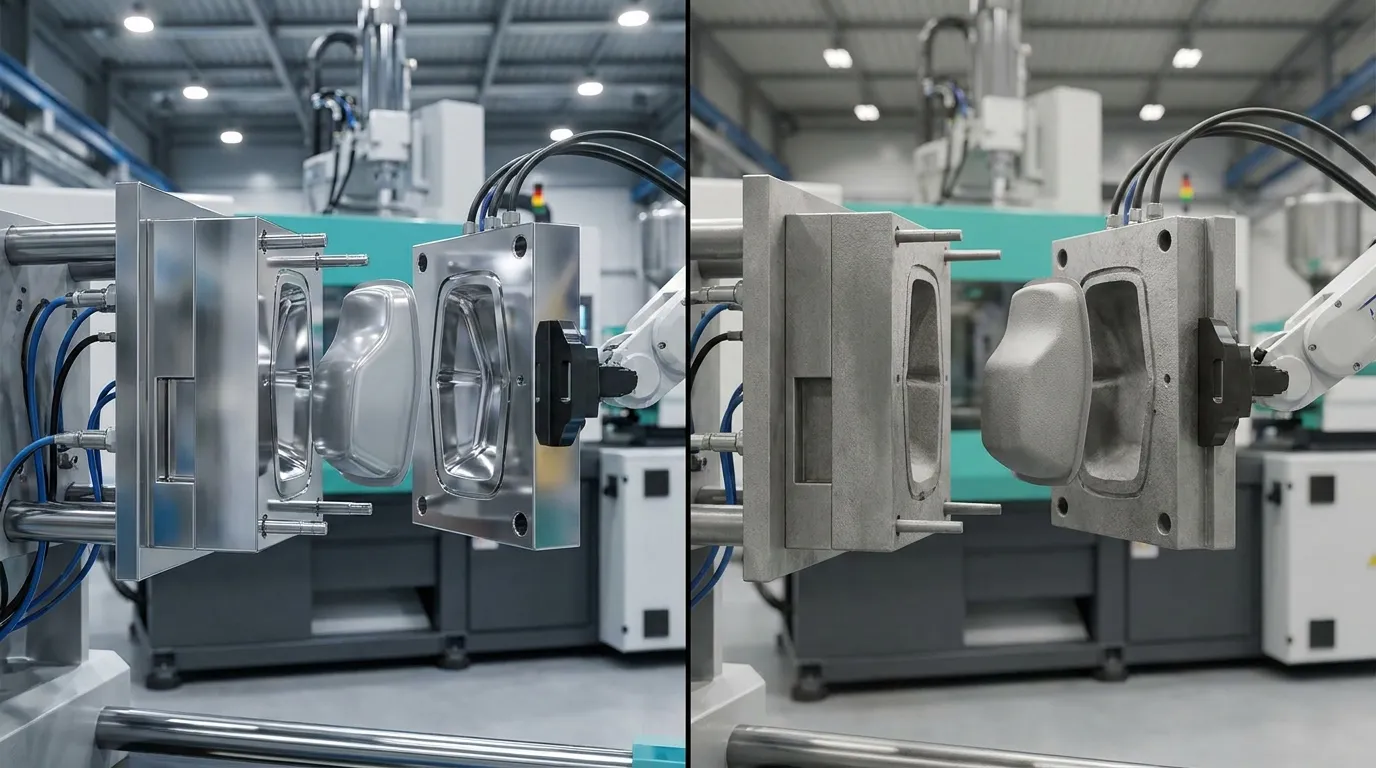
Surface finish affects more than appearance. High-gloss finishes can increase sticking and reveal scratches, while textured finishes may improve grip and hide defects but often require larger draft angles for smooth ejection.
Surface finish changes how the molded part behaves inside the cavity. Smooth polished surfaces create more contact area between the plastic and steel. In some materials, that increases friction during ejection.
Textured surfaces break up contact points and can help reduce visible drag marks. They also hide sink marks, fingerprints, and minor cosmetic defects better than polished surfaces. This is one reason automotive interiors often use textured finishes instead of mirror gloss.
According to Nicolet Plastics’ surface finish overview, finish selection should match both appearance goals and molding performance requirements.
Why textured surfaces need more draft angle
Textured molds usually require more draft because the plastic grips the cavity surface more aggressively during ejection. Deeper textures create more mechanical resistance, especially with softer materials.
| Finish Type | Typical Draft Need | Ejection Risk |
|---|---|---|
| High polish | Lower draft possible | Sticking risk |
| Light texture | Moderate draft | Balanced |
| Deep texture | Higher draft required | Drag marks possible |
A nylon-filled industrial housing is a good example. One manufacturer selected an aggressive texture to improve grip, but the original draft angle was too low. Parts started sticking during ejection, which caused visible drag marks and slower cycle times. Increasing the draft solved the issue without changing the resin.
If you're evaluating textured finishes, SunshinePro’s draft angle guidelines can help you avoid release problems early in the design stage.
Which finish should you choose for different product types?
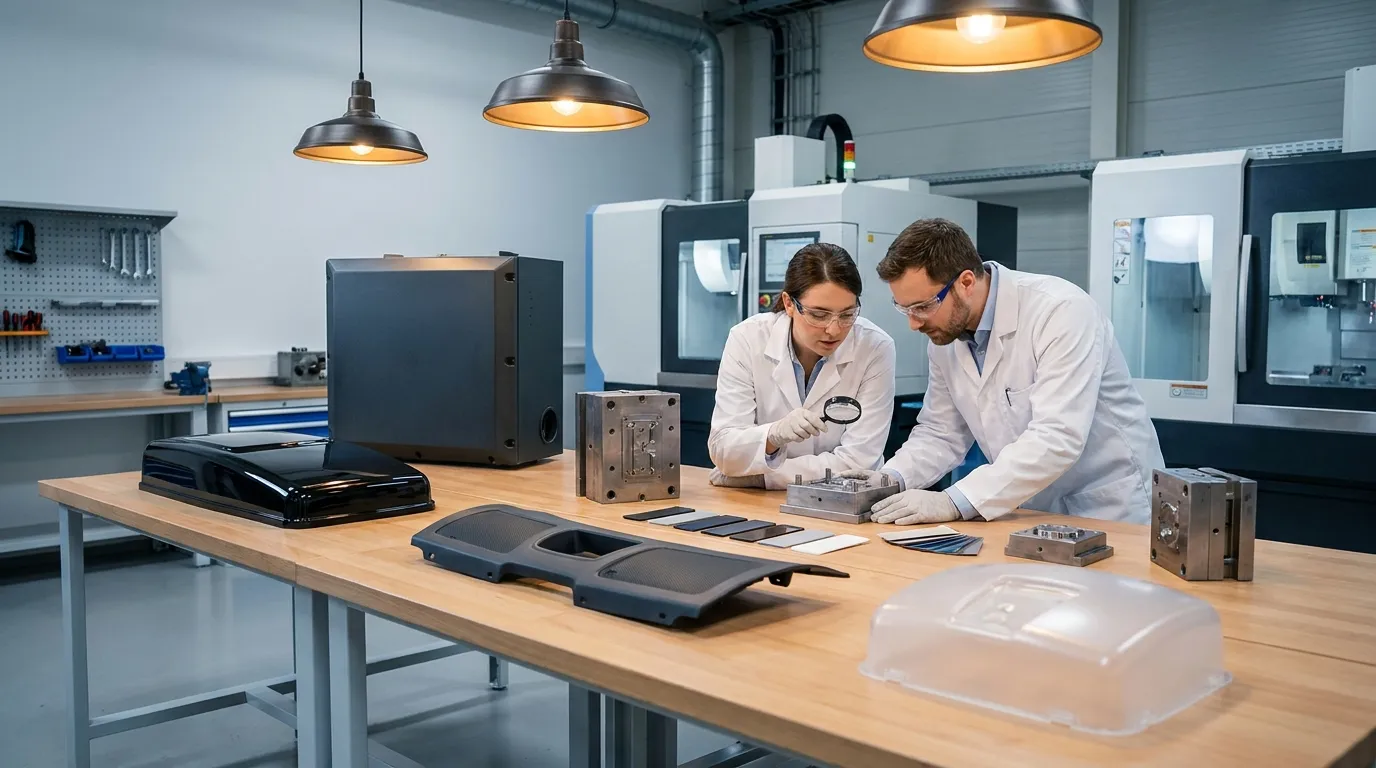
The best injection mold surface finish depends on the product’s appearance requirements, handling conditions, and production goals. High-gloss SPI A finishes suit cosmetic consumer products, while textured VDI finishes often work better for grip, scratch resistance, and industrial durability.
The right finish depends on how the product is used after molding. A cosmetic electronics housing needs different surface behavior than an industrial bracket or medical enclosure.
Textured finishes are often the safer choice for frequently handled products because they hide cosmetic wear better and reduce visible handling marks over time.
Finish selection by product type
| Product Type | Recommended Finish | Main Reason |
|---|---|---|
| Consumer electronics | SPI A2 or B1 | Premium cosmetic appearance |
| Automotive interior trim | VDI 24-30 | Reduced glare and scratch hiding |
| Medical enclosure | SPI B finish | Easier cleaning with moderate gloss |
| Industrial housing | VDI texture | Durability and grip |
| Internal structural parts | SPI C finish | Lower tooling cost |
A consumer electronics company provides a common example. Their first housing design used a mirror-polished SPI A finish because the product needed a premium look. After production launch, fingerprint complaints increased. The manufacturer switched to a fine VDI texture that reduced visible smudges without changing the mold geometry.
For broader manufacturability planning, SunshinePro’s DFM decisions guide explains how cosmetic choices affect tooling and production efficiency.
How much does surface finish increase mold cost?
Surface finish can significantly change mold cost because high-polish cavities require additional machining, hand polishing, inspection, and maintenance. Mirror finishes usually increase tooling time and should only be specified when appearance or optical clarity truly requires it.
High-gloss polishing adds labor at several stages of mold production. Toolmakers often need multiple polishing passes, finer abrasives, and extra inspection work to remove small surface defects.
According to BEC Group’s injection molding surface finish guide, finish-related manufacturability decisions can strongly affect tooling cost and lead time.
Why mirror polishing increases tooling time
Mirror polishing is slow because every small machining mark must be removed manually. Highly polished cavities also require careful maintenance to preserve surface quality during long production runs.
| Finish Type | Relative Tooling Time | Maintenance Demand |
|---|---|---|
| SPI A mirror polish | Highest | High |
| SPI B semi-gloss | Moderate | Medium |
| SPI C matte | Lower | Lower |
| VDI texture | Moderate | Medium |
Many manufacturers over-specify high-gloss finishes even when the part is rarely visible. In those cases, a lower-cost matte finish often improves manufacturability without affecting product value.
An industrial bracket project shows this clearly. The original design specified a polished finish for hidden internal components. After review, the tooling team switched to a matte SPI C finish. That reduced polishing labor and shortened mold delivery time without changing part performance.
If you are comparing tooling budgets, SunshinePro’s tooling cost factors article explains how mold complexity, finish level, and cavity design influence pricing.
Which finishes work best with different plastic materials?
Different plastics respond differently to polished and textured surfaces. Resin behavior affects gloss consistency, scratch visibility, and release performance.
| Material | Best Finish Types | Common Concern |
|---|---|---|
| ABS | SPI A or B | Fingerprints on gloss surfaces |
| Polycarbonate (PC) | SPI A | Optical clarity requirements |
| Polypropylene (PP) | SPI B or VDI | Lower surface detail sharpness |
| Nylon | SPI C or texture | Ejection resistance |
| Glass-filled resins | Matte or texture | Mold wear from abrasive fillers |
Filled materials deserve extra attention. Glass-filled plastics can wear polished cavities faster because the reinforcement fibers are abrasive. In many industrial applications, matte or textured finishes hold up better over long production runs.
Medical equipment housings often use semi-gloss finishes instead of mirror polish. The moderate gloss level keeps surfaces easier to clean without adding unnecessary polishing cost.
Common surface finish mistakes that increase defects and cost
Many mold finish problems start with over-specification. Choosing a high-gloss finish without considering resin behavior, draft angle, or production wear can increase tooling cost while creating avoidable cosmetic and ejection issues.
The most common mistake is selecting a finish based only on appearance. Cosmetic goals matter, but finish selection also affects mold release, maintenance, and production stability.
Another frequent problem is choosing texture too late in the design process. Adding texture after draft angles are finalized can create sticking issues or visible drag marks during ejection.
Surface finish checklist
- Match finish level to real product visibility
- Increase draft angle for textured surfaces
- Review resin compatibility before approving polish level
- Avoid mirror polish unless appearance requires it
- Consider long-term maintenance and wear
- Confirm cosmetic priority zones on drawings
A textured automotive trim panel is a practical example. The original design used a polished finish that reflected sunlight strongly inside the vehicle cabin. Switching to a medium VDI texture reduced glare and hid scratches from daily use.
You can review SunshinePro’s tooling review process to understand how finish decisions should be evaluated before tooling approval.
How should you specify mold surface finish on engineering drawings?
Clear finish specifications reduce supplier confusion and help maintain cosmetic consistency across production runs. The drawing should identify both the finish standard and the exact surface areas where the finish applies.
Most manufacturers use SPI or VDI callouts directly on the engineering drawing. Cosmetic priority zones should also be labeled clearly so the mold maker knows where appearance matters most.
Surface finish specification checklist
- Specify SPI or VDI finish grade directly on the drawing
- Mark cosmetic surfaces clearly
- Identify textured and polished zones separately
- Confirm draft requirements for textured surfaces
- Review resin compatibility before final approval
- Align finish expectations with tooling budget
A good specification process prevents expensive revisions later. Small changes in texture depth or gloss level can affect polishing time, maintenance effort, and production consistency.
For broader mold planning guidance, SunshinePro’s mold specification review resource explains how design decisions affect tooling performance and manufacturability.
Getting the Next Step Right
The best injection mold surface finish balances appearance, production efficiency, and long-term durability. A polished surface may improve cosmetic appeal, but it can also increase tooling cost and reveal scratches more easily. Textured finishes often perform better in high-contact applications where grip and wear resistance matter more than gloss.
Before approving a finish, review the resin type, product visibility, draft angle, and tooling budget together. A practical finish decision early in the design stage usually prevents expensive mold revisions and production problems later.
Frequently Asked Questions
What is SPI finish in injection molding?
SPI finish is a standardized mold surface classification system used for injection molded parts. The grades range from high-gloss polished finishes to textured matte finishes, helping manufacturers define cosmetic and functional surface requirements clearly.
What is the difference between SPI and VDI finishes?
SPI finishes mainly describe polished surface quality, while VDI finishes are commonly used for textured EDM surfaces. SPI is often selected for cosmetic gloss, while VDI works better for matte textures and industrial products.
Does textured finish require more draft angle?
Yes, textured finishes usually require larger draft angles to help parts release cleanly from the mold. Deeper textures create more surface resistance, which increases the risk of drag marks during ejection.
Which injection molding finish hides scratches best?
Matte and textured finishes generally hide scratches, fingerprints, and small cosmetic defects better than mirror-polished surfaces. Highly polished parts tend to show handling wear more easily during daily use.
Do polished molds cost more?
Yes, polished molds usually cost more because they require additional machining, hand polishing, inspection, and maintenance work. Mirror-polished cavities can also increase tooling lead time and long-term maintenance effort.
What finish is best for consumer electronics?
Consumer electronics often use SPI A or SPI B finishes when a premium cosmetic appearance matters most. Fine VDI textures may work better when fingerprint resistance and grip are higher priorities than high gloss.
Share:



Written By Sunshine
At Sunshine, we are a professional manufacturer and supplier of precision mould components, offering a wide range of products for stamping and injection mould applications. Our core focus includes punching dies, ejector pins and sleeves, and guide posts and bushings. With advanced CNC machining, strict quality control, and strong production capabilities, we ensure reliable, high-precision parts, along with in-stock standard components for fast and efficient global supply.
NEWS
GET SERVICE
With quality parts to meet every budget and friendly staff trained to make your visit informative and hassle free.
