



Mold Parts Guide: Common Types, Materials, and Replacement Tips
Mold parts are critical replaceable components that control alignment, ejection, cooling, and precision inside mold systems. Buyers should focus on wear-prone parts like ejector pins, punches, and guide bushings, compare material durability carefully, and plan preventive replacement schedules to reduce downtime, avoid shipment delays, and improve long-term tooling performance.
Production problems often start with a small component failure. A worn ejector pin, damaged guide bushing, or cracked punch can stop output, increase scrap, and delay delivery schedules. Buyers who understand how mold components wear, which materials last longer, and when replacements make sense can avoid expensive interruptions and keep tooling performance stable over time.
What are mold parts and why do they matter?
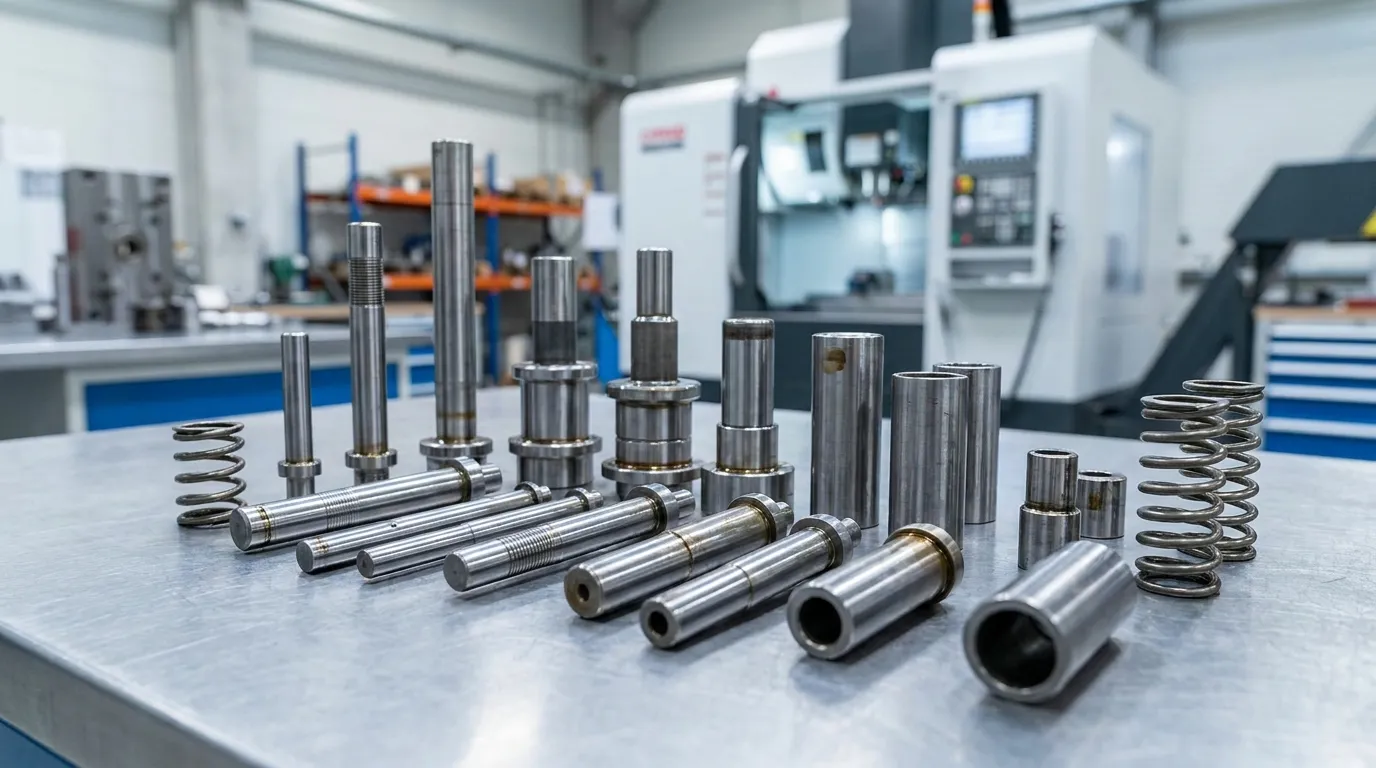
Mold parts are replaceable components that control alignment, ejection, cooling, and movement inside a mold system. High-quality mold parts reduce downtime, improve production consistency, and help extend overall mold life.
Mold parts support the daily operation of injection molds and stamping tools. They guide moving sections, eject finished parts, absorb force, and maintain alignment during repeated production cycles. Even small dimensional changes can affect product quality and cycle consistency.
Many buyers focus heavily on the mold base while overlooking component quality. That often creates problems later. The cheapest mold part is rarely the lowest-cost option long term because lower-grade components tend to wear faster and increase maintenance frequency.
If you want a broader understanding of full tooling structure and engineering principles, SunshinePro’s mold component systems provides a more complete mold architecture overview.
| Mold Part | Main Function | Common Failure Risk |
|---|---|---|
| Ejector pins | Push finished parts out | Wear and sticking |
| Guide bushings | Maintain alignment | Friction damage |
| Springs | Support movement | Fatigue cracking |
| Punches | Form or cut material | Chipping or breakage |
| Sleeves | Guide movement | Surface wear |
Which mold parts wear out most often?
Ejector pins, punches, guide bushings, and sleeves are among the most commonly replaced mold parts because they experience repeated friction, heat, and alignment stress during production cycles.
High-wear mold components operate under constant pressure and movement. Over time, friction changes surface dimensions, weakens alignment accuracy, and increases the chance of sticking or breakage. Buyers who monitor these parts closely usually avoid larger mold repairs later.
The most common wear-related failures include ejector pin galling, guide bushing scoring, spring fatigue, and punch cracking. Heat buildup and poor lubrication often accelerate these issues, especially in high-volume production environments.
A factory running continuous automotive production, for example, may replace guide bushings preventively during scheduled shutdowns instead of waiting for alignment problems to appear during active production.
| Component | Why It Wears Quickly | Common Warning Sign |
|---|---|---|
| Ejector pins | Repeated sliding motion | Sticking parts |
| Punches | High impact stress | Surface cracks |
| Guide bushings | Friction and heat | Misalignment |
| Sleeves | Constant movement | Excess clearance |
| Springs | Compression cycles | Reduced tension |
Buyers comparing replacement options can review SunshinePro’s injection mold components to better understand different component categories and applications.
Which materials are best for mold parts?
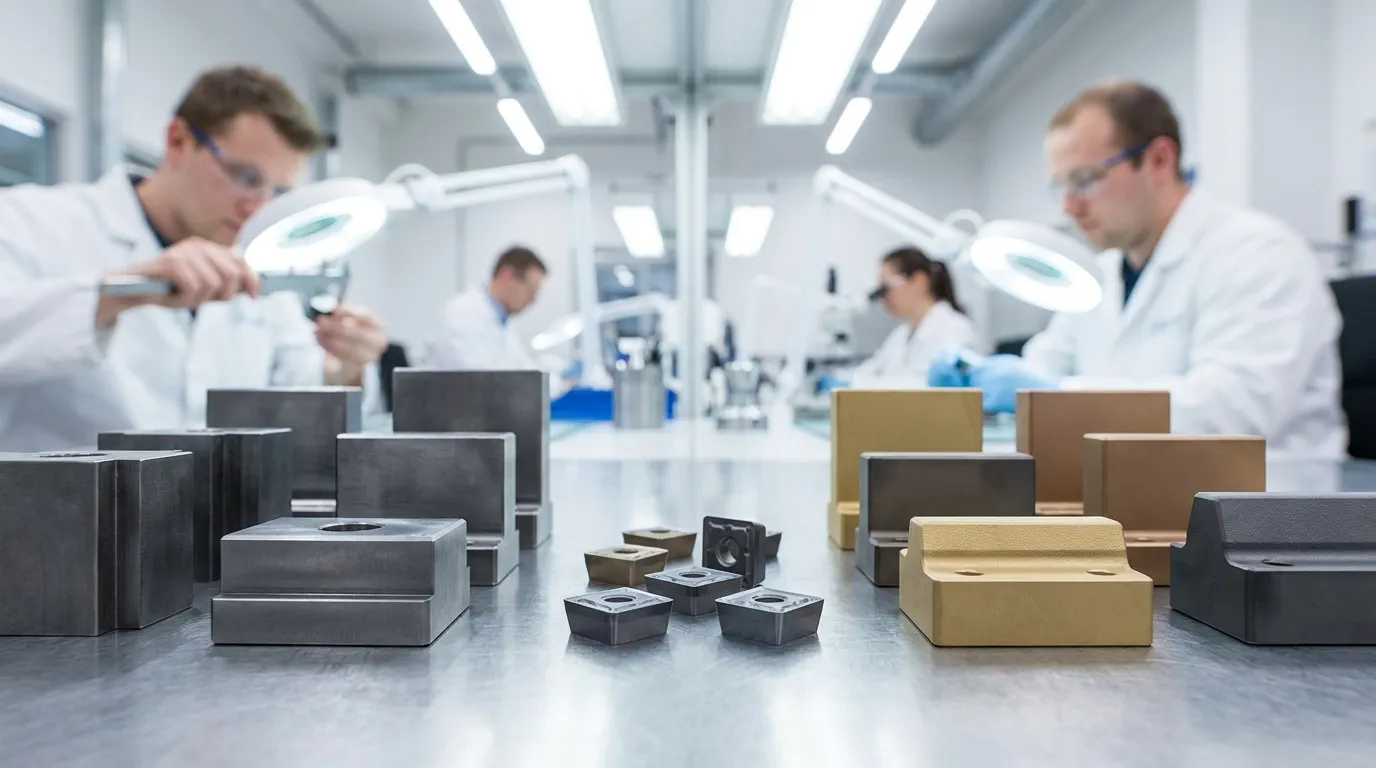
Tool steel remains the most common choice for mold parts because it balances machinability, durability, and cost. Carbide and specialty coatings are often used when wear resistance or high-volume production is critical.
Material selection directly affects mold life, maintenance intervals, and replacement costs. Tool steel works well for many standard production environments because it offers good hardness and machining flexibility at a reasonable cost.
Carbide components last longer in abrasive or high-volume applications, but they cost more and can become brittle under certain conditions. Coatings such as TiN or DLC are often added to reduce friction and surface wear.
Custom mold parts are not automatically better. Standardized tool steel components are usually easier to replace quickly when urgent downtime becomes a problem.
When does carbide make sense?
Carbide is often worth the higher price when molds run continuously with abrasive materials or extremely tight tolerances. A tooling team experiencing repeated wear on standard steel inserts may lower long-term replacement costs by switching to carbide inserts instead.
SunshinePro discusses advanced tooling and durability improvements in its article about mold material selection and related engineering solutions.
| Material | Best Use Case | Main Advantage | Main Limitation |
|---|---|---|---|
| Tool steel | General production | Balanced cost and durability | Moderate wear resistance |
| Carbide | High-volume production | Excellent wear resistance | Higher cost |
| Coated steel | Friction-heavy applications | Reduced surface wear | Added processing cost |
Additional industry discussions around coatings and mold durability appear in advanced mold engineering solutions.
When should you replace mold parts?
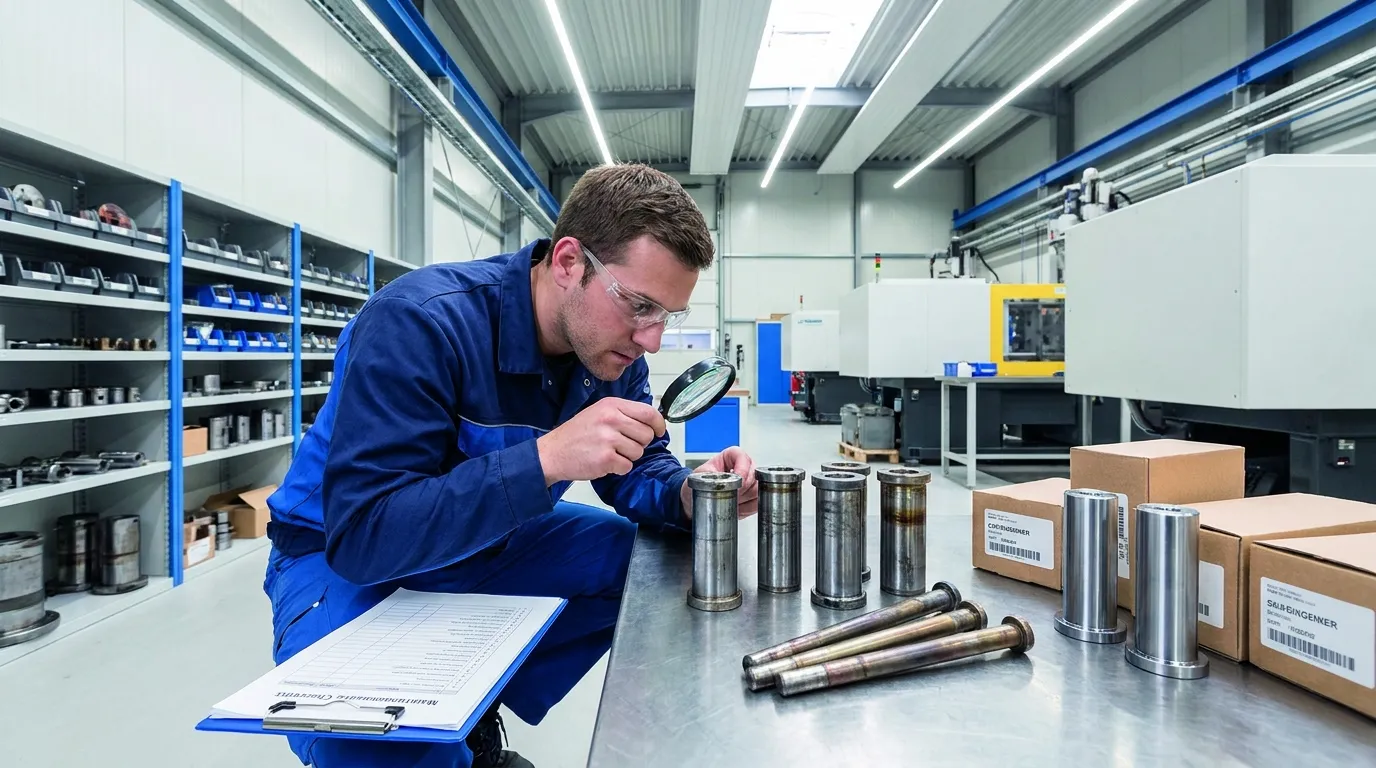
Mold parts should be replaced when they show wear marks, dimensional changes, sticking, alignment problems, or repeated production defects. Waiting until a complete failure usually increases downtime and repair costs.
Many buyers wait too long before replacing worn components. That decision often creates larger production problems, including flash defects, alignment damage, and emergency shutdowns. Preventive replacement is usually less expensive than reactive repair.
A factory replacing ejector pins during planned maintenance may avoid several hours of lost production compared with waiting for a sudden pin seizure during active operation.
Common warning signs before failure
- Surface scoring or scratching
- Increased friction during movement
- Product flash or dimensional inconsistency
- Visible cracks or chipping
- Misalignment between moving sections
- Repeated sticking during ejection
Mold Part Replacement Decision Table
| Part Type | Common Wear Symptom | Production Impact | Replace or Monitor | Downtime Risk |
|---|---|---|---|---|
| Ejector pin | Sticking or drag marks | Part defects | Replace soon | High |
| Guide bushing | Alignment shift | Mold damage risk | Replace now | High |
| Spring | Reduced force | Unstable movement | Monitor closely | Medium |
| Punch | Chipping or cracking | Scrap increase | Replace immediately | High |
| Sleeve | Excess movement | Dimensional issues | Replace soon | Medium |
Waiting for visible mold failure is risky. Most production teams save more money by replacing high-wear components before serious defects appear.
For stamping and tooling wear examples, SunshinePro’s article on punch failure causes explains several common breakdown patterns.
Are standard mold parts or custom parts better?
Standard mold parts usually offer faster replacement and lower costs, while custom parts work better for unique tolerances or specialized applications. The right choice depends on production volume, complexity, and maintenance strategy.
Standard mold components simplify inventory planning because replacements are easier to source quickly. Many buyers prefer them for stable production environments where fast turnaround matters more than specialized geometry.
Custom parts make sense when molds require unusual dimensions, tighter tolerances, or application-specific materials. Medical, aerospace, and precision electronics tooling often rely on custom-engineered components.
Standard vs Custom Mold Parts Comparison
| Factor | Standard Parts | Custom Parts |
|---|---|---|
| Cost | Lower | Higher |
| Lead time | Faster | Longer |
| Availability | Widely stocked | Built to order |
| Replacement speed | Quick | Slower |
| Precision flexibility | Limited | High |
| Best fit | General production | Specialized tooling |
A manufacturer running around-the-clock packaging production may prioritize standard components because emergency replacements can arrive faster. A precision electronics supplier, on the other hand, may accept longer lead times to achieve tighter tolerances.
Buyers evaluating specialized tooling options can review SunshinePro’s custom mold accessories for additional customization details.
How can buyers reduce downtime caused by mold part failure?
Downtime risk drops significantly when buyers track wear cycles, stock critical spare parts, and schedule preventive replacement before performance issues affect production quality.
Downtime prevention starts with planning. Buyers who document wear patterns and maintain spare inventory usually recover faster from unexpected failures. A small stock of high-wear components often costs far less than a stopped production line.
Some manufacturers now separate suppliers based on delivery reliability and maintenance support because unstable supply chains increase operational risk. Industry discussions around this shift appeared in recent mold manufacturing analysis.
How shipping delays affect replacement planning
Lead times for injection molding tools and components can stretch from several weeks to several months depending on complexity and production demand. Industry reports from Aprios injection molding lead time insights and Evok Poly lead time analysis highlight how tooling delays can disrupt production schedules.
Customs delays can also slow replacement shipments. Bangladesh customs updates for industrial mold and die imports appear in official customs guidance, which buyers should review before placing urgent international orders.
Downtime Reduction Checklist
- Track wear cycles for high-friction components
- Keep spare ejector pins and punches in inventory
- Schedule preventive inspections during planned shutdowns
- Record supplier lead times for critical parts
- Confirm coating and material specifications before reordering
- Document replacement intervals by mold type
If you want broader production workflow context, SunshinePro’s plastic injection mold guide explains how tooling performance affects overall manufacturing efficiency.
What should buyers ask before ordering mold parts?
Ordering mistakes usually happen when buyers skip specification details. Material grade, tolerance requirements, coatings, and lead times should always be confirmed before approving production.
A supplier that offers low pricing but unclear material documentation may create larger costs later through premature wear or inconsistent dimensions.
Buyer Checklist Before Ordering
- Confirm material grade and hardness requirements
- Verify dimensional tolerances and fit
- Ask whether coatings are included
- Review estimated lead times and shipping schedules
- Check minimum order quantities for custom parts
- Confirm replacement compatibility with existing tooling
- Request inspection or quality control documentation
A tooling team sourcing replacement punches for high-volume production, for example, may decide to keep extra inventory on hand if overseas shipping timelines become unpredictable.
Buyers needing technical support or replacement guidance can contact SunshinePro for mold supplier consultation before placing large component orders.
Getting the Next Step Right
Choosing the right mold parts comes down to durability, replacement planning, and operational reliability. Buyers who monitor wear early, keep critical spares available, and select materials based on production conditions usually avoid expensive downtime later.
Preventive maintenance often saves more money than emergency replacement. That applies especially to high-wear components like ejector pins, punches, and guide bushings. If your tooling program is expanding or running at higher production volumes, reviewing component quality and lead time risks now can help prevent larger problems later.
Frequently Asked Questions
What are mold parts used for?
Mold parts guide movement, alignment, ejection, and cooling inside mold systems. They help maintain dimensional accuracy and stable production during repeated manufacturing cycles.
What are the most commonly replaced mold components?
Ejector pins, punches, guide bushings, and springs are replaced most often because they face repeated friction, heat, and mechanical stress. Regular inspection helps prevent unexpected downtime.
How often should mold parts be replaced?
Replacement timing depends on production volume, material type, and operating conditions. Many manufacturers replace high-wear parts preventively before defects or alignment issues appear.
What material is best for mold parts?
Tool steel is commonly used because it offers a balance of strength, machinability, and durability. Carbide and coated components are often selected for high-wear or high-volume applications.
Are standard mold parts better than custom mold parts?
Standard parts are usually faster and cheaper to replace, while custom parts work better for specialized tolerances or unique mold designs. The best choice depends on production requirements.
How do you prevent mold part failure?
Preventive inspection, lubrication, proper alignment checks, and spare inventory planning help reduce mold part failure. Tracking wear cycles also helps buyers schedule replacements before production stops.
Share:



Written By Sunshine
At Sunshine, we are a professional manufacturer and supplier of precision mould components, offering a wide range of products for stamping and injection mould applications. Our core focus includes punching dies, ejector pins and sleeves, and guide posts and bushings. With advanced CNC machining, strict quality control, and strong production capabilities, we ensure reliable, high-precision parts, along with in-stock standard components for fast and efficient global supply.
NEWS
GET SERVICE
With quality parts to meet every budget and friendly staff trained to make your visit informative and hassle free.
