



Plastic Injection Mold: Design, Cost, and Manufacturing Checklist
Plastic injection mold projects succeed when buyers review design manufacturability, tooling cost drivers, supplier capability, and production timelines before steel cutting starts. Mold cost depends on complexity, cavities, tolerances, and steel type. Buyers should confirm CAD files, resin selection, inspection plans, and shipping expectations early to avoid redesign costs, launch delays, and production-quality problems.
A mold quote can look straightforward until production starts. Then hidden issues appear: design revisions, unclear tolerances, missed approvals, or tooling delays that push back launch schedules. Buyers who understand the manufacturing process early usually avoid the most expensive mistakes. This guide explains what affects tooling cost, what suppliers need before quoting, and what to check before approving production tooling.
What is a plastic injection mold and what does the buyer actually pay for?
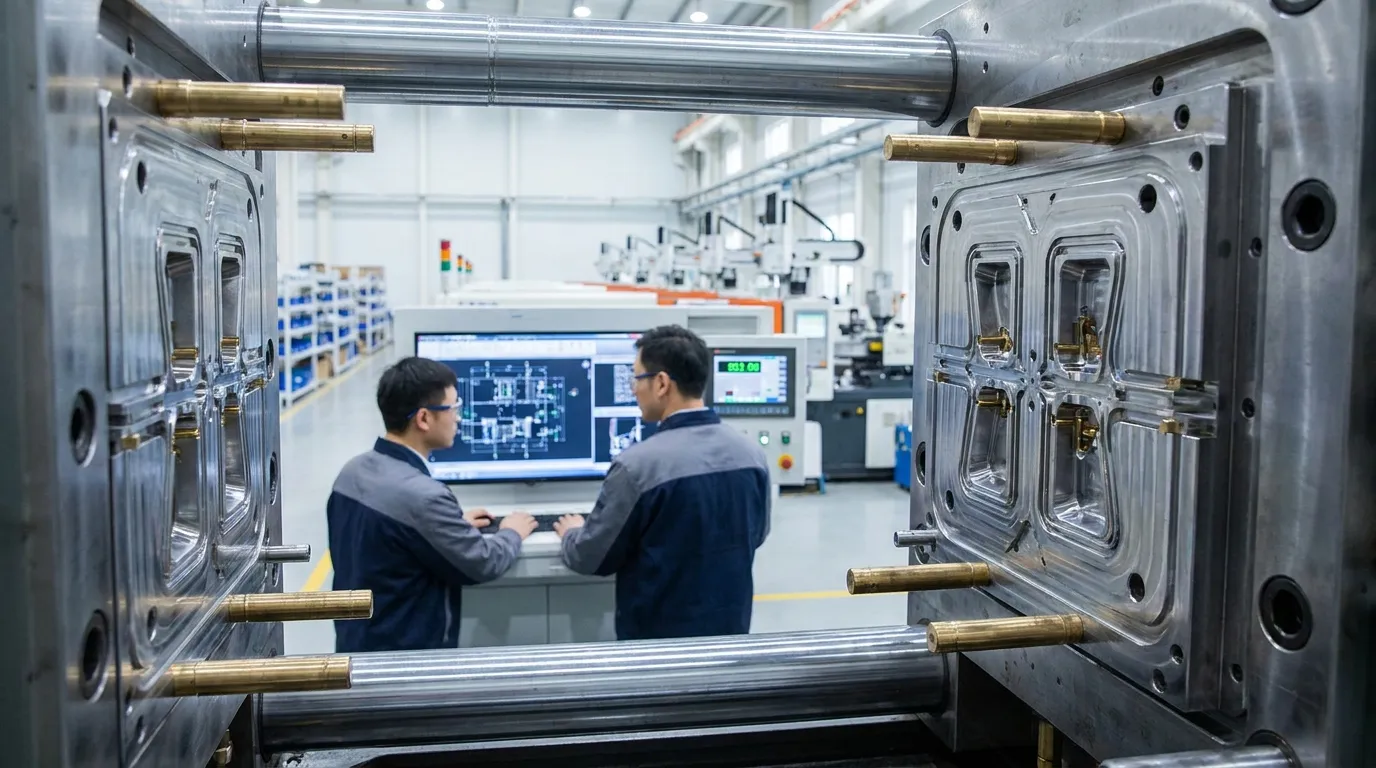
A plastic injection mold is the tooling system used to form plastic parts repeatedly at production scale. Buyers are paying for engineered tooling, machining precision, cooling systems, validation, and long-term production stability, not just a metal block.
A production mold includes far more than the cavity that shapes the part. It also includes cooling channels, ejector systems, alignment components, machining work, polishing, validation, and process engineering. If you need a refresher on tooling terminology, this injection mold basics guide explains the main systems in more detail.
Most suppliers also include design-for-manufacturing (DFM) review before cutting steel. According to Protolabs' moldability guide, part geometry, wall thickness, and gate placement directly affect manufacturability and tooling complexity.
Buyers are usually paying for these areas:
- Mold base and steel components
- Core and cavity machining
- Cooling and ejection systems
- DFM review and engineering support
- Sampling and validation runs
- Surface finishing and polishing
- Production readiness testing
Low-cost tooling is not always cheaper long term. A cheaper mold that requires repeated repairs or unstable production cycles often costs more over the life of the project.
How much does a plastic injection mold cost in 2026?
Plastic injection mold cost depends mainly on part complexity, cavity count, steel grade, tolerance requirements, and expected production volume. Simple prototype molds may cost far less than hardened multi-cavity production tools designed for long lifecycle manufacturing.
A small prototype mold with loose tolerances is very different from a hardened steel production tool running hundreds of thousands of cycles. Buyers sometimes compare quotes without realizing the suppliers are quoting different tooling standards.
What increases tooling cost fastest?
Part complexity usually drives pricing faster than part size. Undercuts, side actions, textured finishes, thin walls, and tight tolerances all increase machining time and validation work.
Multi-cavity molds are not automatically the best choice. They improve production output, but they also increase balancing requirements, cooling complexity, and repair costs.
Injection Mold Cost Breakdown
| Mold Type | Typical Use | Cavity Count | Steel Type | Expected Lifecycle | Relative Cost |
|---|---|---|---|---|---|
| Prototype mold | Early testing | 1 | Aluminum or softer steel | Low volume | Lower |
| Bridge tooling | Medium production | 1-2 | Pre-hardened steel | Medium volume | Medium |
| Production mold | Long-term manufacturing | 2-8+ | Hardened steel | High volume | Higher |
| High-precision mold | Tight tolerance parts | Multi-cavity | Premium hardened steel | Very high volume | Highest |
A startup consumer electronics company may begin with a simpler prototype mold to validate fit and assembly. If annual demand grows later, they often move to hardened steel tooling with additional cavities for production efficiency.
Another common cost driver is design revision timing. A buyer who changes wall thickness after steel cutting may add weeks of machining revisions and extra validation cycles.
What design details should buyers review before approving tooling?
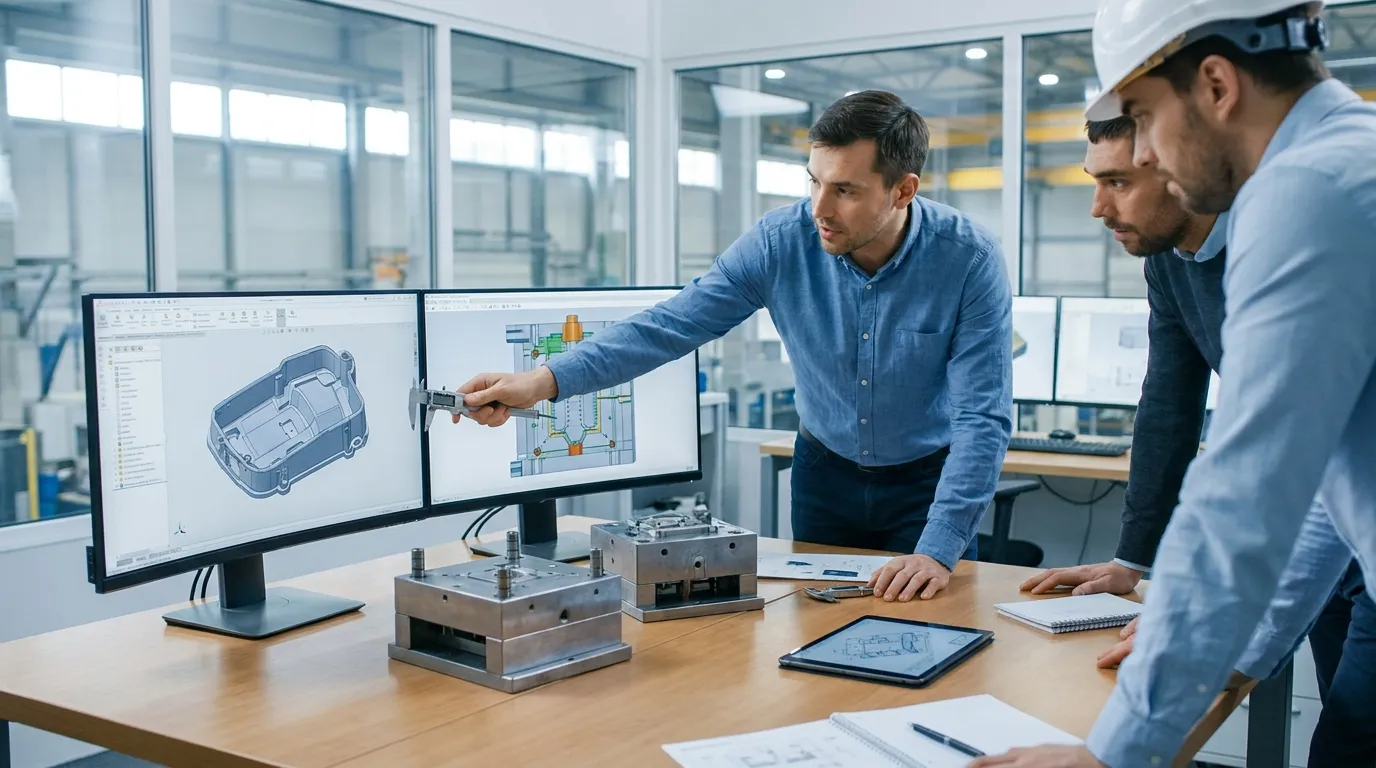
Buyers should review wall thickness consistency, draft angles, undercuts, rib dimensions, and parting line placement before tooling approval. Small design oversights before steel cutting often create the largest timeline and cost overruns later.
Most tooling delays begin with design decisions that looked harmless during CAD review. Once machining starts, even small geometry changes can require major tooling revisions.
According to Protolabs injection molding design tips, consistent wall thickness helps reduce warping, sink marks, and filling problems. Draft angles also help parts eject cleanly from the mold without surface damage.
Which design changes become expensive after steel cutting?
Undercut changes are one of the biggest risks. Side actions and slides require additional machining and alignment work. Moving a parting line late in the project can also force cavity rework.
Rib thickness is another common issue. Thick ribs may create sink marks or uneven cooling. Thin ribs can create filling problems. Buyers should review these details during DFM approval, not during production troubleshooting.
If your design uses internal support features, this guide on core pin design explains how pin geometry affects molding stability and cooling performance.
Design Review Checklist Before Tool Approval
- Confirm draft angles on vertical walls
- Review wall thickness consistency
- Identify undercuts and side actions
- Verify rib dimensions
- Confirm gate locations
- Review parting line placement
- Check tolerance-critical areas
- Confirm cosmetic surface requirements
A buyer can sometimes reduce tooling cost significantly by simplifying undercuts or removing unnecessary side actions before machining starts.
What information should you send to an injection mold supplier?
Suppliers cannot provide accurate tooling feedback without complete CAD files, resin requirements, expected production volume, tolerance expectations, and cosmetic standards. Missing information often causes quote revisions, redesign work, and tooling delays.
The best supplier conversations happen before quoting starts. If the supplier receives incomplete information, the quote often includes assumptions that create problems later.
Buyers should provide:
- 3D CAD files
- Resin or material requirements
- Annual production volume
- Cosmetic finish expectations
- Tolerance requirements
- Assembly details
- Packaging requirements
- Target production timeline
A packaging supplier producing millions of parts per year may need hardened steel tooling and aggressive cooling systems. A startup building small pilot runs may not need the same tooling specification.
Alignment details also matter during early review. This article on guide pin alignment explains how alignment systems affect mold accuracy and long-term wear.
How long does plastic injection mold manufacturing usually take?
Most production injection mold projects take several weeks to several months depending on mold complexity, sampling rounds, design revisions, and production validation requirements. Delays often happen after tooling changes or incomplete approvals.
Simple tooling may move quickly, but production-grade molds often require multiple stages before launch approval. According to Evok Poly's lead-time overview, tooling complexity and validation cycles are major timeline factors.
Typical Mold Manufacturing Timeline
| Stage | Typical Activity |
|---|---|
| DFM review | Manufacturability review and design feedback |
| Mold design | Core, cavity, cooling, and gate planning |
| Steel cutting | Machining and EDM work |
| Assembly | Mold fitting and alignment |
| T1 sampling | First test shots |
| Revision cycle | Tool adjustments if needed |
| Validation | Final production approval |
| Shipping | Freight and customs processing |
Faster tooling timelines are not always safer. Some suppliers shorten validation time to appear competitive during quoting. That creates higher production-launch risk later.
What causes tooling delays most often?
Design revisions after steel cutting are one of the biggest causes. Sampling failures, incomplete approvals, material changes, and shipping paperwork problems also extend schedules.
A common example is a buyer approving CAD files before finalizing resin selection. If shrink rates change later, the supplier may need tooling adjustments before production approval.
What should buyers check before mold steel cutting starts?
Before steel cutting begins, buyers should confirm approved CAD files, resin selection, gate location, tolerance standards, inspection methods, and ownership terms. Fixing mistakes after machining starts is significantly more expensive and slower.
Steel cutting is the point where tooling moves from engineering review into expensive machining work. Buyers should treat this stage like a formal approval gate.
If tooling components need precision alignment and wear resistance, this article about mold bushings explains how these systems support mold accuracy and service life.
Pre-Steel-Cutting Approval Checklist
| Approval Item | Why It Matters |
|---|---|
| Final CAD approval | Prevents geometry revision costs |
| Resin confirmation | Affects shrink rate and cooling |
| Gate location approval | Impacts filling and cosmetics |
| Tolerance agreement | Avoids inspection disputes |
| Surface finish approval | Prevents re-polishing delays |
| Inspection plan | Defines acceptance criteria |
| Sampling expectations | Clarifies validation process |
| Tool ownership terms | Prevents future disputes |
| Shipping timeline | Reduces launch scheduling risk |
A supplier quote comparison can reveal major differences here. One supplier may include multiple sampling revisions, while another charges separately for each correction cycle. Buyers should compare these details before approval, not after production problems appear.
How do you compare injection mold suppliers effectively?
Supplier evaluation should focus on process control and communication quality, not only pricing. A lower quote may exclude validation work, production support, or tooling revisions.
According to Rodon Group's sourcing checklist, buyers should ask about quality systems, tooling ownership, validation procedures, and production experience early in the quoting process.
Supplier Comparison Checklist
| Evaluation Area | What Buyers Should Ask |
|---|---|
| Tooling capability | Can they build similar molds? |
| Validation process | How many sampling rounds are included? |
| Quality systems | What inspection methods are used? |
| Communication | How quickly do they respond to revisions? |
| Mold maintenance | Do they support long-term servicing? |
| Transfer support | Can tooling move to another facility if needed? |
A buyer sourcing high-volume packaging parts may prioritize cycle-time optimization and cavity balancing. A medical-device startup may focus more on documentation and validation support.
Warning signs during supplier evaluation
Slow engineering feedback is usually a bad sign. Suppliers who avoid detailed DFM discussions often create more production problems later.
Another warning sign is vague tooling specifications. If the quote does not clearly define steel type, included validation rounds, or tooling ownership terms, buyers should ask for clarification before approving the project.
For broader process context, Sunshine Pro's mold manufacturing process guide explains how tooling systems move from engineering into production.
What customs and shipping delays should buyers plan for?
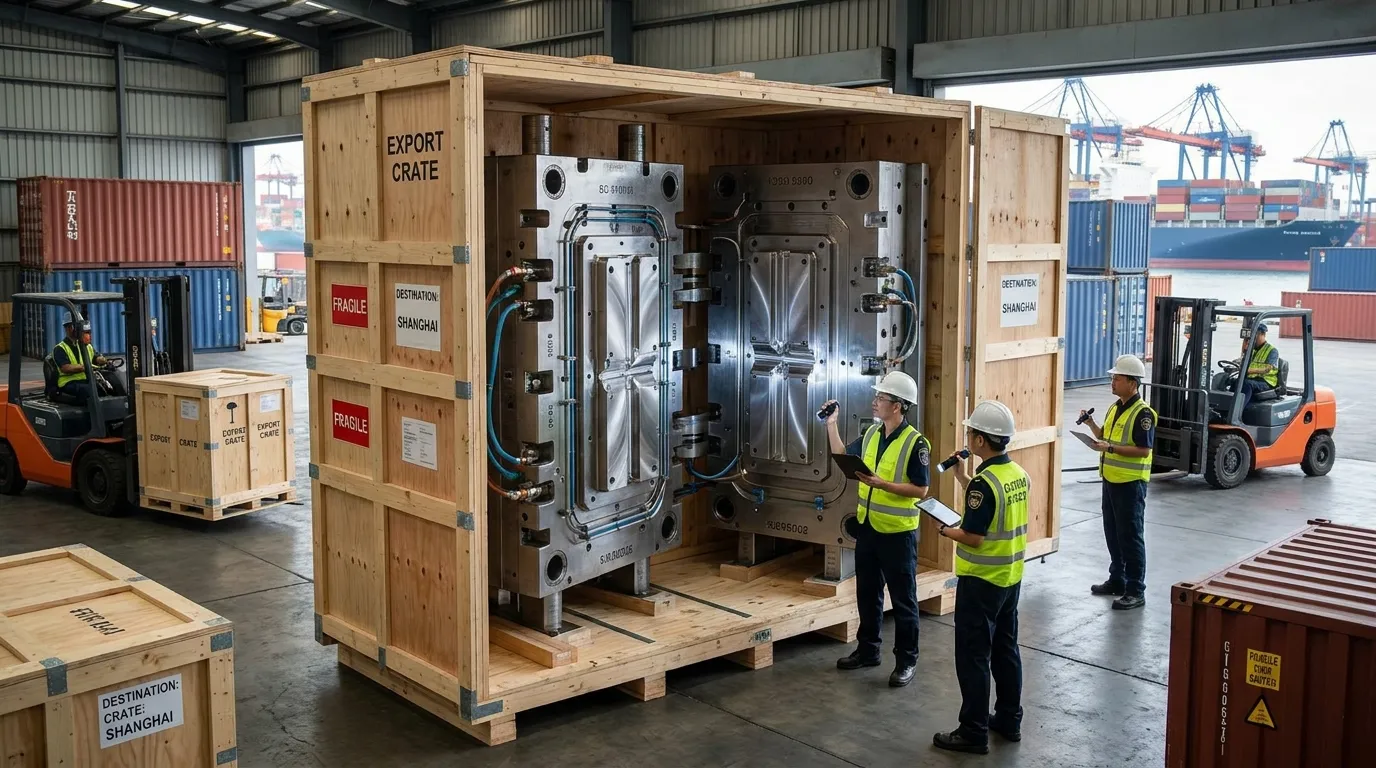
Injection mold delivery timelines can be affected by customs inspections, incomplete shipping paperwork, anti-dumping regulations, and freight delays. Buyers should build timeline buffers into launch schedules instead of relying on optimistic shipping estimates.
Many buyers plan around tooling completion dates but forget about shipping uncertainty. International mold shipments may face customs inspections, port delays, or missing documentation issues.
Trade rules can also affect import timing and costs. This anti-dumping duty reference shows how trade actions can affect imported manufacturing materials and components.
Shipping and Customs Risk Checklist
- Confirm commercial invoice accuracy
- Verify tooling ownership paperwork
- Review shipping insurance terms
- Build launch buffer time into schedules
- Confirm crate and packaging requirements
- Track customs documentation before departure
A mold shipment delayed by customs paperwork can easily disrupt a production launch window. Buyers planning aggressive launch schedules should build contingency time into supplier agreements.
Final buyer checklist before approving a plastic injection mold project
Before approving tooling, buyers should confirm technical requirements, supplier capability, validation scope, and delivery timing. Most expensive tooling mistakes happen because one of these areas was assumed instead of documented.
Use this final checklist before approval:
- Finalize CAD and resin selection
- Confirm cavity count and tooling steel
- Review DFM recommendations carefully
- Clarify included sampling revisions
- Define inspection and validation standards
- Verify tooling ownership terms
- Confirm shipping and customs planning
- Review maintenance expectations
- Align launch timeline with realistic lead times
Getting the Next Step Right
A plastic injection mold project becomes easier to manage when buyers focus on manufacturability and communication before steel cutting starts. The strongest projects usually have clear documentation, realistic timelines, and detailed supplier reviews from the beginning.
If you're comparing suppliers or reviewing a new product launch, start with the engineering details first. Cost matters, but long-term tooling stability, validation support, and production readiness usually have a bigger impact on manufacturing success.
You can also review Sunshine Pro's complete mold components guide for a broader overview of mold systems and tooling components.
Frequently Asked Questions
How much does a plastic injection mold usually cost?
Plastic injection mold cost depends on part complexity, cavity count, steel type, tolerances, and expected production volume. Prototype tooling is usually less expensive than hardened production molds designed for high-volume manufacturing.
How long does it take to manufacture an injection mold?
Injection mold manufacturing may take several weeks or months depending on tooling complexity, validation cycles, and supplier workload. Delays often happen when design changes are requested after machining begins.
Why is injection molding tooling expensive?
Tooling requires precision machining, engineered cooling systems, hardened steel components, and validation testing. Higher-volume molds also need stronger materials and tighter tolerances to maintain stable production.
What information should I send to a mold supplier?
Buyers should provide CAD files, resin requirements, annual production volume, tolerance expectations, cosmetic requirements, and assembly details. Incomplete information often leads to inaccurate quotes and tooling delays.
How long do injection molds last?
Mold lifespan depends on steel quality, resin abrasiveness, maintenance practices, and production volume. Hardened production molds can support very high cycle counts when maintained properly.
What causes injection mold project delays?
Common delays include late design revisions, incomplete approvals, sampling failures, shipping problems, and customs inspections. Weak communication between buyer and supplier can extend timelines even further.
Share:



Written By Sunshine
At Sunshine, we are a professional manufacturer and supplier of precision mould components, offering a wide range of products for stamping and injection mould applications. Our core focus includes punching dies, ejector pins and sleeves, and guide posts and bushings. With advanced CNC machining, strict quality control, and strong production capabilities, we ensure reliable, high-precision parts, along with in-stock standard components for fast and efficient global supply.
NEWS
GET SERVICE
With quality parts to meet every budget and friendly staff trained to make your visit informative and hassle free.
