



Core Pins for Injection Molds: Design, Material, and Tolerance Guide
Core pins are precision mold components used to form internal holes, recesses, and posts inside plastic parts. Choosing the right material, tolerance, surface finish, and cooling design affects molded part accuracy, mold life, and maintenance cost. Standard pins work for many molds, but custom core pins are often required for thin walls, abrasive resins, deep features, and tight-tolerance applications.
Precision internal features can make or break a molded part. A poorly designed core pin may cause flash, dimensional drift, cooling issues, or early mold failure. Buyers and mold engineers need more than a catalog diameter. They need the right material, geometry, finish, and support strategy for the application. This guide explains how to choose and specify core pins that hold tolerances and survive production cycles.
What are core pins in injection molds?
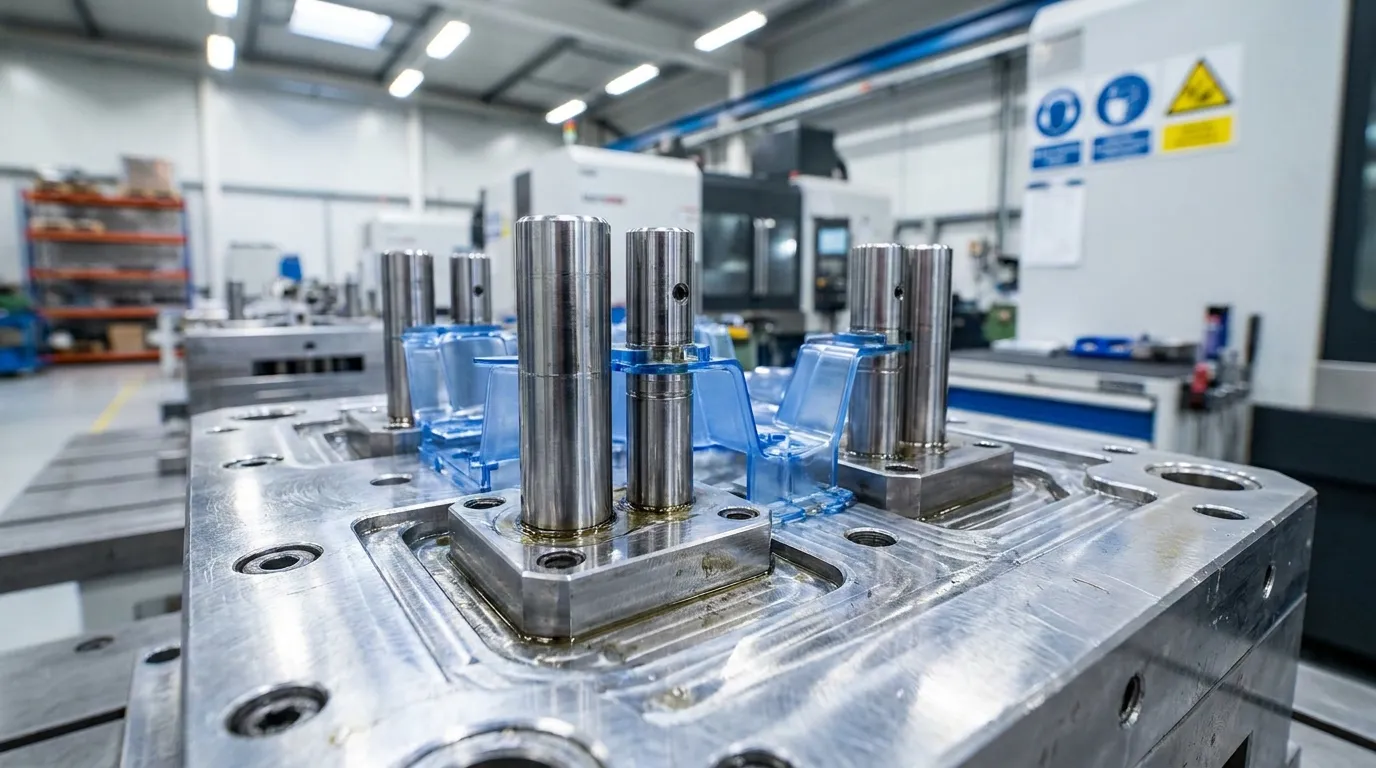
Core pins are precision mold components used to create internal holes, recesses, or posts in molded parts. Manufacturers often use separate core pins instead of machining mold steel directly because pins are easier to replace, maintain, and manufacture with tight tolerances.
In injection molding, a core pin extends into the mold cavity to shape internal geometry. When molten plastic flows around the pin and cools, it leaves behind a hole or internal feature. Core pins are common in medical connectors, automotive clips, electronic housings, and threaded plastic parts.
Most molds use removable core pins instead of machining every detail directly into the cavity block. This approach simplifies maintenance and allows damaged or worn pins to be replaced without rebuilding the entire mold. Suppliers such as DME categorize core pins as standard mold components because they are widely used across injection molding systems.
| Core Pin Function | Typical Example |
|---|---|
| Internal hole creation | Plastic housing screw hole |
| Thin internal post | Electronic connector feature |
| Deep cylindrical cavity | Medical tube fitting |
| Alignment feature | Snap-fit plastic component |
For a broader overview of mold systems and related components, see this mold components guide.
Why use separate core pins instead of machining the mold directly?
Separate core pins simplify maintenance and improve manufacturability. Thin or deep internal features are often too fragile to machine directly into mold steel, so replaceable pins reduce repair cost and downtime when wear or breakage occurs.
Small internal geometries can be difficult to machine directly into a cavity block. A removable pin gives mold makers more flexibility during grinding, polishing, and heat treatment. If the feature wears out, technicians replace the pin instead of repairing the full mold insert.
This matters most in high-cycle production. A mold producing automotive clips or consumer electronics may run hundreds of thousands of cycles per year. Replacing a damaged pin is faster and cheaper than machining a new cavity section.
| If the Mold Needs... | Separate Core Pins Help Because... |
|---|---|
| Deep internal holes | Pins are easier to grind accurately |
| Thin unsupported features | Pins reduce machining complexity |
| High-wear resin molding | Worn pins can be swapped quickly |
| Tight maintenance schedules | Repairs take less downtime |
Many shops pair core pin systems with other replaceable components such as mold pin systems to simplify long-term mold maintenance.
Which core pin materials work best for different molding conditions?
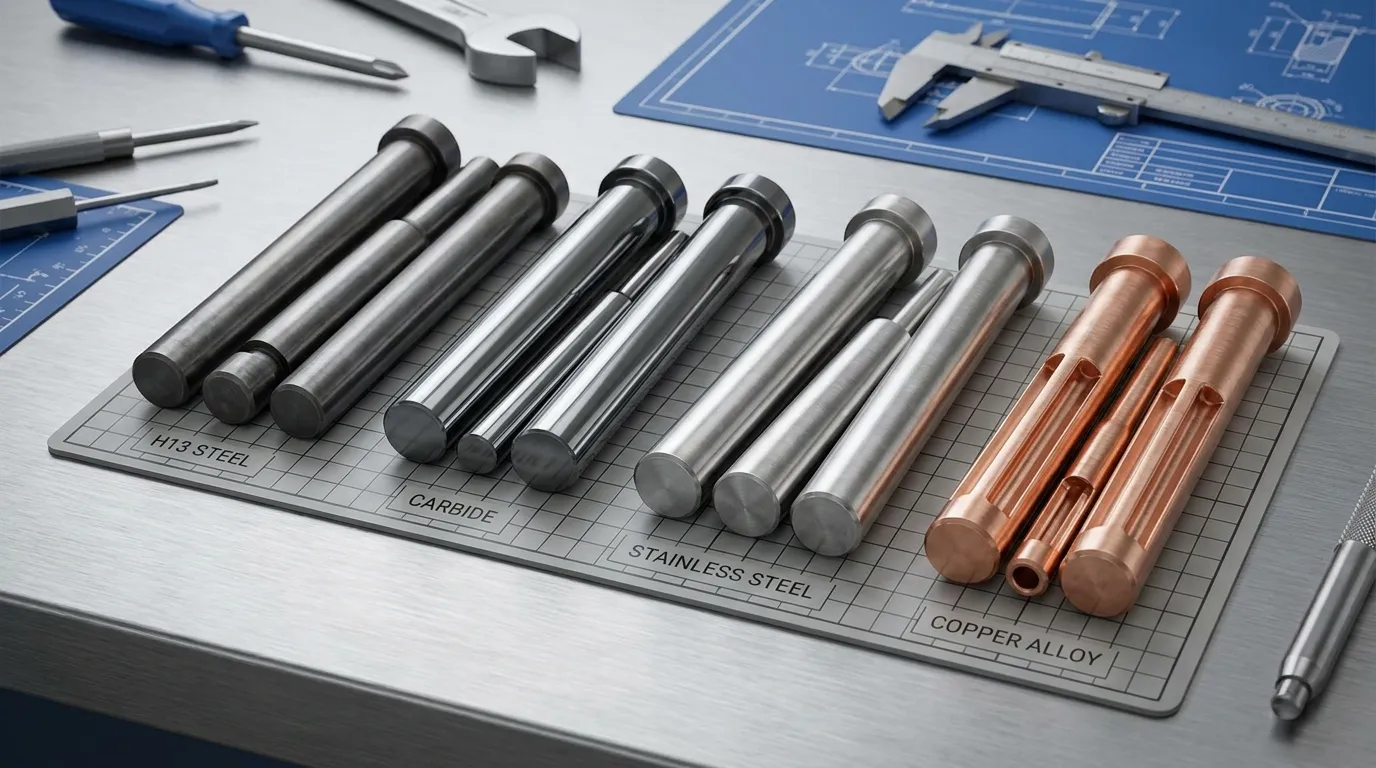
H13 steel works well for general-purpose molding, while carbide performs better in high-wear or ultra-tight tolerance applications. Copper-alloy core pins improve heat transfer in difficult cooling zones but may trade off wear resistance.
Material selection depends on resin type, cycle volume, dimensional tolerance, and heat management. Most injection molds use hardened tool steel because it balances toughness and wear resistance. High-abrasion applications often require stronger materials.
A mold running glass-filled nylon creates more wear than a standard polypropylene part. In that situation, carbide may last longer than standard H13 steel. Carbide is not always the best choice, though. It improves wear resistance, but brittle failure risk increases in unsupported or impact-prone designs.
When carbide core pins make sense
Carbide core pins are commonly used in medical, electronics, and connector molds that require extremely small diameters or very high cycle counts. A medical connector mold with multiple micro-holes may rely on carbide to maintain hole consistency over long production runs.
Long unsupported carbide pins can still crack under stress. For molds with impact loading or alignment variation, hardened tool steel is often safer.
| Material | Best Use | Wear Resistance | Heat Transfer | Relative Cost |
|---|---|---|---|---|
| H13 tool steel | General-purpose molding | High | Moderate | Medium |
| Stainless steel | Corrosive environments | Moderate | Moderate | Medium |
| Carbide | Abrasive resin, micro features | Very high | Low | High |
| Copper alloy | Cooling-critical areas | Moderate | Very high | High |
Some manufacturers also use specialty heat-transfer alloys for difficult cooling zones. PCS performance core pins highlight this approach for reducing cycle time in thick-section molds.
For related component materials, see this guide to precision pin materials.
What tolerances and surface finishes are realistic for core pins?
Precision core pins are commonly manufactured to micron-level tolerances for medical, electronics, and connector molds. Surface finish and concentricity directly affect molded hole quality, flash control, and part release performance.
Tolerance requirements depend on the molded feature, resin shrinkage, and part function. A simple consumer product may tolerate larger variation than a medical connector or electronic housing. Tight-tolerance molds often require precision grinding and polishing to maintain consistent internal geometry.
Surface finish also matters. Rough pin surfaces can create drag during ejection or leave marks inside the molded hole. Polished finishes reduce friction and improve release consistency.
| Feature Requirement | Typical Core Pin Priority |
|---|---|
| Tight hole diameter | Diameter tolerance |
| Smooth internal wall | Surface finish |
| Deep cylindrical feature | Straightness |
| High-precision alignment | Concentricity |
Using extremely tight tolerances is not always beneficial. Over-specifying precision can increase machining cost without improving molded part performance. Buyers should match tolerance targets to actual application needs instead of defaulting to the smallest possible numbers.
A consumer electronics mold may require a polished pin to avoid cosmetic marks. A structural automotive bracket often prioritizes durability and wear resistance instead. Suppliers such as Sunshine Precision emphasize precision grinding and dimensional consistency because small tolerance variation can affect molded part fit and assembly.
When do standard core pins stop working?
Standard catalog core pins work for many molds, but custom pins become necessary when designs require unusual diameters, long unsupported lengths, aggressive resins, or advanced cooling performance.
Standard pins reduce lead time and simplify sourcing. They work well for common diameters and standard molding conditions. Problems appear when molded geometry becomes more specialized.
A deep cylindrical feature with a very small diameter may require custom support geometry or advanced material selection. Electronics molds often need tiny precision pins that standard catalogs do not cover.
Signs a mold needs custom core pins
- Non-standard diameter or tip geometry
- Abrasive resin such as glass-filled nylon
- Long unsupported core length
- Tight cosmetic or medical tolerances
- Cooling-sensitive thick sections
Using standard catalog pins can reduce cost upfront, but forcing standard dimensions into complex molds often creates maintenance problems later. Some manufacturers solve this by ordering custom-machined mold components built for the exact application.
Companies such as IPros suppliers offer non-standard configurations for molds that exceed catalog limitations. Related custom accessories such as custom mold accessories are also common in specialized tooling systems.
How are precision core pins manufactured?
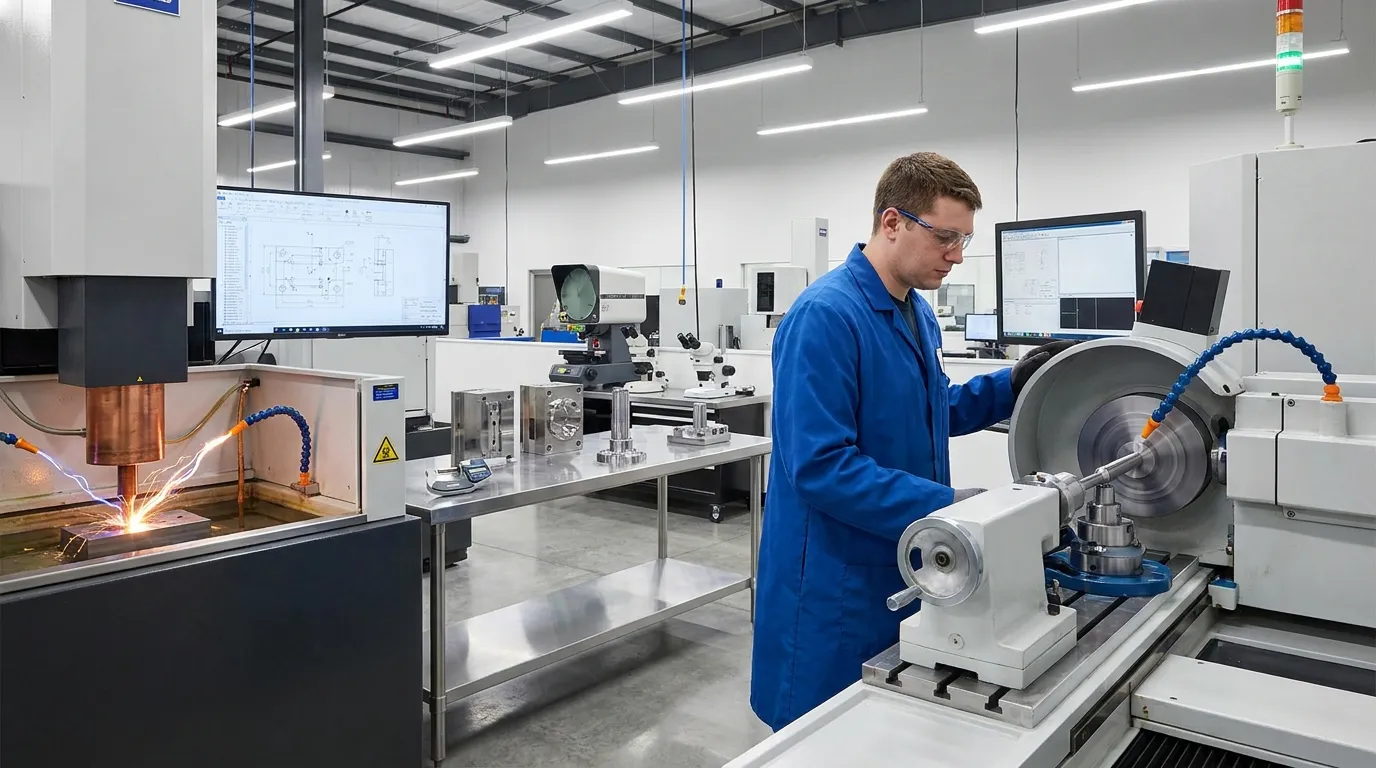
High-precision core pins are typically produced through grinding, heat treatment, EDM machining, and precision polishing. Manufacturing consistency matters because even small dimensional variation can affect molded hole accuracy and mold life.
Most core pins start as hardened tool steel or carbide stock. Manufacturers machine the rough geometry first, then use grinding and polishing operations to achieve final dimensions and surface finish. Precision grinding is especially important for small-diameter pins.
Why heat treatment matters
Heat treatment increases hardness and wear resistance. Poor heat treatment can leave pins brittle or dimensionally unstable. Some manufacturers heat-treat before finish grinding to reduce distortion during final machining.
Electrical discharge machining (EDM) is common for detailed tip geometry or difficult shapes. EDM removes material with electrical sparks instead of cutting tools, making it useful for precision mold work.
| Manufacturing Step | Purpose |
|---|---|
| Rough machining | Creates basic geometry |
| Heat treatment | Improves hardness |
| Precision grinding | Achieves final tolerance |
| EDM machining | Produces complex detail |
| Polishing | Improves surface finish |
A medical mold with ultra-small internal holes may require multiple grinding and polishing passes before approval. In electronics tooling, even slight dimensional drift can cause connector alignment problems during assembly.
Machining consistency also affects maintenance intervals. Shops producing mold component machining systems often focus heavily on grinding accuracy because repeatability matters as much as the original tolerance.
What causes core pin wear, bending, or failure?
Most core pin failures come from poor support, abrasive materials, thermal stress, or alignment problems. Small-diameter pins are especially vulnerable when long unsupported lengths create bending stress during molding cycles.
Wear usually appears gradually. Abrasive resins can round edges or reduce dimensional accuracy over time. Bending and breakage are more severe because they can stop production immediately.
A long unsupported pin inside a deep cylindrical cavity experiences repeated stress during injection pressure and ejection. If the diameter is too small, the pin may flex slightly during every cycle until fatigue causes failure.
| Failure Symptom | Likely Cause | Prevention Method |
|---|---|---|
| Pin bending | Excess unsupported length | Add support or increase diameter |
| Surface wear | Abrasive resin | Use carbide or coated pin |
| Cracking | Thermal stress | Improve cooling balance |
| Flash around hole | Worn surface finish | Regrind or replace pin |
An electronics housing mold may start showing flash around screw holes after the pin surface wears down. In automotive molding, unsupported thin pins can gradually bend during long production runs.
Regular inspection helps prevent unplanned downtime. Many mold shops combine core pin maintenance with broader mold wear prevention programs to catch alignment or wear issues early.
How should buyers specify core pins to suppliers?
Buyers should provide clear dimensional, material, and performance requirements before production begins. Incomplete specifications often lead to tolerance issues, short mold life, or mismatched materials.
A strong specification package should include:
- Pin diameter and length
- Tolerance requirements
- Surface finish expectations
- Resin type and molding conditions
- Cooling or heat-transfer needs
- Expected production volume
Application details matter more than many buyers expect. A supplier choosing material for a polypropylene consumer product may recommend something very different from a glass-filled nylon automotive mold.
For example, a medical connector mold requiring ultra-small holes may need carbide pins with polished finishes and strict concentricity control. A high-volume automotive bracket mold may prioritize toughness and wear resistance instead.
For a broader look at molding systems and production strategy, this plastic injection mold guide covers how mold components fit into the full tooling process.
How to Choose the Right Option
The best core pins balance precision, durability, cooling performance, and maintenance practicality. Material choice alone will not solve a poor support design or unrealistic tolerance target. Buyers should evaluate the molded feature, resin type, cycle volume, and maintenance expectations together before finalizing specifications.
Standard pins work well for many applications, but custom solutions often make sense for thin walls, abrasive resins, or precision internal geometry. A well-designed core pin system reduces downtime, improves molded part consistency, and extends overall mold life. If you are reviewing a new tooling project, start with the molded feature requirements first, then build the core pin specification around real production conditions.
Frequently Asked Questions
What is the difference between a core pin and an ejector pin?
A core pin forms internal features in the molded part, while an ejector pin pushes the finished part out of the mold after cooling. Many molds use both systems together, but they perform different functions during the molding cycle.
What material is commonly used for core pins?
H13 tool steel is one of the most common materials because it balances hardness, toughness, and heat resistance. Carbide and stainless steel are also used for abrasive resins, corrosive molding conditions, and high-precision applications.
Why do core pins break?
Core pins usually fail because of poor support, excessive length-to-diameter ratio, thermal stress, or abrasive resin wear. Small-diameter pins are especially vulnerable when repeated molding cycles create bending fatigue over time.
Can core pins be custom made?
Yes. Custom core pins are widely used for unusual diameters, deep internal features, tight tolerances, or advanced cooling requirements that standard catalog components cannot support effectively.
How precise are injection mold core pins?
Precision core pins can be manufactured to micron-level tolerances depending on the application. Medical, electronics, and connector molds often require tighter dimensional control and higher surface finish quality than general consumer products.
Are carbide core pins better than steel?
Carbide core pins offer excellent wear resistance and dimensional stability in abrasive molding applications. They are also more brittle and expensive than hardened tool steel, so they are not always the safest choice for unsupported designs.
Share:



Written By Sunshine
At Sunshine, we are a professional manufacturer and supplier of precision mould components, offering a wide range of products for stamping and injection mould applications. Our core focus includes punching dies, ejector pins and sleeves, and guide posts and bushings. With advanced CNC machining, strict quality control, and strong production capabilities, we ensure reliable, high-precision parts, along with in-stock standard components for fast and efficient global supply.
NEWS
GET SERVICE
With quality parts to meet every budget and friendly staff trained to make your visit informative and hassle free.
