



Injection Mold Process: Step-by-Step Guide from Design to Production
Injection mold process describes the complete workflow used to design, manufacture, test, and mass-produce plastic parts using injection molding tools. The process includes DFM review, mold design, machining, mold trials, sampling, quality validation, and production ramp-up. Stable production depends on accurate tooling, controlled process parameters, and early defect prevention before full manufacturing begins.
Injection molding projects rarely fail because of one major issue. Most problems start with small design mistakes, rushed tooling decisions, or unstable sampling results. Understanding the full process helps buyers avoid delays, reduce tooling revisions, and improve production consistency. This guide explains each stage clearly, from early DFM review to final production approval.
What Is the Injection Mold Process?
Injection mold process refers to the complete workflow of designing, building, testing, and using a mold to mass-produce plastic parts. The process includes DFM review, mold manufacturing, sampling, quality approval, and stable production ramp-up.
The process starts long before molten plastic enters a mold cavity. Manufacturers first review the product design, evaluate moldability, and identify production risks. This early planning stage has a major effect on tooling quality, cycle stability, and long-term production cost.
Once the design is approved, the mold moves through machining, fitting, polishing, and assembly. After tooling is complete, manufacturers perform mold trials and sample inspections before releasing the tool for production. According to the IQS Directory injection molding overview, injection molding remains one of the most common manufacturing methods for high-volume plastic parts.
If you're new to tooling fundamentals, this plastic injection mold guide gives broader background on mold structures and manufacturing systems. You can also review plastic mold design basics to understand how product geometry affects tooling decisions.
How Does the Injection Mold Process Work Step by Step?
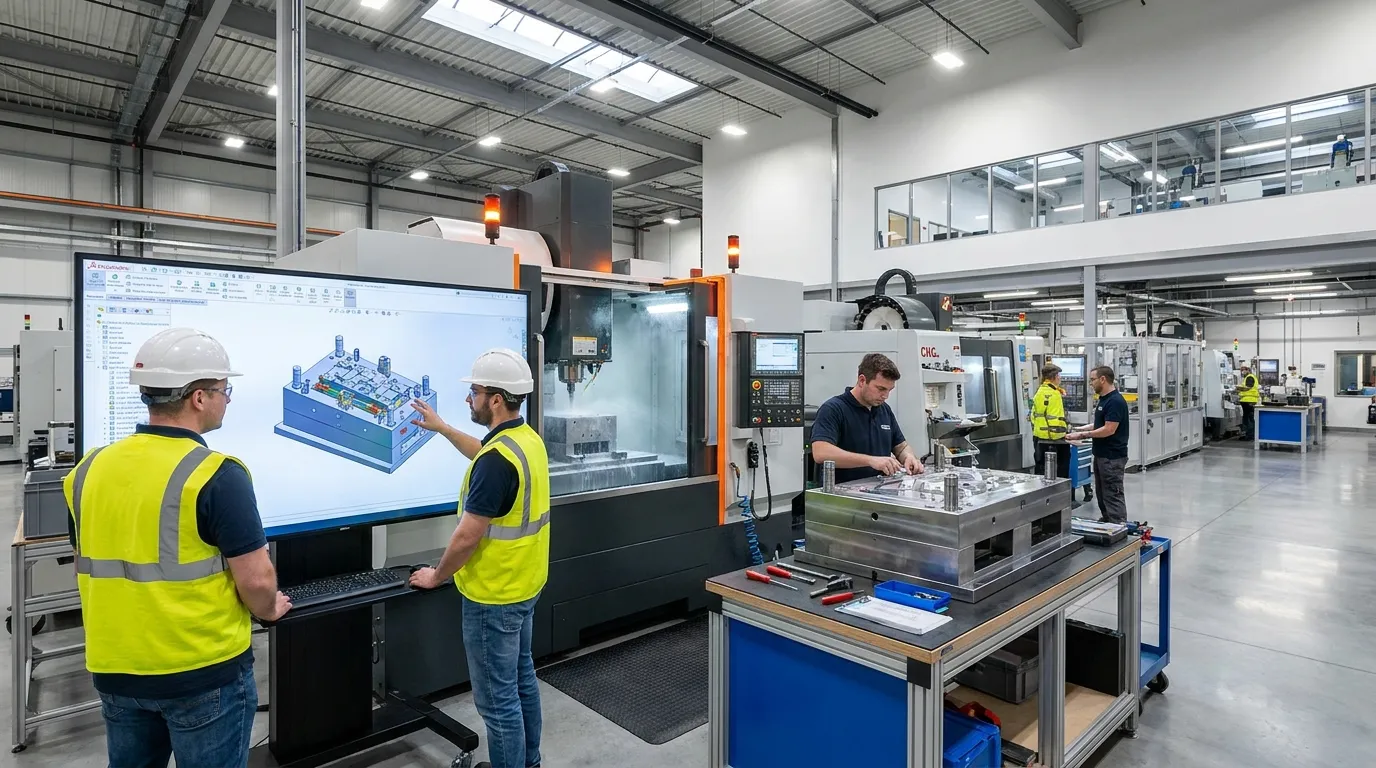
The injection mold process starts with design review and DFM analysis, followed by mold design, machining, assembly, sampling, testing, and final production approval. Stable mass production begins only after part quality and cycle consistency are confirmed.
Most injection molding projects follow the same core sequence. The exact timeline changes based on complexity, tooling size, and production requirements, but the overall workflow stays similar across industries.
| Stage | Main Goal | Common Output |
|---|---|---|
| DFM review | Identify molding risks | Design recommendations |
| Mold design | Create tooling layout | 3D mold files |
| Tool manufacturing | Build the mold | Machined mold components |
| Mold trial | Test mold performance | T1 sample parts |
| Validation | Confirm quality consistency | Approved samples |
| Production ramp | Stabilize manufacturing | Full production output |
Design review and DFM
The first stage focuses on manufacturability. DFM, or Design for Manufacturing, checks whether the part can be molded consistently without excessive defects or tooling risk. Engineers review wall thickness, draft angles, undercuts, gate locations, and material flow before steel cutting begins.
A consumer electronics housing is a common example. If the housing wall thickness changes late in the project, the mold may require additional machining after sampling. That adds cost and delays production approval. Early DFM prevents many of these problems before tooling starts.
For a deeper breakdown of design optimization, review this guide on injection molding DFM process.
Mold manufacturing
After DFM approval, mold manufacturing begins. Toolmakers machine steel blocks using CNC equipment and EDM processes to create cavities, cores, and detailed part geometry. Cooling channels, ejector systems, and alignment features are added during this stage.
Fast tooling is not always the best option. Rushed DFM review often creates larger delays later when mold corrections become necessary. A slightly longer design review usually saves time during sampling and production.
Sampling and production approval
Once tooling is assembled, manufacturers perform mold trials to evaluate part quality and machine stability. The first sample run is often called T1 sampling. Engineers inspect dimensions, cosmetic quality, shrinkage, and molding consistency.
Mass production does not start immediately after T1 approval. Most projects require process adjustments and repeat testing before production becomes stable. This stage determines whether the mold can reliably support long-term manufacturing.
Why Is DFM Review Important Before Mold Manufacturing?
DFM review helps manufacturers identify molding risks before tooling begins. Early analysis reduces defects, prevents expensive steel modifications, and improves production consistency after sampling starts.
DFM review is one of the most important stages in the injection molding workflow. Once steel cutting starts, design changes become expensive and time-consuming. A simple geometry issue can require additional machining, insert replacement, or another round of mold trials.
According to Protolabs' moldability guide, wall thickness consistency, draft angle design, and material flow all affect molding success. These factors also influence cooling time, part warpage, and cycle stability.
- Sharp corners that create stress points
- Insufficient draft angles for part ejection
- Uneven wall thickness causing sink marks
- Poor gate placement affecting material flow
- Tight tolerances that increase tooling complexity
A draft-angle correction is a good real-world example. A part may look acceptable in CAD, but without proper draft, the component sticks during ejection. Fixing that problem before machining prevents costly steel modifications later.
Low mold pricing can look attractive initially, but poor sampling stability usually increases long-term production cost and quality risk. Experienced suppliers spend more time reviewing manufacturability because stable production matters more than fast quoting.
You can learn more about design optimization and mold design requirements before tooling approval.
What Happens During Injection Mold Manufacturing?
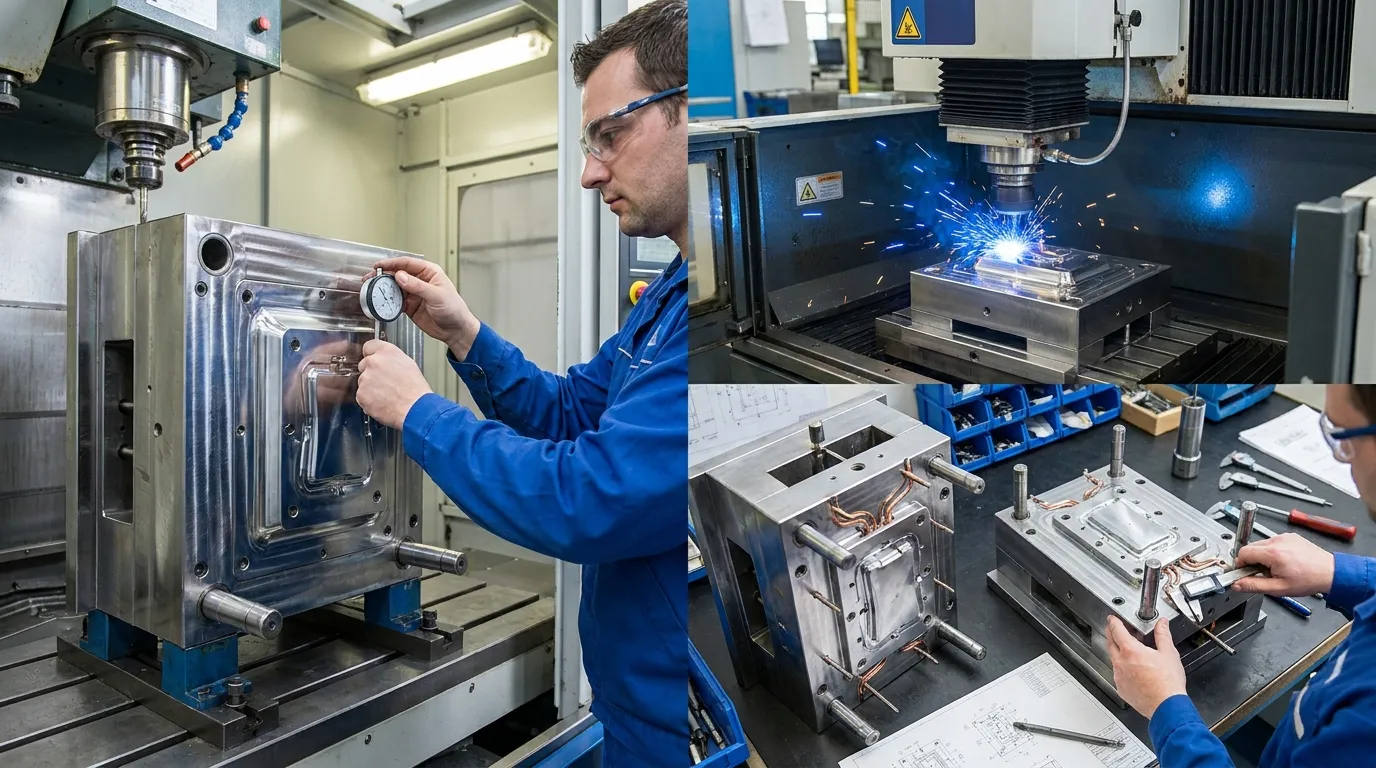
Injection mold manufacturing combines CNC machining, EDM processing, polishing, fitting, and assembly to produce a mold capable of repeatable production. Accuracy during this stage directly affects part quality, cycle time, and mold lifespan.
Tool manufacturing transforms engineering files into a functional production mold. Most molds are built from hardened steel or aluminum, depending on expected production volume and part complexity.
Machining and EDM
CNC machining removes large sections of steel and creates the primary mold structure. EDM, or Electrical Discharge Machining, handles finer details and sharp internal features that traditional machining cannot easily produce.
Complex automotive trim components often require both machining methods. Tight cosmetic surfaces, snap-fit details, and textured areas usually need additional EDM processing before polishing begins.
| Manufacturing Step | Purpose |
|---|---|
| CNC machining | Create mold structure |
| EDM processing | Produce detailed geometry |
| Grinding | Improve precision surfaces |
| Polishing | Improve surface finish |
| Fitting | Align mold components |
| Assembly | Build final mold system |
Mold fitting and polishing
After machining, technicians fit all mold components together and check alignment accuracy. Cooling systems, ejector pins, sliders, and guide components are installed during assembly. Surface polishing then improves cosmetic appearance and material flow.
A medical device enclosure is a good example. During sampling, cosmetic defects may appear near visible surfaces. Additional polishing is often required before final approval. According to research on mold polishing processes, surface finishing has a direct impact on molded part quality.
Manufacturers also verify mold movement and sealing during this stage. Poor alignment can cause flash defects, dimensional variation, or premature tool wear during production.
For additional tooling details, this injection mold tooling guide explains how mold systems are structured.
What Happens During Mold Trial and Sampling?
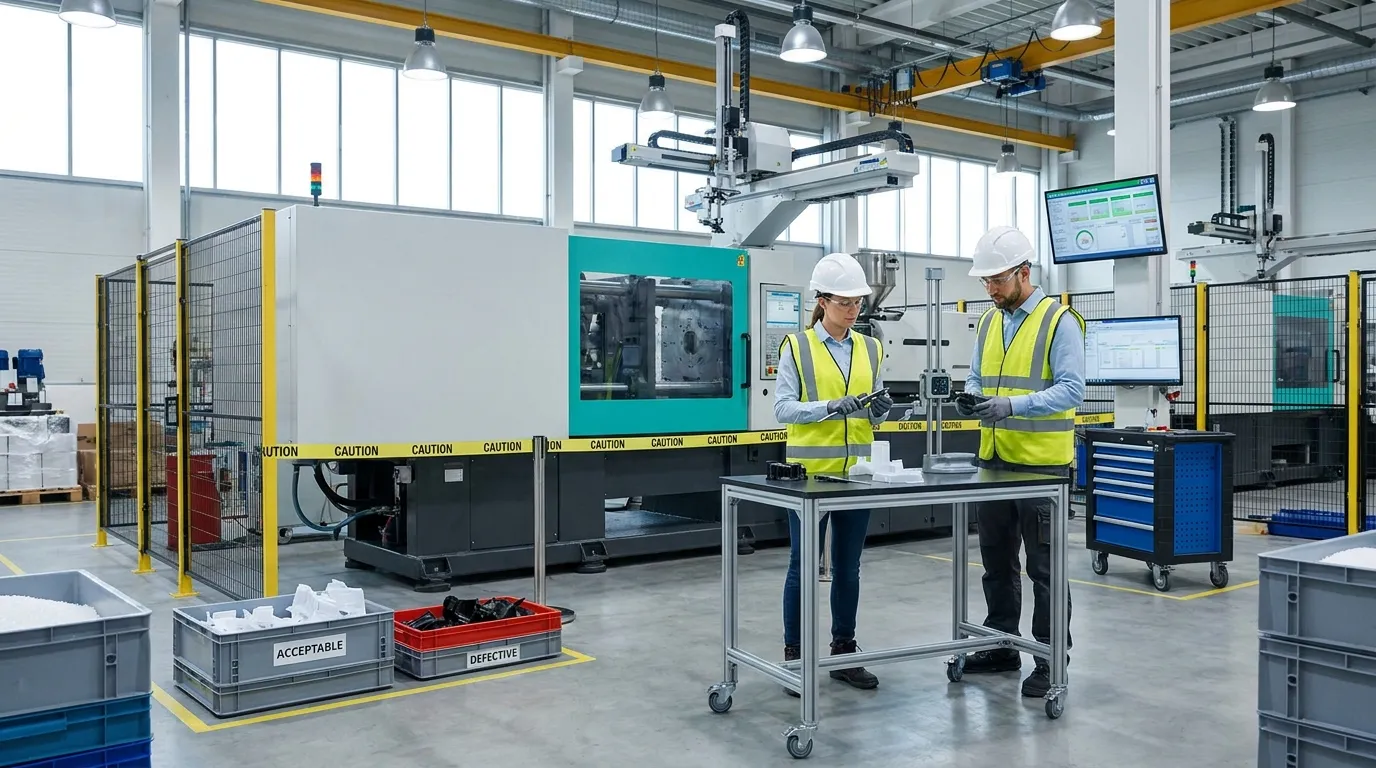
Mold trial and sampling verify whether the tool can consistently produce acceptable parts. Manufacturers evaluate dimensions, defects, shrinkage, and cycle stability before approving the mold for production.
Sampling is the point where theoretical design becomes real production output. The first mold trial checks whether the mold performs correctly under production conditions. Engineers monitor filling balance, cooling behavior, dimensional accuracy, and cosmetic quality.
T1 samples often reveal issues that were not visible during design review. Common problems include warpage, sink marks, short shots, flash, or uneven shrinkage. Manufacturers then adjust process settings or modify tooling before running another trial.
Common defects found during sampling
| Defect | Typical Cause | Common Fix |
|---|---|---|
| Sink marks | Thick wall sections | Adjust wall design |
| Flash | Poor mold sealing | Improve fitting |
| Warpage | Uneven cooling | Modify cooling layout |
| Short shot | Poor material flow | Adjust gate location |
| Burn marks | Trapped air | Improve venting |
A production ramp-up scenario shows why this stage matters. One manufacturer completed tooling on schedule, but unstable cycle times caused inconsistent dimensions during sampling. The project needed additional process tuning before production approval could move forward.
Many buyers focus too heavily on mold completion dates, but production stability after sampling is what actually determines project success. A mold that ships quickly but fails during validation usually creates larger delays later.
Manufacturers also use this stage to verify customer specifications and inspection requirements. This injection mold validation resource explains how design decisions influence final part quality.
How Does Mass Production Start After Sampling?
Mass production starts after sampling results are approved and process parameters become stable. Manufacturers monitor cycle time, defect rates, and dimensional consistency before scaling to full production volume.
Production ramp-up focuses on consistency. Engineers lock machine parameters, validate repeatability, and monitor output quality before increasing manufacturing volume. This stage confirms that the process works reliably outside controlled trial conditions.
According to Kaysun's process development guide, stable processing conditions help reduce variability and improve long-term manufacturing performance. Small changes in temperature, pressure, or cooling time can significantly affect part quality.
- Stable cycle time
- Consistent dimensions
- Controlled defect rates
- Material performance verification
- Repeatable machine settings
An unstable process can delay mass production even when tooling is technically complete. One automotive project passed dimensional inspection during T1 trials, but cycle instability created inconsistent shrinkage during extended production runs. Additional process tuning delayed launch approval.
This is where production-ready mold design becomes important. Strong DFM planning makes production stabilization much easier after sampling.
What Delays Commonly Affect Injection Mold Projects?
Injection mold projects are commonly delayed by design revisions, tooling corrections, material shortages, and international shipping issues. Delays often happen after steel cutting because modifications require additional machining and validation.
Most mold projects do not fail because of one major event. Delays usually build from multiple smaller issues across design, tooling, sampling, and logistics.
| Delay Cause | When It Happens | Impact | Prevention Method |
|---|---|---|---|
| Late design revisions | Before or after tooling | Additional machining | Complete DFM review early |
| Sampling defects | During T1 trials | Repeat testing | Validate tooling carefully |
| Material shortages | Production prep | Delayed scheduling | Confirm supply chain early |
| Customs delays | International shipping | Late delivery | Prepare documentation early |
| Cycle instability | Production ramp | Delayed approval | Optimize process settings |
International logistics can also affect mold timelines. An automotive trim component shipped overseas may face inspection delays if customs documentation is incomplete. Information from CBP and Trade.gov shows that import processing and trade documentation can influence shipment timing.
Buyers should also understand that mold modifications after steel cutting are rarely quick fixes. Even small changes can require additional machining, polishing, fitting, and repeat sampling before approval.
How Can Buyers Reduce Risk Before Starting an Injection Mold Project?
Reducing injection molding risk starts with preparation. Buyers who clarify specifications early usually avoid expensive tooling changes later. Good communication during DFM and sampling stages also improves project stability.
A strong supplier should explain process risks clearly before production starts. If the supplier avoids discussing DFM limitations, tolerance concerns, or sampling expectations, that is usually a warning sign.
- Confirm DFM review before steel cutting
- Review wall thickness and draft angles
- Define cosmetic quality requirements early
- Clarify sample approval expectations
- Plan realistic lead times for revisions
- Verify material availability before production
- Confirm inspection and validation standards
A practical example is a consumer electronics enclosure with cosmetic surface requirements. If the customer approves tooling before discussing polishing standards, additional rework may appear during T1 sampling. That creates extra delays and additional cost.
This injection mold planning checklist can help buyers organize design and production expectations before tooling approval.
What to Do Next
The injection mold process works best when design review, tooling, sampling, and production planning are treated as one connected workflow. Problems caught early are usually manageable. Problems discovered after tooling or during unstable production often become expensive and time-consuming.
Before starting a new project, review manufacturability carefully and confirm how your supplier handles DFM, mold trials, and production validation. Stable production matters more than fast tooling completion. A supplier with strong process control can reduce defects, improve delivery consistency, and help avoid unnecessary mold revisions later in the project lifecycle.
Frequently Asked Questions
What is the injection mold process?
The injection mold process is the workflow used to design, manufacture, test, and use molds for producing plastic parts. It includes DFM review, tooling, mold trials, quality validation, and mass production preparation.
How long does injection mold manufacturing take?
Injection mold manufacturing timelines vary based on complexity, revisions, and sampling requirements. Tooling and production ramp-up can extend project timelines across several weeks or months depending on mold size and validation needs.
Why is DFM important in injection molding?
DFM helps identify production risks before tooling starts. Early review reduces defects, minimizes costly tool modifications, and improves long-term production stability after sampling begins.
What happens during mold sampling?
Mold sampling checks whether the mold can consistently produce acceptable parts. Manufacturers inspect dimensions, defects, shrinkage, and cycle stability before approving the tool for production.
What causes injection molding delays?
Injection molding delays often come from design revisions, tooling corrections, logistics issues, or material shortages. Changes after steel cutting usually increase lead times because additional machining and validation are required.
How do manufacturers reduce molding defects?
Manufacturers reduce molding defects through DFM review, controlled process settings, sampling adjustments, and consistent quality monitoring. Stable machine parameters are important before scaling to full production volume.
Share:



Written By Sunshine
At Sunshine, we are a professional manufacturer and supplier of precision mould components, offering a wide range of products for stamping and injection mould applications. Our core focus includes punching dies, ejector pins and sleeves, and guide posts and bushings. With advanced CNC machining, strict quality control, and strong production capabilities, we ensure reliable, high-precision parts, along with in-stock standard components for fast and efficient global supply.
NEWS
GET SERVICE
With quality parts to meet every budget and friendly staff trained to make your visit informative and hassle free.
