



Design for Manufacturing Injection Molding: DFM Checklist for Buyers
Design for manufacturing injection molding helps buyers catch tooling risks before mold production starts. A proper DFM review checks wall thickness, draft angles, tolerances, undercuts, and gate locations to reduce mold revisions, production defects, and schedule delays. Buyers who review manufacturability early usually avoid expensive tooling changes after steel cutting and improve production stability.
Tooling problems rarely start on the factory floor. Most begin much earlier, during part design approval. A CAD model may look finished, but small geometry issues can trigger mold revisions, cosmetic defects, or long production delays once tooling begins. This guide explains what buyers should review before approving injection mold tooling, and how a stronger DFM process helps prevent avoidable cost and schedule problems.
What is DFM in injection molding and why does it matter before tooling?
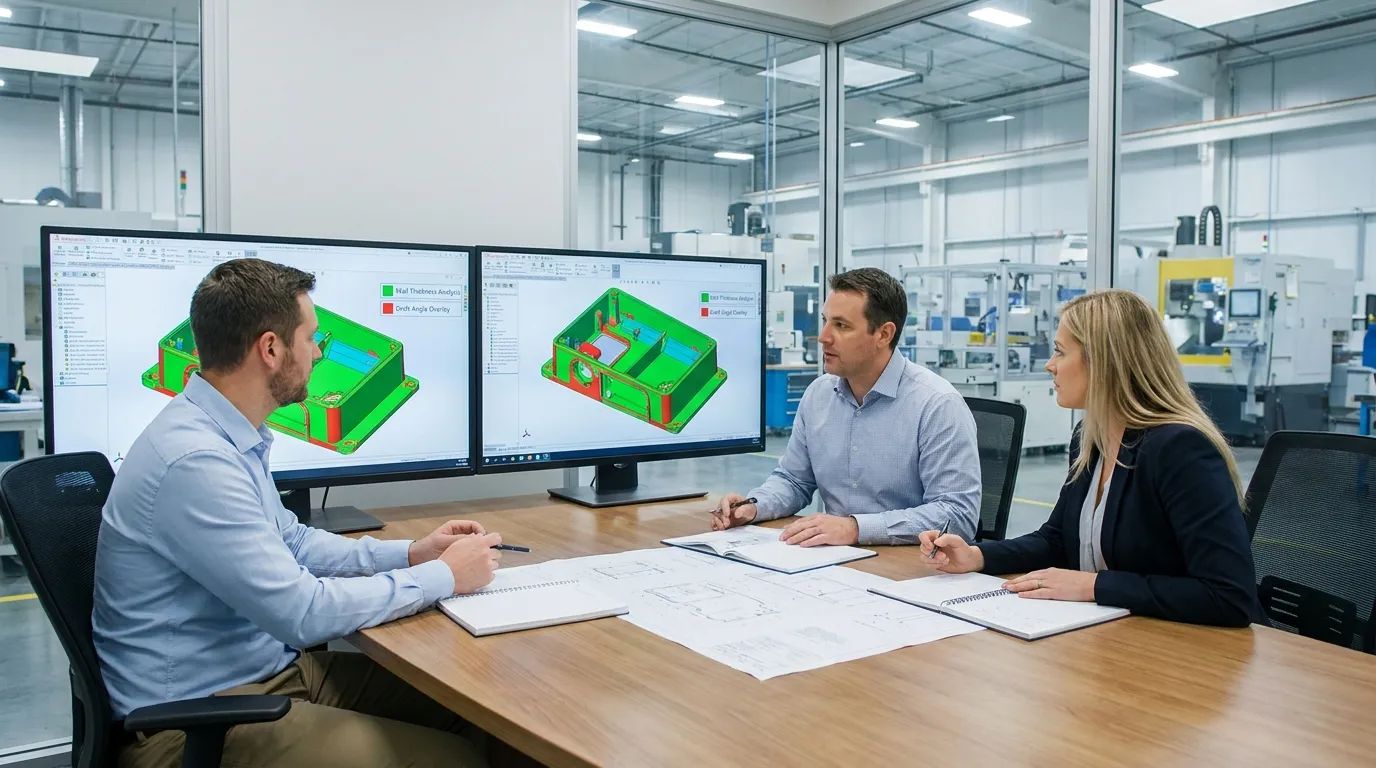
Design for manufacturing injection molding means reviewing a part design before tooling begins to reduce mold revisions, defects, delays, and production risk. A strong DFM review helps buyers avoid expensive tooling changes after steel cutting starts.
DFM, short for design for manufacturability, checks whether a plastic part can be molded efficiently and consistently. Suppliers usually review wall thickness, draft angles, undercuts, gate placement, and tolerances before approving tooling. According to the Protolabs DFM toolkit, early manufacturability review helps reduce production cost and speed up manufacturing readiness.
For buyers, DFM matters because tooling changes become expensive once mold production starts. A small CAD adjustment after steel cutting may require cavity modifications, new inserts, or mold rework. That can delay sampling, qualification, and final production approval.
A good DFM review also improves communication between sourcing teams and mold makers. Instead of reacting to defects later, both sides agree on manufacturable geometry before production begins. If you need a broader process overview, the complete injection mold guide explains the full molding workflow and tooling process.
Common goals of a DFM review
- Reduce mold revisions
- Prevent sink marks and warpage
- Improve mold release
- Shorten tooling lead time
- Lower defect risk during production
- Confirm realistic tolerances
You can also review broader injection mold design basics before moving into tooling approval discussions.
Which design issues cause the most mold revisions and production delays?
Most injection molding delays begin with preventable design issues such as uneven wall thickness, insufficient draft, aggressive tolerances, and unnecessary undercuts. These problems often trigger tooling revisions after mold production has already started.
Many tooling delays come from geometry that looks acceptable in CAD but performs poorly during molding. Suppliers often flag these issues during DFM review because they affect cooling, mold release, cycle time, or cosmetic quality.
A consumer electronics housing is a common example. Internal ribs may look structurally correct, but if the ribs are too thick, they can create sink marks on the visible outer surface. Fixing that problem after tooling starts usually requires steel modifications and additional mold sampling.
Why late design changes delay tooling
Late revisions slow production because mold tooling is built around finalized geometry. Once steel cutting begins, even a small design update can affect multiple mold areas.
A gate relocation is one example. If a buyer changes gate position after tooling starts, the supplier may need to modify runner systems, cooling layouts, or cavity surfaces. That adds machining time and delays first article samples.
According to Aprios, mold complexity and design changes directly affect injection molding lead times.
| Design Issue | Manufacturing Impact | Delay Risk | Typical Fix |
|---|---|---|---|
| Uneven wall thickness | Sink marks and warpage | Medium to high | Redesign wall geometry |
| Missing draft angles | Parts stick during ejection | Medium | Add draft to vertical walls |
| Tight tolerances | Higher tooling complexity | Medium | Relax non-critical dimensions |
| Undercuts | Requires side actions | High | Simplify geometry |
| Poor gate placement | Flow imbalance or defects | Medium | Adjust gate location |
Some buyers assume tighter tolerances always improve quality. That is not always true. Tight dimensions help when assembly fit matters, but unnecessary precision increases tooling complexity, inspection cost, and production risk.
For a deeper look at mold engineering considerations, review the mold design process used during tooling development.
What should buyers review in a DFM report before approving tooling?
A useful injection molding DFM report should identify manufacturability risks before tooling approval. Buyers should review draft analysis, wall thickness consistency, gate locations, tolerance feasibility, and predicted defect risks before releasing the mold for production.
A DFM report is more than a list of recommendations. It is a decision tool that helps buyers evaluate production risk before tooling moves forward. The best reports explain why a feature may create molding problems and what changes reduce that risk.
According to Boyan Manufacturing, DFM analysis helps identify molding issues before mold fabrication begins. Buyers should expect suppliers to explain both the problem and the manufacturing impact clearly.
Buyer DFM review checklist
- Confirm draft angles on vertical walls
- Review wall thickness consistency
- Check predicted sink or warp areas
- Verify gate location recommendations
- Confirm realistic tolerances
- Review undercut requirements
- Approve resin selection
- Evaluate cosmetic surface risks
One common issue is tolerance stacking. A buyer may request very tight dimensions across several connected features without realizing the combined tolerance range becomes difficult to mold consistently. That usually increases inspection requirements and mold complexity.
Another frequent problem involves cosmetic expectations. Class A surface finishes are not always necessary. High-polish molds increase tooling cost and maintenance requirements, especially on parts where appearance has little impact on product performance.
If you want more detail on manufacturability review methods, the plastic mold design review guide explains common mold design considerations in more depth.
How do wall thickness and draft angles affect manufacturability?
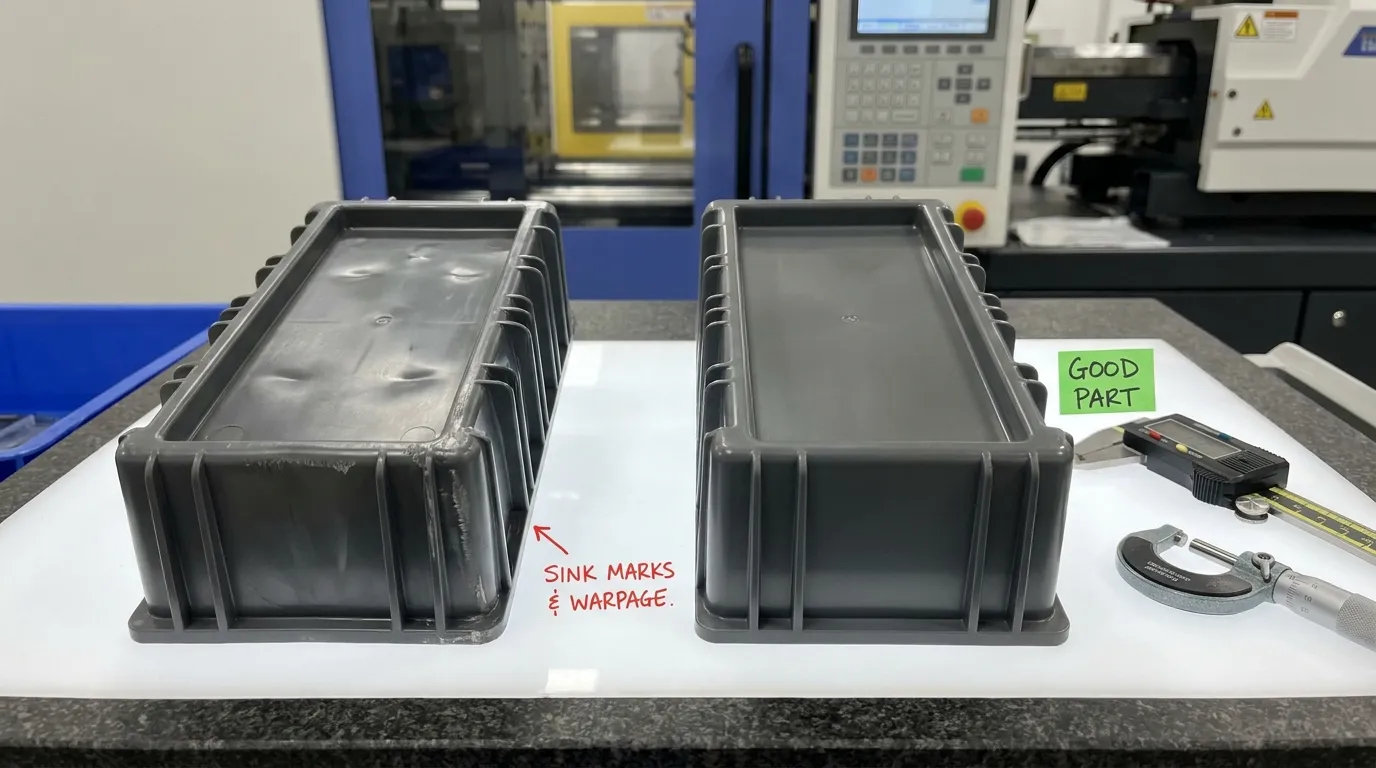
Uniform wall thickness and proper draft angles help plastic parts cool evenly and eject cleanly from the mold. Poor geometry increases the risk of sink marks, warpage, sticking, and extended production cycles.
Wall thickness and draft angle are two of the most important DFM checks in injection molding. Both directly affect part quality, mold performance, and production consistency.
According to Protolabs, uneven wall sections can cause cooling problems and visible defects. Thick areas cool more slowly than thin sections, which creates internal stress and distortion.
Recommended wall thickness ranges
Uniform walls cool more consistently and reduce defect risk. Large thickness transitions should be avoided whenever possible.
| Wall Design | Production Result |
|---|---|
| Uniform wall thickness | Stable cooling and lower warp risk |
| Thick isolated sections | Sink marks and longer cycle time |
| Sharp thickness transitions | Internal stress and distortion |
| Thin unsupported walls | Weak structural performance |
A packaging component with uneven sidewalls is a good example. One section may cool faster than another, causing the part to twist slightly after ejection. That small amount of warpage can create assembly alignment problems later.
Typical draft angle guidelines
Draft angle helps molded parts release from the mold without damaging the surface.
| Feature Type | Typical Draft Guidance |
|---|---|
| Smooth walls | 1° minimum |
| Textured surfaces | 2° or more |
| Deep cavities | Additional draft may be needed |
| Tight shutoff areas | Review with mold maker |
Parts without enough draft often stick during ejection. That can leave drag marks, surface scratches, or damaged edges. In some cases, the mold itself experiences premature wear.
If your product requires tighter dimensional control, review precision molding tolerances before finalizing geometry.
When do tolerances and cosmetic requirements increase tooling cost?
Tight tolerances and cosmetic surface requirements often increase tooling complexity. Buyers should only apply strict requirements where the feature directly affects fit, sealing, or product performance.
A common sourcing mistake is over-specifying dimensions that do not matter in real-world use. One buyer requested ±0.02 mm tolerances across non-critical plastic features on a consumer device enclosure. The supplier had to increase mold precision and inspection frequency, which raised both tooling and production cost.
| If the Requirement Is... | Then the Manufacturing Impact Is... |
|---|---|
| Tight assembly tolerance | Higher machining precision needed |
| High-gloss cosmetic finish | More mold polishing required |
| Texture on deep walls | Additional draft angle needed |
| Multi-cavity dimensional matching | More inspection and balancing |
| Non-critical tight tolerance | Unnecessary tooling expense |
Cosmetic perfection is not always the best choice. High-polish surfaces work well for visible consumer products, but they increase mold maintenance requirements and production sensitivity. For industrial parts or hidden components, a standard finish is often safer and more cost-effective.
Complex tolerances also affect cycle consistency. If dimensions are too aggressive for the selected resin or geometry, suppliers may struggle to maintain repeatable quality across long production runs.
For tighter production requirements, the high precision molding process guide explains how advanced tolerances affect tooling and manufacturing control.
How can buyers reduce tooling delays before production starts?
Buyers reduce tooling delays by finalizing manufacturable designs before steel cutting begins. Early DFM review, realistic tolerances, and faster supplier feedback cycles help prevent expensive mold revisions and production slowdowns.
The fastest way to reduce injection molding delays is to solve design problems before tooling begins. Once steel cutting starts, every revision becomes slower and more expensive.
According to the Hubs injection molding guide, tooling turnaround can extend beyond several weeks depending on mold complexity. Design changes during that window usually create additional delays.
Questions buyers should ask before tooling approval
- Are all draft angles approved?
- Has wall thickness been reviewed for sink risk?
- Are any undercuts avoidable?
- Which tolerances are function-critical?
- Has gate placement been finalized?
- Is the cosmetic finish requirement realistic?
- Has mold flow feedback been reviewed?
Clear communication also matters. Many delays happen because suppliers wait for approval on DFM recommendations. Slow buyer feedback can push tooling schedules back by days or weeks.
One supplier example involved a late undercut revision. The original design required side actions that increased mold complexity. After review, the buyer simplified the geometry and removed the undercut before steel cutting. That avoided extra tooling components and shortened the production timeline.
You can also review the tooling approval process to understand how mold validation typically moves from design review into production sampling.
Buyer DFM checklist before releasing an injection mold for production
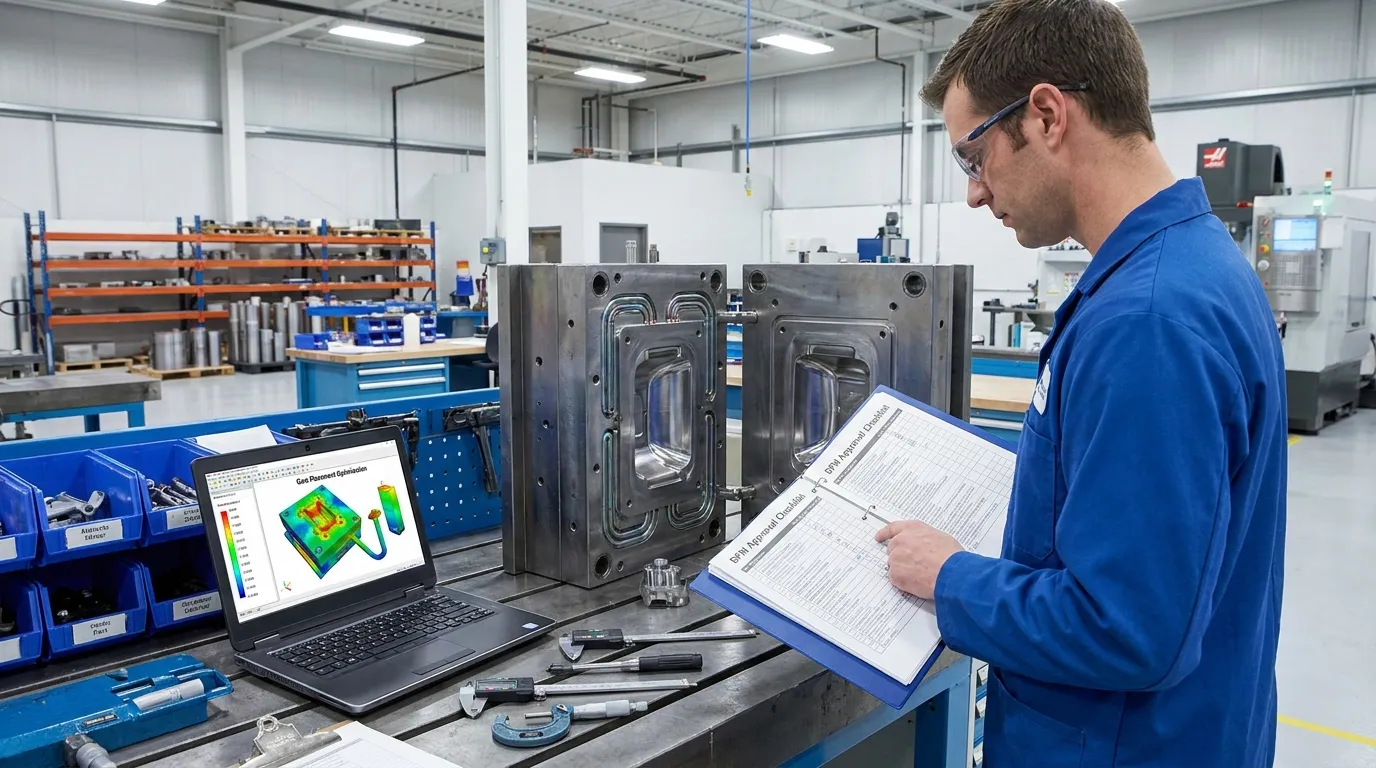
A buyer-side DFM checklist helps prevent mold revisions, tooling delays, and avoidable defects before production begins. The review should confirm geometry, tolerances, material selection, gate locations, and manufacturability feedback before approving tooling.
Buyer DFM Approval Checklist
| Review Item | Approval Question | Status |
|---|---|---|
| CAD geometry | Are all dimensions finalized? | □ |
| Draft angles | Has proper draft been added? | □ |
| Wall thickness | Are walls consistent throughout the part? | □ |
| Gate location | Has the supplier approved flow direction? | □ |
| Tolerances | Are only critical dimensions tightly controlled? | □ |
| Material selection | Has the resin been confirmed for the application? | □ |
| Cosmetic finish | Is the finish requirement necessary? | □ |
| Mold flow analysis | Have high-risk areas been reviewed? | □ |
| Undercuts | Can any side actions be removed? | □ |
| DFM approval | Has the supplier signed off before steel cutting? | □ |
Buyers who complete this checklist before tooling approval usually avoid the most common production setbacks. The goal is simple: fix manufacturability risks before they become tooling problems.
If you need broader background on tooling structure and molding systems, the mold component fundamentals guide covers the main mold elements used in production tooling.
Getting the Next Step Right
A strong design for manufacturing injection molding process reduces more than defects. It helps buyers control tooling cost, protect production schedules, and avoid preventable revisions after mold work starts.
Before approving tooling, review geometry carefully, confirm which tolerances actually matter, and resolve supplier feedback early. Small changes during CAD review are usually manageable. The same changes after steel cutting can create expensive delays.
The best DFM process is practical, fast, and collaborative. Buyers and mold makers should work from the same manufacturability checklist before production begins.
Frequently Asked Questions
What is DFM in injection molding?
DFM in injection molding means reviewing a part design to ensure it can be manufactured efficiently before tooling starts. The process helps reduce defects, tooling revisions, production delays, and unnecessary manufacturing cost.
Why are draft angles important in injection molding?
Draft angles help molded parts release cleanly from the mold during ejection. Without proper draft, parts may stick, scratch, warp, or damage the mold surface during production.
What causes sink marks in injection molding?
Sink marks usually happen when wall thickness is uneven or sections are too thick to cool consistently. Poor rib design and incorrect packing pressure can also increase sink defects.
What should a DFM report include?
A DFM report should include draft analysis, wall thickness review, gate location recommendations, tolerance feedback, and predicted molding risks. The report helps buyers identify manufacturability problems before tooling approval.
How can buyers reduce injection molding delays?
Buyers reduce injection molding delays by completing DFM review before steel cutting and minimizing late-stage design changes. Faster communication with suppliers also helps avoid tooling rework and production slowdowns.
What are common injection molding design mistakes?
Common design mistakes include uneven wall thickness, missing draft angles, unrealistic tolerances, sharp corners, and unnecessary undercuts. These issues often increase tooling cost and defect risk.
Share:



Written By Sunshine
At Sunshine, we are a professional manufacturer and supplier of precision mould components, offering a wide range of products for stamping and injection mould applications. Our core focus includes punching dies, ejector pins and sleeves, and guide posts and bushings. With advanced CNC machining, strict quality control, and strong production capabilities, we ensure reliable, high-precision parts, along with in-stock standard components for fast and efficient global supply.
NEWS
GET SERVICE
With quality parts to meet every budget and friendly staff trained to make your visit informative and hassle free.
