



Injection Mold Manufacturers: How to Choose a Reliable Supplier
Injection mold manufacturers should be evaluated based on engineering capability, tolerance control, communication quality, lead time reliability, and export support. A reliable supplier explains its mold trial process, inspection methods, revision handling, and shipping timelines before production starts. Buyers who compare lifecycle value instead of only mold price usually avoid costly delays, tooling failures, and unstable production runs.
Choosing the wrong mold supplier can delay a product launch for months. A low quote may look attractive early on, but weak communication, poor sampling control, or missed tolerances often create larger problems later. This guide explains how to compare injection mold manufacturers based on real production factors, including tooling capability, lead times, export readiness, and long-term support.
What should you look for in an injection mold manufacturer?
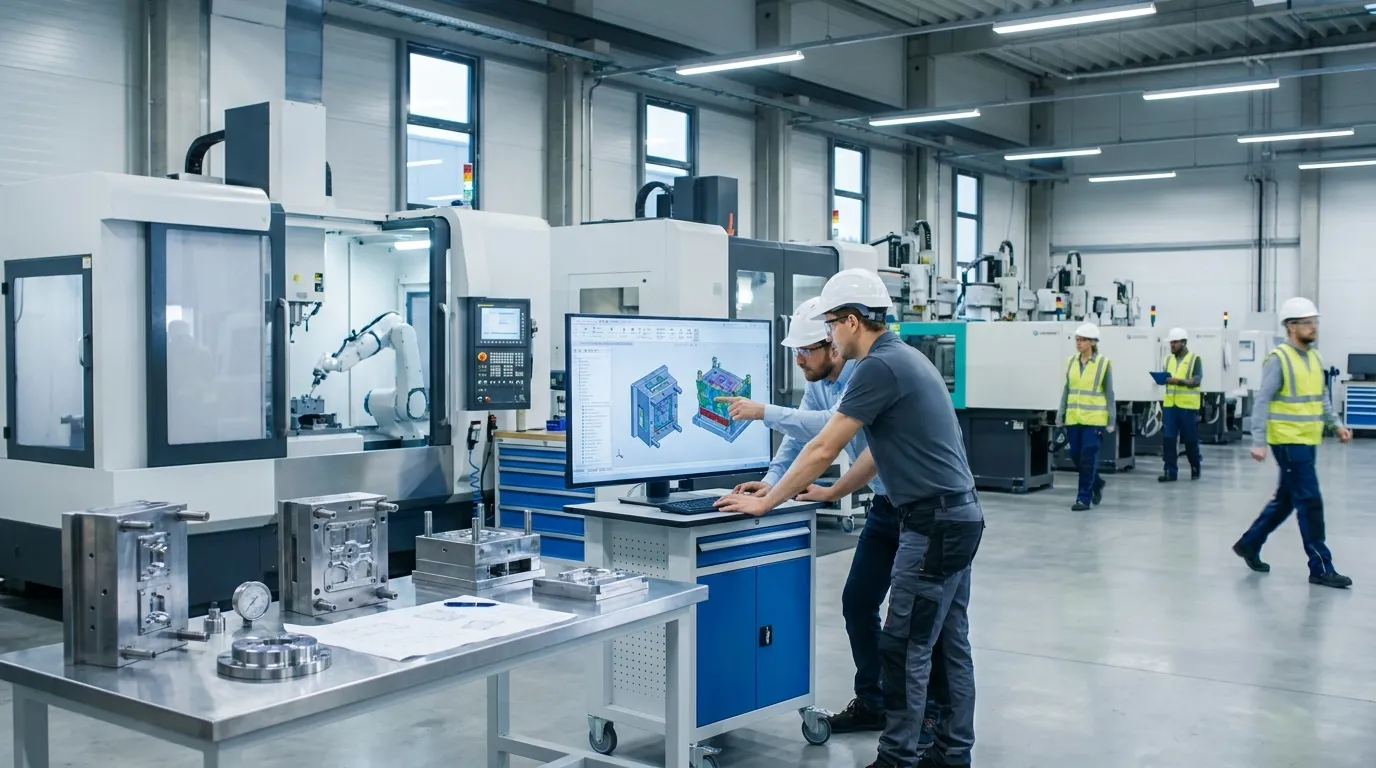
Reliable injection mold manufacturers should demonstrate technical capability, stable quality control, realistic lead times, and responsive communication before quoting price. Buyers should evaluate tooling experience, export readiness, and project management support instead of comparing mold cost alone.
A good supplier should be able to explain how your mold will be built, tested, inspected, and maintained. If a manufacturer gives vague answers during the quoting stage, that usually becomes a larger problem once production begins.
For buyers new to tooling projects, it helps to understand the broader manufacturing process before comparing suppliers. This plastic injection molding overview explains how tooling, molding, and production fit together.
The strongest suppliers usually perform well in five areas:
- Engineering support during RFQ review
- Stable tolerance and inspection processes
- Realistic lead-time planning
- Clear communication during revisions
- Export and logistics coordination
Injection Mold Supplier Evaluation Table
| Evaluation Area | What Buyers Should Ask | Good Answer Example | Red Flag Example |
|---|---|---|---|
| Engineering Support | Can you review DFM risks before tooling? | Supplier explains draft angles and gate placement | Supplier only discusses price |
| Tolerance Control | How do you verify dimensions? | Provides inspection workflow and sampling reports | Says tolerances are “no problem” without detail |
| Lead Time Planning | What affects delivery timing? | Explains tooling, trials, revisions, and shipping | Promises unusually fast delivery without process detail |
| Communication | How often are project updates sent? | Weekly updates with revision tracking | Slow replies during quoting |
| Export Support | How do you manage international shipment? | Explains packaging and customs preparation | No export coordination experience |
A manufacturer with advanced machines is not automatically reliable. Process control, inspection discipline, and communication quality matter more than equipment lists alone.
How do you verify manufacturing capability before placing an order?
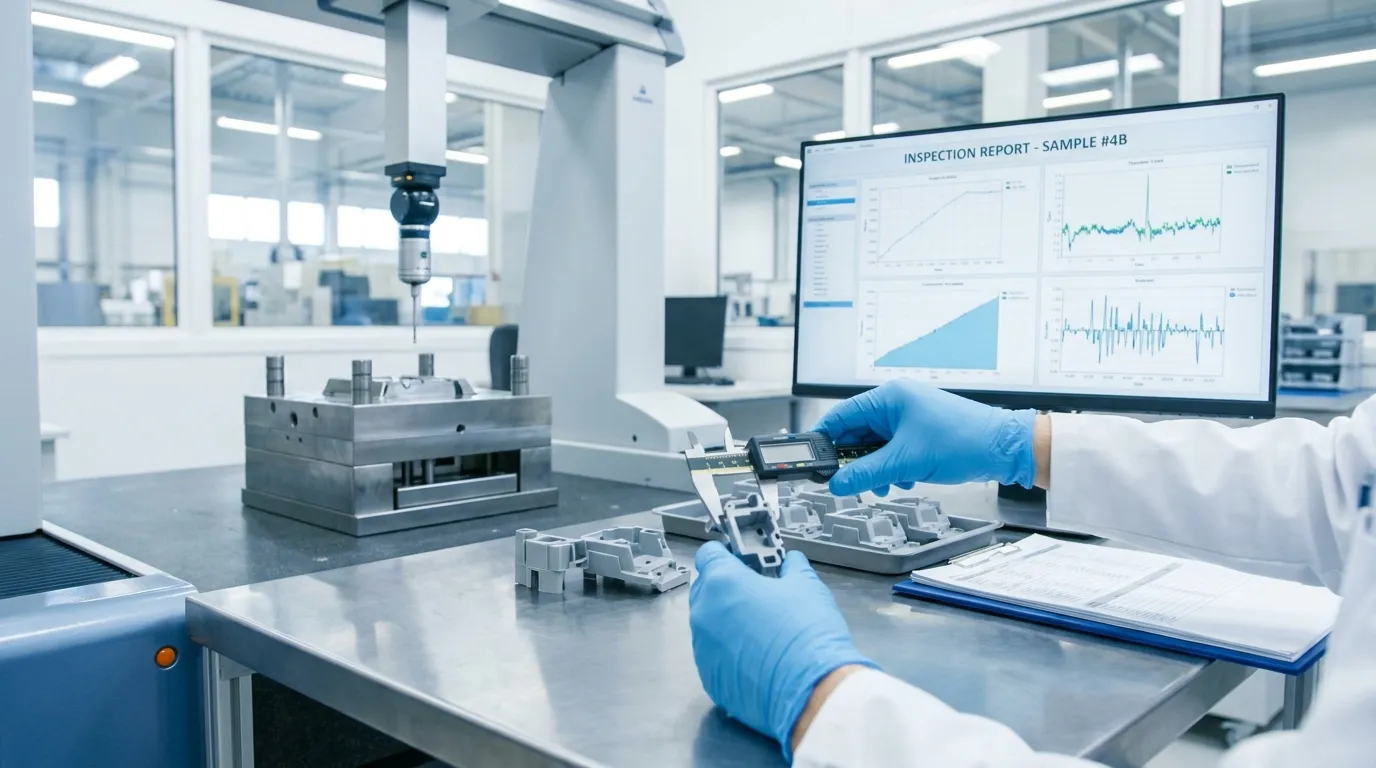
Buyers should verify machine range, tolerance capability, tooling experience, and mold testing procedures before approving a supplier. A strong manufacturer can explain inspection methods, trial processes, and corrective actions clearly during RFQ discussions.
Many sourcing problems begin because buyers approve a supplier before checking real production capability. A polished website does not confirm that the supplier can hold tolerances consistently or manage revisions correctly.
Ask suppliers for examples of similar tooling projects. If your product requires thin walls, cosmetic finishes, or tight dimensional control, the manufacturer should explain how those requirements affect tooling design and mold trials.
You should also review the mold production process before final approval. This helps buyers understand how tooling moves from design to sampling and production validation.
Technical capability checklist
| Capability Area | What to Verify |
|---|---|
| Machine Capacity | Ton range and part size compatibility |
| Tolerance Control | Inspection equipment and sampling method |
| Tooling Experience | Similar industries or product categories |
| Mold Trials | Trial process and correction workflow |
| Quality Systems | Inspection reporting and documentation |
| Revision Handling | Change management after steel cutting |
A medical-device buyer may reject a low-cost supplier if the manufacturer cannot explain sampling validation clearly. That situation happens often with suppliers focused only on fast quoting.
Another common mistake is choosing based on machine size alone. A supplier with fewer machines but better inspection systems may produce more stable results than a larger factory with weak process control.
What lead times should buyers realistically expect?

Injection mold lead times depend on mold complexity, revisions, sampling cycles, and shipping coordination. Buyers should expect tooling, validation, and logistics to affect schedules more than machine production time alone.
Production tooling rarely moves in a straight line. Even a simple mold may require design revisions, sampling corrections, or packaging adjustments before shipment approval.
According to EvokPoly’s lead time breakdown, tooling schedules usually include design review, machining, assembly, mold trials, and validation before production starts. Buyers who only ask for “delivery date” often miss the stages that create delays.
A startup launching a 5,000-unit pilot run may choose aluminum tooling to shorten the schedule and reduce upfront cost. Hardened steel tooling usually makes more sense for long production runs, but it requires longer machining and validation time.
What causes unexpected mold delays?
Several issues regularly extend tooling timelines:
- Design changes after steel cutting
- Failed mold trials
- Sampling corrections
- Packaging revisions
- Export documentation problems
- Customs clearance delays
Ulite’s project timeline analysis explains how revisions after steel cutting can significantly extend schedules. Even small CAD changes may require additional machining or tooling adjustments.
International shipments can create another delay point. Recent customs compliance discussions show that documentation errors can slow international cargo even when factory production is complete.
Lead Time Risk Checklist
| Risk Area | Why It Matters |
|---|---|
| Design Freeze Status | Ongoing revisions delay machining |
| Sampling Cycles | Failed trials require corrections |
| Export Documentation | Missing paperwork delays shipment |
| Packaging Approval | Incorrect packaging can block export |
| Shipping Method | Ocean freight increases schedule risk |
| Customs Preparation | Compliance issues can delay delivery |
Fast tooling timelines only work when the product design is stable. If revisions continue after steel cutting, aggressive delivery promises usually become unrealistic.
Why communication quality matters as much as tooling quality
Poor communication often creates larger project delays than machining problems. Reliable injection mold manufacturers provide clear revision tracking, fast engineering feedback, and consistent project updates throughout tooling and sampling.
A supplier that communicates poorly during the RFQ stage rarely improves later. Slow replies, vague engineering answers, or missing revision records often lead to production delays once tooling begins.
Good communication usually includes:
- Clear DFM feedback
- Revision tracking
- Scheduled project updates
- Fast engineering clarification
- Transparent sampling reports
A company may accept a slightly higher tooling quote because the supplier provides structured updates, trial reports, and maintenance planning. That decision often reduces production disruption later.
Communication quality also affects export coordination. If packaging requirements, labeling, or shipping approvals are unclear, customs delays become more likely during shipment preparation.
What are the biggest red flags when comparing mold manufacturers?
Red flags include unrealistic timelines, unclear quality documentation, vague tolerance claims, and slow engineering responses during quoting. Buyers should treat inconsistent communication before the order as a warning sign for future production support problems.
Some suppliers promise extremely fast delivery to win projects. That approach creates risk if the tooling schedule ignores sampling, revisions, or export coordination.
Another warning sign is vague quality language. If a supplier says “high precision” without explaining measurement methods or inspection systems, buyers should ask deeper technical questions.
The mold type selection process also affects tooling reliability. Different mold structures require different maintenance plans, tooling materials, and production strategies.
Common supplier red flags
- Unrealistic lead-time promises
- Weak engineering communication
- No sampling documentation
- Limited export experience
- Unclear revision process
- Poor inspection reporting
- Generic quoting with little technical review
Lowest-price tooling is not always the safest sourcing decision. A supplier with slower quoting but stronger engineering communication often creates fewer production problems later.
Is the lowest mold quote usually the best option?
The cheapest injection mold quote can become the most expensive option if poor tooling quality causes production delays, rework, or maintenance problems. Buyers should compare lifecycle value instead of upfront tooling cost alone.
Low-cost quotes sometimes exclude inspection support, mold validation, or maintenance planning. Buyers may save money initially but lose more later through rework, unstable production, or missed launch schedules.
This injection mold basics resource explains how tooling quality affects long-term molding performance and production consistency.
Low Quote vs Reliable Supplier Comparison
| Factor | Low-Cost Supplier | Reliable Supplier |
|---|---|---|
| Upfront Tooling Cost | Lower | Higher |
| Engineering Review | Limited | Detailed |
| Sampling Support | Minimal | Structured |
| Communication | Inconsistent | Scheduled updates |
| Mold Maintenance | Often excluded | Usually planned |
| Production Stability | Higher risk | More predictable |
A consumer electronics company may lose three weeks after approving a cheap supplier that cannot handle CAD revisions correctly. The original quote looked attractive, but production delays increased the total project cost.
Lifecycle value matters more than initial tooling price. Buyers should evaluate how the supplier supports production after the mold ships.
What should happen before final supplier approval?
Final supplier approval should happen only after tooling validation, sampling review, inspection checks, and export preparation are complete. Buyers who skip these steps often discover problems after production starts.
The supplier should complete mold trials and provide dimensional inspection results before mass production approval. Buyers should confirm that sampled parts match the approved CAD files and cosmetic requirements.
This tooling quality checks guide explains how inspection and validation fit into the broader tooling workflow.
Documents buyers should request
- Mold trial reports
- Dimensional inspection results
- Material confirmation
- Packaging specifications
- Export documentation
- Revision records
A buyer shipping internationally should also confirm export preparation before the mold leaves the factory. Packaging, labeling, and customs paperwork should all be reviewed in advance.
One practical example involves a company reducing customs delays by confirming shipping documentation before mold shipment approval. The supplier completed production on time, but missing export paperwork could have delayed delivery for weeks.
What to Do Next
Choosing injection mold manufacturers should feel like a technical and operational decision, not only a price negotiation. Strong suppliers explain their tooling process clearly, communicate consistently, and help buyers manage production risk from design review through shipment.
If you’re comparing suppliers now, start by reviewing engineering communication, sampling procedures, and inspection methods before focusing on quote price. A reliable partner usually creates fewer delays, fewer corrections, and more stable long-term production.
For broader process education, review this complete injection molding guide before final supplier selection.
Frequently Asked Questions
How long does it take to manufacture an injection mold?
Most production molds require several weeks for design, machining, testing, and validation before mass production begins. Complex tooling, design revisions, and export coordination can extend the timeline further.
What questions should I ask an injection molding company?
Buyers should ask about tolerance capability, mold trial procedures, inspection systems, machine capacity, revision handling, and export experience. These questions help identify whether the supplier can support long-term production stability.
Should injection mold tooling be aluminum or steel?
Aluminum tooling works well for prototypes and lower-volume production because it reduces tooling time and upfront cost. Steel molds usually provide better durability and production consistency for long manufacturing runs.
What causes injection mold project delays?
Design revisions after steel cutting, failed sampling trials, tooling corrections, and customs documentation issues commonly delay projects. Weak communication can also slow approvals and production scheduling.
How do you know if a mold manufacturer is reliable?
Reliable manufacturers provide clear inspection documentation, realistic schedules, structured project updates, and transparent engineering communication during quoting. Consistent responsiveness before production usually predicts better long-term support.
Why do cheap mold quotes sometimes fail?
Low-cost tooling quotes may exclude validation support, inspection processes, engineering review, or maintenance planning. Buyers often face higher costs later through rework, delays, or unstable production quality.
Share:



Written By Sunshine
At Sunshine, we are a professional manufacturer and supplier of precision mould components, offering a wide range of products for stamping and injection mould applications. Our core focus includes punching dies, ejector pins and sleeves, and guide posts and bushings. With advanced CNC machining, strict quality control, and strong production capabilities, we ensure reliable, high-precision parts, along with in-stock standard components for fast and efficient global supply.
NEWS
GET SERVICE
With quality parts to meet every budget and friendly staff trained to make your visit informative and hassle free.
