



Plastic Injection Molding Manufacturers: Buyer Checklist for Better Quotes
Plastic injection molding manufacturers provide better quotes when buyers submit complete RFQ packages with CAD files, material requirements, annual volume estimates, tolerances, and delivery expectations. Comparing suppliers only by unit price often creates tooling revisions, delayed approvals, and hidden production costs later. A structured RFQ checklist helps buyers reduce quote inconsistencies and choose suppliers with fewer downstream risks.
A weak RFQ can create problems long before production starts. Suppliers may assume different materials, tooling standards, or inspection requirements, which leads to confusing pricing and timeline gaps. Buyers who standardize their RFQ process usually get faster responses, cleaner communication, and more reliable manufacturing quotes from the beginning.
What should you send plastic injection molding manufacturers before requesting a quote?

Plastic injection molding manufacturers produce more accurate quotes when buyers provide complete CAD files, material requirements, annual volume estimates, tolerance expectations, and shipping details upfront. Missing RFQ information usually increases revisions, delays, and quote inconsistencies.
Most manufacturers can only estimate tooling and production costs based on the information they receive. If critical details are missing, suppliers fill the gaps with assumptions. That’s why two quotes for the same part can look completely different.
A complete RFQ also speeds up DFM review. DFM stands for design for manufacturability, which helps suppliers identify molding risks before tooling begins. If you need a broader overview of tooling structure, this mold component guide explains how mold systems work together during production.
Minimum RFQ file checklist
| RFQ Item | Why It Matters |
|---|---|
| 3D CAD file | Defines geometry and tooling complexity |
| 2D drawing | Clarifies tolerances and dimensions |
| Resin specification | Affects shrinkage, tooling, and cycle time |
| Annual volume estimate | Impacts cavitation and mold lifespan |
| Surface finish requirement | Changes tooling and polishing work |
| Packaging instructions | Affects production handling and shipping |
| Target timeline | Helps suppliers schedule tooling capacity |
A consumer electronics buyer might send the same part file to five suppliers without annual volume estimates. One supplier may assume low-volume production with a single-cavity tool, while another assumes high-volume production requiring multiple cavities. That difference alone can change tooling quotes significantly.
If your team needs a closer look at manufacturing stages, this plastic mold workflow explains the process step by step.
Why do quotes from different manufacturers vary so much?
Injection molding quotes often differ because suppliers make different assumptions about tooling steel, tolerances, production volume, quality controls, and finishing requirements. Two manufacturers may price the same part differently if the RFQ leaves critical production details undefined.
Price variation usually starts with assumptions hidden inside the tooling proposal. Some suppliers quote only basic tooling, while others include DFM support, sampling, maintenance, or secondary operations. Buyers often compare totals without comparing scope.
The lowest tooling quote is not always the lowest production risk. Suppliers that skip manufacturability feedback early often create more revisions and delays later.
| Quote Variable | Lower-Cost Assumption | Higher-Cost Assumption |
|---|---|---|
| Tool steel | Short production life | Long production life |
| Tolerances | Standard commercial | Tight inspection control |
| Surface finish | Functional finish | Cosmetic-grade finish |
| Sampling | One trial | Multiple validation rounds |
| Secondary operations | Excluded | Included |
Some buyers also overlook cycle time assumptions. A supplier using aggressive cycle estimates may show lower unit pricing, but production consistency can suffer later if cooling or part stability becomes an issue.
If you want to compare tooling categories in more detail, this guide to mold tooling types explains common mold configurations and production use cases.
Which RFQ details affect tooling and production cost the most?
Material selection, annual production volume, tolerances, and cosmetic requirements are usually the biggest drivers of injection molding cost. Small specification changes can significantly affect tooling complexity, cycle time, and inspection requirements.
Many buyers focus on unit price first, but tooling assumptions usually shape long-term production cost more than the initial quote. Tight tolerances, cosmetic surfaces, and high-volume expectations all increase tooling precision requirements.
A medical-device supplier may request cosmetic-grade surfaces and strict tolerances without defining inspection standards clearly. That often creates multiple quote revisions because manufacturers need to estimate inspection procedures before finalizing pricing.
Buyer Decision Table: Highest-Impact RFQ Details
| RFQ Detail | Cost Impact | Why It Changes Pricing |
|---|---|---|
| Resin type | High | Engineering resins increase tooling wear |
| Annual volume | High | Changes cavitation and mold durability |
| Tight tolerances | High | Requires more precision machining |
| Cosmetic finish | Medium to High | Adds polishing and inspection work |
| Part geometry | High | Complex shapes increase tooling difficulty |
| Secondary assembly | Medium | Adds labor and handling time |
Design revisions after steel cutting are especially expensive. According to Ulite’s project timeline overview, tooling modifications can extend schedules significantly once production tooling work has already started.
If your team wants a broader process overview, this plastic injection mold guide covers tooling fundamentals and molding workflows in more detail.
How should buyers compare plastic injection molding manufacturers beyond price?
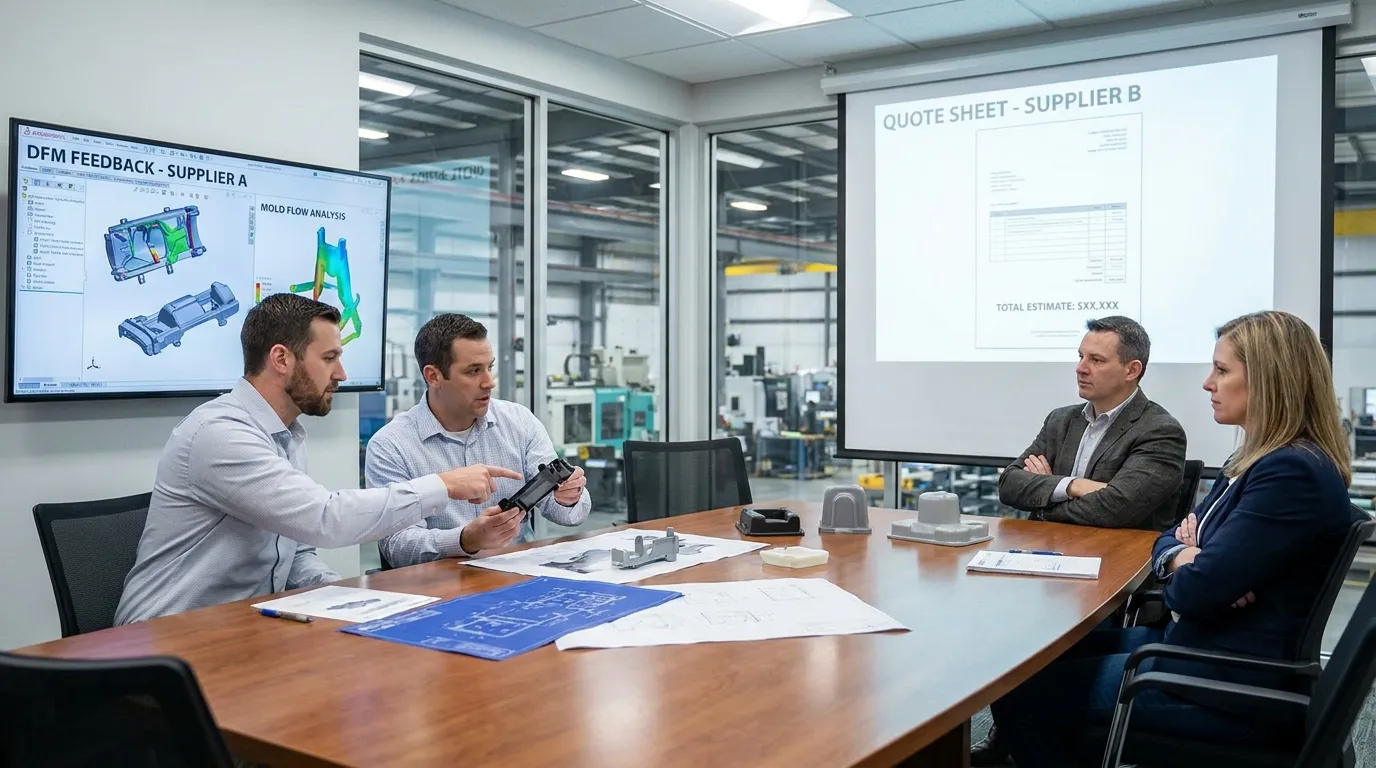
The cheapest quote is not always the lowest-risk option. Buyers should compare communication quality, engineering feedback, tooling transparency, inspection capability, and production scalability before selecting a plastic injection molding manufacturer.
A supplier’s responsiveness during quoting often predicts how communication will work during production. If answers are vague during RFQ review, the same problems usually continue during tooling, sampling, and shipment coordination.
Fast lead-time promises are not always realistic. If a supplier avoids discussing sampling, tooling revisions, or export timing, the schedule may already be too aggressive.
Questions to ask before approving tooling
- Does the supplier provide DFM feedback before steel cutting?
- What inspection standards are included in the quote?
- Are T1 sampling rounds included?
- Who owns the tooling after production?
- Is mold maintenance included?
- How are export packaging and customs handled?
Supplier Quote Comparison Table
| Evaluation Area | Supplier A | Supplier B |
|---|---|---|
| Tooling cost | Lower | Higher |
| DFM support | Limited | Detailed |
| Sampling rounds | One | Multiple |
| Mold maintenance | Excluded | Included |
| Inspection reporting | Basic | Full dimensional reports |
| Export packaging | Separate cost | Included |
| Communication speed | Slow | Fast |
A buyer comparing two similar quotes may discover that only one supplier includes DFM feedback, mold maintenance, and export handling. The upfront quote looks higher, but the overall project risk is lower.
For a broader sourcing overview, this injection mold supplier guide explains how manufacturers differ by production capability and project type.
What causes injection molding project delays after quoting?
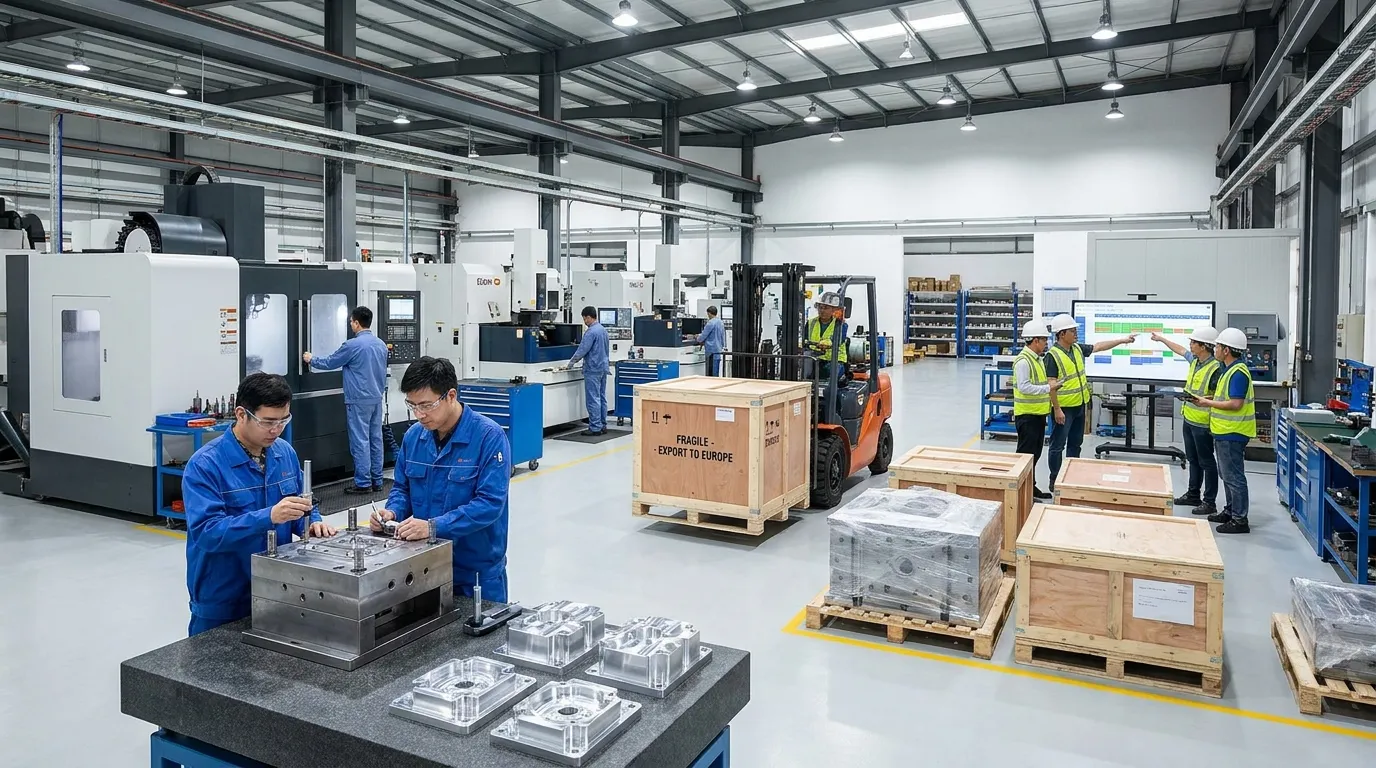
Many injection molding delays happen after quoting because buyers change designs, revise tolerances, delay approvals, or underestimate shipping and customs timelines. Clear RFQs and faster approval cycles reduce project risk significantly.
The biggest delays often happen after tooling starts. Once steel cutting begins, even small geometry changes can trigger machining revisions, additional sampling, or mold rework.
A startup that changes part geometry after steel cutting may add several weeks to the schedule. The supplier must revise tooling components, repeat sampling, and verify dimensional stability again before production approval.
Customs and export timing considerations
Shipping timelines also create avoidable delays. U.S. Customs and Border Protection explains that customs processing and import documentation can affect delivery schedules if paperwork or inspections are incomplete. You can review current import guidance directly through CBP.
Export coordination also matters during busy production seasons. The U.S. International Trade Administration provides additional manufacturing and export process guidance through Trade.gov.
| Delay Cause | Common Result |
|---|---|
| Design changes after steel cutting | Tooling rework |
| Slow material approvals | Sampling delays |
| Missing tolerance details | Quote revisions |
| Weak communication | Missed deadlines |
| Customs paperwork issues | Shipment holds |
If your team wants a clearer production timeline overview, these tooling timeline stages break down major manufacturing milestones.
What should happen before you approve tooling production?
Before tooling approval, buyers should confirm that manufacturability reviews, sampling expectations, and inspection standards are fully aligned. Early clarification reduces expensive revisions later in the project.
A rushed approval process usually creates downstream problems. Buyers who skip DFM review or fail to define inspection criteria often face additional tooling changes after T1 sampling.
Documents buyers should request before approval
- DFM review report
- Mold flow or manufacturability feedback
- Preliminary production timeline
- Inspection standards and tolerance plan
- T1 sampling expectations
- Packaging specifications
- Tool ownership agreement
A buyer should also confirm how revision requests will be handled after T1 samples. Some suppliers include limited revisions in the original quote, while others charge separately for every tooling adjustment.
For a deeper breakdown of manufacturing phases, these mold manufacturing steps explain how tooling moves from design approval into production.
Buyer checklist for getting faster and more accurate injection molding quotes
Buyers receive faster and more reliable injection molding quotes when they standardize RFQ data, clarify production expectations early, and compare supplier assumptions line by line instead of focusing only on unit price.
Many quote problems start because buyers send inconsistent RFQs to different suppliers. A standardized process makes pricing easier to compare and reduces confusion during production planning.
RFQ Accuracy Checklist
- Include both 3D CAD and 2D drawings
- Define resin grade clearly
- Share realistic annual volume estimates
- Specify cosmetic and tolerance requirements
- Clarify sampling expectations
- Define packaging requirements
- Confirm shipping destination early
- Compare tooling assumptions line by line
- Ask about mold maintenance responsibility
- Review export and customs planning before approval
Buyers who standardize these details usually receive cleaner quotes with fewer revision cycles. It also becomes easier to identify which manufacturers understand the project clearly and which suppliers rely heavily on assumptions.
Getting the Next Step Right
Choosing between plastic injection molding manufacturers becomes much easier when the RFQ process is structured from the start. Complete drawings, realistic production expectations, and clear communication help suppliers quote accurately and reduce avoidable delays later.
Before sending your next RFQ, compare suppliers beyond unit price alone. Review DFM support, tooling assumptions, inspection planning, and production communication carefully. A slightly higher quote with stronger engineering support often creates fewer problems during tooling, sampling, and full production launch.
Frequently Asked Questions
What information do injection molding manufacturers need for a quote?
Most manufacturers need CAD files, material preferences, annual volume estimates, tolerance requirements, surface finish expectations, and shipping details before preparing a quote. Missing information often causes inaccurate pricing and additional revision cycles.
Why are injection molding quotes different between suppliers?
Suppliers often make different assumptions about tooling steel, production volume, cycle time, inspection requirements, and finishing operations. Incomplete RFQs increase quote variation because manufacturers fill information gaps differently.
How long does injection molding tooling usually take?
Prototype tooling may take a few weeks, while production tooling projects often require several months depending on part complexity, revisions, sampling, and supplier capacity. Delays commonly increase after design changes or approval slowdowns.
What affects injection molding cost the most?
Material selection, tooling complexity, annual volume, tolerances, and cosmetic requirements usually affect injection molding cost the most. Small specification changes can increase tooling complexity and inspection requirements quickly.
What questions should buyers ask injection molding suppliers?
Buyers should ask about DFM support, sampling procedures, inspection standards, tooling ownership, maintenance policies, lead times, and communication processes. Strong suppliers usually answer these questions clearly before production starts.
What causes injection molding project delays?
Design revisions after steel cutting, incomplete specifications, delayed approvals, shipping bottlenecks, and customs issues commonly slow injection molding projects. Early alignment between buyers and suppliers reduces many preventable delays.
Share:



Written By Sunshine
At Sunshine, we are a professional manufacturer and supplier of precision mould components, offering a wide range of products for stamping and injection mould applications. Our core focus includes punching dies, ejector pins and sleeves, and guide posts and bushings. With advanced CNC machining, strict quality control, and strong production capabilities, we ensure reliable, high-precision parts, along with in-stock standard components for fast and efficient global supply.
NEWS
GET SERVICE
With quality parts to meet every budget and friendly staff trained to make your visit informative and hassle free.
