



Plastic Mold Manufacturing: Process, Cost Factors, and Quality Checks
Plastic mold manufacturing involves designing, machining, assembling, and testing tooling used to produce repeatable plastic parts. Mold cost depends on steel type, cavities, tolerances, cooling design, and validation work. Most molds require sampling, dimensional inspection, and correction before production approval. Buyers should evaluate lead time planning, QC systems, and supplier experience carefully because tooling decisions directly affect long-term production cost and part quality.
A plastic part can only perform as well as the mold behind it. Poor tooling creates unstable dimensions, cosmetic defects, and expensive production delays. Good tooling shortens cycle times, improves consistency, and reduces long-term manufacturing risk. If you're sourcing a new mold, understanding how the manufacturing process works helps you ask better questions before approving production.
What is plastic mold manufacturing?
Plastic mold manufacturing is the process of designing, machining, assembling, and testing tooling used to produce repeatable plastic parts. Mold quality directly affects part consistency, production speed, defect rates, and long-term manufacturing cost.
Plastic mold manufacturing turns a CAD product design into a physical mold used in injection molding machines. The mold shapes molten plastic into finished parts during production. According to TWI Global, injection molding is widely used for repeatable, high-volume plastic production because it delivers consistent dimensions and fast cycle times.
Most production molds include cavities, cooling channels, ejector systems, and runner systems. These features control how plastic flows, cools, and releases during production. Even small tooling changes can affect part quality, warpage, or cycle time.
If you need a broader overview of tooling systems and components, the injection mold guide covers the larger injection molding ecosystem in more detail.
You can also review plastic injection mold basics to understand how molds interact with the molding process itself.
How does the plastic mold manufacturing process work?
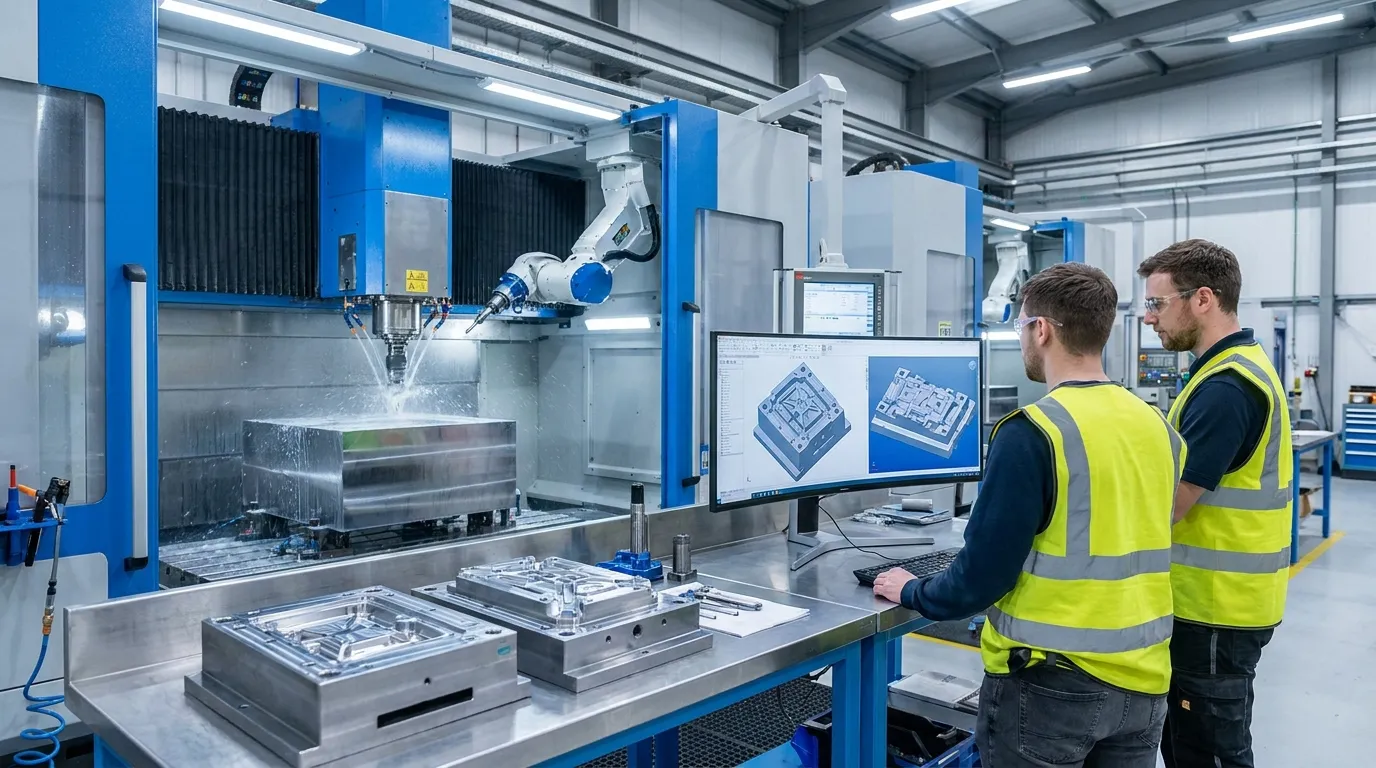
Plastic mold manufacturing starts with DFM analysis and mold design, followed by machining, EDM, fitting, polishing, assembly, and mold trials. Most production molds require testing and adjustments before final approval.
The process usually begins with DFM analysis, short for Design for Manufacturability. Engineers review wall thickness, draft angles, gate locations, shrinkage risk, and cooling requirements before machining starts. This step helps avoid expensive tooling changes later.
Once the design is approved, the mold base and core inserts are machined from steel or aluminum. CNC machining handles most shaping work, while EDM machining creates fine details and sharp corners that standard cutting tools cannot produce.
DFM and mold design
Mold design controls how the part fills, cools, and ejects. Cooling channel layout is especially important because uneven cooling often causes warpage or dimensional instability.
A consumer electronics housing is a good example. Cosmetic surfaces may require balanced flow paths and careful gate placement to avoid visible sink marks or weld lines on the finished product.
Machining and EDM
After machining, manufacturers perform heat treatment if hardened steel tooling is required. The mold then moves into fitting, polishing, assembly, and texture work.
Faster tooling schedules are not always better. Aggressive lead times often reduce fitting and testing time, which increases the risk of corrections during production trials.
Mold trials and validation
Most molds go through one or more sampling stages before approval. During mold trials, technicians test cycle stability, dimensional accuracy, cooling performance, and cosmetic quality.
If the mold fails inspection, engineers may adjust cooling layouts, venting, gating, or process settings before another trial begins.
For a deeper breakdown of machining and tooling stages, review this mold manufacturing workflow resource.
What factors affect plastic mold manufacturing cost?
Mold cost depends mainly on tooling complexity, steel type, cavity count, cooling design, tolerances, and validation requirements. Design changes after machining begins are one of the most common causes of unexpected tooling cost increases.
Simple prototype tooling may cost far less than hardened steel production molds designed for millions of cycles. The largest cost drivers are usually machining time, mold complexity, and inspection requirements.
Tighter tolerances increase machining and validation work. Multi-cavity molds also require more balancing, cooling control, and dimensional consistency during production.
Tooling Cost Driver Table
| Cost Factor | Why It Increases Cost | Lead Time Impact | Production Impact |
|---|---|---|---|
| Hardened steel | Harder to machine and heat treat | Medium | Longer mold lifespan |
| Multi-cavity design | Requires balancing and precision | High | Higher production output |
| Hot runner system | Adds thermal control complexity | Medium | Lower material waste |
| Tight tolerances | Requires extra machining and inspection | High | Better dimensional accuracy |
| Cosmetic finish | Increases polishing and texture work | Medium | Improved appearance |
| Design revisions | Requires rework after machining | High | Delays approval |
Hot runner molds are not automatically the best choice. They work well for high-volume production with stable materials, but cold runner systems are often safer for lower-volume projects or products that change materials frequently.
A medical connector project, for example, may justify hardened steel tooling because long production runs require stable dimensions over millions of cycles.
You can compare mold type comparison options when evaluating tooling complexity and lifespan requirements.
Aluminum vs steel molds: which one makes sense?
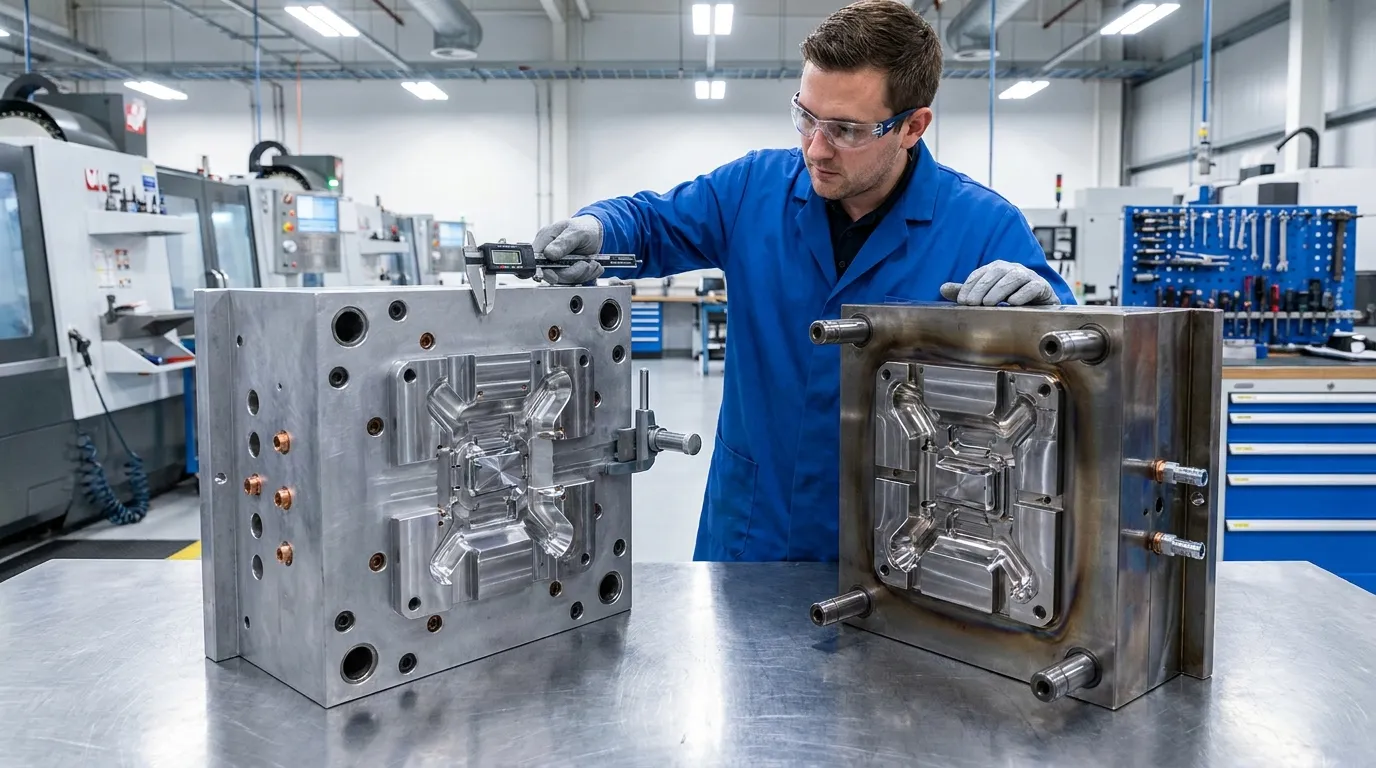
Aluminum molds reduce lead time and upfront tooling cost, while steel molds handle higher production volumes and tighter tolerances. The better option depends on expected production volume, material abrasiveness, and lifespan requirements.
Aluminum tooling is common for prototypes, bridge tooling, and lower-volume production. It machines faster than steel, which reduces lead time and upfront cost.
A startup launching a consumer product may choose aluminum tooling to shorten development time and validate market demand before investing in hardened steel production tooling.
| Factor | Aluminum Mold | Steel Mold |
|---|---|---|
| Initial cost | Lower | Higher |
| Lead time | Faster | Slower |
| Durability | Lower | Higher |
| Production volume | Low to medium | Medium to high |
| Abrasive materials | Less suitable | Better suited |
| Dimensional stability | Moderate | Strong |
Steel tooling usually makes more sense for long production runs, abrasive materials, or tighter tolerances. Although the upfront cost is higher, the long-term production stability is often better.
You can explore broader steel vs aluminum molds considerations before finalizing tooling material selection.
How long does plastic mold manufacturing take?
Plastic mold manufacturing timelines often range from several weeks to several months depending on tooling complexity, sampling revisions, validation requirements, and shipping conditions. Design changes after steel cutting are one of the biggest causes of delay.
According to EvokPoly's lead time guide, tooling schedules vary significantly based on mold size, complexity, and production requirements.
A simple prototype mold may move quickly through machining and validation. Multi-cavity production tooling with cosmetic surface requirements usually takes longer because fitting, polishing, and sampling are more demanding.
Plastic Mold Manufacturing Timeline
| Stage | Typical Activity |
|---|---|
| DFM review | Manufacturability analysis |
| Mold design | Cooling, gating, and cavity design |
| CNC machining | Core and cavity cutting |
| EDM machining | Fine detail work |
| Assembly and fitting | Mold alignment and polishing |
| Mold trial | Initial production sampling |
| Validation | Dimensional and cosmetic inspection |
| Shipping | Packaging and customs clearance |
Common causes of tooling delays
- Late product design revisions
- Cooling imbalance discovered during sampling
- Steel sourcing delays
- Repeated mold corrections
- Customs clearance problems during shipping
A packaging mold project may look complete during machining but still require several sampling revisions if cooling channels create uneven shrinkage across cavities.
International tooling shipments can also face customs classification delays. FreightAmigo's HS code guide explains how mold classification affects shipping documentation and customs processing.
For additional scheduling context, this tooling lead time process guide explains how production stages connect together.
What quality checks happen before mold approval?
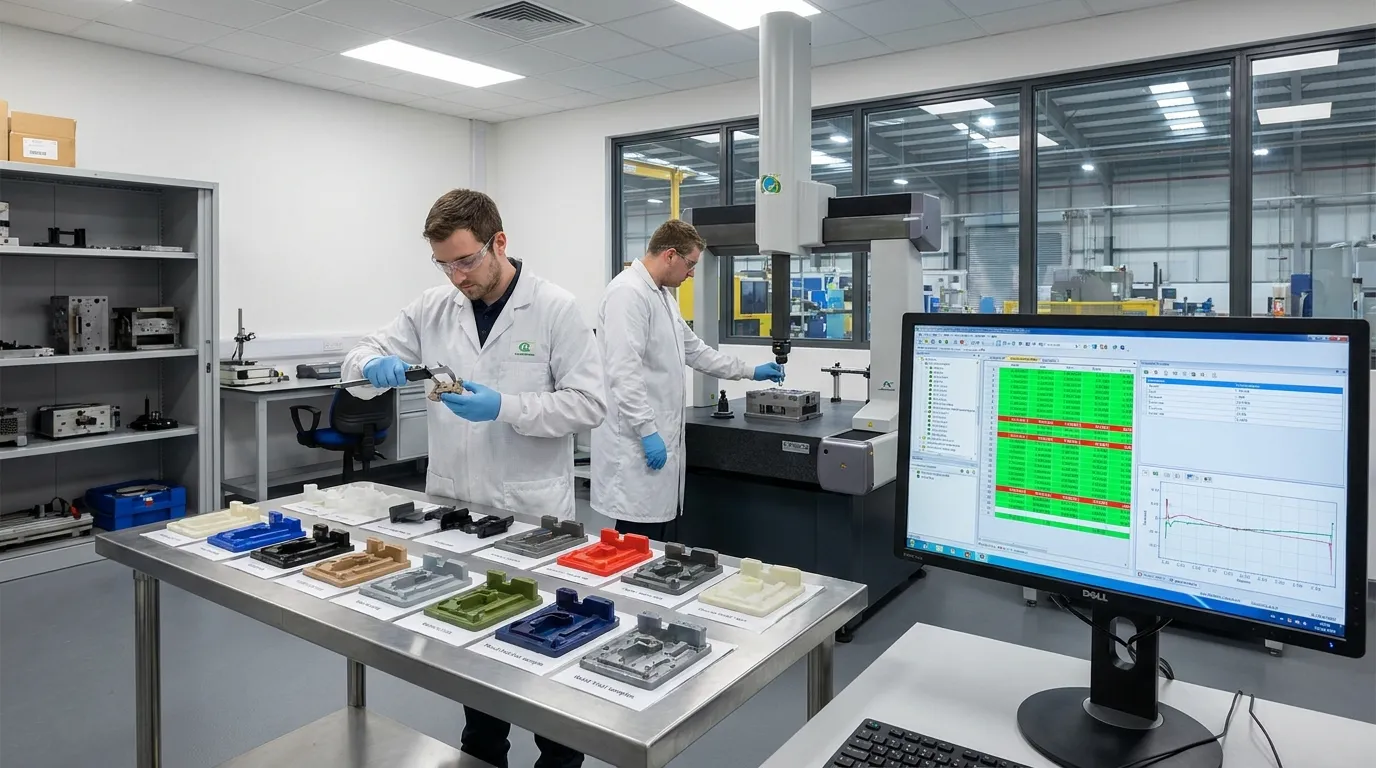
Mold approval should include dimensional inspection, cosmetic validation, mold trial reports, cooling verification, and production sampling. A mold that passes machining inspection can still fail during real production testing.
Machining accuracy alone does not guarantee stable production performance. Mold trials test how the tool behaves under real molding conditions, including pressure, cooling, shrinkage, and cycle consistency.
Manufacturers typically measure critical dimensions against approved drawings after sampling. Cosmetic inspection checks for sink marks, flash, short shots, and weld lines.
Mold trial inspection
- Fill balance between cavities
- Cooling performance
- Part warpage
- Ejection consistency
- Surface finish quality
- Cycle time stability
A consumer electronics housing may pass dimensional inspection but still fail cosmetic review if gate placement leaves visible marks on display surfaces.
Production validation checks
Good suppliers also document process settings and inspection reports before production approval. These records help maintain consistency after mass production begins.
The cheapest tooling quote is often the most expensive production decision later if cooling performance, maintenance access, or sampling support are weak.
If you need a broader tooling overview, the mold component overview explains how mold systems work together during production.
You can also review mold inspection basics for additional inspection terminology and tooling concepts.
What problems commonly delay or damage mold projects?
Many mold delays start before machining begins. Incomplete product drawings, late engineering changes, weak cooling design, and customs clearance problems can all extend tooling schedules and increase project cost.
Late revisions are one of the biggest risks in mold manufacturing. Once steel cutting starts, even small geometry changes may require expensive rework or replacement inserts.
Weak cooling layouts also create long-term production problems. Uneven cooling increases shrinkage variation, which often leads to repeated sampling corrections and unstable dimensions.
Common tooling risk checklist
- Incomplete DFM review
- Unclear tolerance requirements
- Poor venting design
- Limited maintenance access
- Unrealistic delivery schedules
- Weak sampling plans
- Customs documentation errors
Trade conditions and tariff changes can also affect tooling schedules and cost planning. The Plastics Industry Association notes that changing trade conditions continue to affect plastics supply chains and manufacturing logistics.
A tooling shipment delayed at customs can stop production planning even after the mold itself is complete. That's why experienced export support matters during international projects.
For additional production context, review injection mold production to understand how tooling decisions affect molding performance later.
How should buyers evaluate a plastic mold manufacturer?
Choosing the right mold manufacturer depends on more than price. Buyers should evaluate engineering support, sampling capability, inspection systems, communication quality, and long-term tooling support before approving a project.
Good suppliers explain lead times clearly and identify risks early. They also provide realistic feedback during DFM review instead of simply accepting every product design without discussion.
Buyer evaluation checklist
- DFM review capability
- Mold flow analysis support
- Sampling and validation process
- QC documentation quality
- Mold maintenance planning
- Export and shipping experience
- Revision handling process
- Production troubleshooting support
Tool ownership and documentation should also be clarified before production begins. Harris Sliwoski's tooling guide explains why tooling agreements matter in international manufacturing relationships.
You can also review this injection mold supplier guide for broader supplier evaluation criteria.
Getting the Next Step Right
Plastic mold manufacturing affects far more than tooling cost alone. Mold design, cooling layout, sampling quality, and validation planning all shape long-term production performance. A lower upfront quote may create larger costs later if the tool requires repeated corrections or unstable production settings.
Before approving a project, review the supplier's DFM process, inspection standards, and sampling workflow carefully. Ask how they handle revisions, cooling verification, and production troubleshooting. A well-built mold usually saves time, scrap, and maintenance cost long after the first production run begins.
Frequently Asked Questions
How much does plastic mold manufacturing cost?
Plastic mold manufacturing cost depends on tooling complexity, steel type, cavities, tolerances, runner systems, and validation requirements. Simple prototype molds cost much less than hardened steel production tooling designed for long production runs.
How long does it take to manufacture a plastic mold?
Plastic mold manufacturing can take several weeks to several months depending on tooling complexity and validation requirements. Design changes after steel cutting commonly extend lead times and increase production delays.
What quality checks are required before mold approval?
Mold approval should include dimensional inspection, cosmetic validation, mold trial reports, cooling verification, and sampling review. Production testing matters because machining accuracy alone does not guarantee stable molding performance.
Should I choose aluminum or steel tooling?
Aluminum tooling works well for prototypes and lower production volumes because it reduces cost and lead time. Steel molds are usually better for high-volume production, abrasive materials, and tighter tolerances.
What causes mold manufacturing delays?
Mold manufacturing delays often come from late design revisions, steel sourcing problems, sampling corrections, and shipping issues. Poor project planning can extend tooling schedules significantly.
What happens during mold sampling?
Mold sampling tests whether the tool can produce parts that meet dimensional and production requirements. Manufacturers often adjust cooling, gating, or process settings after the first trial.
Share:



Written By Sunshine
At Sunshine, we are a professional manufacturer and supplier of precision mould components, offering a wide range of products for stamping and injection mould applications. Our core focus includes punching dies, ejector pins and sleeves, and guide posts and bushings. With advanced CNC machining, strict quality control, and strong production capabilities, we ensure reliable, high-precision parts, along with in-stock standard components for fast and efficient global supply.
NEWS
GET SERVICE
With quality parts to meet every budget and friendly staff trained to make your visit informative and hassle free.
