



Injection Molding Service: What Buyers Get from Tooling to Production
Injection molding service providers usually handle far more than mold manufacturing. A complete injection molding service includes DFM review, tooling, sampling, production, quality control, assembly, packaging, and logistics coordination. Buyers should evaluate suppliers based on engineering support, communication, production stability, and long-term manufacturing capability instead of focusing only on tooling price or lead time.
A lot can go wrong between approving a CAD file and receiving finished plastic parts. Delays, tooling revisions, communication gaps, and unstable production often cost more than the mold itself. That’s why buyers need to understand what a full-service injection molding partner actually does. The right supplier helps manage the entire workflow, from design review through mass production support.
What does an injection molding service include?
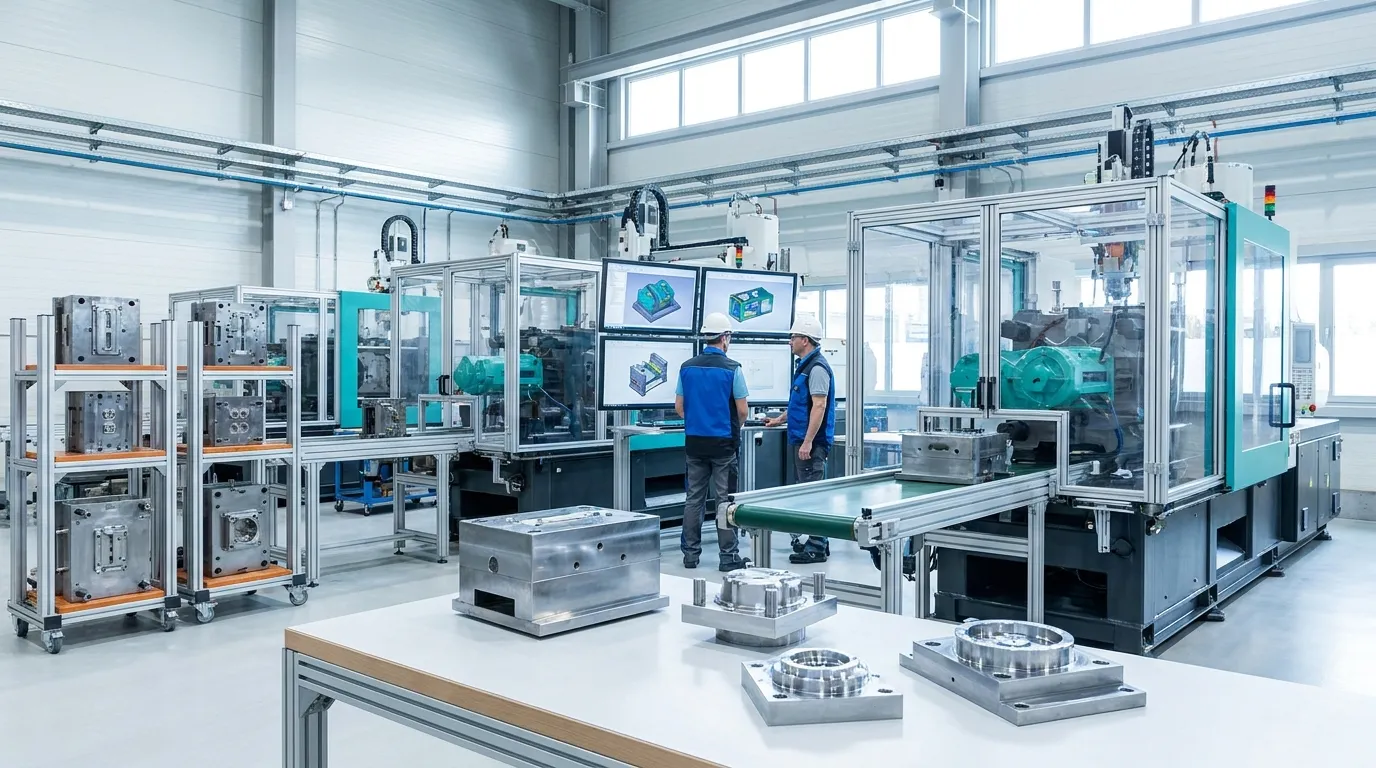
An injection molding service usually covers design review, mold manufacturing, sampling, production, quality control, and logistics support. Strong suppliers manage the full workflow instead of handing buyers off between separate vendors.
Some suppliers only build molds. Others manage the complete manufacturing process from engineering review to final shipment. For most buyers, the second option reduces coordination problems and keeps production more stable.
A typical service starts with DFM analysis, which stands for Design for Manufacturability. Engineers review part geometry, wall thickness, draft angles, tolerances, and resin selection before tooling begins. This stage helps prevent expensive mold corrections later.
After design approval, the supplier moves into tooling, sampling, production, and post-processing support. Many companies also offer assembly, packaging, labeling, and export coordination.
A complete injection molding service often includes:
- DFM and CAD review
- Material selection support
- Mold manufacturing
- T1 sample validation
- Production molding
- Quality inspections
- Assembly and packaging
- Shipping coordination
Buyers looking for integrated production support can review these custom molding solutions to understand how full-service projects are typically managed.
What happens before mold manufacturing starts?
Before steel is cut, suppliers review part geometry, tolerances, resin selection, and production goals. This DFM stage reduces tooling risk, avoids expensive revisions, and improves long-term production stability.
The pre-production phase is where many successful projects are decided. A supplier should review your CAD files carefully before approving tooling. Small design issues can create major molding problems later if they are missed early.
Good suppliers check for uneven wall thickness, sharp corners, sink marks, undercuts, and poor gate locations. They also review expected production volume because prototype tooling and mass production tooling are built differently.
Lowest tooling cost is not always the safest option. Cheap molds may work for short production runs, but unstable tooling can create quality issues and expensive downtime later.
What information buyers should prepare before requesting a quote
Before requesting pricing, buyers should prepare:
- 3D CAD files
- Material requirements
- Annual production volume
- Surface finish expectations
- Tolerance requirements
- Packaging details
Providing complete information reduces quoting delays and tooling revisions. Buyers preparing an injection mold quotation should also clarify whether parts need assembly or secondary operations.
For readers who want deeper technical background, these mold design fundamentals explain how mold structure decisions affect manufacturability.
How long does an injection molding project usually take?
Most injection molding projects take several weeks to several months depending on tooling complexity, revisions, validation requirements, and production scale. Tool manufacturing is usually the longest stage in the process.
Simple prototype molds may be completed relatively quickly, while hardened steel production molds can take much longer. According to Aprios lead time insights and EvokPoly lead time guidance, tooling complexity and revisions heavily affect timelines.
Injection Molding Project Timeline
| Stage | Typical Focus | Common Delay Risk |
|---|---|---|
| DFM review | Design validation | Missing CAD details |
| Tool manufacturing | Mold machining | Steel revisions |
| T1 sampling | Part validation | Dimensional issues |
| Mold correction | Tool adjustments | Multiple revisions |
| Mass production | Stable output | Material shortages |
| Shipping | Export logistics | Customs delays |
Fast quoting does not automatically mean strong engineering support. Some suppliers respond quickly but skip detailed DFM checks. That often creates bigger delays after tooling starts.
Common reasons injection molding timelines slip
Production schedules usually change because of one of these problems:
- Design changes after tooling approval
- Material availability issues
- Incomplete technical drawings
- Mold correction cycles
- Export and customs delays
One automotive supplier delayed launch production after changing clip geometry once the mold steel had already been cut. The tooling revision added weeks to the project timeline and increased validation costs.
What happens during sampling and validation?
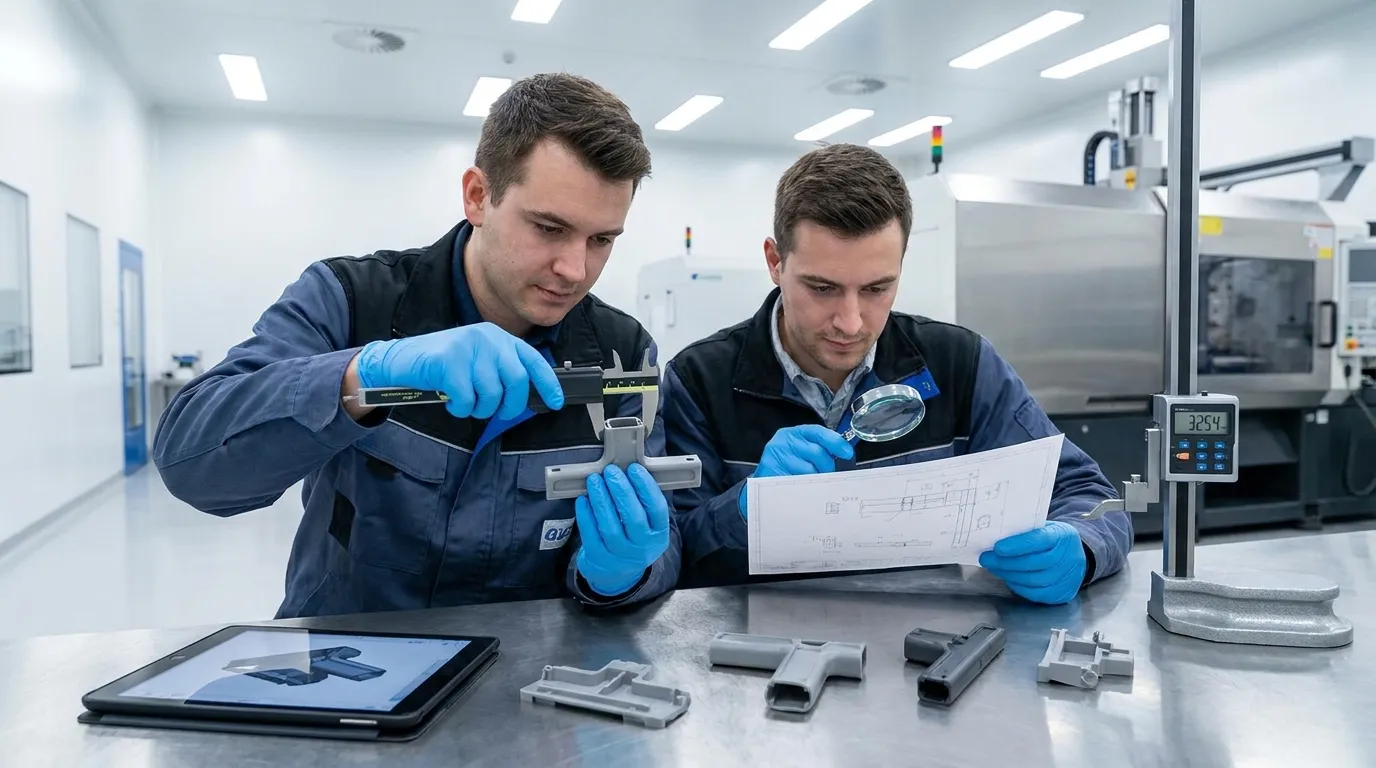
Sampling validates whether the mold can consistently produce parts within specification. Buyers review dimensions, surface finish, fit, and function before approving the tool for mass production.
T1 sampling is the first trial run from a newly built mold. This stage checks whether the mold performs correctly under real production conditions. Suppliers inspect molded parts and compare them against engineering requirements.
Most buyers review dimensional reports, cosmetic appearance, assembly fit, and functional testing during this phase. If problems appear, the mold goes back for corrections before another sampling round begins.
What buyers should review during T1 approval
During validation, buyers should confirm:
- Critical dimensions
- Surface quality
- Warpage or sink marks
- Assembly fit
- Resin performance
- Cycle consistency
A medical device startup, for example, may approve dimensions during T1 sampling but delay production release until packaging validation and labeling requirements are fully verified.
Companies evaluating tooling quality can also review how an experienced plastic mold manufacturer handles sampling corrections and mold optimization.
What production support should buyers expect after tooling approval?
Reliable injection molding services continue after tooling approval with process monitoring, quality inspections, assembly support, packaging coordination, and production scheduling to maintain stable output.
Production support matters just as much as tooling quality. Once a mold enters mass production, suppliers must maintain consistent process control to reduce scrap, dimensional variation, and downtime.
Good manufacturers track molding temperatures, pressure settings, cycle times, and inspection data during production. Many suppliers also handle secondary operations such as ultrasonic welding, assembly, pad printing, labeling, and retail packaging.
A consumer electronics company may choose one supplier for molding and assembly to avoid communication delays between separate vendors. Integrated production support often reduces scheduling conflicts and shipping errors.
Buyers comparing suppliers should evaluate whether the company operates as a full plastic injection molding manufacturer with long-term production capabilities or only as a tooling vendor.
Readers looking for industry-specific production examples can explore injection mold applications for broader manufacturing use cases.
What causes injection molding delays and production problems?
Injection molding delays usually come from late design changes, tooling revisions, shipping issues, or unclear specifications. Early engineering review and consistent communication reduce most avoidable delays.
Most production problems start long before the molding machine runs. Poor communication during design review often creates tooling changes, unstable production, or inspection failures later.
Common Delay Risks and Responses
| If this happens | Production impact | Better response |
|---|---|---|
| CAD files are incomplete | Tool revisions | Finalize drawings earlier |
| Resin changes late | Sampling delays | Lock materials before tooling |
| Packaging changes late | Shipping disruption | Confirm packaging specs early |
| Customs documents are missing | Export delays | Prepare compliance paperwork ahead |
| Tool corrections repeat | Timeline expansion | Improve DFM review |
According to TBS customs delay reporting, customs processing disruptions can affect export timelines and manufacturing schedules. Overseas buyers should factor shipping risk into production planning.
A supplier that only builds molds may create coordination problems later if production and assembly are handled elsewhere. Buyers managing multiple vendors often spend more time solving communication issues during production ramp-up.
How should buyers evaluate an injection molding supplier?

Buyers should evaluate injection molding suppliers based on engineering support, tooling experience, quality systems, communication speed, production scalability, and long-term manufacturing reliability rather than tooling price alone.
Choosing a supplier based only on tooling cost is risky. A lower quote may leave out engineering support, process validation, inspection reporting, or production planning. Those gaps usually appear later when delays and quality issues become expensive.
Strong suppliers explain their process clearly and communicate project status consistently. They should also show experience with your product category, production volume, and export requirements.
Supplier Evaluation Checklist
| Evaluation Area | What Buyers Should Look For |
|---|---|
| Engineering support | Detailed DFM feedback |
| Tooling capability | Experience with similar molds |
| Quality systems | Inspection and process tracking |
| Communication | Fast, clear updates |
| Production capacity | Stable manufacturing output |
| Export experience | Packaging and logistics support |
Questions buyers should ask before approving a supplier
- How are tooling revisions handled?
- What inspections are included?
- How is production monitored?
- Can assembly and packaging be managed internally?
- What happens if dimensions fail during T1 sampling?
According to Rodon Group sourcing questions, supplier evaluation should include engineering support, quality systems, and production experience, not just pricing.
Companies searching for a long-term custom injection molding partner should also evaluate responsiveness during the quoting stage. Communication quality early in the project usually reflects how production support will work later.
When should a buyer request an injection molding quotation?
A buyer should request a quotation once the part design, material direction, and production goals are reasonably defined. Waiting for every small detail can slow the project, but incomplete information also creates inaccurate quotes and revision delays.
The best time to request pricing is after CAD files are ready and the buyer understands expected production volume. Suppliers can then estimate tooling type, cavity count, material usage, and production planning more accurately.
Before requesting a quote, prepare:
- 3D CAD files
- Resin preferences
- Estimated annual volume
- Surface finish requirements
- Assembly expectations
- Packaging details
One buyer reduced tooling revisions by submitting finalized resin specifications and assembly requirements during the quotation stage. That helped the supplier complete DFM analysis earlier and shorten the approval cycle.
If you're preparing for supplier discussions, this guide to request a mold quote can help organize the technical information manufacturers typically need.
Getting the Next Step Right
A strong injection molding service should support far more than tooling alone. Buyers need clear engineering review, stable production planning, quality control, and responsive communication throughout the project lifecycle.
Before choosing a supplier, review how they handle DFM, sampling, production monitoring, and post-molding support. The cheapest mold quote is not always the safest production decision. A reliable manufacturing partner helps reduce delays, improve consistency, and keep projects moving from tooling approval through final delivery.
Frequently Asked Questions
How long does injection molding tooling usually last?
Injection mold lifespan depends on tooling material, resin type, maintenance, and production volume. Production molds can last from hundreds of thousands to more than one million cycles when properly maintained.
What causes injection molding defects during production?
Common injection molding defects come from poor venting, incorrect temperatures, material flow restrictions, or unstable process settings. Strong suppliers monitor process consistency to reduce scrap and production interruptions.
What information do suppliers need for an injection molding quote?
Most suppliers need CAD drawings, material requirements, estimated annual volume, tolerance expectations, and surface finish requirements. Clear project information improves quote accuracy and reduces revision delays.
What is T1 sampling in injection molding?
T1 sampling is the first trial run from a newly built mold. Buyers review dimensions, appearance, and functionality before approving mold corrections or production release.
Can one supplier handle tooling and mass production?
Yes. Many injection molding companies provide complete services including tooling, molding, assembly, packaging, and logistics support. Buyers often prefer integrated suppliers to reduce communication gaps and project delays.
Why do injection molding projects get delayed?
Injection molding projects are commonly delayed by tooling revisions, late design changes, material shortages, or customs issues during international shipping. Early DFM review helps reduce many avoidable delays.
Share:



Written By Sunshine
At Sunshine, we are a professional manufacturer and supplier of precision mould components, offering a wide range of products for stamping and injection mould applications. Our core focus includes punching dies, ejector pins and sleeves, and guide posts and bushings. With advanced CNC machining, strict quality control, and strong production capabilities, we ensure reliable, high-precision parts, along with in-stock standard components for fast and efficient global supply.
NEWS
GET SERVICE
With quality parts to meet every budget and friendly staff trained to make your visit informative and hassle free.
