



Precision Mold Parts: Tolerance, Steel, Finish, and QC Checklist
Precision mold parts must balance tolerance capability, steel grade, surface finish, and inspection quality to maintain stable injection molding performance. Buyers should compare suppliers using measurable QC processes, material traceability, dimensional inspection methods, and realistic lead-time expectations instead of relying only on low pricing or “high precision” marketing claims.
A mold can look well-machined and still fail during production because of poor tolerance control, incorrect steel selection, or weak inspection procedures. Small dimensional problems often create flash, part sticking, inconsistent shrinkage, or early wear. This guide explains how engineers and buyers can compare precision mold parts using practical standards instead of supplier claims alone.
What are precision mold parts and why do they matter in injection molding?
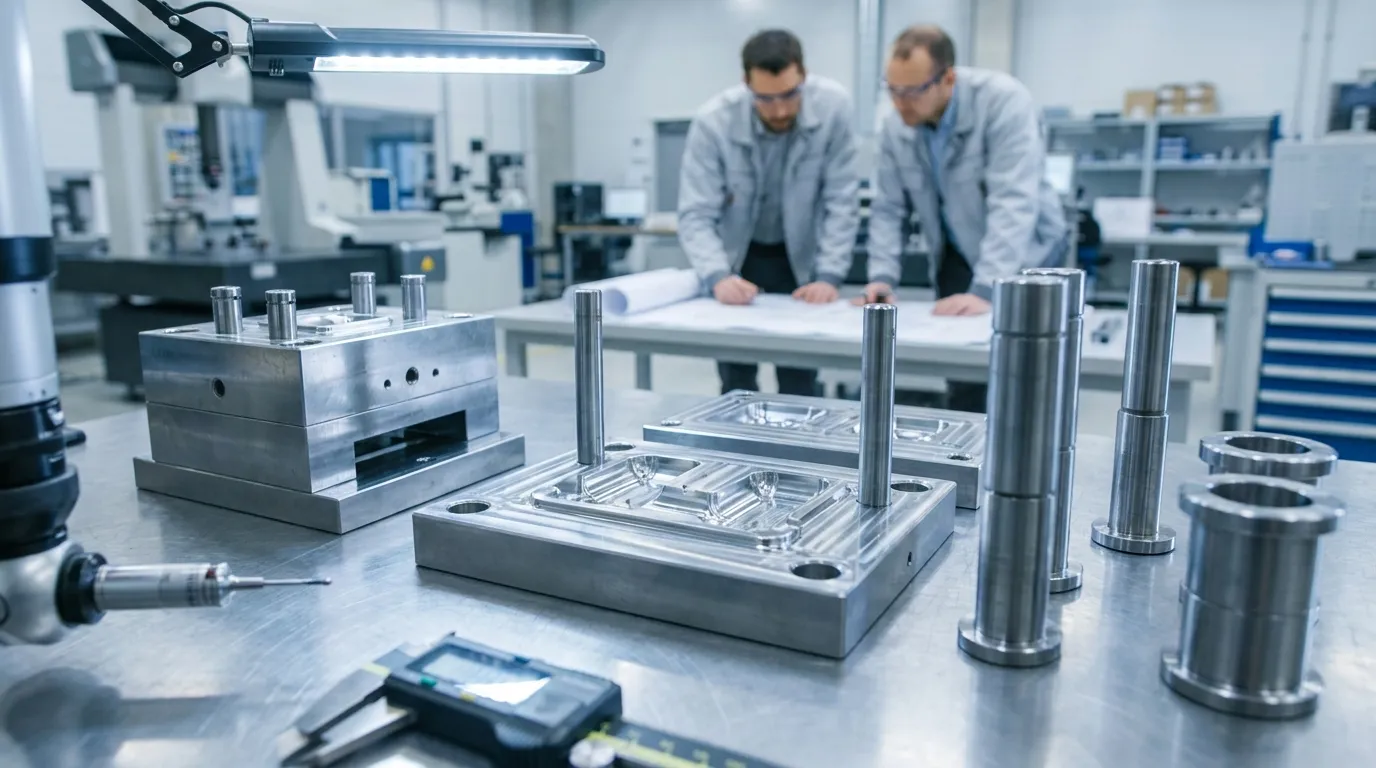
Precision mold parts are high-accuracy mold components such as cores, cavities, ejectors, and inserts manufactured to tight tolerances. Their dimensional consistency directly affects molded part accuracy, cycle stability, wear resistance, and long-term production reliability.
Precision mold parts are the components inside a mold that directly control part geometry, movement, and alignment. These parts include mold inserts, sliders, ejector pins, guide bushings, cores, and cavities. Even small dimensional errors can affect the molded product after thousands of production cycles.
For example, a cavity insert with slight dimensional drift may create flash on a medical housing or cause uneven shrinkage in a packaging component. That problem usually becomes more expensive after production begins because downtime, rework, and scrap costs increase quickly.
Many buyers start with a broad mold components guide to understand how mold systems work together before comparing individual precision components.
| Precision Component | Main Function | Risk if Tolerance Fails |
|---|---|---|
| Core insert | Forms internal geometry | Dimensional mismatch |
| Cavity insert | Forms external shape | Flash or cosmetic defects |
| Ejector pin | Removes molded part | Sticking or pin marks |
| Guide bushing | Maintains alignment | Mold wear and instability |
| Slider | Creates side features | Leakage or part deformation |
Buyers comparing plastic mold parts overview pages should focus less on catalog variety and more on measurable process capability, inspection control, and steel traceability.
What tolerance range is realistic for precision mold parts?
Precision mold parts commonly operate within micron-level tolerances, but tighter specifications increase machining, inspection, and rejection costs. Not every mold component requires ultra-tight control, so tolerance should match the molding function and production risk.
Many suppliers advertise “high precision” without defining actual tolerance capability. In practice, required tolerance depends on the component’s role inside the mold. A cavity insert handling cosmetic alignment needs tighter control than a support plate or non-critical mounting feature.
Ultra-tight tolerance is not always the best choice. Some mold components perform reliably with wider tolerances that reduce machining cost and inspection delays. Over-specifying every dimension often increases lead time without improving molding results.
Which mold components require the tightest tolerances?
Critical sealing surfaces, shut-off areas, cavity inserts, and alignment components usually require the highest precision. These areas directly affect molded part quality and mold movement.
Support structures and non-contact surfaces often allow wider tolerances without affecting production stability.
| Component Type | Typical Precision Requirement | Why It Matters |
|---|---|---|
| Cavity insert | Very high | Controls molded dimensions |
| Shut-off surface | Very high | Prevents flash |
| Guide components | High | Maintains alignment |
| Ejector system | Moderate | Supports smooth release |
| Support plates | Lower | Limited molding impact |
A packaging mold project may require tight cavity tolerance control to prevent flash around thin walls, while surrounding support plates can use wider tolerance ranges. One buyer reduced machining cost significantly after relaxing unnecessary tolerances on non-critical support components.
Engineers comparing precision mold components should ask suppliers which dimensions receive full inspection instead of assuming every surface receives the same level of control.
Which steel grade should buyers choose for precision mold parts?
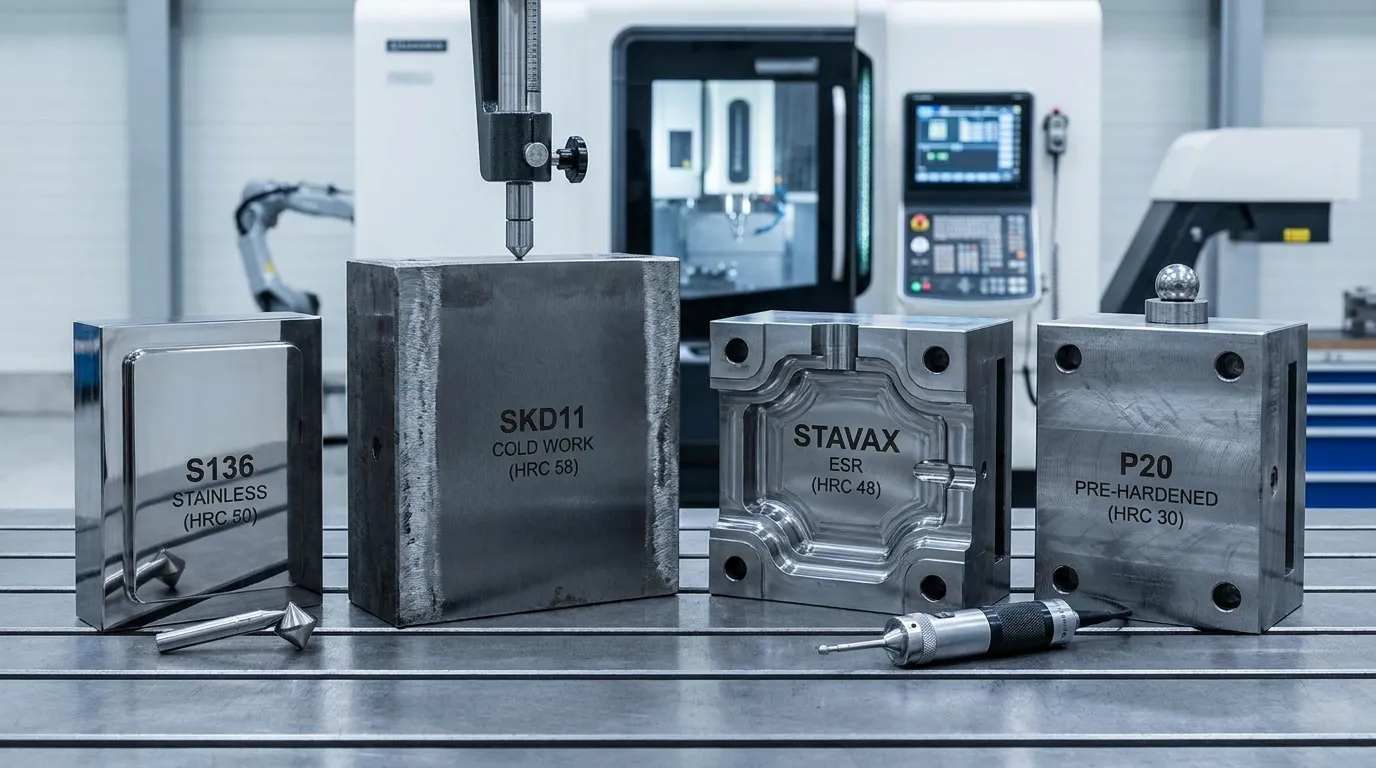
Mold steel selection depends on production volume, resin type, corrosion exposure, and wear conditions. Harder steel is not automatically better because machining difficulty, brittleness, polishability, and maintenance requirements also affect long-term tooling performance.
Steel selection changes mold lifespan, polish quality, maintenance intervals, and repair difficulty. Buyers often compare popular grades like S136, SKD11, STAVAX, and P20, but the best option depends on production conditions rather than brand familiarity alone.
Harder mold steel is not automatically better. Extremely hard steel can increase brittleness, polishing difficulty, and repair complexity in high-maintenance molds. Some high-volume molds actually perform better with balanced hardness and easier maintenance access.
When is stainless mold steel worth the added cost?
Stainless grades such as S136 or STAVAX work well in corrosive environments, medical molding, and humid production conditions. They also support polished cosmetic surfaces more effectively than some general-purpose steels.
A medical mold insert exposed to moisture and aggressive cleaning chemicals may fail early with standard tool steel. Stainless mold steel often prevents corrosion damage and extends maintenance intervals in those environments.
Precision Mold Steel Selection Table
| Steel Grade | Main Advantage | Best Use Case | Relative Wear Resistance | Maintenance Notes |
|---|---|---|---|---|
| P20 | Easy machining | General production molds | Moderate | Easier to repair |
| SKD11 | Strong wear resistance | Abrasive resin applications | High | Harder polishing |
| S136 | Corrosion resistance | Medical and cosmetic molds | High | Good for polished finish |
| STAVAX | High polishability | Optical or transparent parts | High | Higher material cost |
Many buyers researching mold component materials focus only on hardness values. Wear resistance, corrosion exposure, polish requirements, and repair access usually matter just as much during long production runs.
How does surface finish affect mold performance and part quality?
Surface finish affects part appearance, release behavior, wear resistance, and cleaning requirements. A mirror finish improves cosmetic clarity for some applications, but many industrial molds perform better with practical finishes that reduce maintenance and machining cost.
Surface finish changes more than appearance. It affects mold release, friction, cleaning cycles, resin flow, and wear behavior. Cosmetic consumer products often require polished cavity surfaces, while industrial parts may perform better with controlled texture or practical machining finishes.
Mirror-polished surfaces are often overused. Many industrial molding applications achieve better long-term performance with practical finishes that reduce maintenance and tooling cost. Highly polished surfaces can increase polishing time and future repair expense without improving the molded part.
| Finish Type | Common Use | Main Benefit |
|---|---|---|
| Mirror polish | Optical or cosmetic parts | High visual clarity |
| Fine polish | Consumer products | Balanced appearance |
| EDM texture | Industrial components | Better grip and release |
| Machined finish | Functional tooling areas | Lower maintenance cost |
A cosmetic electronics housing may require mirror-polished cavity surfaces for visual clarity. A structural industrial part usually benefits more from stable release performance and lower maintenance requirements.
Buyers reviewing injection mold components should match finish quality to actual product requirements instead of automatically choosing the highest polish level.
How are precision mold parts inspected before approval?
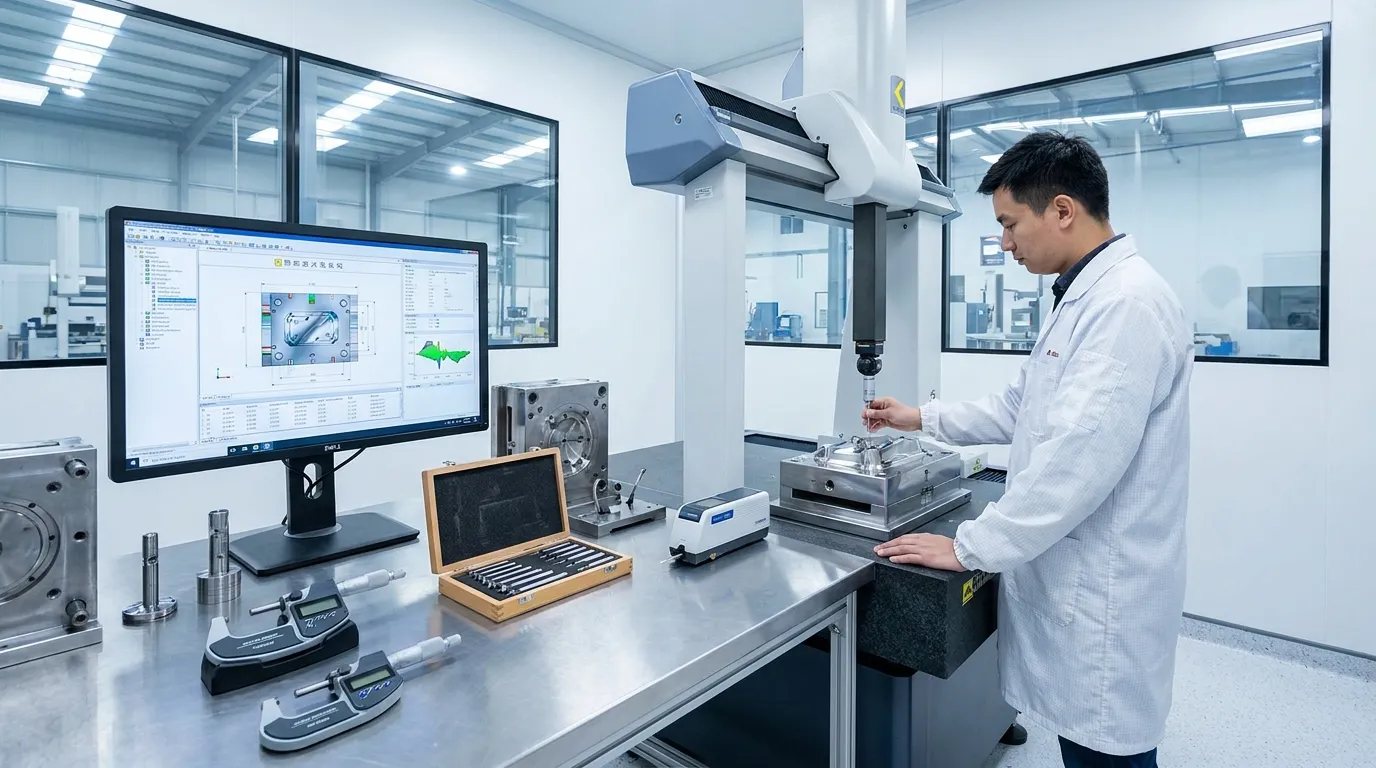
Precision mold part inspection should combine dimensional measurement, hardness verification, surface evaluation, and documented first article approval. Buyers should request measurable inspection data instead of relying only on supplier claims about precision capability.
A reliable inspection process starts before shipment. Suppliers should verify dimensions against engineering drawings, confirm material specifications, inspect surface finish quality, and document all critical measurements.
Many procurement teams reject suppliers because inspection reports lack measurable traceability. If a supplier cannot explain how dimensions were verified, future production consistency becomes difficult to trust.
Which inspection tools matter most?
Coordinate Measuring Machines (CMMs) remain one of the most important inspection tools for complex mold geometry. Micrometers, hardness testers, pin gauges, and surface roughness instruments also support dimensional verification.
| Inspection Tool | Main Purpose |
|---|---|
| CMM | Complex dimensional measurement |
| Micrometer | External precision measurement |
| Pin gauge | Hole verification |
| Hardness tester | Steel hardness validation |
| Surface roughness tester | Finish quality inspection |
A supplier should also provide first article inspection records before approval. This documentation helps buyers compare measured dimensions against the original drawing package.
Mold Part QC Approval Checklist
- Verify engineering drawing revision
- Confirm material certification
- Review hardness testing records
- Check critical dimensions using CMM reports
- Inspect surface finish quality
- Confirm shut-off and sealing surfaces
- Verify traceability documentation
- Review packaging protection methods
- Confirm shipment labeling accuracy
- Approve first article inspection report
International trade documentation also affects approval timing. The U.S. International Trade Administration notes that incomplete compliance records can disrupt import timelines, especially for industrial manufacturing shipments.
Buyers evaluating a supplier’s precision inspection process should verify how inspection data is stored, reviewed, and linked to each production batch.
What causes delays in precision mold part delivery?
Precision mold part delays often result from incomplete drawings, inspection failures, customs documentation errors, tariff classification problems, and late-stage design revisions. Many delays occur after machining is complete rather than during manufacturing itself.
Machining is only one part of the delivery timeline. Inspection rework, engineering revisions, customs holds, and shipment paperwork often create larger delays than the machining process itself.
One tooling project experienced shipment delays because HS code classification errors triggered customs inspection holds during export processing. The shipment was already complete, but documentation problems delayed delivery for days.
| Delay Source | Likely Result | Prevention Method |
|---|---|---|
| Incomplete drawings | Machining rework | Final drawing approval |
| Failed inspection | Production delays | Intermediate QC checks |
| HS code errors | Customs hold | Verified classification |
| Design revisions | Lead-time extension | Change control process |
| Supplier overload | Schedule slippage | Capacity verification |
The U.S. Customs and Border Protection highlights that incorrect customs documentation can increase inspection and clearance delays. Tariff uncertainty also affects sourcing timelines and budgeting decisions in global tooling programs.
How should buyers compare precision mold part suppliers?
Buyers should compare mold suppliers based on measurable inspection capability, documentation quality, steel traceability, process control, and communication responsiveness rather than price alone. Low-cost precision parts can become expensive if dimensional drift causes production downtime.
A low quote does not always mean lower total cost. Poor inspection control, weak communication, or inconsistent machining quality can create expensive production interruptions later.
Procurement teams should compare suppliers using measurable criteria instead of marketing claims. A supplier that documents inspection capability clearly is usually easier to manage during production changes or troubleshooting.
Red flags during supplier evaluation
The biggest warning sign is vague technical communication. If a supplier cannot explain tolerance verification, inspection frequency, or steel sourcing clearly, future QC problems become more likely.
- Missing material traceability
- Generic inspection reports
- Unrealistic lead times
- Limited engineering support
- Poor revision control
Buyer Comparison Checklist
| Evaluation Area | What Buyers Should Verify |
|---|---|
| Inspection capability | CMM access and reporting |
| Material control | Steel traceability records |
| Communication | Engineering response speed |
| Process stability | Repeatable machining methods |
| Delivery reliability | Realistic production scheduling |
| Documentation | Revision-controlled reports |
A buyer once rejected a supplier after discovering the inspection report contained no CMM traceability and no measurement references tied to the engineering drawing. That issue appeared before production began, which prevented larger quality problems later.
Teams researching mold supplier capabilities should compare process transparency as carefully as pricing.
Precision mold parts QC checklist before final approval
Before approving shipment, buyers should confirm that every critical dimension matches the latest engineering drawing revision. Material certification, hardness testing, and traceability records should also align with purchase specifications.
Final Approval Checklist
- Confirm approved drawing revision
- Match steel grade to purchase order
- Verify hardness test values
- Review CMM inspection report
- Inspect critical shut-off surfaces
- Check surface finish consistency
- Confirm cavity and core alignment
- Verify packaging protection
- Confirm shipment labels and documentation
- Archive inspection records for future maintenance
Many manufacturers also maintain a broader plastic injection mold guide internally to standardize sourcing, tooling approval, and long-term maintenance procedures across multiple projects.
Getting the Next Step Right
Choosing precision mold parts is less about finding the cheapest supplier and more about reducing long-term production risk. Tolerance capability, steel selection, surface finish quality, and inspection discipline all affect mold stability after production begins.
Before approving a supplier, review inspection documentation carefully, compare material traceability, and verify how dimensional control is managed during machining. A supplier with clear QC procedures and realistic lead times usually delivers more stable production performance than one focused only on aggressive pricing.
Frequently Asked Questions
What are precision mold parts?
Precision mold parts are high-accuracy mold components manufactured to tight dimensional tolerances for injection molding systems. Common examples include mold cores, cavities, inserts, ejector pins, sliders, and bushings that directly affect molded part quality and production stability.
What tolerance can precision mold parts achieve?
Precision mold parts can achieve micron-level tolerances depending on geometry, material, and machining method. Tighter tolerances increase manufacturing cost, inspection complexity, and rejection risk, so specifications should match actual molding requirements.
Which steel is best for precision mold parts?
The best mold steel depends on wear conditions, resin type, corrosion exposure, and production volume. Stainless grades like S136 improve corrosion resistance, while hardened tool steels such as SKD11 provide strong wear resistance for demanding applications.
How are precision mold parts inspected?
Precision mold parts are typically inspected using CMM systems, micrometers, hardness testing, surface finish measurement, and dimensional comparison against engineering drawings. Buyers should request inspection reports and first article documentation before approval.
What causes delays in mold component shipments?
Mold component shipments are commonly delayed by incomplete customs documentation, tariff classification errors, failed inspections, late engineering revisions, and supplier scheduling bottlenecks. Inspection rework can also extend lead times significantly.
How long do precision mold parts take to manufacture?
Precision mold part lead times vary by complexity, tolerance level, steel grade, and inspection requirements. Standard components may ship within days, while custom high-precision parts can require several weeks including inspection and validation.
Share:



Written By Sunshine
At Sunshine, we are a professional manufacturer and supplier of precision mould components, offering a wide range of products for stamping and injection mould applications. Our core focus includes punching dies, ejector pins and sleeves, and guide posts and bushings. With advanced CNC machining, strict quality control, and strong production capabilities, we ensure reliable, high-precision parts, along with in-stock standard components for fast and efficient global supply.
NEWS
GET SERVICE
With quality parts to meet every budget and friendly staff trained to make your visit informative and hassle free.
